


 Distributors
 SDS Download
 Contact
Partner Login
Enter your username and password here on order to log in on the partner portal:
No registered partner yet?
Register nowWhat Are China's Top 10 Ink Marking Systems Manufacturers?
Ink Marking Systems help manufacturers place clear, durable codes on products, cartons, cables, and components. These marks support traceability, quality checks, and smoother production-line work. A code may contain only a few characters, yet poor contrast or frequent downtime can disrupt an entire shift. Small details matter.
This guide explores ten notable manufacturers serving the ink marking systems market. It considers practical factors buyers often compare: printing technology, substrate compatibility, line speed, ink choices, maintenance needs, integration options, and service availability. No single supplier fits every factory. A food packer, an electronics plant, and a pipe producer may need very different equipment. That distinction is easy to overlook.
The list is a starting point, not a universal ranking. Manufacturer portfolios and regional support can change, while published specifications do not always show how a printer performs on a real production line. Buyers should verify current models, consumable costs, warranty terms, and local technical support directly. Ask for a sample print. Test it on the actual material at the intended speed before committing. That step can reveal issues a brochure will not.
The companies below are considered for their product scope, industry presence, and relevance to common coding applications. Some details may still require confirmation. That is worth saying plainly. The strongest choice is the system that produces legible, consistent marks with manageable operating costs in your specific environment.
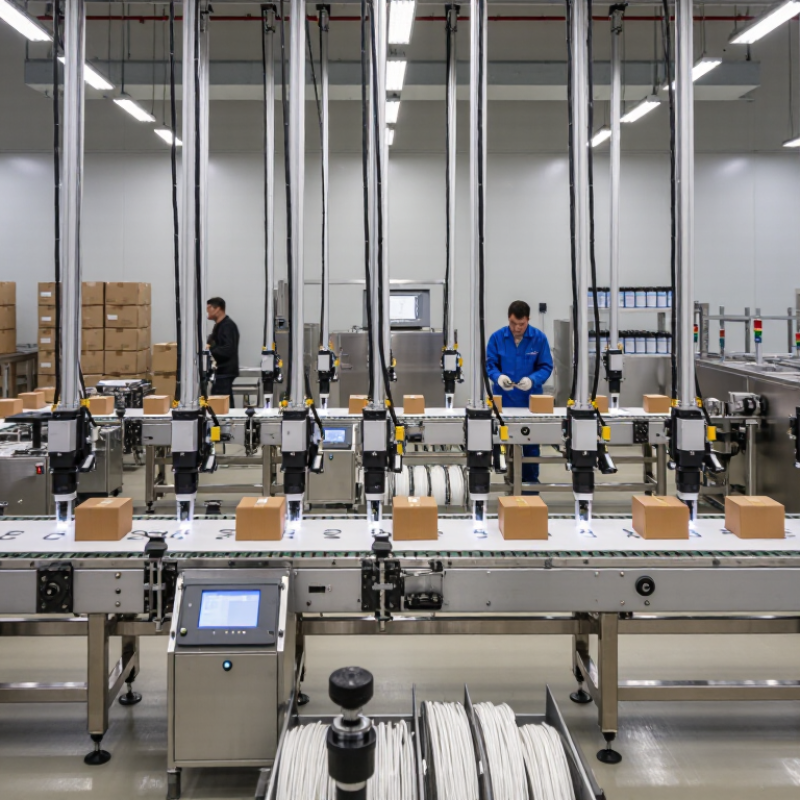
Understanding Ink Marking Systems and Their Main Functions
Ink marking systems place text, dates, batch codes, and simple graphics on products or packaging. Their main job is to make information readable and consistent during production. A typical system combines a controller, ink supply, and printhead. Some print without touching the surface, which helps when items move quickly along a conveyor. Others suit slower lines or precise placement. Small details matter. A code on a curved bottle may need different settings from one printed on a flat carton.
These systems support identification, sorting, and quality checks. Clear marks help staff match an item to its production batch or locate printed information during inspection. Performance depends on the ink, surface, line speed, and surrounding conditions. Dust, moisture, or a rough package can weaken contrast. Operators should test marks on actual materials and check them after drying, not just on a clean sample. Routine nozzle checks and timely cleaning also reduce interruptions. It is tempting to expect one setup to work everywhere. Usually, it will not. Even a technically sound system can produce faint or smudged marks when the material changes. That limitation deserves attention during selection and setup.
What Are China's Top 10 Ink Marking Systems Manufacturers? - Understanding Ink Marking Systems and Their Main Functions
Technology overview: the entries below describe common ink-marking system configurations, not a ranked list of manufacturers.
| No. | System Configuration | How It Marks | Common Applications | Main Strength | Key Consideration |
|---|---|---|---|---|---|
| 1 | Dye-based continuous inkjet (CIJ) | A pressurized ink stream is divided into droplets; selected droplets are electrically deflected onto the product. | Dates, lot codes, and simple alphanumeric marks on fast-moving packaging and components. | Non-contact printing can mark products moving continuously on a production line. | Ink choice and surface condition affect adhesion, contrast, and drying. |
| 2 | Pigmented CIJ | CIJ uses pigmented ink, with particles suspended in the fluid, to form visible marks. | Dark or colored materials, including some cables, plastics, and metal components. | Can provide stronger contrast on surfaces where a dye-based ink is difficult to see. | Pigmented inks may require attention to agitation, filtration, and printhead maintenance. |
| 3 | Water-based thermal inkjet (TIJ) | Small resistive heaters create vapor bubbles that eject ink droplets through nozzle openings. | Porous cartons, paperboard, labels, and other absorbent packaging materials. | Produces sharp text and codes with a compact, cartridge-based printhead arrangement. | Water-based ink is generally best suited to compatible, absorbent surfaces. |
| 4 | Solvent-based TIJ | Thermal actuation ejects a fast-drying solvent ink formulated for less-porous surfaces. | Some coated cartons, films, plastics, and other packaging substrates, subject to ink compatibility. | Offers high-resolution coding in a compact printhead format. | Adhesion and drying should be tested on the actual substrate and under line conditions. |
| 5 | Piezoelectric drop-on-demand (DOD) | An electrically driven piezoelectric element changes chamber pressure to eject droplets only when needed. | Variable text, logos, graphics, and codes on suitable packaging or product surfaces. | Supports controlled droplet placement and can accommodate a range of ink types and print formats. | Nozzle condition, ink properties, and surface compatibility influence print quality. |
| 6 | High-resolution DOD inkjet | A fine-drop DOD printhead places droplets in a controlled pattern to form detailed text, graphics, or codes. | Secondary packaging, labels, and applications requiring more detail than basic alphanumeric coding. | Can print variable information and more complex layouts than simple character marking. | Print resolution depends on printhead setup, motion, substrate, and operating conditions. |
| 7 | Large-character DOD | A multi-nozzle printhead deposits larger droplets to build prominent characters or graphics. | Outer cases, shipping cartons, sacks, and other large-format packages. | Creates conspicuous marks that can be read from a greater distance than small product codes. | The printhead and ink must suit the package surface and the required mark size. |
| 8 | Valve-jet marking | An electronically controlled valve releases discrete ink droplets or short bursts through a nozzle. | Large, bold codes on cartons, building materials, and selected industrial products. | Can deposit relatively large ink droplets for high-visibility marks. | Typically suited to bold marking rather than fine-detail printing. |
| 9 | UV-curable inkjet | Ink droplets are deposited on the surface and then cured using ultraviolet light. | Selected non-porous packaging and products where rapid curing or surface decoration is required. | UV curing can make the deposited ink set quickly when the ink, substrate, and curing conditions are compatible. | Requires suitable UV-curable ink and curing equipment; adhesion must be validated for each material. |
| 10 | Traversing inkjet marking system | A printhead moves across or along a stationary or indexed product to apply the mark. | Large parts, irregular production layouts, and applications where the product cannot pass a fixed printhead. | Allows marking across a wider area or on products that are not continuously conveyed. | Motion control, positioning, and cycle time must match the production process. |
Related Posts
-
Top 10 Industrial Ink Marking Systems for Global Buyers
-
Top 10 Inkjet Coding Printers for Global Buyers
-
Why Choose Industrial Inkjet Printing for Your Business?
-
What Is the Best China Inkjet Coder for Global Buyers?
-
Ultimate Guide to Choosing the Best Cij Printer for Global Procurement Success
-
Understanding the Benefits of Inkjet Coders in Modern Packaging Industries
