Partner Login
Enter your username and password here on order to log in on the partner portal:
No registered partner yet?
Register nowChoosing the best China Inkjet Coder is not simply a matter of comparing prices. Global buyers must examine print quality, machine stability, service response, and long-term operating costs. A coder may look impressive in a showroom, yet struggle beside a dusty conveyor or in a humid packaging room.
Industry consultant David Lee explains, “The right Inkjet Coder is the one that keeps production moving with fewer surprises.” This practical view matters. A reliable machine should print clear dates, batch numbers, barcodes, or product codes on different surfaces. Plastic bottles, metal cans, cartons, and flexible films often require different ink behavior. Small details matter.
Look closely at nozzle performance, ink consumption, touchscreen usability, and cleaning requirements. Ask how quickly replacement parts can arrive. Confirm whether remote support is available in your time zone. A low purchase price can become expensive when production stops for several hours.
Chinese manufacturers now offer compact coders with stainless-steel cabinets, multilingual interfaces, and improved printhead systems. Some models perform very well. Others still need stronger documentation and better overseas support. That difference is easy to miss.
Global buyers should request sample printing before making a decision. Send real materials, real speeds, and real production conditions. Then inspect the results under ordinary factory lighting. The sharpest sample may not represent daily performance.
There is no universal winner. The best choice depends on application, environment, budget, and service expectations. Careful testing remains more reliable than attractive specifications. Even experienced buyers can overlook maintenance access. That small mistake can become a costly lesson.
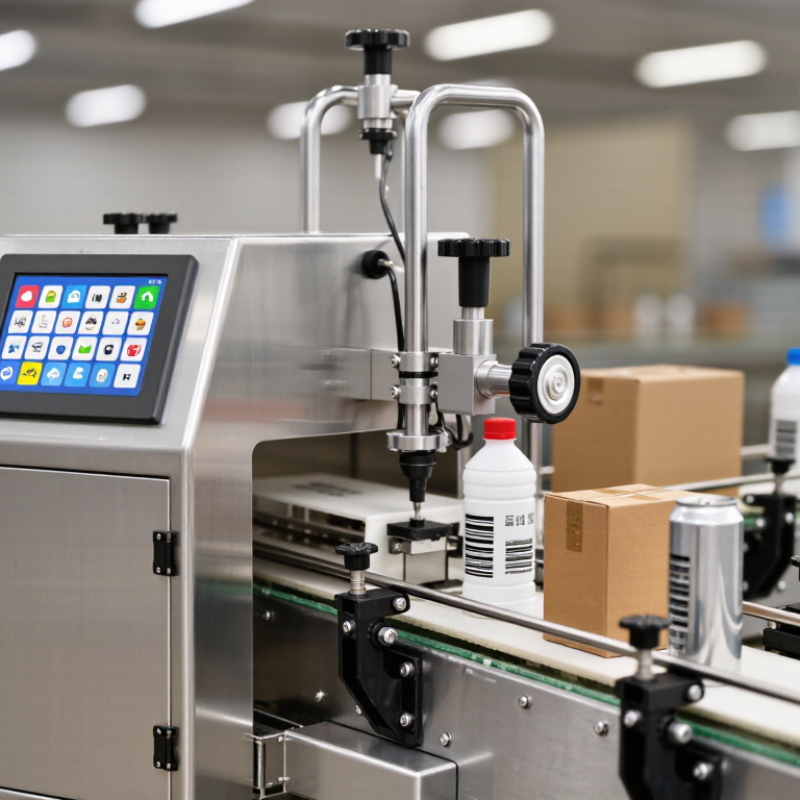
For global buyers, the best China inkjet coder depends on product speed, substrate, and factory conditions. Grand View Research valued the global coding and marking equipment market at about USD 1.7 billion in 2023. Its forecast also indicates steady growth through 2030. That growth reflects stricter traceability and faster packaging lines.
Continuous inkjet (CIJ) suits high-speed bottles, cans, films, and uneven surfaces. It prints reliably despite dust, vibration, and changing line speeds. Thermal inkjet (TIJ) offers sharper small text and simpler maintenance on cartons and smooth films. It usually needs cleaner conditions. Drop-on-demand (DOD) systems produce larger characters for cartons, cases, and porous materials. However, nozzle design and ink selection strongly affect consistency.
According to PMMI’s 2024 industry research, labor efficiency and equipment integration remain major packaging priorities. A coder should therefore support line signals, remote diagnostics, and readable production data. Check printhead protection, ink availability, language settings, and local technical response before purchasing. Certification documents matter too. Small details matter.
A practical factory test should use the buyer’s real film, carton, ink, and conveyor speed. Laboratory samples can look excellent, yet production dust may expose weaknesses. I would not select a machine from price alone. That approach is tempting, but often incomplete. Specification sheets rarely show cleaning time, rejected packs, or operator learning curves. Evaluate those costs during a live trial.
What Is the Best China Inkjet Coder for Global Buyers?
For global buyers, the best China inkjet coder should match real production demands, not only catalog claims. A practical benchmark is its ability to print one to five lines clearly. One-line codes suit cartons, cables, and bottles. Multi-line models handle dates, batch numbers, barcodes, and small instructions. Print heights from 2 to 5 mm cover many everyday applications. Smaller text needs steady ink flow and accurate nozzle control. That sounds simple. Reality is messier.
A reliable coder should maintain readable marks during continuous 24/7 duty. Test it beside your actual conveyor, under factory heat, dust, vibration, and changing shift patterns. Check startup time after overnight stops. Watch for blurred characters, clogged nozzles, and ink mist near the printhead. A strong system should recover quickly without constant operator adjustment. Still, no benchmark replaces a site trial. Laboratory results can look better than production results.
Ask for sample prints on your real materials, including plastic, glass, metal, and coated cartons. Measure character edges, contrast, drying time, and adhesion. Also review maintenance access, training quality, spare-part availability, and technical response times. These details reveal practical reliability. A lower purchase price may become expensive when cleaning takes too long. I would also question any claim of uninterrupted operation without maintenance. Twenty-four-hour duty is achievable, but only with suitable ink, regular checks, and disciplined servicing.
What Is the Best China Inkjet Coder for Global Buyers?
Evaluating China Inkjet Coders by Speed, Ink Use, and Uptime Data
A reliable inkjet coder should match real production demands, not only brochure speeds. During a practical trial, run identical cartons at several line speeds. Record readable prints, missed characters, and restart delays. A machine rated at 300 prints per minute may perform differently with dusty surfaces or changing conveyor gaps. Measure the actual result.
Ink consumption also deserves careful testing. Print the same message across 10,000 packages, then weigh the cartridge before and after production. Small fonts usually reduce usage, while bold codes and frequent flushing increase it. Solvent choice, print distance, and nozzle condition can change the figures. Ask for data from comparable applications. One impressive sample proves little.
Uptime data needs a clear definition. Track operating hours, stoppages, cleaning time, and fault recovery separately. A useful availability figure excludes planned maintenance only when every supplier uses the same method. In field evaluations, simple logs often expose hidden downtime. That detail matters. I have also seen test results become unreliable when operators received unequal training. The comparison was fair on paper, but not on the factory floor. Buyers should inspect service response times, spare-part access, language support, and local technical capability. A lower purchase price may lose its advantage after repeated stoppages. Test the coder with your actual ink, packaging, shift pattern, and message changes before making a final decision.
What Is the Best China Inkjet Coder for Global Buyers?
A reliable inkjet coder should pass more than a factory demonstration. Ask for current CE documentation, the applicable conformity declaration, and test records. CE marking supports market access in relevant regions, but it is not a universal quality certificate. Check whether the declaration covers the exact coder model, power supply, and installed accessories. Small details matter.
RoHS compliance helps control restricted substances in electrical equipment. Request a material statement or laboratory report, not only a sales promise. An IP55 enclosure can resist limited dust and water jets. However, IP55 does not mean waterproof. In a beverage plant, inspect cable glands, door seals, and washdown distance. A machine may carry the right rating and still suffer from poor installation.
Ink selection needs equal care. For food, cosmetic, or pharmaceutical packaging, ask for an FDA-compatible ink option suitable for the intended contact conditions. “Compatible” does not automatically mean approved for every product or market. Review the ink’s safety data sheet, technical data, migration information, and traceability documents. Test adhesion on actual film, cartons, or metal caps. Check drying time at line speed.
A practical trial reveals more than a brochure. Yet even trials can mislead. Humidity, dust, and operator habits often change results. Confirm print quality after overnight stops, nozzle cleaning, and temperature shifts. Leave room for doubt. Compliance paperwork is essential, but disciplined verification protects the buyer’s reputation.
| Evaluation Dimension | Standard CIJ Coder | High-Resolution TIJ Coder | Piezo DOD Coder | Buyer Verification Point |
|---|---|---|---|---|
| Best-fit production environment | Continuous production lines requiring non-contact marking | Short and medium production runs with fast message changes | Large-character printing on cartons, sacks, and porous materials | Match the printer to line speed, substrate, humidity, dust, and cleaning conditions |
| Typical print height | Approximately 0.8–15 mm, depending on nozzle and configuration | Approximately 1–12.7 mm per cartridge; multiple cartridges can increase coverage | Approximately 10–100 mm, depending on printhead and ink system | Request a sample print using the actual product and required character height |
| Typical line-speed capability | Up to several hundred metres per minute in suitable conditions | Commonly suitable for low-to-medium speed lines; actual speed depends on resolution and message length | Usually selected for slower lines or large-format coding; speed varies widely by drop size | Confirm tested speed at the requested resolution, font size, and conveyor distance |
| Common substrates | Plastic, metal, glass, cable, film, and coated materials | Carton, paper, film, plastic, metal, and other relatively smooth surfaces | Corrugated cartons, paper bags, construction materials, and porous surfaces | Check adhesion, drying time, contrast, rub resistance, and migration requirements |
| Resolution range | Typically optimized for reliable alphanumeric, batch, date, and code printing | Commonly up to about 600 dpi in the print direction, depending on cartridge and settings | Often optimized for bold, high-coverage characters rather than fine small text | Evaluate the finished code under the actual viewing distance and lighting |
| CE documentation | Should include an EU Declaration of Conformity covering applicable directives and standards | Should include an EU Declaration of Conformity for the complete supplied configuration | Should include an EU Declaration of Conformity and applicable electrical safety documentation | Verify model number, responsible manufacturer, applicable directives, standards, and declaration date |
| RoHS status | Request a current RoHS declaration and restricted-substance test evidence where required | Request RoHS evidence for the printer, power supply, cables, and supplied accessories | Request RoHS evidence for the full electrical assembly and replacement parts | A marketing statement alone is not a substitute for a signed declaration or technical file |
| IP55 suitability | IP55-rated cabinets are available for dusty or splash-prone production areas | IP-rated versions may be available; cartridge and printhead protection must be checked separately | IP55 suitability depends strongly on cabinet, pump, printhead, and control-panel design | Confirm the IP rating applies to the complete enclosure and request the test standard or report |
| FDA-compatible ink options | Food-packaging and indirect-contact ink options may be available, subject to formulation and use conditions | Water-based or solvent-based options may be offered for specific packaging applications | Large-character water-based inks are commonly used on porous packaging surfaces | Request the exact ink SDS, composition statement, regulatory letter, and intended-use limitations |
| Food-contact compliance caution | Ink suitability depends on direct or indirect contact, substrate, drying, and migration conditions | Do not assume “food-safe” from the printer specification alone | Confirm whether the ink is suitable for the specific packaging material and production process | FDA compatibility refers to the ink formulation and application, not automatic approval of the entire coder |
| Maintenance profile | Requires solvent and makeup-fluid management, nozzle cleaning, and scheduled filter replacement | Cartridge replacement is simple; printhead wiping and storage controls remain important | Requires ink-system cleaning, nozzle maintenance, and control of dust and viscosity | Compare total operating cost, consumable availability, service interval, and local technical support |
| Recommended selection priority | Best for high-throughput, non-contact coding across varied non-porous substrates | Best for clean operation, quick changeovers, and high-resolution variable data | Best for economical, large-format coding on porous or absorbent packaging | Choose only after validating print quality, compliance documents, ink compatibility, and after-sales support |
For global buyers, the best China inkjet coder is not always the cheapest machine. Purchase price matters, but total cost decides the investment. Grand View Research estimates that the global coding and marking market will continue growing through 2030, driven by traceability and production efficiency. That growth increases pressure on suppliers to provide dependable equipment and measurable operating costs.
In practical quotations, ink consumption can differ sharply between similar-looking machines. Some suppliers claim 20–30% ink savings through optimized nozzle control, shorter purge cycles, and smaller drop sizes. Treat this claim carefully. Request a sealed-container test using your actual text, speed, substrate, and shift length. A 500 ml cartridge may look economical until frequent cleaning increases waste. I have seen impressive spreadsheets fail during humid, dusty production.
Service support often outweighs a modest purchase discount. PMMI industry reports repeatedly identify uptime, labor efficiency, and technical support as important packaging-equipment concerns. Buyers should compare response times, remote diagnostics, spare-part availability, and technician coverage by region. Calculate the cost of one stopped line hour, then compare it with the annual service plan. A low initial price can become expensive after repeated delays.
For a reliable comparison, record purchase price, expected ink use, solvent consumption, maintenance hours, spare parts, training, and downtime over three years. Ask for audited test records, not promotional estimates. The best decision may still be imperfect, especially when local service data is limited.
Three-year total cost comparison based on purchase price, ink consumption after 20–30% savings, and service support.
The comparison uses anonymized market segments rather than company or brand data. Estimated three-year costs include the initial coder purchase, ink usage after efficiency savings, and service support. Ink savings are modeled at 20% for Entry, 25% for Standard, and 30% for High-Throughput systems.