X

Partner Login

Enter your username and password here on order to log in on the partner portal:

No registered partner yet?

Register now

Top 10 Industrial Ink Marking Systems for Global Buyers

Choosing among the Top 10 Industrial Ink Marking Systems requires more than comparing price and print speed. Global buyers need dependable identification across food packaging, electronics, cables, pharmaceuticals, and industrial components. A clear mark should remain readable after vibration, moisture, heat, and routine handling.

This guide examines proven systems through practical purchasing criteria. We consider print resolution, line speed, ink compatibility, maintenance access, operator training, and integration with production software. We also assess support networks, spare-part availability, and documented performance. Those details often matter more than impressive laboratory figures.

Real factories are less predictable.

A system that performs well on cartons may struggle with oily metal surfaces. A fast printer may demand frequent cleaning in dusty environments. These trade-offs deserve honest attention. Manufacturer specifications provide useful evidence, but field experience reveals limitations that brochures rarely mention. Our evaluation therefore combines technical data, application knowledge, and buyer-focused observations.

The selected Industrial Ink Marking Systems represent different production needs and budget levels. Some prioritize high-speed coding, while others suit flexible batch changes or compact workstations. Regional voltage requirements, approved inks, environmental conditions, and local service capability can also influence the final decision. Buyers should verify these points before placing an order.

No ranking can replace a controlled production trial. Sample testing remains essential. Ask suppliers to mark your actual materials, inspect readability after handling, and measure cleaning time during a realistic shift. This approach reduces uncertainty and supports a more reliable investment.
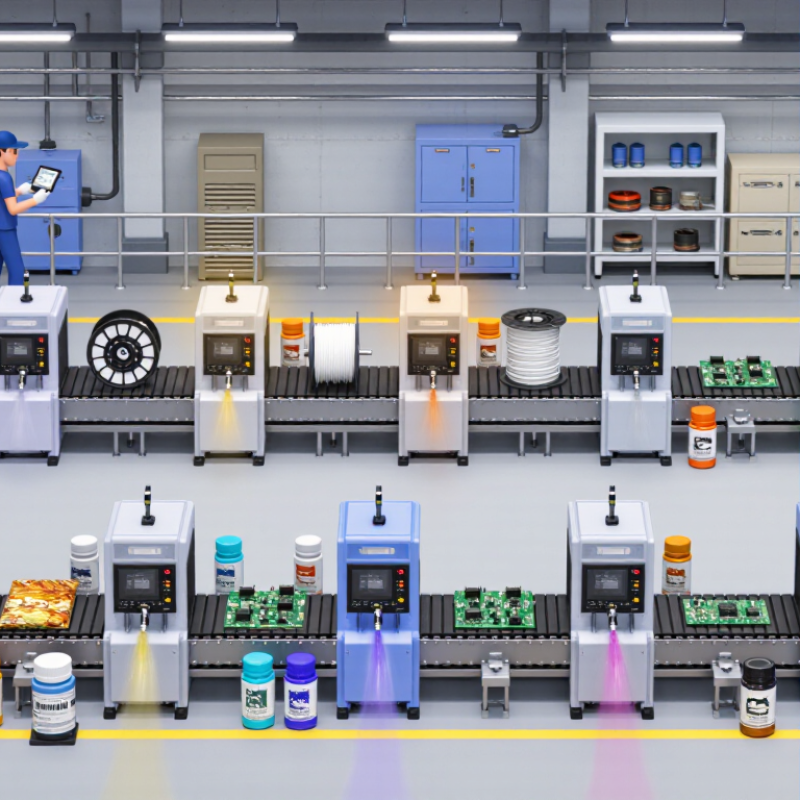
Top 10 Industrial Ink Marking Systems for Global Buyers

Industrial Ink Marking Systems: Purpose, Scope, and Core Technologies

Industrial ink marking systems give products a readable identity during production, packaging, and distribution. They print batch codes, dates, serial numbers, barcodes, and handling information directly onto surfaces. This supports traceability, inspection, inventory control, and targeted quality checks. A code must survive real conditions. Oil, condensation, abrasion, and heat can all reduce readability. On a fast conveyor, even a small delay may shift the mark.

The scope is broad. Systems serve cartons, films, cables, metal parts, glass, plastics, and treated wood. Continuous inkjet suits high-speed lines and uneven surfaces. Drop-on-demand systems place larger droplets with lower ink consumption. Thermal inkjet can deliver sharp text and two-dimensional codes on porous or coated materials. UV-curable formulations support rapid surface curing, but they require compatible substrates and controlled exposure. No system is universal.

Core hardware includes printheads, ink reservoirs, pumps, sensors, encoders, and industrial controllers. Software manages recipes, permissions, data input, and verification. In practice, reliability depends on integration, not print quality alone. Test the exact substrate, ink, line speed, and cleaning routine before purchase. A short showroom sample may mislead. Humidity and dust can expose weaknesses later. A common field lesson is that changing reel material can damage an otherwise successful trial. Global buyers should document maintenance intervals, spare-part access, language support, and local service capability. These details often matter more than higher headline resolution.

How to Compare the Top Ten Industrial Ink Marking Systems

Comparing the top ten industrial ink marking systems requires more than reading speed claims. In practical evaluations, I check print quality on the real production material. Cardboard, plastic, metal, and coated film can produce very different results. A system that marks cleanly on a sample may struggle beside a dusty conveyor. Test the actual line.

Print resolution matters, but so does message stability. Inspect characters under bright light, after rubbing, and after exposure to moisture. Compare drying time, ink adhesion, color contrast, and resistance to heat. Ask how quickly operators can replace cartridges or clean the printhead. Small maintenance delays can stop an entire shift. They matter.

Integration deserves close attention. Compare encoder support, sensor response, software controls, data interfaces, and alarm visibility. A reliable system should maintain legible marks during speed changes. Review its performance logs and service records, not only its brochure. Calculate ink use, spare parts, training, and energy costs over several years. The lowest purchase price may become expensive later. It is imperfect. A spreadsheet cannot capture every surprise. Noise, vibration, cramped access, and operator habits can change the result. Let trained technicians repeat the trial before approval.

Key Specifications for Different Production Environments

Top 10 Industrial Ink Marking Systems for Global Buyers

Key Specifications for Different Production Environments

Selecting an industrial ink marking system requires more than comparing print resolution. In real production lines, speed, substrate, dust, humidity, and cleaning routines determine reliability. Smithers’ “The Future of Inkjet Printing to 2029” identifies packaging and product identification as major industrial inkjet applications. This supports the need for flexible systems across cartons, films, metals, cables, and molded parts.

For fast-moving packaging lines, buyers should examine print speed, nozzle stability, and encoder response. A system rated for 300 meters per minute may perform poorly with vibration or irregular spacing. Resolution near 300 dpi suits many readable codes, while smaller characters may require higher capability. Dust changes everything. In dusty plants, an enclosure rated at least IP55 can reduce contamination risks. Humid areas require corrosion-resistant components and controlled ink drying.

Connectivity also matters. PMMI’s packaging automation research shows that manufacturers continue investing in data integration and production visibility. Ethernet communication, barcode verification, and centralized error reporting can reduce manual checks. Solvent selection must match the substrate and workplace controls. Water-based inks may suit porous cartons, while fast-drying formulations often serve non-porous films and metal surfaces. Test before purchase. Laboratory samples cannot fully reproduce line vibration, temperature shifts, or operator cleaning habits. A practical trial should run several shifts, not merely one afternoon. The specification sheet is useful, but it is never the whole story.

Top 10 Industrial Ink Marking Systems for Global Buyers - Key Specifications for Different Production Environments
Rank System Type Typical Print Height Typical Line Speed Resolution / Print Quality Suitable Substrates Ink or Consumable Options Recommended Production Environment Typical Protection Level Key Advantages Main Limitations
1 Continuous Inkjet (CIJ) Approximately 0.8–15 mm per line Up to approximately 6.5 m/s, depending on message length and substrate Typically 50–150 dpi; suitable for small text, dates, batch codes, and simple graphics Plastic, glass, metal, coated paper, cables, films, and uneven surfaces Fast-drying solvent inks, pigment inks, food-contact-compliant options, and high-contrast inks High-speed beverage, food, cable, pharmaceutical, and general packaging lines Usually IP54–IP65 for industrial versions Very high throughput; non-contact printing; works on many materials; supports curved or irregular products Requires solvent and ink management; routine printhead cleaning may be necessary
2 Laser Marking System Approximately 0.5–20 mm, depending on lens and application Approximately 100–1,000 m/min, depending on marking content and material High-resolution permanent marks; commonly 200–1,000 dpi equivalent Metal, glass, plastics, painted surfaces, cartons, films, and anodized materials No ink; uses laser energy with extraction and, where required, fume filtration High-volume lines requiring permanent traceability, tamper resistance, or solvent-free operation Enclosures commonly rated IP54 or higher; safety housing is required Permanent, clean, low-consumable marking; excellent for serialization and fine codes Higher initial cost; material response varies; laser safety controls and extraction may be required
3 Thermal Inkjet (TIJ) Approximately 12.7–25.4 mm per printhead Typically up to 300 m/min, depending on resolution and ink Usually 150–600 dpi; sharp text, barcodes, logos, and variable data Cartons, paperboard, labels, porous films, coated materials, and selected plastics Water-based, solvent-based, pigment, and selected food-packaging inks Secondary packaging, case coding, pharmaceutical cartons, and clean production areas Often IP54–IP65 with suitable enclosure High print quality; simple cartridge replacement; low routine maintenance; compact installation Print distance and surface energy affect performance; cartridge capacity can limit long runs
4 Piezo Drop-on-Demand Inkjet Approximately 1–72 mm, depending on head configuration Typically 50–300 m/min Approximately 180–720 dpi; suitable for text, barcodes, graphics, and variable images Corrugated boxes, cartons, porous materials, wood, construction products, and selected films Water-based, solvent-based, pigment, and UV-curable inks Primary or secondary packaging, building materials, logistics, and large-format coding Commonly IP54–IP65; higher protection depends on the enclosure Flexible print widths; efficient ink usage; supports large characters and high-resolution graphics Ink viscosity and nozzle condition require controlled operating conditions
5 Valve-Jet Inkjet Approximately 1–20 mm per nozzle; multiple heads can increase height Typically 60–180 m/min Generally 32–150 dpi; optimized for bold characters and basic codes Corrugated cases, sacks, wood, concrete products, metal, and rough industrial surfaces Oil-based, solvent-based, water-based, and high-opacity pigmented inks Warehousing, pallet coding, building materials, agricultural products, and dusty environments Often IP65 or higher when installed in a protected cabinet Prints large, readable characters on uneven or absorbent surfaces; robust for industrial use Lower resolution than fine-code systems; larger ink drops can increase drying time and consumption
6 Thermal Transfer Overprinter (TTO) Commonly 32–53 mm print width Approximately 100–600 mm/s of web or film movement Typically 200–300 dpi; excellent for barcodes, nutrition panels, text, and graphics Flexible packaging films, foil laminates, pouches, sachets, and labels Thermal transfer ribbons in wax, resin, or wax-resin formulations Form-fill-seal, snack food, frozen food, medical packaging, and pharmaceutical lines Print modules commonly IP43–IP65, depending on washdown requirements High-quality variable data; dry print immediately; integrates with intermittent and continuous packaging machines Requires compatible ribbon and web tension; print width is limited by the installed module
7 UV-Curable Inkjet Approximately 1.5–54 mm per printhead Typically 50–150 m/min Usually 300–600 dpi; high-contrast text, barcodes, and graphics Glass, metal, rigid plastics, flexible films, coated surfaces, and low-absorption materials UV-curable inks, including high-adhesion and selected low-migration formulations Industrial packaging, electronics, cosmetics, labels, and applications requiring immediate curing Often IP54–IP65; UV shielding and curing protection are required Immediate curing; strong adhesion on difficult substrates; high resistance to abrasion and moisture Higher equipment complexity; requires UV curing, shielding, and application-specific ink validation
8 Large-Character Inkjet Approximately 10–140 mm per line Typically 30–180 m/min Generally 50–300 dpi; designed for readable large text and graphics Corrugated cases, sacks, timber, pipes, panels, concrete, and other large products Water-based, solvent-based, oil-based, and pigmented high-contrast inks Building materials, logistics, agricultural packaging, lumber, and industrial manufacturing Commonly IP54–IP65; heavy-duty enclosures are available for dusty areas Large, clear marks from a stand-off distance; suitable for porous and irregular products Not intended for fine microtext or very small barcodes; drying performance depends on ink and substrate
9 Hot-Foil Coding and Stamping Approximately 10–100 mm print or stamp area Typically 50–250 packs/min, depending on machine format High-contrast alphanumeric codes and simple graphics; resolution depends on type and foil Flexible films, labels, coated paper, laminates, and selected plastics Heat-activated pigment or metallic foil Intermittent packaging, bakery products, confectionery, cosmetics, and small-batch production Usually enclosed industrial machinery; protection varies by packaging equipment Strong contrast; simple operation; suitable for applications where solvent-based ink is undesirable Limited variable-data capability; requires heated tooling and compatible packaging material
10 Electrostatic Inkjet Approximately 3–25 mm per line Typically 50–300 m/min Approximately 150–600 dpi, depending on electrode and ink configuration Metal, conductive or treated plastics, films, glass, and selected coated materials Electrostatic liquid inks with application-specific conductivity and drying characteristics Specialty coding, electronics, metal components, industrial parts, and high-contrast marking Commonly IP54–IP65 with controlled electrical and ink systems Fine droplets, fast drying, and good contrast on suitable surfaces; non-contact operation Requires careful conductivity control, grounding, and substrate qualification
Specification ranges are typical industry values and can vary according to printhead configuration, ink formulation, substrate, message content, line integration, and environmental conditions.

Global Buyer Guide to Compliance, Integration, and Operating Costs

Choosing among the top 10 industrial ink marking systems requires more than comparing print speed. Global buyers should examine compliance, integration, and total operating costs together. A system may perform well in a factory trial but fail under humidity, dust, or frequent product changes.

In field evaluations, I check readable codes, ink adhesion, service access, and cleaning time. Short tests help. Longer trials reveal more. Buyers should confirm local labeling rules, electrical requirements, chemical handling controls, and documentation before purchase. Requirements differ by market, so supplier claims should be verified through technical files, test records, and independent quality procedures.

Integration also affects the budget. The marker should communicate reliably with line controllers, scanners, databases, and inspection devices. Poor data exchange can create duplicate codes or production delays. Ask for protocol details and failure-recovery steps. Operating costs include ink, solvent, filters, printheads, energy, maintenance labor, training, and rejected products. A lower initial price can mislead. However, premium features are not always necessary. That point is often overlooked.

A practical comparison uses the same sample materials, line speed, code format, and production hours for every system. Record consumable use and cleaning intervals. Leave room for uncertainty. Real factories are less tidy than demonstrations. The strongest choice is usually the system that remains compliant, serviceable, and predictable across several operating conditions.

Top 10 Industrial Ink Marking Systems for Global Buyers

Typical maximum marking speed by system type, with integration and compliance considerations for international production environments.

Continuous inkjet and laser systems generally support the highest line speeds, while print-and-apply and large-character systems are better suited to packaging, pallet, and secondary identification tasks. Actual performance depends on substrate, message length, coding resolution, environmental protection, conveyor configuration, and local compliance requirements. The figures shown are representative technology-level maximums rather than brand-specific specifications.

Selection Criteria for Reliable Long-Term Marking Performance

Top 10 Industrial Ink Marking Systems for Global Buyers

Reliable marking starts with the selection criteria, not the machine list. MarketsandMarkets estimates the industrial inkjet printer market will grow from USD 10.5 billion in 2023 to USD 14.1 billion by 2028. That growth reflects rising demand for traceable, high-speed coding. Buyers should examine print consistency, uptime records, substrate compatibility, and service access. A clear code at 1,200 products per minute means little if cleaning takes an hour.

Long-term performance depends on real factory conditions. Test adhesion on dusty cartons, glossy films, metal, and recycled surfaces. Check performance after temperature changes, vibration, and short production stops. Ask for mean time between failures, ink consumption, nozzle recovery rates, and spare-part availability. ISO 9001 certification can support process control, but it does not guarantee field reliability. A lab result is not a factory truth. Experienced teams sometimes overvalue resolution and underestimate maintenance discipline.

Tips: Request sample codes from your own materials. Record startup time after seven idle days. Compare total ownership cost, not only purchase price. Keep maintenance logs with photographs and operator notes. The best system may not be the fastest one. It should remain predictable when shifts change, ink levels fall, or production becomes messy. According to PMMI’s 2024 packaging automation research, workforce skills and equipment integration remain major investment concerns, so training and communication interfaces deserve equal attention.