


 Distributors
  SDS Download
  Contact
 Partner Login
Enter your username and password here on order to log in on the partner portal:
No registered partner yet?
Register nowWhat Is the Best Industrial Inkjet Printing Machine in 2026?
Choosing the best industrial inkjet printing machine in 2026 is not simply a race for speed. Production managers now compare print quality, uptime, ink costs, automation, and service response. A machine may promise 150 meters per minute, yet perform poorly during long overnight runs. That difference matters.
Mike Willis, an experienced industrial inkjet consultant, has offered a practical view: “The best press is the one that makes money consistently for its owner.” His point remains valuable. A reliable machine should produce sharp text, smooth gradients, and stable color across changing materials. It should also recover quickly after nozzle checks, ink changes, or software updates. Small delays become expensive when thousands of packages wait beside the line.
The strongest systems in Industrial Inkjet Printing usually combine precise printheads with intelligent monitoring. They can detect missing nozzles, adjust image data, and reduce unnecessary ink waste. Some models support water-based inks for packaging, while others suit durable labels, textiles, metal parts, or coated boards. One machine cannot handle every factory.
That is the uncomfortable part. “Best” depends on the application. A converter printing short label runs may value flexibility over maximum speed. A large manufacturer may prefer stable throughput and simple maintenance. My own evaluation would begin with sample production, not a showroom demonstration. Ask for real substrates. Measure rejects. Check the service agreement carefully.
There is no perfect machine. There is only the better fit, tested under honest production conditions.
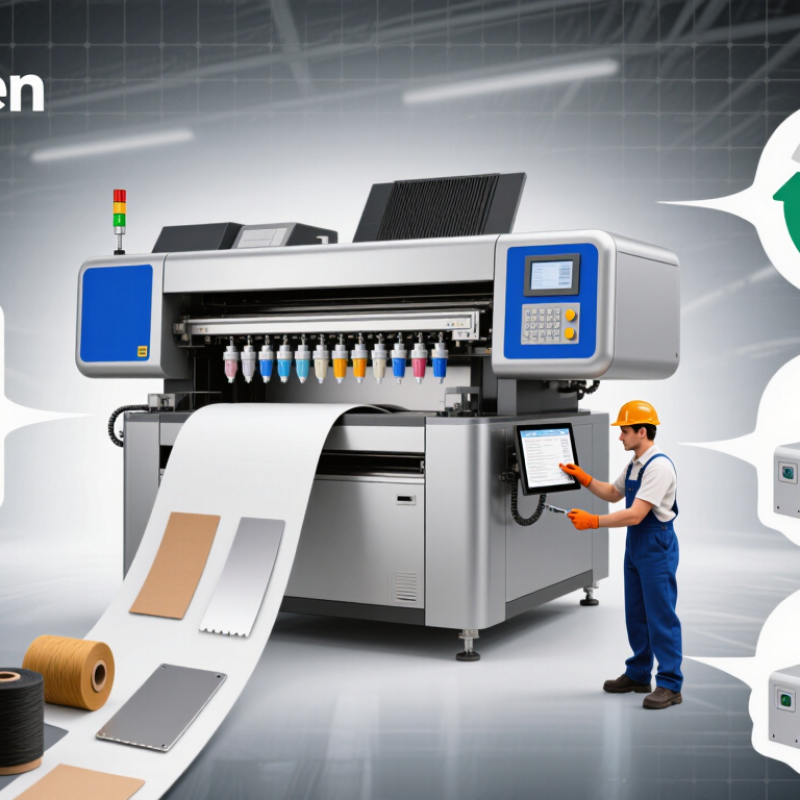
Industrial Inkjet Printing Machines: Definition, Functions, and Main Types
Industrial Inkjet Printing Machines: Definition, Functions, and Main Types
An industrial inkjet printing machine is a non-contact system that places controlled ink droplets onto products or packaging. Unlike traditional presses, it prints without plates, rollers, or direct mechanical pressure. This design supports fast production lines, uneven surfaces, and frequent data changes.
Its main functions include batch coding, date marking, serial numbering, barcodes, logos, and basic graphics. Some systems print on plastic film, metal cans, glass bottles, cartons, wood, and coated materials. In a factory, the printer may work beside a conveyor, sensing each product before releasing ink. Small details matter. Ink adhesion, curing time, nozzle condition, and surface dust can affect readability.
The main types include continuous inkjet, drop-on-demand, thermal inkjet, and piezoelectric inkjet. Continuous inkjet suits high-speed coding because it produces a steady stream of droplets. Drop-on-demand systems fire ink only when needed, which can reduce waste. Thermal inkjet often creates sharp text on porous or treated surfaces. Piezoelectric systems offer precise droplet control and support a broader range of industrial inks.
Choosing the best machine in 2026 depends on the substrate, line speed, print height, ink chemistry, maintenance skills, and required resolution. A technically impressive printer may perform poorly on oily metal or dusty cartons. Real production trials are essential. I have seen specifications look perfect, yet the printed code faded after handling. The better decision comes from testing actual materials under normal factory conditions.
What Is the Best Industrial Inkjet Printing Machine in 2026?
The best industrial inkjet printing machine depends on the substrate, required print quality, production speed, ink chemistry, and degree of automation. The comparison below summarizes the main machine categories used in industrial production.
| Machine Type | Definition and Main Function | Typical Industrial Speed | Common Substrates | Typical Ink Systems | Primary Applications | Key Advantages | Main Limitations | Best Fit in 2026 |
|---|---|---|---|---|---|---|---|---|
| Continuous Inkjet (CIJ) | Uses a continuous stream of electrically charged ink droplets to create variable-data codes and marks. | Approximately 30–300 m/min, depending on product and code requirements. | Plastic, glass, metal, cables, cartons, films, and irregular product surfaces. | Solvent-based inks; specialized food-contact and high-adhesion formulations are also available. | Lot numbers, expiry dates, barcodes, serialization, and production-line identification. | Very high line speed, non-contact printing, and reliable coding on curved or moving products. | Requires solvent and makeup-fluid management; print resolution is generally lower than high-resolution piezo systems. | High-speed product coding |
| Drop-on-Demand Piezo Inkjet | Fires individual droplets only when required, using piezoelectric printheads for precise image and text formation. | Approximately 30–150 m/min in industrial production, depending on resolution and print width. | Corrugated board, coated paper, films, plastics, labels, metal sheets, and specialty materials. | Water-based, pigment, dye, UV-curable, and selected solvent-based inks. | Packaging graphics, variable-data printing, product decoration, labels, and industrial marking. | High placement accuracy, efficient ink usage, variable-data capability, and compatibility with diverse ink chemistries. | Printhead maintenance and ink-substrate compatibility must be carefully controlled. | Flexible industrial graphics |
| Thermal Inkjet (TIJ) | Uses a small heater in each nozzle to generate vapor bubbles that eject ink droplets onto the substrate. | Approximately 30–180 m/min, depending on resolution, print width, and code complexity. | Paperboard, cartons, porous and treated films, packaging materials, and selected non-porous surfaces. | Primarily water-based inks; solvent and specialty formulations are available for suitable systems. | Text, barcodes, QR codes, batch information, and high-resolution packaging marks. | Compact design, sharp text, low routine maintenance, and simple cartridge replacement. | Ink and substrate choices can be more restricted than with industrial piezoelectric systems. | High-resolution coding |
| UV Inkjet | Prints with inks that cure rapidly when exposed to ultraviolet light, producing a durable surface image. | Approximately 20–100 m/min for industrial decoration and variable-data production. | Plastic, glass, metal, wood, coated board, rigid panels, and specialty films. | UV-curable pigment inks, including white, clear, and specialty-effect formulations. | Packaging decoration, labels, industrial graphics, direct-to-object printing, and short-run customization. | Strong adhesion on many non-porous materials, immediate curing, vivid color, and high resistance to abrasion. | Higher equipment and ink costs; curing units require energy, ventilation, and safety controls. | Durable surface decoration |
| Water-Based Inkjet | Uses water as the main carrier to print text, graphics, or variable data on absorbent or specially coated materials. | Approximately 30–150 m/min, influenced by drying capacity and media absorbency. | Paper, corrugated board, coated cartons, labels, and other absorbent packaging media. | Dye or pigment water-based inks. | Food and pharmaceutical packaging, corrugated coding, labels, publishing, and commercial print. | Low volatile-organic-compound emissions, strong image quality, and suitability for many paper-based workflows. | Requires absorbent or treated media and sufficient drying; moisture resistance may need coating or pigment ink. | Paper-based packaging |
| Single-Pass Inkjet | Uses fixed printhead arrays across the full print width, allowing the substrate to pass through the machine once. | Approximately 50–200 m/min, depending on material, resolution, and system configuration. | Corrugated board, packaging webs, labels, paper, films, and industrial sheets. | Water-based, UV-curable, pigment, and selected solvent-based inks. | High-volume packaging, decorative surfaces, labels, and production-line variable printing. | High throughput, consistent registration, and efficient integration into automated production lines. | High initial investment; printhead alignment, media handling, and line integration are critical. | Continuous high-volume production |
| Scanning or Multipass Inkjet | Moves printheads or the substrate through multiple passes to build the image progressively. | Approximately 5–60 m/min, depending on resolution, number of passes, and image coverage. | Rigid boards, textiles, ceramics, glass, wood, metal sheets, and specialty materials. | UV-curable, water-based, sublimation, pigment, and specialty inks. | Short-run graphics, customized products, signage, textiles, décor, and sample production. | Excellent image detail, broad substrate flexibility, and economical production for short or variable runs. | Lower throughput than single-pass systems; image consistency depends on precise pass control. | Customized and short-run work |
Related Posts
-
Why Choose Industrial Inkjet Printing for Your Business?
-
How to Choose the Best Industrial Inkjet Printer?
-
Understanding the Differences Between Continuous Inkjet Printers and Other Coding Technologies
-

How to Choose the Right Industrial Printer Machine for Your Business Needs
-
What Is the Best China Inkjet Coder for Global Buyers?
-
Unlocking Global Opportunities at the 137th Canton Fair with Industrial Inkjet Printing Innovations
