
Partner Login
Enter your username and password here on order to log in on the partner portal:
No registered partner yet?
Register nowGlobal construction sites rarely offer identical working conditions. One project may have reliable power, skilled operators, and wide access roads. Another may face narrow entrances, uneven ground, limited water, and strict delivery schedules. These differences make equipment selection more important than many planning teams expect.
A Vertical Concrete Mixer can provide a practical response to these pressures. Its upright design uses gravity during material movement and often requires less floor space than horizontal systems. That compact footprint matters beside a bridge repair, inside a crowded urban site, or near a remote housing project. Operators can watch the mixing chamber, adjust the batch, and discharge concrete with fewer handling steps. Small details matter.
Concrete technology expert Professor P. Kumar Mehta wrote, “Concrete is the most versatile and widely used construction material.” His observation highlights a central challenge: versatile concrete still needs controlled production. A Vertical Concrete Mixer can support consistent mixing when aggregate moisture, cement quality, and batch sizes change. However, it is not a universal solution. Very large pours may demand continuous plants or higher-capacity equipment. Maintenance access can also be overlooked.
That weakness deserves attention. A machine may look efficient on paper, yet perform poorly without trained operators and disciplined cleaning. Global projects need more than powerful machinery. They need equipment that suits local skills, transport limits, climate, and service availability. When these factors align, a Vertical Concrete Mixer becomes more than a mixing unit. It becomes a reliable part of the project’s daily rhythm, even when conditions are far from perfect.
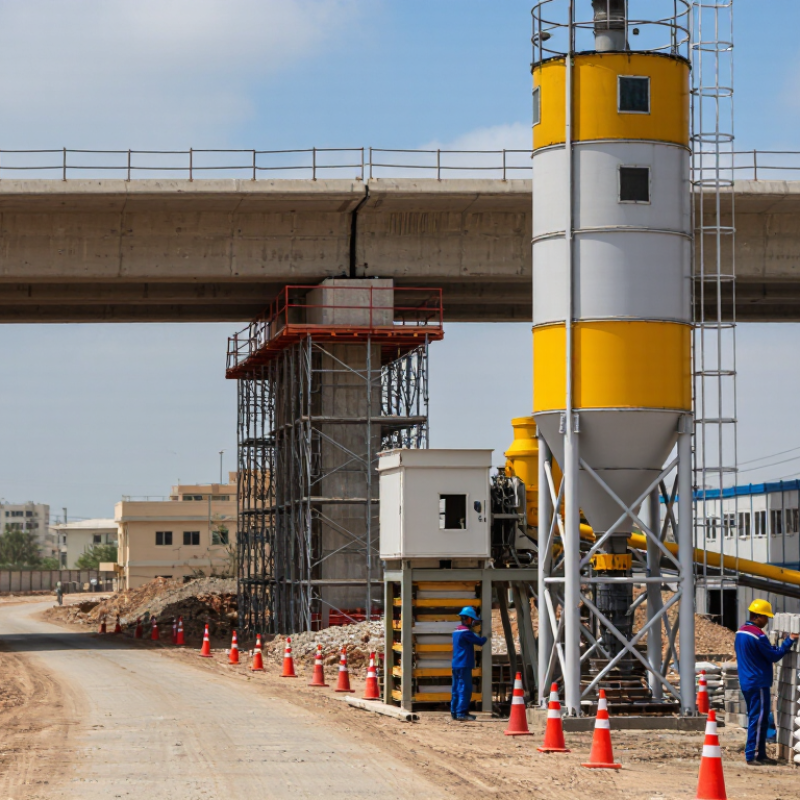
Why Choose a Vertical Concrete Mixer for Global Projects?
Vertical concrete mixers are best defined by batch capacity and project scale, not appearance alone. A 0.5 m³ mixer suits repair crews, rural foundations, and restricted sites. A 1 m³ batch supports small commercial work and steady daily placement. Units from 2–3 m³ fit larger foundations, precast yards, and infrastructure projects with reliable aggregate supply.
Capacity figures can mislead.
Actual output falls when materials arrive unevenly, moisture changes, or workers load manually. A 3 m³ mixer is not automatically the better choice. Site access, power stability, discharge distance, and cleaning time often matter more than maximum volume. A practical selection should compare usable batches per hour, not brochure capacity. Concrete quality also depends on repeatable mixing and controlled water addition.
The International Energy Agency reports that cement production creates about 7% of global carbon dioxide emissions. The 2023 Global Status Report for Buildings and Construction records 37% of global energy and process emissions from the building sector in 2022. These figures make material efficiency important. A vertical mixer can reduce overproduction when its batch size matches daily demand, especially on remote projects. The decision still requires testing. Local aggregate shape, climate, and operator skill can change results. A smaller mixer may sometimes deliver more consistent work.
A vertical concrete mixer can make global projects more predictable. Its mixing action lifts and folds material through the drum, helping distribute cement, water, and aggregates evenly. In controlled trials, workable batches may finish in 60 to 120 seconds. The shorter cycle suits consistent materials and fast production schedules. The longer cycle gives tougher mixes more time to blend. Actual time changes with aggregate size, moisture, batch volume, and temperature. From site experience, visible uniformity matters more than a timer alone. Not every mix behaves the same.
Tips: Record each batch time. Check aggregate moisture before charging. Compare slump, texture, and discharge consistency. Use a calibrated timer and moisture meter. Test representative samples, not only the first batch.
For global concrete production, a 60-second cycle can improve output when the mix design is stable. A 120-second cycle may reduce dry pockets in dense or fiber-modified mixtures. Operators should verify results against the project specification and local quality procedures. Independent slump tests and strength samples provide stronger evidence than appearance. Batch logs also help teams adjust settings across different climates and aggregate sources. I have seen crews add time automatically, even when the mix was already uniform. That extra minute increased energy use without clear performance gains. It is a useful reminder: efficiency needs measurement, not assumption. A practical setup leaves room for adjustment.
Compare 60–120-second mixing cycles for global concrete production.
Shorter mixing cycles can increase potential production capacity. Theoretical output is calculated on the basis of one cubic metre per completed cycle: hourly output = 3,600 seconds ÷ cycle duration. Actual production will vary according to loading, discharge, cleaning, material conditions, and operating downtime.
On constrained sites, footprint often matters more than maximum output. A vertical concrete mixer uses a smaller working area than many horizontal systems. This helps crews operate beside narrow roads, foundations, or temporary structures. Measure doorways, turning space, discharge height, and clearance above the mixer. A compact machine still needs safe access for charging and cleaning. Small spaces punish poor planning.
Mobility also affects daily productivity. A towable or wheeled mixer can move between work zones without major lifting equipment. Check ground slope, surface strength, tire clearance, and transport limits before selection. On remote projects, simple movement may matter more than sophisticated controls. I have seen schedules lose hours because a mixer could not pass a muddy access lane. That detail is easy to miss.
Power demand requires equal care. Compare motor rating, starting current, voltage, phase requirements, and generator capacity. A mixer that runs well in a workshop may struggle on a weak temporary supply. Keep cables short where possible, protect connections from water, and allow room for maintenance. Diesel power may suit isolated locations, while electric power can offer cleaner indoor operation. Neither option fits every site. Production estimates also deserve honest checking; real output falls when aggregate loading, water measurement, or repositioning takes longer than expected. Test the setup before full deployment.
Aggregate moisture can change concrete quality within minutes. In different climates, sand may arrive dusty, damp, or nearly saturated. A vertical concrete mixer helps operators control this variation through thorough, upward mixing action. Keeping aggregate moisture between 3–7% supports a more stable water-cement ratio. That matters for strength, workability, and finishing performance.
Keeping aggregate moisture between 3–7% supports a more stable water-cement ratio.
From practical site experience, moisture checks should happen before batching, not after problems appear. A handheld moisture meter, regular calibration, and small trial batches can prevent costly adjustments. Still, a fixed 5% setting is not always correct. Coarse aggregate, local sand, temperature, and storage conditions all affect the result. I have seen teams trust yesterday’s reading too much. The mix then became stiff by noon.
Tips: Store aggregates on a sloped, clean surface. Check moisture at several pile locations. Adjust added water gradually, and record each batch. Clean the mixer blades daily, because hardened material can disturb mixing efficiency. Operators should also compare slump results with moisture readings. One measurement alone can mislead.
Vertical mixing is especially useful for projects using local materials with inconsistent grading. Its compact layout can support remote sites where space and maintenance resources are limited. However, good equipment cannot replace disciplined testing. Clear records, trained operators, and honest review of rejected batches build more reliable concrete production.
Global projects need measurable concrete, not attractive mixer brochures. A vertical concrete mixer supports controlled batching in compact, demanding sites. Its real value appears when output is verified against recognized standards. The USGS Mineral Commodity Summaries 2024 estimated global cement production at 4.1 billion metric tons in 2023. That scale makes small quality deviations expensive. I have learned that a smooth-looking mix proves almost nothing. Water, aggregate moisture, and mixing time can quietly change performance.
Under EN 206, teams should document strength class, exposure class, consistency, constituent materials, and production conformity. Fresh concrete testing can follow EN 12350, while hardened strength verification follows EN 12390. For ASTM projects, ASTM C94/C94M emphasizes agreed proportions, delivery records, slump, temperature, air content, and strength compliance. ASTM C138/C138M can verify unit weight and actual yield. ASTM C143/C143M checks slump, but slump alone cannot confirm strength. Testing must match the specification and project risk.
The GCCA 2050 Net Zero Roadmap describes concrete use at roughly 14 billion cubic metres annually. A vertical mixer may improve repeatability, yet its rated capacity is not verified project output. Measure loaded volume, mixing time, discharge losses, and rejected batches. Field records matter. The uncomfortable point is simple: theoretical capacity often looks better than site performance. Weather, operator technique, and delayed testing can expose that gap. Teams should review those failures honestly, then adjust batching intervals and quality controls.
| Data Dimension | EN 206 Consideration | ASTM C94/C94M Consideration | Vertical Mixer Verification Method | Illustrative Project Data | Result |
|---|---|---|---|---|---|
| Production capacity | EN 206 requires production conformity and consistent concrete properties; it does not prescribe a universal mixer capacity or hourly output. | ASTM C94/C94M addresses ready-mixed concrete production and delivery requirements rather than prescribing a specific mixer size. | Record batch volume, complete cycle time, and effective operating factor. Calculate: hourly output = batch volume × cycles per hour × utilization. | 1.00 m³ batch; 8-minute cycle; 7.5 theoretical cycles/hour; 80% utilization; calculated output: 6.0 m³/hour. | Verify on site |
| Batch volume accuracy | Accurate proportioning is necessary to achieve the specified concrete composition and conformity requirements. | Materials must be measured and proportioned so the delivered concrete complies with the specified mixture and applicable tolerances. | Compare calibrated load-cell or weighing-system readings with certified test weights and the approved mix design before production. | Target cement: 360 kg/batch; target water: 180 kg/batch; target water-to-cement ratio: 0.50. | Control point |
| Concrete strength class | Strength classes use designation such as C30/37, representing characteristic cylinder and cube compressive strengths in MPa. | ASTM C94/C94M requires compliance with the purchaser’s specified strength and testing requirements; strength acceptance is normally linked to ASTM C39/C39M testing. | Prepare and cure specimens according to the applicable test method. Review 7-day and 28-day compressive-strength results against the project specification. | Specified class: C30/37; illustrative 28-day results: 32 MPa cylinder average and 40 MPa cube average. | Test required |
| Workability and slump | Slump classes include S1 through S5; S3 corresponds to a slump range of 100–150 mm when slump classification is used. | Slump is measured in accordance with ASTM C143/C143M. ASTM C94/C94M applies the specified slump and the relevant acceptance tolerances. | Test the first load, routine loads, and any load adjusted with water or admixture. Record sampling time, batch number, and measured slump. | Specified slump: 125 mm; measured values in three checks: 118 mm, 126 mm, and 132 mm. | Within S3 range |
| Mixing uniformity | Concrete must be uniform and conform to the specified composition and performance requirements throughout production. | ASTM C94/C94M includes uniformity provisions for centrally mixed and truck-mixed concrete, evaluated using representative samples from a batch. | Use a validated mixing time and compare samples taken from the beginning and end of discharge for slump, air content, and coarse aggregate distribution. | Validated mixing time: 120 seconds after all materials enter the mixing chamber; two-point slump difference: 10 mm. | Validate locally |
| Air content | Air content is selected according to the concrete specification, exposure conditions, and required durability performance. | Air content is commonly measured using ASTM C231/C231M or ASTM C173/C173M, depending on aggregate characteristics and the project specification. | Measure air content on representative samples and maintain the result within the specified project range after mixing and any permitted adjustments. | Specified air content: 5.0% ± 1.5%; illustrative readings: 4.8%, 5.2%, and 5.6%. | Specification dependent |
| Water addition control | Additional water can change the designed water-to-cement ratio and may affect strength, durability, and conformity. | ASTM C94/C94M permits controlled adjustments under specified conditions, with documentation and remixing requirements before discharge. | Lock or record water dosing, document every adjustment, remix for the validated time, and retest slump when required. | Design water: 180 kg/m³; maximum approved water: 180 kg/m³; unplanned additions: 0 kg in the trial batch. | Controlled |
| Discharge and delivery time | EN 206 requires conformity of fresh concrete at the point of delivery or use, according to the applicable specification and execution conditions. | ASTM C94/C94M contains requirements for delivery, discharge, and time limits; the applicable edition and purchase specification must be checked for the project. | Record loading, arrival, discharge start, discharge completion, and any permitted adjustment times for every batch. | Illustrative cycle record: loading 08:00; discharge begins 08:08; discharge completed 08:13; total cycle: 13 minutes. | Documented |
| Temperature management | Concrete temperature and temperature development must be managed when required by the specification, weather, mass-concrete design, or durability provisions. | ASTM C94/C94M includes temperature requirements when specified by the purchaser; measurement is commonly performed using ASTM C1064/C1064M. | Measure fresh concrete temperature at discharge and record ambient temperature, mixing-water temperature, and aggregate condition. | Illustrative fresh-concrete temperature: 27°C; project acceptance limit: 32°C maximum. | Below limit |
| Vertical mixer configuration | EN 206 does not mandate a horizontal or vertical mixer. The equipment must produce uniform concrete that meets the specified performance requirements. | ASTM C94/C94M focuses on concrete compliance, mixing, and delivery performance rather than a particular mixer geometry. | Verify mixing uniformity, discharge completeness, clean-out performance, and repeatability under the actual aggregate, moisture, and admixture conditions. | Illustrative configuration: vertical mixing chamber with bottom discharge; residual material after clean-out: less than 1% of batch mass. | Performance based |
| Moisture compensation | Aggregate moisture must be considered so that the effective water content and designed proportions remain consistent. | Accurate aggregate and water measurement supports compliance with the approved mixture and specified fresh-concrete properties. | Measure aggregate moisture at least at the start of each shift and after significant weather changes; automatically adjust batch water where possible. | Coarse aggregate moisture: 1.2%; fine aggregate moisture: 5.5%; calculated water correction: −14 kg/m³. | Adjusted |
| Traceability and records | Production-control records should support conformity assessment, identification of materials, and investigation of nonconforming concrete. | Delivery documentation should identify the mixture, quantity, time information, and relevant test or adjustment details required by the purchase specification. | Generate a batch record containing mix code, material masses, moisture corrections, admixture dosage, mixing time, slump, temperature, and operator approval. | Illustrative record completeness: 12 of 12 required fields captured for each batch. | Complete |
| Important: The numerical values in this table are an illustrative verification dataset for a 1.00 m³ production example, not universal acceptance limits. Final compliance must be confirmed against the applicable edition of EN 206, ASTM C94/C94M, referenced test methods, national provisions, and the project-specific concrete specification. | |||||