X

Partner Login

Enter your username and password here on order to log in on the partner portal:

No registered partner yet?

Register now

Why Choose an Electromagnetic Device for Industrial Use?

Choosing an Electromagnetic Device for industrial use is a decision about control, safety, and long-term performance. These devices convert electrical energy into precise motion, force, sensing, or switching. They operate inside conveyor systems, robotic arms, lifting equipment, pumps, and automated production lines. A suitable unit can deliver repeatable movement while reducing mechanical wear and maintenance interruptions. The wrong choice can produce heat, noise, vibration, and unexpected downtime.

Michael Faraday once wrote, “Nothing is too wonderful to be true, if it be consistent with the laws of nature.” His observation still guides electromagnetic engineering. A modern Electromagnetic Device must respect measurable limits. Engineers review voltage, current, duty cycle, magnetic force, temperature rise, enclosure protection, and response time. They also examine installation conditions. Dust, moisture, steel structures, and nearby motors can affect performance. Small details matter.

Real experience often reveals what a data sheet misses. A technician may find a coil running hotter than expected after eight hours. A sensor may lose accuracy beside a powerful motor. Testing under actual load is essential. Compliance with applicable industrial standards should also be verified by qualified professionals. Reliable suppliers provide traceable test results, clear specifications, and replacement guidance. Still, no device is perfect. Efficiency may decline with age. Noise may remain higher than expected. Engineers should record these limitations rather than hide them. Careful selection creates a safer, more predictable industrial system.
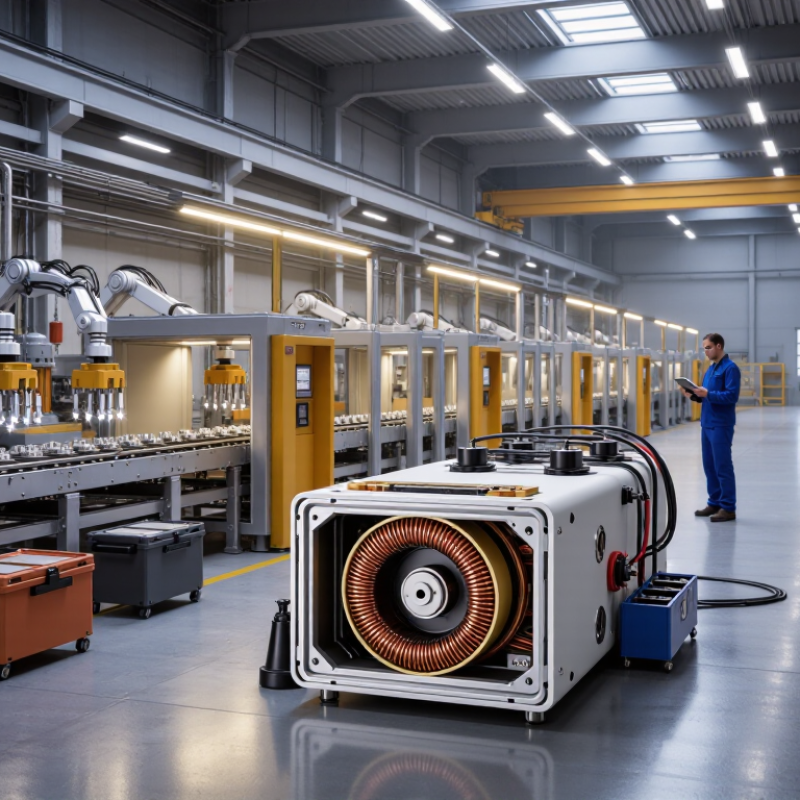
Why Choose an Electromagnetic Device for Industrial Use?

What Is an Electromagnetic Device?

Why Choose an Electromagnetic Device for Industrial Use?

What Is an Electromagnetic Device?

An electromagnetic device uses electricity to create or control magnetic force. This force can move, hold, switch, lift, or regulate mechanical parts. Common examples include solenoids, relays, magnetic brakes, lifting magnets, and contactors.

Inside a solenoid, an energized coil produces a magnetic field. The field pulls a metal plunger through a short, controlled distance. In a factory, this action may open a valve, lock a guard, or activate a machine cycle. Relays use the same principle to control one circuit with another. This separation can improve operational safety and simplify control systems.

Industrial users value these devices because they offer fast response and repeatable movement. They also fit many demanding environments. However, performance depends on voltage stability, heat control, alignment, and correct sizing. I have seen small installation details matter more than expected. A loose connection can create heat, noise, and unreliable switching. No device is perfect.

Tips: Check the rated voltage before installation. Keep coils within their approved temperature range. Inspect terminals for discoloration or looseness. Protect the device from dust, moisture, and excessive vibration when necessary. A simple maintenance record can reveal gradual changes before they cause downtime. When selecting a unit, review its force, duty cycle, response time, and enclosure rating with a qualified engineer.

How Electromagnetic Devices Work in Industrial Systems

An electromagnetic device converts electrical energy into controlled mechanical movement. When current passes through a coil, it creates a magnetic field around the windings. An iron core strengthens that field. The resulting force pulls an armature, opens a contact, moves a valve, or holds a load in position.

In industrial systems, this action happens repeatedly and precisely. A relay uses magnetic movement to switch a separate circuit. A solenoid changes electrical signals into short linear strokes. Electromagnetic brakes create holding force when a machine must stop quickly. In motors, changing magnetic fields interact with permanent magnets or other coils, producing continuous rotation. Control panels usually combine these devices with sensors, timers, and protective circuits.

Installation details strongly affect performance. Dust can restrict movement. Heat increases coil resistance and may shorten insulation life. Incorrect voltage can cause weak operation, noise, or overheating. Technicians should check current draw, response time, wiring tightness, and surface temperature during scheduled inspections. A basic multimeter helps, but it cannot reveal every mechanical fault. No system is perfect.

A practical concern is failure behavior. Some devices release their load when power disappears, while others hold it. Engineers must match this behavior with the machine’s safety needs. Real-world testing also matters. A design may work well on a clean test bench but respond differently beside vibration, moisture, and frequent switching.

How Electromagnetic Devices Work in Industrial Systems

This waveform shows the relationship between normalized magnetic flux and induced voltage in an ideal electromagnetic circuit operating at 50 Hz. Magnetic flux changes continuously with the alternating current, enabling industrial motors, transformers, relays, contactors, and solenoid systems to transmit energy or produce controlled motion.

One 50 Hz cycle lasts 20 milliseconds. The 90-degree phase difference illustrates Faraday’s law: induced voltage is proportional to the rate of change of magnetic flux.

Key Benefits of Electromagnetic Operation

Electromagnetic operation converts electrical energy into controlled motion, force, or switching. In a factory, that may mean a solenoid moving a valve stem within milliseconds, or a relay opening a circuit without mechanical leverage. The response feels immediate.

This matters where timing and repeatability shape production quality. The International Energy Agency reports that electric motor systems consume nearly half of global electricity. Industry uses about 70% of that motor-related electricity. Electromagnetic equipment can support efficient control when matched with suitable drives, duty cycles, and power ratings. It also reduces dependence on compressed air in selected applications. That can remove leaks, compressor noise, and hidden maintenance costs. The U.S. Department of Energy recommends system-level motor assessments because equipment efficiency alone can mislead.

Operators often notice practical benefits first. A clean enclosure protects the actuator from oil mist and metal dust. A diagnostic signal can reveal coil overheating before a line stops. With fewer lubricated contact points, routine servicing may become simpler. However, the improvement is not automatic. Poor sizing can cause heat, buzzing, slow release, or premature coil failure. Electromagnetic fields may also interfere with nearby sensors. Engineers should check response time, insulation class, thermal limits, ingress protection, and failure behavior. I have seen “maintenance-free” claims become maintenance surprises. Design reviews should include real load data, not catalogue optimism. Reliability grows from measured current, controlled temperature, and documented testing.

Why Choose an Electromagnetic Device for Industrial Use? - Key Benefits of Electromagnetic Operation

Evaluation Dimension Typical Electromagnetic Performance Industrial Benefit Typical Applications
Response Time Approximately 5–100 ms, depending on coil size, voltage, stroke, and load Enables rapid switching, positioning, clamping, and release operations Valves, relays, locking mechanisms, sorting equipment
Control Precision Force and motion can be adjusted through current, voltage, pulse-width modulation, or closed-loop control Supports repeatable positioning and adjustable operating profiles Robotic tooling, precision feeders, automated inspection systems
Force Density Compact devices can generate substantial linear or holding force over a short stroke Reduces actuator footprint where installation space is limited Compact clamps, latches, brakes, indexing units
Energy Use Power consumption is commonly concentrated during actuation; holding power can be reduced with latching or current-control designs Can lower operating energy in intermittent-duty applications Material handling, access control, process switching
Maintenance Requirement Typically low; many units have few moving parts and require no hydraulic fluid or compressed-air supply Simplifies preventive maintenance and reduces auxiliary system requirements Packaging lines, conveyor systems, automated machinery
Installation Infrastructure Requires a compatible electrical supply and suitable switching or control hardware Avoids compressors, pumps, pipework, reservoirs, and fluid lines in many installations Retrofitted automation, decentralized machine controls
Noise and Cleanliness No exhaust air or hydraulic-fluid discharge; operating noise depends mainly on impact, vibration, and switching frequency Suitable for clean production areas and applications where pneumatic exhaust noise is undesirable Laboratory equipment, electronics assembly, food-packaging machinery
Operating Environment Available in enclosed designs with ingress protection selected for dust, moisture, temperature, and vibration conditions Allows configuration for indoor, outdoor, and demanding industrial environments Machine tools, outdoor enclosures, process equipment
Fail-Safe Design Options Spring-return, normally open, normally closed, and magnetic latching configurations are available Supports defined behavior during power loss or emergency shutdown Safety interlocks, emergency release systems, industrial brakes
Integration with Automation Compatible with relays, programmable logic controllers, motor drives, sensors, and industrial communication systems through suitable interfaces Simplifies system synchronization, diagnostics, and remote control Smart factories, assembly cells, warehouse automation
Design Considerations Force decreases as the air gap increases; continuous-duty heating, duty cycle, voltage tolerance, and thermal management must be evaluated Proper sizing improves reliability, service life, and energy performance All applications requiring controlled electromagnetic actuation

Note: Performance values are typical engineering ranges and may vary with actuator geometry, stroke, load, supply voltage, duty cycle, thermal conditions, and control method. Final selection should be based on the manufacturer's technical specifications and application requirements.

Industrial Applications and Equipment Compatibility

An electromagnetic device can support demanding industrial work when its operating conditions match the equipment around it. In factories, these devices control valves, engage brakes, switch circuits, move actuators, and separate metal parts from production streams. They are also used in conveyor systems, packaging machines, lifting equipment, and automated inspection lines. Each application creates different electrical and mechanical demands.

Compatibility starts with voltage, current, response time, and duty cycle. A coil designed for intermittent use may overheat during continuous operation. Mounting space matters too. Nearby motors can create vibration, heat, or magnetic interference. During equipment checks, I compare terminal layout, insulation ratings, connector type, and control signals. A device may fit physically but still fail through poor PLC communication or unsuitable switching protection. Small details matter.

Field testing remains essential. I usually check temperature rise after repeated cycles, listen for unusual noise, and inspect movement under real load. A clean workshop test can hide problems found near dust, oil mist, or rapid vibration. This is where selection becomes less certain. Engineers sometimes trust nominal specifications too quickly. I have made that mistake. Retesting with actual cables, mounting brackets, and control timing often reveals better choices. Maintenance teams should also consider access, replacement time, and inspection records, not only initial performance. Safety interlocks and documented testing help keep the installation reliable.

Safety, Maintenance, and Selection Considerations

Industrial electromagnetic devices can improve lifting, switching, clamping, and automated control. Their value depends on safe selection, not magnetic strength alone. The International Labour Organization and World Health Organization estimated 2.93 million work-related deaths globally in 2019. That figure reinforces a practical point: energy control deserves attention before installation.

A safer device includes thermal protection, suitable insulation, and a defined response to power loss. For lifting applications, engineers should check rated load, air gaps, surface condition, and residual magnetism. A rough steel plate may reduce holding force sharply. Pinch points also remain dangerous, even when the device looks compact. IEC 60204-1 supports electrical equipment safety for machinery, while ISO 12100 guides hazard identification and risk reduction. These standards help, but they do not replace site-specific testing.

Maintenance teams should inspect coils, terminals, seals, cables, and mounting bolts. Dust can block cooling paths. Moisture can damage insulation. NFPA 70B emphasizes documented electrical maintenance, condition checks, and qualified personnel. The U.S. Bureau of Labor Statistics recorded 5,283 fatal work injuries in 2023, showing why routine controls cannot be treated as paperwork. Selection should match duty cycle, voltage variation, ambient temperature, ingress protection, and electromagnetic compatibility. A catalogue match may still be wrong. Test the worst case, including low voltage, unexpected restart, and a dirty operating area.