X

Partner Login

Enter your username and password here on order to log in on the partner portal:

No registered partner yet?

Register now

Why Choose a CNC Panel Bender for Your Business?

Choosing a Cnc Panel Bender is more than a decision about bending speed. It affects repeatability, labor needs, floor-space use, and the range of parts a shop can handle. On a busy line, fewer manual repositioning steps can support steadier output and reduce operator strain. Small details matter. The machine’s tooling, control system, and capacity must match the materials and panel sizes you actually process.

Automation is not a cure-all. A bender may improve consistency, yet poorly prepared programs or unsuitable tooling can still cause delays and rework. Consider a cabinet panel with several flanges: accurate positioning can help produce uniform bends across a batch, but the first setup still needs careful checking. Ask how changeovers work, what training operators receive, and how maintenance is supported. These practical questions often reveal more than a headline speed rating.

This article explores why businesses choose a Cnc Panel Bender, what benefits are realistic, and which trade-offs deserve attention. It also looks at production volume, part variety, integration, and long-term operating costs. A high-output shop may value automation differently from a small workshop handling frequent custom jobs. There is no perfect machine for every operation. The useful choice is the one that fits your parts, people, and production plans—with enough flexibility for the work you have not yet considered.
Why Choose a CNC Panel Bender for Your Business?

What a CNC Panel Bender Does in Sheet Metal Manufacturing

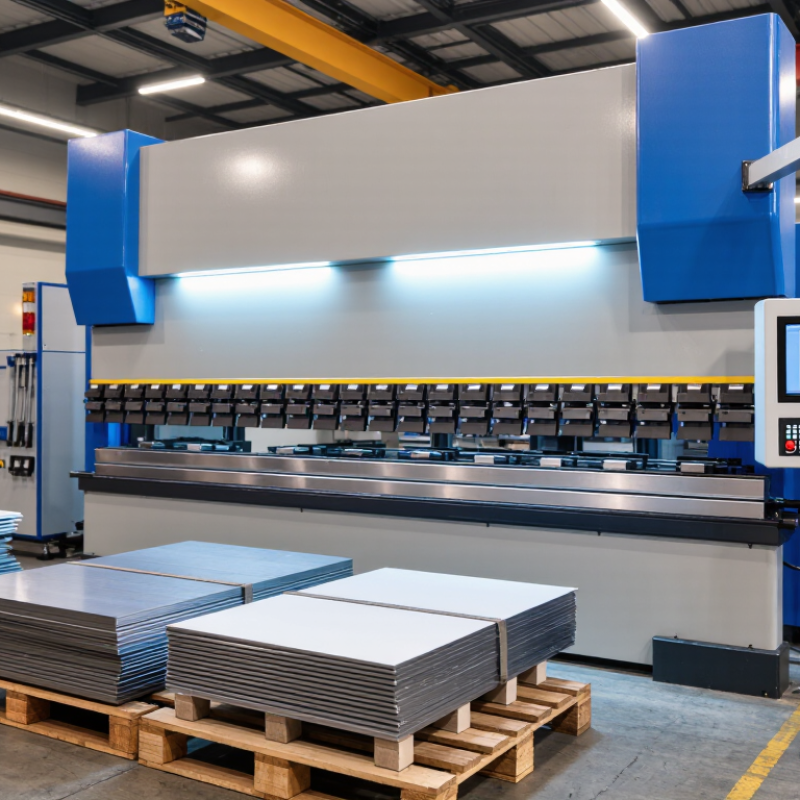
A CNC panel bender turns a flat sheet-metal blank into a formed part through programmed, controlled bends. The operator loads a part file, checks material and tooling, then positions the blank against the machine’s gauges. Clamps hold the panel while bending blades form flanges, often in different directions without manually flipping the sheet. Think of an electrical enclosure: its sides and return edges can be formed in sequence, keeping the panel supported and reducing repeated handling. That sequence matters. The controller helps repeat bend positions, but material springback and blank quality still affect the result.

In practice, a panel bender is most useful when parts have repeatable geometries and production volumes justify setup time. Short runs may be less straightforward. Setup still matters. Operators need to verify sheet thickness, grain direction, flange dimensions, and tool clearance before trusting a program.

Deloitte’s 2024 Smart Manufacturing Survey found that 86% of surveyed manufacturing executives viewed smart-manufacturing solutions as a competitiveness driver over the next five years.

That is industry context, not proof of a panel bender’s return on investment. Compare actual cycle times, scrap, labor, and changeover effort against your current process. A well-programmed machine can be precise; a poorly checked blank can still derail the shift.

How CNC Folding Controls Bend Sequence, Tooling, and Part Geometry

Why Choose a CNC Panel Bender for Your Business?

How CNC Folding Controls Bend Sequence, Tooling, and Part Geometry

A CNC panel bender links each bend to a programmed sequence, tool setup, and part dimension. The operator enters the drawing data, checks the blank, and confirms the intended flange direction. The controller then coordinates the folding blades and clamping tools around the part. On a cabinet side, for example, a narrow return flange may need bending before a deeper wall blocks tool access. Sequence matters. A well-planned cycle can reduce manual handling and keep repeat parts consistent. Still, incorrect measurements or a poorly positioned blank can produce a precise bend in the wrong place.

Tooling control also affects geometry. Automatic tool positioning can help accommodate different flange lengths, while the program accounts for bend order and clearance. This is useful when one production run includes several panel sizes.

Deloitte’s 2024 Smart Manufacturing Survey found that 86% of manufacturing executives expect smart manufacturing to be a primary competitiveness driver within five years.

That finding concerns manufacturing broadly, not panel benders specifically, but it highlights the value of connected, repeatable processes. In practice, material thickness, coating, and springback still need attention. The software cannot inspect every sheet. A short test bend remains worthwhile, especially after a material change. CNC control reduces guesswork, not responsibility.

ISO 2768-1: ±0.3 mm Medium Tolerance for 30–120 mm Dimensions

Why Choose a CNC Panel Bender for Your Business?

ISO 2768-1: ±0.3 mm Medium Tolerance for 30–120 mm Dimensions

ISO 2768-1 medium class allows ±0.3 mm for linear dimensions over 30 mm and up to 120 mm, when drawings specify no individual tolerance. This gives designers and fabricators a useful shared reference. It does not mean every bend or finished part automatically meets ±0.3 mm. Bend geometry, material thickness, and measurement methods still matter. Check critical dimensions directly on the drawing.

A CNC panel bender can help produce repeatable flanges across a batch, reducing variation from manual handling. Yet repeatability depends on setup, material consistency, and regular machine checks. A 90 mm flange, for example, may fall within the standard’s range, but the formed edge can still shift with springback. Not automatically. One easy mistake is treating the tolerance table as a guarantee. Inspect a first-off part before running the full order.

How Automation Affects Setup Time, Handling, and Production Throughput

Why Choose a CNC Panel Bender for Your Business?

How Automation Affects Setup Time, Handling, and Production Throughput

A CNC panel bender can shorten setup by automating tool positioning and bend sequences. Operators spend less time adjusting stops between jobs. For repeat orders, saved minutes can add up across a shift. Handling may improve too: a support table or automated arm can steady a large blank and reduce awkward repositioning. That matters when a cabinet side or appliance panel is wide and thin. Still, automation does not remove every pause. Small batches still matter.

Tips: Record setup time, handling steps, and good parts per hour before changing equipment. Compare the same parts and staffing levels afterward. Check scrap and rework as well; speed alone can hide problems.

Throughput depends on more than the machine. Consistent blanks, accurate drawings, and a clear job sequence help keep it running. It is tempting to assume automation will fix a messy workflow. That assumption deserves a check. If parts arrive late or vary in size, the bender may wait or need extra adjustments. Review a typical week, including changeovers and material handling, before estimating gains. A short trial with common parts can reveal where time is truly saved—and where expectations need revising.

How to Assess Business Value Using Cycle Time, Labor, Scrap, and OEE

Why Choose a CNC Panel Bender for Your Business?

A CNC panel bender can shorten forming time, but its value depends on the whole production cell. Compare actual minutes per finished part, not machine cycle time alone. Include loading, tool changes, programming, inspection, and waiting for the next operation. A formed panel may exit quickly, while poor material flow leaves it waiting beside the machine.

Track labor hours, scrap, and OEE before and after installation. OEE combines availability, performance, and quality; a stoppage or rejected bend reduces the total. Record scrap by cause, such as wrong blank size or springback, rather than assuming automation removes every defect.

The Deloitte and Manufacturing Institute 2024 workforce report estimates that U.S. manufacturing may need 3.8 million workers by 2033, with 1.9 million jobs at risk of going unfilled.

That makes labor capacity worth measuring, not merely counting headcount. Real parts matter.

Build a business case from a representative product mix: daily good parts, changeover time, rework, and operator hours. Compare the result with current equipment and include training, maintenance, and programming effort. A spreadsheet can look convincing. Then one awkward panel or long changeover can undo the estimate. Pilot the process, keep the assumptions visible, and revisit the figures after production settles.