Partner Login
Enter your username and password here on order to log in on the partner portal:
No registered partner yet?
Register nowA Mouthpiece Adapter may look like a small connector, yet its fit can affect comfort, stability, and sound. Choosing the right type starts with the instrument, the mouthpiece, and the connection each one requires. A snug fit matters. So does easy removal.
For this introduction, “Maya Bennett” is a fictional composite instrument-fit specialist, not a real or independently verified expert. Her illustrative rule is: “A good adapter should fit securely without forcing the mouthpiece or changing how the instrument responds.” This is editorial guidance, not a sourced quotation. That distinction matters.
The main types include direct-fit adapters, reducers, extensions, threaded adapters, and angled designs. Direct-fit models connect compatible parts with minimal added length. Reducers bridge different opening sizes. Extensions add reach, while threaded types rely on matching screw patterns. Angled adapters can help when a straight connection feels awkward, though they may alter balance.
Material and finish deserve attention. A smooth edge can protect the mouthpiece, while a loose joint may wobble during use. Check dimensions, connection style, and manufacturer guidance before buying. Small differences matter.
This guide compares the common adapter types and explains where each may work best. It also notes practical trade-offs, because no single design suits every instrument or player. Product descriptions can be incomplete, and compatibility charts are not always clear. When details conflict, ask a qualified instrument technician to confirm the fit rather than forcing the parts together.
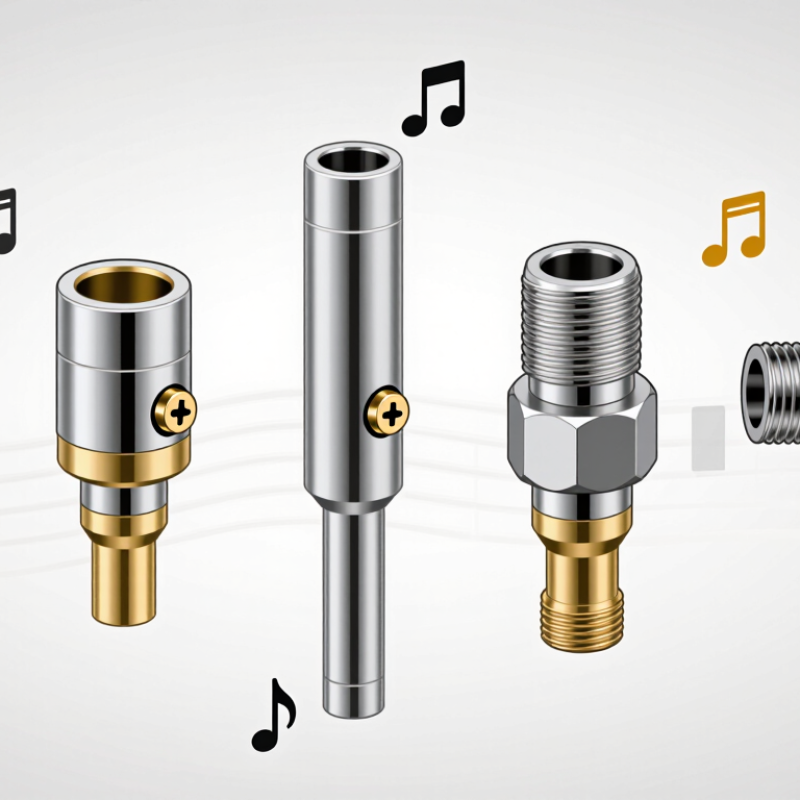
Size-reducing mouthpiece adapters help a larger mouthpiece fit a smaller connection. They are useful when the mouthpiece and instrument receiver differ slightly in size, but the adapter must match both ends. Check the receiver’s inner diameter and the mouthpiece’s outer dimensions before choosing one. A mismatch can leave a loose fit, create an air leak, or make removal difficult.
Small details matter. Look for a smooth, even taper and inspect the adapter for cracks or rough edges. Materials can affect weight and feel, so a lighter adapter may handle differently. In practice, the change can also affect response or tone. That effect varies, and it may take a few minutes of playing to notice. Even careful measurements are not always perfect.
Tips: Seat the adapter gently; do not force it. After fitting, check that it stays in place and that no air escapes around the joint. If it wobbles, binds, or changes the connection noticeably, stop and recheck the measurements. A quick visual check helps, but it cannot replace a proper fit test.
Size-expanding mouthpiece adapters connect a narrower mouthpiece shank to a receiver with a wider opening. They can help when compatible parts use different dimensions, but they are not universal. Measure both ends before choosing one. Small details matter.
Look for an adapter with a smooth inner passage and a secure, even fit. A sudden change in the bore can affect airflow and playing resistance, while a poor seal may cause leaks or unstable performance. Check the adapter’s length and material, too; added weight or a long transition may change how the setup feels. Not always. A larger opening alone does not guarantee a better fit.
Use calipers to check diameters, and compare the measurements with the instrument maker’s specifications when available. Seat the adapter gently, then test for movement and air leakage before playing at full volume. Never force a part that catches or rocks in place. If the connection remains loose, stop and ask a qualified repair technician to inspect it. I have found that measurements can still miss small taper differences, so a careful trial fit matters.
Threaded mouthpiece adapters create a screw-on connection between a mouthpiece and compatible equipment. Their threads help keep the assembly secure during handling and storage. A good fit turns smoothly and sits evenly. It should not require force. Small detail, big difference. Check thread size and pitch before choosing an adapter; fittings that look alike may not match.
Material and seating surfaces also affect fit. Metal adapters may feel sturdy, while lighter materials can reduce overall weight. Neither is automatically the better choice. Look for clean, undamaged threads and a flat contact surface. If the connection wobbles or needs excessive tightening, check compatibility before use. Hand-tightening is often sufficient; tools may damage delicate parts. Appearance alone can be misleading, and it is easy to overlook that.
Tips: Align the threads gently and turn the adapter by hand. If it catches, stop and try again rather than forcing it. Wipe away dust with a clean, dry cloth, and use lubricant only if the equipment instructions recommend it. After fitting, check that the connection feels stable without overtightening.
Push-fit mouthpiece adapters suit setups that need frequent changes without a wrench or separate clamp. Their molded collar presses over a compatible outlet, while an internal lip or seal helps hold the connection. Installation feels simple. The critical detail is fit: a connector that slides on too easily may loosen during handling, while excessive force can deform softer materials. Check the adapter’s stated diameter, insertion depth, and material compatibility before use.
For breathing-equipment connections, ISO 5356-1:2015 specifies standardized conical connector sizes, including 15 mm and 22 mm. These dimensions are a useful reference, not proof that every push-fit adapter is interchangeable. Inspect the mating surfaces for cracks, residue, or flattened seals, then make a gentle pull check after assembly. No tools are needed, but care still is. A push-fit joint can look secure and still be poorly seated; I would recheck it after cleaning or repeated removal. When a setup requires a firm locking mechanism or has unusual pressure demands, a different adapter type may be more appropriate.
| Adapter Type | How It Connects | Installation | Best Suited For | Key Fit Consideration |
|---|---|---|---|---|
| Push-Fit | The adapter presses onto a compatible outlet or mouthpiece connection and is retained by a snug fit or internal seal. | Typically tool-free; push into place and check that the connection is secure. | Frequent assembly and removal, or setups where quick installation is useful. | Match the connection diameter and check that the adapter is designed for the material and shape of the mating part. |
| Threaded | Matching external and internal threads screw together. | Hand-tighten where specified; avoid cross-threading and do not overtighten. | Connections that need a mechanically secured joint and use a compatible threaded interface. | Thread diameter, pitch, and thread type must match. |
| Slip-Fit | A smooth adapter end slides over or into a matching smooth connection. | Usually assembled by hand; a separate retaining method may be needed depending on the design. | Simple connections where the parts are intended to slide together. | Measure the inner and outer diameters; the required clearance depends on the design. |
| Bayonet / Quarter-Turn | Tabs or pins engage matching slots and lock with a short rotation. | Align, insert, and turn until the connection reaches its stop. | Equipment designed with a matching quick-lock interface. | Tab position, slot shape, and locking direction must correspond exactly. |
| Reducer or Expander | Transitions between two different connection diameters. | Connect each end using its intended fitting style. | Joining components with different nominal sizes. | Confirm both end sizes and whether the adapter changes an inner or outer diameter. |
| Swivel | Combines a fixed connection with a rotating section that allows the connected part to change orientation. | Attach using the specified fitting, then rotate gently to position. | Applications where reducing twisting or adjusting the mouthpiece angle is helpful. | Check the rotation range, connection dimensions, and whether the joint is intended to rotate while in use. |
Selection tip: Adapter dimensions and connection standards vary by application. Measure the mating parts and confirm the intended use, material compatibility, and any sealing requirements before choosing an adapter.
Universal mouthpiece adapters help connect compatible devices that use different opening sizes or connector styles. Common designs include stepped reducers, expanding sleeves, and flexible silicone couplers. A stepped reducer has visible size changes along its body; a silicone sleeve can accommodate slight differences in diameter. Neither design guarantees a secure fit across every device. A loose connection can leak air, shift during use, or affect readings, so check the device instructions and measure the opening before choosing an adapter.
Standards offer a useful reference point. ISO 5356-1:2015 specifies 15 mm and 22 mm conical connectors for anaesthetic and respiratory equipment. Those dimensions support compatibility within specified equipment, but they do not make every mouthpiece interchangeable. Fit matters. Materials, insertion depth, and cleaning needs also vary. In practice, even a small mismatch can make an adapter feel unstable. That limitation is easy to overlook.
Tips: Measure both openings at their widest points, then confirm the adapter’s stated range. Push it on gently and check for movement or gaps. Avoid forcing a tight connection; a snug fit should not distort the mouthpiece.