What is a Vacuum Oil Skimmer and How Does it Work?
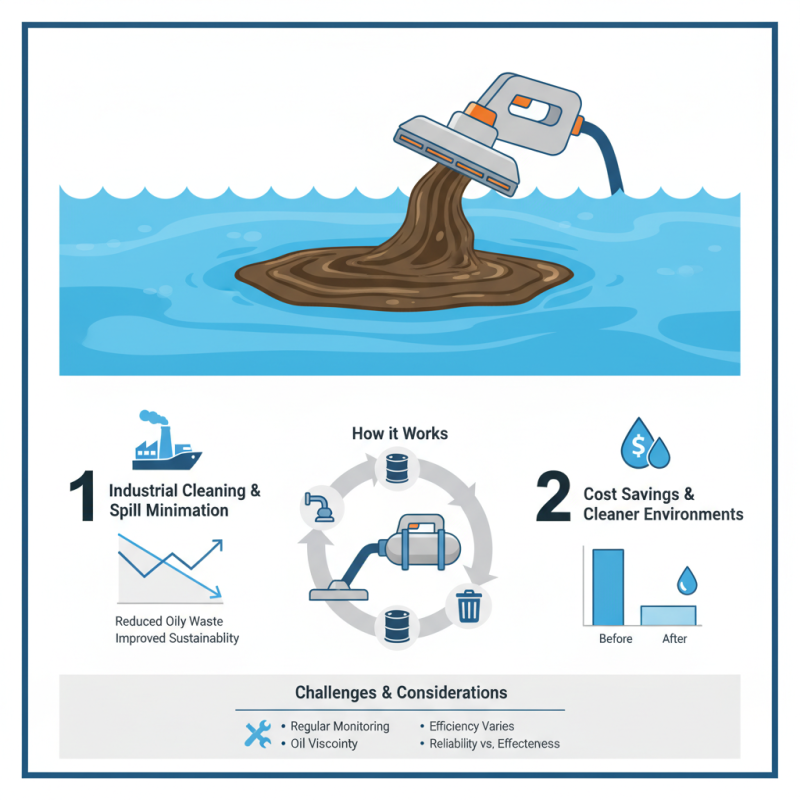
In the world of industrial cleaning, the Vacuum Oil Skimmer stands out as an essential tool. According to Dr. Emily Carter, a leading expert in environmental engineering, “The Vacuum Oil Skimmer can greatly reduce oily waste and improve sustainability.” This technology plays a crucial role in minimizing oil spills in various settings, from manufacturing plants to marinas.
Operating on the principle of suction, it effectively removes oil from water surfaces without harming the environment. The device captures and stores waste oil, making it easy to dispose of afterward. Companies using Vacuum Oil Skimmers report significant cost savings and cleaner operational environments.
However, some challenges persist. Users must monitor the device regularly to ensure optimal performance. Additionally, understanding the mechanics of oil viscosity can be complicated. While the Vacuum Oil Skimmer proves effective, its efficiency varies based on specific conditions. Balancing reliability and effectiveness remains a critical consideration for many industries.
What is a Vacuum Oil Skimmer?
A vacuum oil skimmer is an essential tool in various industrial settings. It serves to remove oil and other contaminants from water surfaces. By using a vacuum-based mechanism, this device effectively separates oil from water. Often, industries face challenges in controlling oil spills or managing oily waste. A skimmer offers a practical solution to these issues.
These devices operate by creating a vacuum that draws the contaminated liquid into a collection chamber. The oil rises to the surface, where it can be removed without disturbing the underlying water. This process not only cleans the water but also recovers valuable oil. Maintenance is crucial; many users find that regular inspections help ensure optimal performance. It's important to pay attention to the skimmer’s efficiency and adjust settings accordingly.
While vacuum oil skimmers are effective, they are not foolproof. They may struggle with certain viscosities or highly contaminated environments. Users often reflect on their experiences, seeking improvements in operational methods. Balancing efficiency with the need for thorough cleaning can be complex. Nonetheless, these devices remain a reliable option for managing oil pollution in water systems.
Principles Behind the Vacuum Oil Skimmer Operation
Vacuum oil skimmers operate on basic yet effective principles. They utilize a vacuum system to remove oil from the surface of water. By creating a vacuum, these devices draw in both water and oil. However, the challenge lies in separating the two once they are collected. This separation can often be imperfect, leading to residual oil in the water and vice versa.
The design of a vacuum oil skimmer includes a collection tank and a pump. The pump generates suction, pulling the mixture towards the tank. As it fills, gravity comes into play, supporting the oil's rise above the water level. Nevertheless, some oil may remain trapped, requiring further filtration. This can be seen as an area for improvement in design and function. Engineers continuously seek methods to enhance effectiveness, but results can vary based on conditions like water contamination levels.
Understanding the principles behind vacuum oil skimmers helps in optimizing their use. Regular maintenance is crucial. Users should reflect on their operational efficiency. This device brings a valuable tool to industries, yet it is not the perfect solution. Each skimmer's performance depends on proper usage and ongoing adjustments.
Key Components of a Vacuum Oil Skimmer
A vacuum oil skimmer is essential for removing oil from water. It uses suction to extract oil, leaving the water cleaner. Understanding its key components helps in appreciating its function.
The main part of a vacuum oil skimmer is the suction nozzle. This nozzle draws in the oily water mixture. It's designed to create a vacuum that effectively separates oil from water. The oil collected is then stored in a separate tank.
Another important feature is the filtration system. It filters out debris, ensuring only the oil is captured. However, maintenance can be challenging. Filters need regular inspection. If neglected, they can clog and reduce efficiency. Regular checks on the skimmer's condition are necessary to maintain its performance.
Applications of Vacuum Oil Skimmers in Industry
Vacuum oil skimmers are an essential tool in various industrial applications. They operate by using a vacuum system to extract oil from water or other surfaces. Commonly found in manufacturing settings, they help maintain equipment and ensure clean working environments. Industries benefit greatly by reducing waste and reusing oil.
In metalworking, vacuum oil skimmers play a critical role. They remove cutting fluids and oils from coolant tanks. This helps prolong the life of the cooling fluids and ensures the quality of the machining process. It also leads to lower disposal costs and minimizes environmental impact.
In wastewater treatment plants, these skimmers effectively separate oil from water. They help achieve cleaner effluent, which is essential for regulatory compliance. However, not all systems are perfect. Proper maintenance is key to ensuring efficiency. Regular inspections are necessary to avoid oil buildup or system failures. Cleaning the skimmer itself can be tedious but is vital for optimal performance.
Benefits of Using Vacuum Oil Skimmers for Oil Recovery
Vacuum oil skimmers are essential tools for effective oil recovery. They utilize a unique process that creates a vacuum to draw in oil from the surface of water or other liquids. This ability to separate oil from water makes them invaluable in various industries, including manufacturing and shipping. The technology behind these skimmers is straightforward yet efficient, making them an attractive option for many operations.
Using vacuum oil skimmers offers several benefits. They can recover a high percentage of oil, minimizing waste and promoting environmental sustainability. Additionally, they require minimal maintenance, which reduces operational costs. The design eliminates the need for complex machinery, simplifying the recovery process. However, operators must ensure they are well-trained in using the equipment. This can sometimes lead to human error in setup or operation, diminishing performance.
Cost-effectiveness is another notable benefit. Vacuum oil skimmers often prove cheaper than other recovery methods. Their efficiency can lead to reduced cleanup times, further saving resources. Yet, there may be challenges in adapting them to specific environments. Each setup may require evaluation to determine how effective the skimmer will be under various conditions. Understanding these nuances is crucial for maximizing their effectiveness.



 Distributors
  SDS Download
  Contact