X

Partner Login

Enter your username and password here on order to log in on the partner portal:

No registered partner yet?

Register now

What Are the Top Types of Energy Storage Connectors?

Energy storage systems rely on more than cells and control software. Their connectors carry current, manage heat, and keep high-voltage paths secure through repeated operation. “Energy storage is the key to unlocking the full potential of renewable energy,” is a principle often associated with Dr. Imre Gyuk, a longtime energy-storage specialist. The same principle puts quiet pressure on connector design: dependable storage needs dependable electrical interfaces.

This guide examines the top types of Energy Storage Connector, including busbar connections, bolted terminals, plug-in interfaces, and circular power connectors. Each has trade-offs. A bolted connection can provide a firm, serviceable joint, but installation torque matters. Plug-in connectors can speed assembly, yet contact condition and alignment deserve close attention. Busbars handle substantial current efficiently, though their layout must account for insulation, clearances, and heat. Small details matter.

A connector’s rated current is not the whole story. Engineers also check voltage, temperature rise, vibration, ingress protection, cable size, and maintenance access. The best choice depends on the battery architecture and the conditions around it. Some product comparisons make selection look simpler than it is. That deserves a second look. A connector that works well on a clean test bench may face dust, repeated mating, or limited service space in the field. The sections ahead compare common connector types and explain where each can fit, what to verify, and which practical limits are easy to overlook.
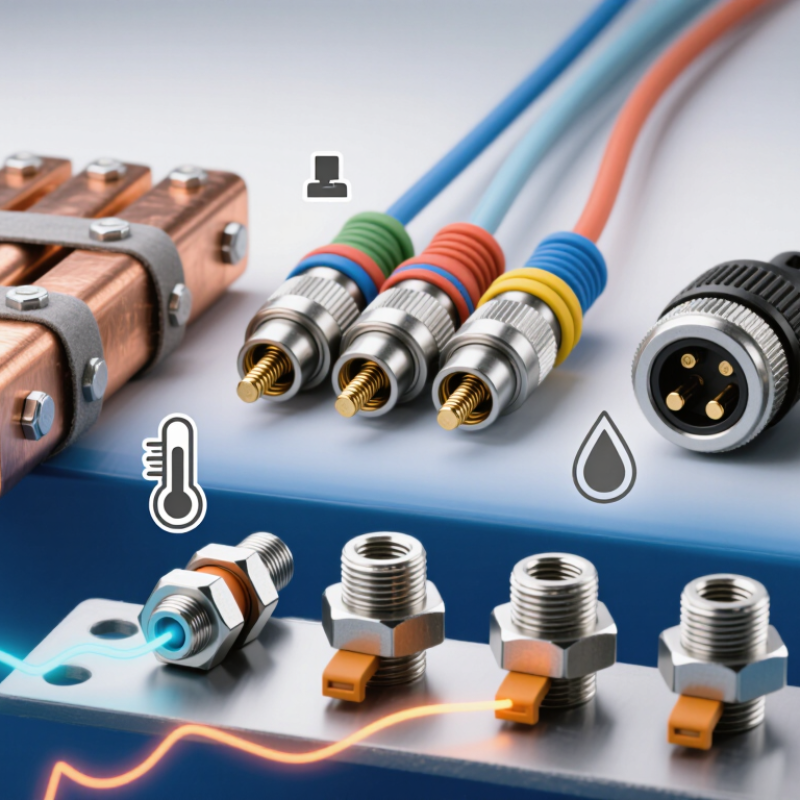
What Are the Top Types of Energy Storage Connectors?

How Energy Storage Connectors Link Cells, Modules, and Systems

Energy storage connectors link individual cells into modules, then join modules into larger battery systems. At cell level, tabs or short conductors carry current between neighboring cells. Small parts matter. A loose or poorly matched connection can create resistance, heat, and uneven performance. In many designs, cell connections are fixed during assembly, while accessible connectors are used between modules for service and replacement.

Between modules, connectors must handle the system’s expected current and voltage while fitting the enclosure and cable path. At rack level, power connectors carry energy to conversion equipment, while smaller signal connectors support monitoring and control. These paths have different jobs, so they should not be treated as interchangeable. Installers check polarity, contact condition, strain relief, and specified tightening requirements. In practice, neat wiring is not always the easiest wiring to inspect; clear labels and accessible test points help.

Tips: Match each connector to its rated current, voltage, temperature, and environment. Check for secure engagement and damaged contacts before commissioning. Follow the system documentation, and have qualified personnel verify connections.

What Are the Top Types of Energy Storage Connectors?

Energy storage connectors link cells, modules, racks, and system buses. Common connection types include cell-to-cell tabs or busbars, module interconnects, high-current separable connectors, and high-voltage cable connectors.

Illustrative nominal DC voltage examples: an LFP cell is typically about 3.2 V; module, rack, and system voltages vary by design. These values describe the connected equipment, not connector voltage ratings.

Which Design Features Define an Energy Storage Connector?

An energy storage connector must handle high current without creating a hot spot. Its rated voltage and current should match the battery system, cable size, and expected duty cycle. Low contact resistance helps limit heat, while durable contacts resist wear from repeated mating. That margin matters. A connector that fits physically may still be poorly matched electrically.

Mechanical details matter just as much. Look for clear polarity keying, a positive locking mechanism, and touch-safe construction. Seals should suit the installation environment, whether dust, moisture, or vibration is expected.

The IEA’s 2024 report, Batteries and Secure Energy Transitions, says global storage capacity must grow sixfold to 1,500 GW by 2030 in its net-zero pathway, with batteries providing 1,200 GW. That scale makes dependable connections essential, not decorative.

A useful design also makes inspection practical. Technicians should be able to check cable entry, latch engagement, and signs of discoloration without dismantling half the enclosure. Small details count. Verify temperature-rise and endurance test results against the intended operating conditions and applicable standards.

A datasheet can look complete, yet leave installation tolerances unclear; that deserves a closer review. In practice, connectors often fail at the interface between a sound design and a rushed assembly.

What Are the Main Types of Energy Storage Connectors?

What Are the Main Types of Energy Storage Connectors?

Energy storage systems use several connector types, each suited to a different task. Cable lugs attach thick battery cables to threaded terminals or busbars. They provide a firm connection, but loose hardware can create heat under load. Plug-in high-current connectors join battery modules or connect a rack to an inverter. Their keyed housings help prevent incorrect mating. Busbar connectors carry current across multiple cells or modules, while smaller signal connectors link battery management sensors and control circuits. Small parts matter.

Tips: Match the connector to the cable size, expected current, and operating environment. Check that its voltage and temperature ratings suit the system. Keep contact surfaces clean, and follow the specified tightening method for bolted connections. A neat fit is not proof of a safe connection.

The right choice depends on where the connector sits and how often it may need servicing. A fixed indoor battery cabinet may use bolted lugs, while a modular system may benefit from accessible plug-in connections. Signal connectors need secure latches and clear pin assignments. It is easy to focus only on current capacity; vibration, moisture, and maintenance access deserve attention too. A connector can look robust and still be poorly matched to its installation.

What Are the Top Types of Energy Storage Connectors? – What Are the Main Types of Energy Storage Connectors?

Connector Type Typical Connection Common Energy Storage Uses Key Characteristics Selection Considerations
Bolted cable lug connectors Cable lug secured to a threaded stud or busbar with a nut and washer Battery terminals, inverter connections, and DC distribution links Simple, robust connection; suitable for large conductors when correctly assembled Check conductor size, lug material, stud dimensions, tightening torque, and corrosion protection
Busbar connectors Conductive bars joined by bolted or clamped interfaces Battery racks, module interconnections, and power distribution assemblies Provides a compact, low-resistance path for distributing current across multiple circuits Consider current capacity, spacing, insulation, enclosure clearances, and fault-current requirements
Plug-in high-current connectors Mating male and female contacts, often with a locking feature Removable battery modules, service connections, and equipment interfaces Enables faster connection and disconnection than a bolted joint; some designs include touch protection Verify rated voltage and current, mating cycles, locking method, polarity, and whether live mating is permitted
Flexible laminated busbar connectors Layers of conductive foil joined at terminal ends, with a flexible section between connection points Connections between battery modules, busbars, and power electronics Accommodates vibration and small movements while helping simplify tight layouts Check bend radius, joint temperature, insulation, available space, and mechanical support
Battery post or terminal connectors Clamp or terminal interface fitted directly to a battery post or terminal Battery packs and smaller stationary storage systems Provides a direct connection to battery terminals; designs vary by terminal shape and size Match the terminal geometry and material; ensure secure contact and avoid excessive tightening
Protective earth connectors Bolted lug, grounding stud, or dedicated bonding interface Battery enclosures, cabinets, racks, and inverter chassis Creates an electrical bonding path for exposed conductive parts as part of the protective grounding system Follow applicable electrical codes and equipment instructions; verify continuity and corrosion resistance
Signal and communication connectors Low-voltage contacts in a keyed or multipin connector Battery management systems, temperature sensors, and monitoring links Carries control or measurement signals rather than the main battery power current Check pinout, signal type, shielding, environmental sealing, and separation from power wiring

Connector suitability depends on the system voltage, current, environment, installation method, and applicable electrical and safety requirements. Always confirm specifications with the equipment documentation and qualified design personnel.

How Do Busbar, Cable, and Plug-In Connectors Differ?

Busbar connectors join battery modules or power units through rigid metal bars. They suit compact layouts where current is high and cable movement is limited. A flat copper bar may sit close to the enclosure wall, but its joints need accurate alignment and specified tightening torque. Space matters. Poor access can make inspection and retightening awkward.

Cable connectors use flexible conductors between components. That flexibility helps absorb vibration and route around obstacles, especially when modules are not perfectly aligned. Cable size, insulation, bend radius, and terminal quality all affect performance. A cable that is forced into a tight bend may strain its lug over time. The drawing can look tidy; the installed cable may tell a different story.

Plug-in connectors allow components to be connected or removed through a mating interface. They can simplify assembly and servicing, provided the connector is rated for the system’s voltage, current, and environment. Check contact temperature, locking features, and protection against dust or moisture. They are not automatically easier: limited clearance or repeated mating can complicate maintenance. The right choice depends on current demand, vibration, available space, and how often the system needs service. Verify ratings and installation requirements against the system design.

How to Choose a Connector for an Energy Storage System

What Are the Top Types of Energy Storage Connectors?

How to Choose a Connector for an Energy Storage System

Battery-to-busbar connections commonly use bolted lugs or flexible links, while plug-in power connectors simplify modular battery racks. Signal connectors carry temperature, voltage, and control data. Choose by function first: a power connector must handle continuous current and short-term peaks without excessive heating. Check the system’s maximum voltage, conductor size, contact resistance, and required mating cycles. Small details matter.

The International Energy Agency’s Batteries and Secure Energy Transitions report states that global battery storage additions in the power sector reached 42 GW in 2023, up 130% from 2022. That growth makes installation quality increasingly important, but the figure does not prescribe a connector type. Review the system design and manufacturer ratings.

Then consider enclosure space, vibration, moisture, dust, and whether technicians need frequent access. A connector that fits on paper may be awkward to reach behind a rack.

Tips: Compare rated current at the expected ambient temperature, not just the headline maximum. Look for clear polarity keying, secure locking, and touch-safe features. Confirm cable strain relief and inspection access. A neat datasheet is not the installation; measure the real cable route before ordering.