


 Distributors
 SDS Download
 Contact
Partner Login
Enter your username and password here on order to log in on the partner portal:
No registered partner yet?
Register nowTop 10 Spring Tensioner Types for Global Sourcing
Global sourcing demands more than comparing prices and product photos. A Spring Tensioner must maintain controlled force, fit the assembly, and survive its working environment. This guide introduces ten practical tensioner types for engineers, purchasing teams, and industrial distributors. It considers extension, compression, torsion, constant-force, automatic, manual, hydraulic, pneumatic, belt, and chain-tensioning applications. Each type serves a different mechanical purpose.
Real sourcing decisions begin with operating details. Check load range, stroke, cycle frequency, temperature, corrosion exposure, mounting space, and replacement access. A compact stainless-steel tensioner may suit food-processing equipment, while a heavy-duty automatic unit may better support a conveyor drive. Material certificates, dimensional drawings, fatigue data, and inspection records can strengthen supplier evaluation. Ask for test evidence.
Price is only one variable. Lead time, minimum order quantity, tooling ownership, packaging quality, and regional delivery capacity also affect total cost. A supplier’s catalog may look complete, yet its custom-production limits can appear later. That deserves attention. Tolerance differences can create assembly problems across factories. Sample testing remains essential, especially when sourcing from unfamiliar markets. This article’s ranking is a working reference, not a universal rule. Actual selection should follow verified specifications, application testing, and documented quality controls. Some recommendations may need revision as standards, materials, and production conditions change. Reliability is built through evidence, not confident wording.
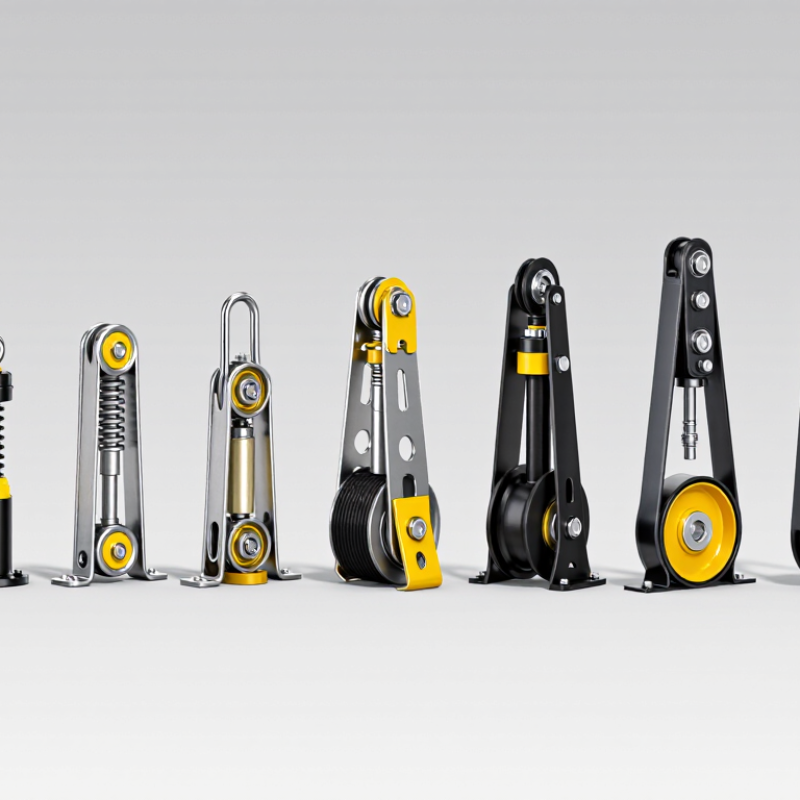
Spring Tensioners: Definition, Functions, and Core Components
Spring tensioners are mechanical devices that maintain controlled force when belts, chains, cables, or moving assemblies change length. They compensate for vibration, thermal expansion, wear, and minor installation errors. In practical sourcing, common types include compression, extension, torsion, constant-force, gas-assisted, roller, pulley, hydraulic, automatic, and adjustable tensioners. Each design serves a different load path.
A tensioner usually contains a spring element, housing, guide, pivot, fastener, and contact surface. The spring stores energy, while the guide keeps movement stable. The contact surface transfers force to a belt or chain. Material selection matters. Stainless steel resists corrosion, while carbon steel often provides higher fatigue strength at lower cost. According to the U.S. Department of Energy’s Industrial Motor Systems Market Opportunities Assessment, motor-driven systems consume about 69% of industrial electricity in the United States. Poor tension can increase friction and energy loss within these systems.
Global sourcing teams should check preload, working travel, fatigue cycles, temperature range, and permissible side load. MarketsandMarkets’ Industrial Automation Market analysis reports sustained investment in automated production equipment, increasing demand for reliable motion-control components. Yet catalog ratings can mislead. Static load is not fatigue performance. A spring may survive testing but fail after repeated misalignment. That uncomfortable detail deserves attention. Sample testing under real vibration, dust, and temperature conditions remains more reliable than a spreadsheet alone.
| No. | Tensioner Type | Definition | Primary Function | Core Components | Spring Element | Typical Applications | Key Sourcing Considerations |
|---|---|---|---|---|---|---|---|
| 1 | Automatic Pivot-Arm Belt Tensioner | A pivoting arm applies controlled spring force to an idler pulley or directly to a belt, automatically compensating for belt stretch and wear. | Maintains belt preload, reduces slip, and absorbs changes caused by temperature, vibration, and rotating-shaft movement. | Pivot arm, torsion spring, idler pulley, bearing, mounting bracket, pivot bushing, stop, and protective cover. | Torsion spring, commonly made from high-carbon or stainless spring steel. | Serpentine drives, auxiliary belt systems, conveyors, fans, pumps, and compact power-transmission assemblies. | Verify belt profile, pulley diameter, operating angle, spring torque, travel range, bearing life, and mounting-hole pattern. |
| 2 | Automatic Chain Tensioner | A spring-loaded plunger, shoe, or guide maintains pressure on a chain span without requiring frequent manual adjustment. | Controls chain slack, limits vibration, improves engagement with sprockets, and reduces noise and impact loading. | Housing, plunger or tensioning shoe, compression spring, guide surface, ratchet or check mechanism, seals, and mounting fasteners. | Compression spring; some designs combine spring force with hydraulic damping. | Timing-chain systems, roller-chain drives, agricultural machinery, packaging equipment, and industrial conveyors. | Check chain pitch, allowable travel, wear compensation, guide material, preload, temperature range, lubrication, and contamination resistance. |
| 3 | Constant-Force Spring Tensioner | A rolled strip spring provides nearly constant force over a defined extension range, typically through a drum, reel, or guided track. | Delivers stable pulling force while accommodating long travel and variable component positions. | Strip spring, reel or arbor, housing, guide roller, mounting frame, end fitting, and travel stop. | Pre-stressed flat strip spring, usually stainless steel or hardened spring steel. | Cable management, retractors, counterbalances, covers, linear equipment, and lightweight positioning mechanisms. | Specify force tolerance, extension length, cycle life, strip width and thickness, reel diameter, corrosion resistance, and safe return speed. |
| 4 | Extension-Spring Tensioner | A helical extension spring is stretched between anchor points to create a restoring force in a tensioning linkage or idler assembly. | Maintains tension in belts, cables, wires, screens, and light chain systems while allowing a practical adjustment range. | Extension spring, hooks or loops, anchor brackets, adjustment screw, linkage, and optional guide or safety cable. | Close-coiled helical extension spring with initial tension. | Light-duty conveyors, wire tensioning, screen assemblies, agricultural equipment, and general machinery. | Confirm initial tension, working extension, hook geometry, coil stress, fatigue life, corrosion protection, and secondary retention requirements. |
| 5 | Compression-Spring Plunger Tensioner | A compression spring inside a housing pushes a plunger, roller, pad, or guide against the tensioned component. | Applies a controlled outward force and compensates for dimensional variation, wear, and thermal expansion. | Body, plunger, compression spring, guide bushing, contact pad or roller, retaining ring, adjustment screw, and seal. | Helical compression spring, generally manufactured from carbon, alloy, or stainless spring steel. | Chain guides, belt guides, sliding rails, cable systems, packaging machines, and general industrial fixtures. | Evaluate force at working height, plunger stroke, buckling risk, guide clearance, wear-pad material, sealing, and replacement access. |
| 6 | Sliding-Base Spring Tensioner | A motor, gearbox, shaft support, or idler is mounted on a sliding plate that is pushed by a spring mechanism to maintain drive tension. | Provides continuous or semi-automatic adjustment for center-distance changes in belt and chain drives. | Sliding baseplate, compression springs, guide rails, adjustment stops, locking bolts, motor or idler mount, and wear plates. | Compression springs, often arranged in pairs for balanced loading. | Industrial belt drives, small conveyors, pumps, fans, compressors, and modular machinery. | Check available installation space, slide friction, spring symmetry, adjustment range, load capacity, locking method, and alignment tolerance. |
| 7 | Torsion-Bar or Torsion-Arm Tensioner | A torsion bar, shaft, or arm twists around its axis and transfers torque to an idler, guide, or tensioning lever. | Generates repeatable rotational force and supports compact tensioning layouts with controlled angular travel. | Torsion bar or shaft, lever arm, idler or guide, bushings, mounting brackets, preload adjustment, and mechanical stop. | Helical torsion spring or torsion shaft made from spring steel. | Compact belt drives, chain guides, agricultural mechanisms, office equipment, and automated handling systems. | Specify torque-angle characteristics, preload direction, angular travel, fatigue cycles, shaft retention, bushing wear, and stop strength. |
| 8 | Leaf-Spring Tensioner | A curved or flat spring strip deflects under load and presses a guide, shoe, roller, or contact surface against the moving component. | Provides simple, low-profile tensioning with useful damping and relatively low part count. | Leaf spring, formed contact shoe or roller, support bracket, fasteners, spacer, and optional wear insert. | Flat spring steel, stainless steel, or corrosion-resistant alloy strip. | Low-load chain guides, belt tracking devices, shielding systems, agricultural tools, and compact mechanisms. | Assess deflection limits, edge stress, fatigue life, contact wear, spring flatness, surface treatment, and resistance to vibration. |
| 9 | Wave-Spring Tensioner | A wave-shaped spring provides axial force in a limited space and is used to preload a guide, bearing, pulley, or sliding component. | Maintains axial preload and compensates for small clearances where a conventional coil spring would require more installation height. | Wave spring, retainer, thrust washer, guide surface, bearing or pulley, housing, and optional preload spacer. | Single-turn, multi-turn, or nested wave spring made from spring steel or stainless steel. | Compact bearing assemblies, small belt mechanisms, precision guides, actuators, and instrument equipment. | Confirm axial force, compressed height, spring travel, friction, seating surface, operating temperature, and dimensional consistency. |
| 10 | Dual-Spring Redundant Tensioner | A tensioner uses two springs or two independent force paths to improve load sharing, service continuity, or fail-safe performance. | Maintains tension if one spring loses part of its force and helps reduce uneven loading in demanding systems. | Primary and secondary springs, load-sharing arm, idler or guide, housing, retainers, stops, adjustment hardware, and safety feature. | Paired torsion, compression, extension, or constant-force springs. | Heavy-duty conveyors, safety-related guarding, lifting mechanisms, industrial automation, and high-cycle equipment. | Define load-sharing tolerance, failure mode, spring synchronization, inspection access, fatigue life, containment, and qualification testing. |
