
X

Partner Login

Enter your username and password here on order to log in on the partner portal:

No registered partner yet?

Register now

Top 10 Solar Panel Connectors Every Buyer Should Know?

As the solar energy market expands, understanding essential components becomes crucial. One such component is Solar Panel Connectors. These connectors play a vital role in ensuring efficient energy transfer between solar panels and inverters. According to a recent report by the Solar Energy Industries Association (SEIA), the U.S. solar market grew by over 20% in 2022 alone. This surge in installations highlights the importance of reliable and durable connectors.

The right connectors can significantly impact the performance of solar systems. They ensure safety and efficiency, reducing potential energy loss. However, not all connectors are created equal. Some may face issues with heat resistance or water exposure. An overlooked connector can lead to performance drops or even system failure. Awareness of top solar panel connectors can empower buyers to make informed decisions.

Understanding the differences among solar panel connectors is essential. It can lead to better investment and increased efficiency. With the right knowledge, buyers can ensure that their solar systems operate at optimal levels for years to come.
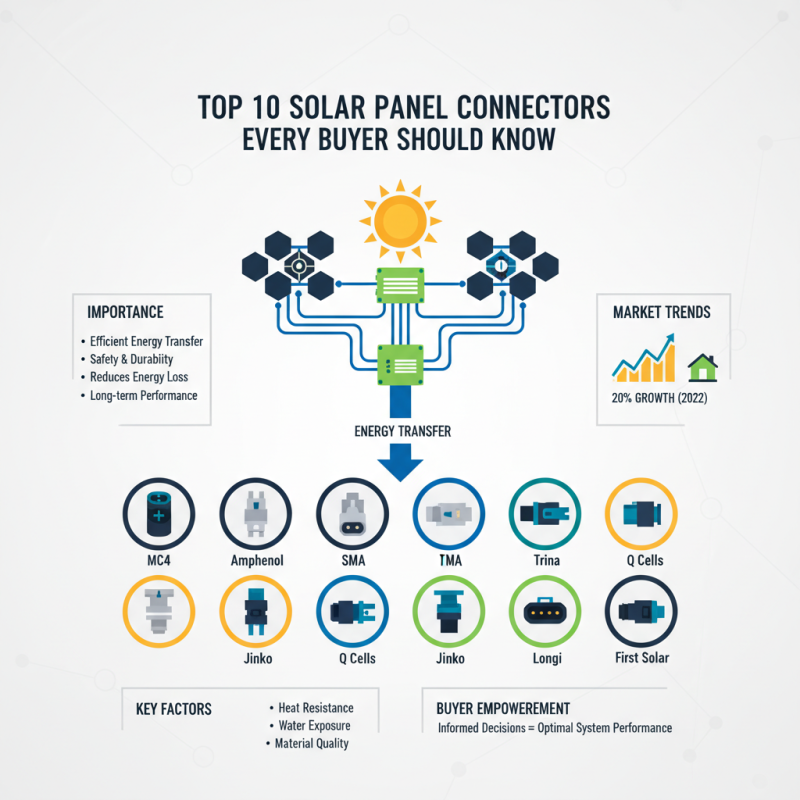
Top 10 Solar Panel Connectors Every Buyer Should Know?

Understanding Solar Panel Connectors: An Overview

Understanding solar panel connectors is essential for anyone looking to harness solar energy. These connectors play a crucial role in the efficiency and safety of solar power systems. They link solar panels to other components, ensuring that energy flows smoothly. Each type of connector has its specifications, which can affect performance. It’s easy to overlook this aspect, but proper connection is vital for longevity.

A common connector type is the MC4 connector. It's widely used due to its reliability and ease of use. However, some users might struggle with compatibility issues. Not all connectors fit every panel. Investigating detailed specifications can prevent costly mistakes. Additionally, it’s worth noting that many connectors can experience wear over time. Regular inspection is important. Deterioration can lead to energy loss or even system failure.

Connectivity standards, like IP67 ratings, indicate how resistant these connectors are to water and dust. Yet, users often confuse ratings, leading to incorrect installations. This misstep can have serious ramifications for system performance. Ultimately, being informed about solar panel connectors ensures not only a safe installation but also maximizes energy output. Therefore, thorough research and careful selection are essential steps in the process.

Types of Connectors Commonly Used in Solar Panel Installations

When considering solar panel installations, understanding the types of connectors is crucial. There are several common types used in the industry. MC4 connectors are among the most popular. They offer secure connections and are weather-resistant. Reports indicate that over 80% of solar panels utilize this type across the globe.

Then, there are T4 connectors, known for their versatility. They are suitable for various wire sizes, making them a flexible option for installers. The Solar Energy Industries Association reported that T4 connectors have increased in usage by 25% over the last few years, driven by advancements in technology and efficiency.

Another notable connector type is the H4 connector. This connector type allows for easy assembly, saving time during installation. However, the research noted a potential drawback in its compatibility with older panels. Many installers have faced challenges when integrating H4 with existing systems. This raises questions about standardization in the industry. Understanding these details can influence choice when purchasing solar equipment.

Top 10 Solar Panel Connectors Every Buyer Should Know

Connector Type Description Applications Advantages Disadvantages
MC4 Standard connector for solar panels, waterproof and durable. Used in most PV installations. Highly reliable, easy to connect and disconnect. May be harder to find parts compared to other types.
Tyco Connector system with various reliable configurations. Common in larger solar farms. Good for high current applications. May require specific tools for installation.
Amphenol Robust, versatile connector with smart features. Used in both residential and commercial systems. High quality and durability, resistant to environmental stress. Higher cost compared to standard connectors.
H4 Compact, lightweight connector designed for PV modules. Popular in residential setups. Quick to connect and disconnect. Less robust than larger connectors.
Junction Box Connectors Connectors used inside the solar panel junction box. Found in various solar panels. Protects internal connections from elements. Difficult to replace if damaged.
Solar Extension Cables Cables with connectors on both ends for extending connections. Useful for connecting distant panels. Flexible length options available. Quality may vary; choose durable options.
DC Disconnect Switch Connectors Switch connectors for safely disconnecting DC power. Essential for maintenance. Enhances safety during servicing. Requires proper installation and knowledge.
Multi-Contact Connectors Advanced connectors suitable for high performance. Used in efficient solar systems. Excellent performance in harsh conditions. Costly and complex to install.
SAE Connectors Commonly used in automotive and battery systems. Useful for solar battery systems. Easy to handle and connect. Not suitable for high voltage applications.
Anderson Connectors Modular, versatile connectors ideal for DC applications. Used in various solar setups. High current capacity and safety features. Bulkier than some alternatives.

Key Features to Consider When Choosing Solar Panel Connectors

When selecting solar panel connectors, several critical features come into play. The first consideration is the connector's electrical rating. According to industry standards, connectors should handle a minimum of 30 amps at 1000V. Higher ratings can improve performance and reliability under varying conditions. Heat resistance is another crucial factor. Connectors must withstand extreme temperatures, typically ranging from -40°C to 85°C. This ensures longevity and minimizes the risk of failure over time.

Another vital aspect is the ease of installation. Connectors should feature a simple plug-and-play design. This reduces installation time and labor costs. A study by the Solar Energy Industries Association highlights that improper connections account for nearly 5% of system failures. Therefore, user-friendly connectors are essential for maintaining system integrity.

Lastly, consider the environmental ratings of the connectors. Many products are now rated for UV resistance and IP67 waterproofing. These features provide additional peace of mind, particularly in regions subject to harsh weather. Choosing the right solar panel connectors involves careful assessment of these factors. It is crucial to prioritize quality and reliability. Without a thorough understanding, buyers may overlook important details that affect system performance.

Top 10 Solar Panel Connectors - Key Features to Consider

Best Practices for Installing and Maintaining Solar Panel Connectors

When installing solar panel connectors, attention to detail is crucial. Proper installation ensures the longevity of your solar energy system. A study from the Solar Energy Industries Association found that incorrect connections can reduce energy output by up to 30%. Tight connections help prevent energy loss and increase performance.

Regular maintenance is another key aspect of ensuring optimal functionality. Periodically checking for corrosion or wear can prevent issues down the line. A recent report showed that nearly 15% of solar panel failures stem from connector-related issues. Dust and moisture can easily compromise connectors. Keeping them clean and dry is essential for maintaining efficiency.

Selecting high-quality materials can significantly influence the durability of your connections. However, even the best connectors can fail if not correctly installed. Ensuring that connectors are not over-tightened is just as important as a secure fit. Over-tightening can lead to mechanical stress and premature failure, which is often overlooked in the installation process. Continuing education on best practices is vital for installers.

Top Brands and Models of Solar Panel Connectors in the Market

When selecting solar panel connectors, understanding the available brands and models is crucial. The market offers various types, including MC4, H4, and XT connectors. MC4 connectors dominate the solar industry, accounting for over 70% of the market share, according to a recent report by SolarPower Europe. These connectors are known for their ease of use and reliable connection, making them a preferred choice among installers.

Quality is essential in solar connectors. Often, lower-priced options lead to issues, such as poor conductivity and corrosion. Notably, connectors must withstand harsh environments. A study by the National Renewable Energy Laboratory highlights that connectors can deteriorate under extreme temperatures and humidity. Purchasing high-quality connectors minimizes risks associated with failures.

Even within well-regarded brands, inconsistency in manufacturing can occur. Buyers must look for certifications like TUV and UL. It ensures adherence to safety standards. As solar installation grows, users must weigh performance against cost. Pricey might not always mean quality. Users should do thorough research before making their decisions.