X

Partner Login

Enter your username and password here on order to log in on the partner portal:

No registered partner yet?

Register now

Top 10 Hairpin Tube Benders for Global Buyers

Choosing among the Top 10 Hairpin Tube Benders for Global Buyers takes more than comparing brochure speeds. A machine may form neat U-bends on a showroom sample, yet struggle with thin-wall copper, changing tube diameters, or a full production shift. Look closely at bend consistency, tooling changes, automation, operator access, and the support available after installation. Small details matter. A stubborn clamp can slow an entire line.

Manufacturing quality expert W. Edwards Deming is widely associated with the principle, “Quality comes not from inspection, but from improvement of the production process.” That idea fits this purchase: buyers should assess how each Hairpin Tube Bender performs in a repeatable process, not just how polished its specifications look. Ask for sample bends using your tube material and dimensions. Check the bend radius, ovality, end alignment, and cycle time. Then ask how quickly wear parts can be supplied. A test on real production material is worth more than a confident sales promise.

This guide compares machines for different budgets, output targets, and factory setups. Some buyers need flexible changeovers; others need dependable, high-volume forming. There is no perfect machine. Even a strong option may bring trade-offs in footprint, training, or maintenance. The ranking is a starting point, not a substitute for checking your own requirements. One overlooked detail can become a daily headache.
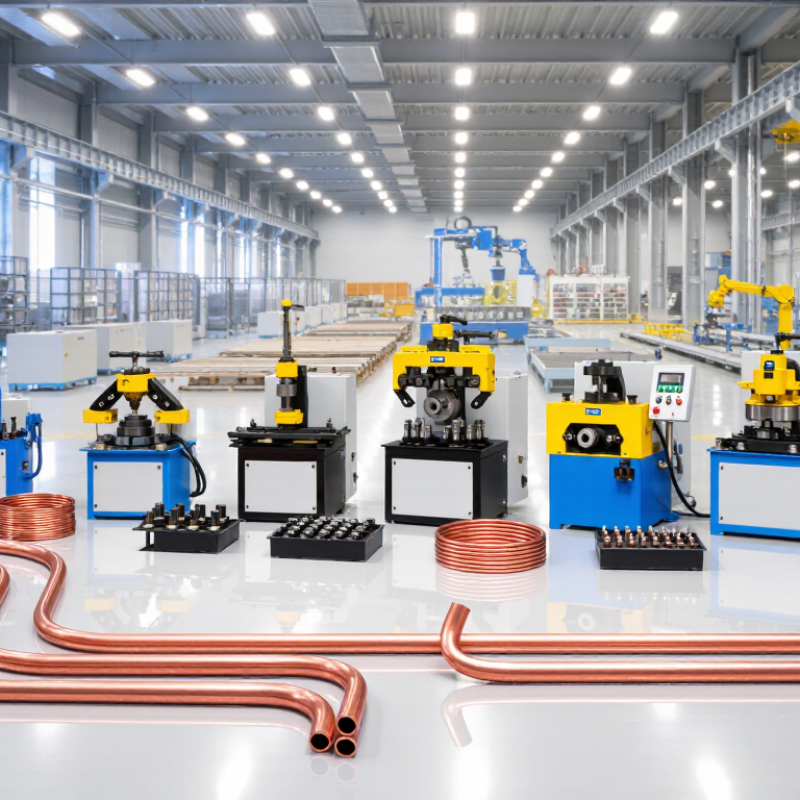
Top 10 Hairpin Tube Benders for Global Buyers

What Hairpin Tube Benders Do in Tube-Processing Operations

Top 10 Hairpin Tube Benders for Global Buyers

What Hairpin Tube Benders Do in Tube-Processing Operations

Hairpin tube benders form straight copper or aluminum tubing into U-shaped circuits for heat-exchanger coils. A feeder sets the tube length, clamps secure it, and forming tools guide each bend. The aim is more than a smooth curve. Consistent bend radius and leg spacing help tubes fit later coil-assembly steps. Small errors matter. A kink can restrict flow, while uneven legs may slow assembly. Operators should check tube diameter, wall thickness, material temper, and tool condition before running a new batch.

The International Energy Agency’s 2018 report, The Future of Cooling, projects air-conditioning electricity demand to rise from about 2,000 TWh in 2016 to 6,200 TWh by 2050.

This is not a forecast of bender sales, but it highlights the scale of demand for cooling equipment. On high-volume lines, hairpin benders can reduce manual handling and produce repeatable parts. Still, automation is not magic. Thin-wall tubing can flatten, and a setup that works for one alloy may mark another. Measure sample bends for ovality, leg pitch, and end position before full production. Changeovers can take longer than the bending itself.

How Hairpin Tube Benders Form Accurate U-Shaped Tubes

Hairpin tube benders transform straight copper or aluminum tubing into the U-shaped circuits used in heat exchangers. A clamp holds the tube while a rotating die forms each bend around a set radius. For tight bends, a mandrel can support the tube wall and reduce wrinkling or collapse. The machine must also account for springback: metal partly returns toward its original shape after bending. Small errors matter. A few degrees of mismatch can make parallel legs difficult to fit into a coil assembly.

Accuracy depends on more than the bending head. Operators check tube diameter, wall thickness, bend radius, leg length, and spacing between legs. A sample bend can reveal whether tooling or settings need adjustment before a production run. That step takes time, but skipping it may create scrap. The International Energy Agency’s 2018 report, The Future of Cooling, projects global space-cooling electricity demand will rise from 2,020 TWh in 2016 to about 6,200 TWh by 2050. The U.S. Energy Information Administration’s 2020 Residential Energy Consumption Survey found air conditioning in 88% of U.S. households. These figures indicate the scale of cooling equipment; they do not guarantee uniform tube designs. Each application still needs its own bend tolerances and inspection plan.

Key Machine Types and Features for Different Production Needs

Hairpin tube benders differ by forming method and production volume. Manual and semi-automatic machines suit short runs, prototypes, and frequent size changes. CNC rotary-draw models control bend angle and feed length for repeatable coil patterns. Multi-stack machines can handle several radii with fewer tool changes. For tight bends, mandrel support helps limit flattening; simpler mandrel-free designs may be adequate for larger radii and less demanding tolerances. Small batches need flexibility. High-volume lines need stable cycle times.

Machine choice also depends on tube diameter, wall thickness, material, bend radius, and return-bend geometry. The IEA’s 2018 report, The Future of Cooling, projected global air-conditioner stock to rise from 1.6 billion units to 5.6 billion by 2050. That forecast points to long-term cooling demand, but it does not mean every factory needs the fastest machine. Buyers should test sample tubes and inspect ovality, springback, end length, and tool-change time. One selection habit deserves scrutiny: comparing cycle speed while overlooking setup losses. A slower machine may perform better across mixed orders. And specifications can mislead. Ask for a trial using the actual tube and drawing.

Top 10 Hairpin Tube Benders for Global Buyers - Key Machine Types and Features for Different Production Needs

Machine Type Bending and Control Method Best-Fit Production Need Typical Features Key Buyer Checks
Manual Bench Hairpin Bender Hand-operated lever and dedicated bending tooling Prototypes, repair work, and low-volume production Simple operation, compact footprint, and low setup complexity Confirm tube-size compatibility, bend repeatability, and operator effort for the planned volume.
Hydraulic Semi-Automatic Bender Hydraulic bending force with operator-led loading and cycle control Small to medium batches with frequent part changes Powered bending, straightforward controls, and less manual force than a bench tool Check hydraulic maintenance needs, guarding, tooling availability, and changeover time.
NC Single-Head Bender Numerical control for programmed bend settings; typically one bending head Repeat production of a limited range of hairpin designs Stored settings can help improve consistency between production runs Ask how programs are stored, how setup is verified, and which adjustments remain manual.
CNC Servo Single-Head Bender Servo-controlled axes coordinate feed, rotation, and bending actions Flexible production with multiple sizes or frequent recipe changes Programmable motion, repeatable settings, and support for recipe-based production Verify axis configuration, programming workflow, training, and service support in the destination market.
CNC Simultaneous Double-Head Bender Two heads form the ends of a tube in a coordinated cycle Higher output of standard, symmetric hairpin parts Can reduce cycle time when both bends can be formed together Confirm the machine supports the required bend geometry and that loading and unloading do not limit throughput.
CNC Independent Double-Head Bender Two heads can be configured or controlled independently, depending on the machine design Part families needing different end positions or bend settings Greater setup flexibility than a fixed, synchronized arrangement Clarify which axes are independent and test the actual part drawings before purchase.
Multi-Stack Tooling Bender Uses multiple tooling sets or bend radii on one machine Production requiring more than one bend radius or tooling setup Can reduce tooling changeovers when the machine is configured for the required radii Check available tooling stations, tooling change method, and compatibility with tube diameter and wall thickness.
Rotary-Draw Hairpin Bender Forms the bend by drawing the tube around a shaped bending die Controlled U-bends where bend shape and repeatability are important Uses application-specific dies; support tooling may be selected to suit the tube and bend Review bend radius, tube material, wall thickness, and sample-part quality with the proposed tooling.
Automatic Feed-and-Bend Line Combines tube feeding and positioning with automated bending; cutting may be integrated or separate Longer runs of repeatable parts with a suitable upstream tube supply Can reduce manual handling and support a more continuous production flow Establish whether the line handles straight lengths or coil stock, and confirm cut-length and feeding requirements.
Integrated Hairpin Production Cell Coordinates bending with selected operations such as feeding, cutting, or part handling Factories seeking a connected production process for established part designs May combine multiple process steps and reduce transfers between separate machines Check cell layout, safety interfaces, changeover procedures, maintenance access, and compatibility with existing equipment.

The configurations above are common machine types, not a ranking of manufacturers. Actual capacity and achievable bend quality depend on the tube material, outside diameter, wall thickness, bend radius, tooling, and machine configuration; validate requirements using sample parts and drawings.

Top 10 Hairpin Tube Benders for Global Buyers

A practical top-ten shortlist of hairpin tube benders should cover different production needs, not just machine size. Manual lever benders suit repairs and low volumes. Bench-mounted models offer steadier support in small workshops. Hydraulic units reduce operator effort on thicker tubing. Electric benders provide repeatable motion for regular batches. CNC models help manage complex programs and frequent changeovers.

Multi-radius machines handle several bend geometries with fewer tool changes. Dual-head designs can improve output on matched parts. Vertical benders save floor space in crowded production areas. Portable units help with on-site work, though setup can be less consistent. Automated cells suit high-volume lines, but demand careful integration. Fit matters.

For global buyers, compare tube diameter, wall thickness, bend radius, and material before requesting a quotation. Ask suppliers to bend sample tubes and share measurements, cycle-time assumptions, and tooling details. Check the die. Also confirm electrical supply, control-language options, spare-part availability, packing protection, and remote service arrangements. A low purchase price may not reflect tool costs or downtime. I would still question any claimed capacity without a test piece; figures on a specification sheet can hide important limits. Choose the machine that matches real parts and operators, not an impressive brochure.

Top 10 Hairpin Tube Benders for Global Buyers

Tube-size reference for comparing hairpin bender capacity

The chart converts ten fractional-inch tube outside diameters to millimeters using 1 inch = 25.4 mm. Use it as a sizing reference when checking machine compatibility; it is not a ranking or a specification for any particular bender.

How to Evaluate Suppliers, Specifications, and After-Sales Support

A global shortlist of hairpin tube benders should start with supplier evidence, not polished photographs. Ask for recent production references, operator training materials, and a live demonstration using tubing similar to yours. Small details matter. Watch how the machine supports each leg of a U-bend and whether operators can repeat the setup without guesswork. A neat catalog is not proof of consistent output.

Compare specifications against your actual parts. Confirm tube outside diameter, wall thickness, bend radius, material range, and required cycle time. Check whether tooling changes are manual or automatic, and ask how long a typical changeover takes. Request sample bends and inspect leg spacing, springback, surface marks, and dimensional variation. A stated tolerance may look impressive, yet still fail to describe performance across a full shift. Ask for evidence.

After-sales support can decide whether a capable machine remains productive. Clarify response hours, remote troubleshooting options, spare-parts availability, and technician travel arrangements. Ask which components are considered routine wear items and how they are stocked. Get service scope and warranty exclusions in writing. If support depends on one distant technician, plan for delays. I would also ask the supplier to walk through a realistic breakdown scenario; the answer may be less polished, but more useful. Compare training, documentation, and maintenance guidance alongside the purchase price.