Top Granular Zinc Oxide Manufacturers for Global Buyers
Choosing a reliable Granular Zinc Oxide manufacturer starts with understanding the material your process actually needs. Buyers should compare zinc oxide content, particle-size range, moisture limits, and the supplier’s stated grade. These details affect handling and performance. A sample can reveal practical issues, such as dust, uneven granules, or slow feeding into production equipment.
Specifications matter.
This guide introduces leading manufacturers and explains how global buyers can assess them. It considers production consistency, technical documentation, batch traceability, packaging, and export support. Ask for a recent certificate of analysis and confirm that its results match your intended application. Where possible, test material under your own operating conditions. A datasheet alone cannot predict every process outcome.
Check the details.
Reliable suppliers should answer questions clearly and provide relevant product information without overstating performance. Buyers should also review shipping options, lead times, and packaging protection; damaged bags can complicate receiving and storage. Requirements vary by destination and application, so confirm applicable quality and import requirements with qualified professionals. The comparison is useful, but it is not a substitute for due diligence. Even a strong checklist leaves some uncertainty. I would still verify a real production batch before placing a large order.
What Granular Zinc Oxide Is and How It Is Used
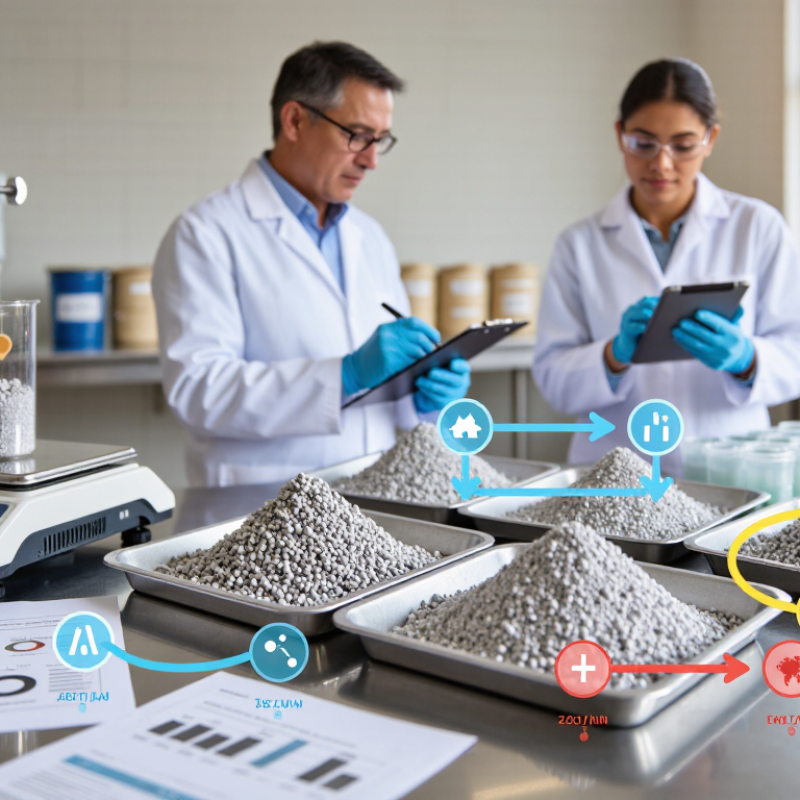
Granular zinc oxide is zinc oxide supplied as compacted or agglomerated particles rather than fine powder. The chemical is still ZnO; the granules mainly change how it is stored, conveyed, and added to a mixture. Their size and strength can vary by grade. Dust still matters. Rough handling may fracture granules and create fines, so packaging and transport conditions deserve attention.
In rubber manufacturing, zinc oxide commonly helps activate vulcanization, the process that gives rubber its useful elastic properties. Even distribution matters: uneven mixing can affect curing and the finished compound. Ceramic makers may add it to glaze or body formulations, where it can influence melting behavior and surface appearance. Results depend on the full recipe and firing conditions. Granules are not magic. They must disperse adequately for the intended process.
Global buyers can compare purity, particle-size range, moisture, bulk density, and resistance to breakage. Ask for a current specification sheet and safety data sheet, then check whether the grade suits the equipment and formulation. Test a sample batch. A small production trial can reveal handling or dispersion issues that a certificate alone may not show.
How Granular Zinc Oxide Is Manufactured and Classified
Granular zinc oxide begins as a fine powder, made through processes such as the indirect or direct oxidation of zinc. The powder is then converted into larger, easier-to-handle particles. Manufacturers may use compaction, pressure-based granulation, or liquid-assisted agglomeration. The chosen route affects particle strength, dust levels, and how quickly the material disperses.
Small details matter. Moisture, binder dosage, and drying temperature can change granule size and hardness. After drying, screens separate particles into specified ranges, while oversized or undersized material may be returned for processing. A sample is commonly checked for zinc oxide content, moisture, particle-size distribution, and flow behavior. These checks help buyers compare batches, though test methods and specifications can differ.
Classification is not based on size alone. Grades may be described by particle range, bulk density, purity, or intended industrial use. Some granules dissolve or disperse more readily than others, so a size label cannot tell the whole story. The trade-off is real: harder granules can produce less dust, but may take longer to break apart. Buyers should review a current specification and test a representative sample. On paper, two grades can look similar. In practice, they may behave differently in a feeder or mixing tank.
What Buyers Should Look for in a Global Manufacturer
A reliable global manufacturer should show that its granular zinc oxide matches your application, not just a general product description. Ask for a current technical data sheet with grade, particle size, purity, and test methods clearly stated. Request a recent certificate of analysis, then compare its results with your own incoming checks. A neat document is useful. Consistent batches matter more.
Look beyond the sample. Ask how production lots are identified, retained, and investigated when results differ. Traceability should connect each shipment to its production records. Check whether packaging protects granules from moisture and damage during handling; inspect a delivered bag for intact seals and readable labels. Small details matter. Discuss lead times, minimum order quantities, export documents, and how delays are communicated before placing a large order. A technically capable supplier may still be a poor fit if replies are vague or corrective actions lack dates and owners. No audit removes every risk, and buyer expectations can be unclear too. Share your test limits and intended use in writing, then confirm the supplier can meet them consistently.
Leading Granular Zinc Oxide Manufacturers by Region
Leading Granular Zinc Oxide Manufacturers by Region
Asia remains a key sourcing region, supported by large zinc-processing networks and strong demand from rubber, ceramics, and chemical producers. The USGS Mineral Commodity Summaries 2025 estimates China mined about 4.0 million metric tons of zinc in 2024, compared with roughly 1.4 million in Peru and 1.2 million in Australia. These figures describe mine output, not zinc oxide capacity. That distinction matters.
In Europe, manufacturers often serve buyers needing documented particle size, purity, and consistent handling characteristics. Regional suppliers may offer granular grades suited to controlled dosing and reduced dust during production. Request a recent certificate of analysis and ask how batches are tested. Small details count.
North American buyers can compare local supply with imports, weighing lead time against specification consistency. The USGS data shows the United States produced about 0.74 million metric tons of mined zinc in 2024, but this does not reveal regional oxide output. Treat upstream supply as context, not proof of factory capacity. A useful supplier review checks granule size distribution, packaging integrity, and traceability. Frankly, public regional data on granular zinc oxide makers is limited, so buyers should verify capacity directly rather than rely on market headlines.
How to Compare Suppliers and Verify Product Quality
When comparing granular zinc oxide suppliers, request the same documents from each: a lot-specific certificate of analysis, particle-size distribution, purity assay, moisture result, and sieve residue. Granules can look identical yet differ in flow, dust generation, and dissolution behavior. Ask how samples are collected and whether results come from an ISO/IEC 17025-accredited laboratory. Check that the quoted test methods match your own specification. A certificate alone is not proof of consistency.
Feedstock context matters, but it is not a product-quality score. The U.S. Geological Survey’s Mineral Commodity Summaries 2024 estimated global zinc mine production at about 12 million metric tons in 2023. That figure describes mined zinc, not zinc oxide output; do not treat it as evidence that any supplier can meet a particular grade. Compare suppliers on traceable batch records, documented process controls, and clear limits for impurities and particle size. Ask for results from several production lots, not one hand-picked sample. Then test a sealed sample against your intended application before approving a shipment. I still double-check packaging: moisture or damaged bags can undo careful quality control.
Top Granular Zinc Oxide Manufacturers for Global Buyers
Compare suppliers using verified product specifications—not brand claims. The chart shows illustrative ZnO purity scenarios and the corresponding theoretical zinc content, calculated from the molecular masses of zinc and zinc oxide.
These values are calculations, not supplier test results. For procurement, request a batch-specific certificate of analysis and independently verify purity and other agreed specifications with a suitable laboratory.


 Distributors
 SDS Download
 Contact
