X

Partner Login

Enter your username and password here on order to log in on the partner portal:

No registered partner yet?

Register now

7 Best Fence Post Machines for Global Buyers

Global fencing demand is closely tied to construction, agriculture, infrastructure, and perimeter-security investment. Reports from Grand View Research and MarketsandMarkets show continued expansion across construction equipment and automated manufacturing. However, neither report isolates every Fence Post Machine category. That gap matters.

A buyer comparing machines must examine more than output claims. Post diameter, timber moisture, hydraulic pressure, tooling life, power supply, and service access affect real productivity. A machine producing 600 posts daily may perform poorly with wet hardwood or inconsistent material. Small details become expensive delays.

W. Edwards Deming, a respected manufacturing quality expert, said, “Without data, you’re just another person with an opinion.” His warning fits this market. Supplier brochures often present ideal conditions. Field performance can differ. No shortlist is flawless.

This guide reviews seven Fence Post Machine options for global buyers. It considers production capacity, energy use, automation, operator safety, maintenance, spare-parts support, and regional compatibility. These factors reflect practical purchasing experience, not showroom impressions. Buyers should still verify test results, warranty terms, and local technical support before ordering.

Some machines suit high-volume fencing factories. Others fit smaller workshops needing flexible tooling and simpler maintenance. The best choice depends on material, budget, labor availability, and expected production cycles. A cheaper machine may demand more manual handling. A fully automated line may require stronger technical skills.

The ranking offers direction, not a universal answer. Real conditions matter more than polished specifications.
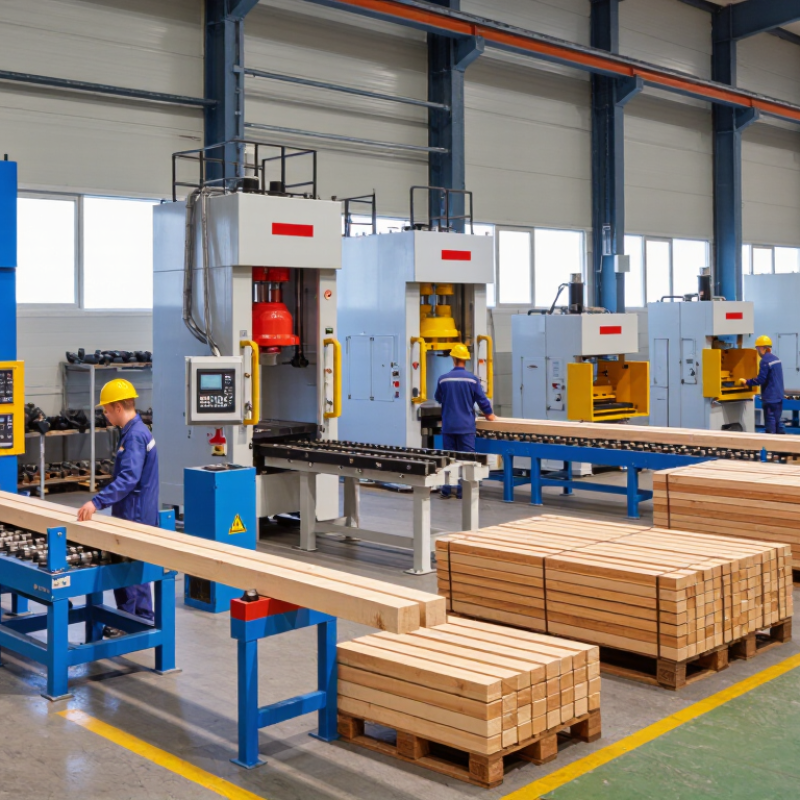
7 Best Fence Post Machines for Global Buyers

What Fence Post Machines Are and How They Work

7 Best Fence Post Machines for Global Buyers

What Fence Post Machines Are and How They Work

Fence post machines are industrial systems that produce posts from concrete, steel, or timber. Their design depends on the material, post shape, and required production volume. Concrete machines usually combine cement, aggregate, water, and additives. The mixture enters a mold, then vibration or hydraulic pressure removes air pockets. After forming, posts need controlled curing before handling. Steel equipment commonly straightens, cuts, punches, and presses metal profiles. Timber systems may use saws, drills, and surface treatment units. Each machine follows a different production logic.

A typical concrete line starts with measured materials and a mixing unit. The fresh compound moves into a reusable mold. Vibration spreads the material around reinforcement and sharp corners. Hydraulic pressure may improve density and surface consistency. Sensors can monitor filling, temperature, and cycle timing. However, automation cannot fix poor raw materials or a worn mold. That part is often underestimated. Buyers should check local power supply, water quality, mold availability, and operator training before comparing output claims.

Tips: Request test samples using your intended material. Inspect mold alignment after every shift. Keep curing records, even when production seems stable. Ask how quickly common parts can be replaced. A slightly slower machine may deliver better consistency and fewer rejected posts. Also, leave space around the line for cleaning and safe maintenance.

Key Criteria for Evaluating Fence Post Machines

When comparing the 7 best fence post machines for global buyers, production needs should guide the decision. A machine must match the post profile, steel grade, thickness, and required length. Check its forming pressure, line speed, and dimensional tolerance. A fast machine is not automatically better. Excessive speed can create uneven holes, bent edges, or unstable posts.

Inspect the frame, rollers, cutting unit, and control system closely. Look for rigid construction and accessible wear parts. Ask whether operators can adjust settings without special software. Electrical compatibility matters across markets. Confirm voltage, frequency, guarding, emergency stops, and documented safety procedures. These details often affect installation more than the advertised output. Test samples with your actual coil material. Catalog figures can be optimistic.

Service support deserves equal attention. Reliable technical manuals, spare-part availability, and remote troubleshooting reduce production delays. Calculate energy use, tooling costs, labor needs, and maintenance intervals over several years. A lower purchase price may hide costly downtime. Noise, floor space, and foundation requirements also influence daily operation. I would record trial results for surface quality, hole accuracy, changeover time, and rejected pieces. The method is not perfect, but written evidence limits guesswork. Leave room for human error, especially during night shifts. A practical machine should remain stable when conditions are less than ideal.

7 Best Fence Post Machines for Global Buyers - Key Criteria for Evaluating Fence Post Machines
No. Machine Type Typical Post Material Recommended Production Method Typical Output Typical Installed Power Automation Level Typical Post Size Range Best For Main Advantages Important Evaluation Criteria
1 Automatic Hydraulic Concrete Fence Post Machine Steel-reinforced concrete Pressing or hydraulic compaction in reusable molds Approximately 300–1,200 posts per 8-hour shift, depending on mold layout and curing time Approximately 15–45 kW Automatic feeding, forming, demolding, and basic mold handling Length: 1.5–3.5 m
Section: approximately 80–180 mm
Medium- to large-scale concrete post production High dimensional consistency, reduced manual labor, and good compatibility with multi-cavity molds Hydraulic pressure stability, mold accuracy, reinforcement positioning, demolding reliability, spare-parts availability, and local technical support
2 Vibration Concrete Fence Post Machine Steel-reinforced concrete Vibration compaction in steel or polymer molds Approximately 200–800 posts per 8-hour shift Approximately 5.5–22 kW Manual or semi-automatic Length: 1.5–3.0 m
Section: approximately 70–160 mm
Small and medium producers requiring flexible product sizes Lower initial investment, simple operation, flexible mold changes, and relatively easy maintenance Vibration frequency, motor durability, mold stiffness, concrete-workability requirements, operator safety, and curing-area capacity
3 Prestressed Concrete Fence Post Production Line Prestressed concrete with high-strength steel wire Wire tensioning, concrete casting, vibration, curing, and controlled release Approximately 500–2,000 posts per 8-hour shift, depending on line length and mold configuration Approximately 30–100 kW High automation, usually with centralized controls Length: 2.0–4.0 m
Section: approximately 80–200 mm
Large infrastructure and agricultural fencing projects High bending resistance, efficient material use, long product life, and consistent structural performance Wire-tensioning accuracy, anchoring safety, curing control, concrete strength, production-line synchronization, and compliance with local construction standards
4 Spun Concrete Fence Post Machine Reinforced concrete High-speed centrifugal spinning in tubular molds Approximately 150–600 posts per 8-hour shift Approximately 22–75 kW Semi-automatic to automatic Length: 2.0–5.0 m
Outside diameter or width: approximately 100–250 mm
Round, tapered, or hollow concrete posts requiring high density Dense concrete structure, smooth surface finish, reduced material usage for hollow sections, and good durability Spinning-speed control, mold balance, vibration isolation, wall-thickness consistency, bearing maintenance, and operator guarding
5 Steel Fence Post Roll-Forming Machine Galvanized steel, pre-painted steel, or carbon steel strip Roll forming, punching, cutting, and optional in-line coating or packaging Approximately 8–25 m/min, depending on profile, thickness, and punching requirements Approximately 7.5–30 kW Automatic feeding, forming, length cutting, and programmable control Material thickness: approximately 1.2–3.0 mm
Post length: typically 0.6–3.0 m
High-volume steel T-post, U-post, or proprietary-profile production Continuous production, repeatable profiles, fast length changes, and efficient material utilization Roller design, strip-width tolerance, punching accuracy, cutting burrs, coil-decoiler capacity, surface protection, and changeover time
6 Cold-Formed C-Post or U-Post Machine Galvanized steel or painted structural steel Cold roll forming with holes, slots, or embossed stiffening ribs Approximately 10–30 m/min, depending on profile complexity Approximately 11–37 kW Automatic or semi-automatic, with PLC-based length control Material thickness: approximately 1.5–4.0 mm
Profile height: approximately 40–120 mm
Perimeter fencing, agricultural fencing, and security-fence systems Strong profile-to-weight ratio, continuous hole punching, adjustable post lengths, and compatibility with galvanized coil Profile straightness, punching-die life, roller alignment, galvanizing-surface protection, emergency-stop systems, and availability of replacement tooling
7 Wood Fence Post Treatment and Pointing Line Sawn timber or roundwood Debarking or sizing, pointing, drilling, preservative treatment, and drying Approximately 300–1,500 posts per 8-hour shift, depending on post diameter and treatment cycle Approximately 10–50 kW, excluding large treatment-kiln heating systems Semi-automatic to automatic Length: approximately 1.2–3.6 m
Diameter or width: approximately 50–180 mm
Timber fencing, agricultural posts, and rural landscaping applications Uses locally available timber, supports multiple post shapes, and can combine machining with preservative treatment Timber moisture content, pointing accuracy, preservative penetration, pressure-vessel safety, wastewater handling, dust extraction, and compliance with wood-treatment regulations
Note: Capacity, power, dimensions, and automation levels are typical industry ranges. Actual performance depends on post design, material specifications, mold or tooling configuration, concrete mix, coil quality, curing method, and local operating conditions.

Seven Leading Fence Post Machines for Global Buyers

Global buyers need fence post machines that match local soil, production targets, and maintenance skills. The seven leading options include hydraulic post drivers, pneumatic post drivers, vibratory drivers, auger machines, roll-forming lines, punching machines, and automated welding systems. Each machine serves a different stage of fence installation or post production.

Hydraulic post drivers deliver strong impact force for hard ground and heavy steel posts. Pneumatic models suit smaller contractors with reliable air compressors. Vibratory drivers reduce surface damage, although loose soil can limit their accuracy. Auger machines prepare precise holes in rocky or compacted sites. Roll-forming lines create uniform metal posts at high output. Punching machines add repeated holes efficiently, while automated welding systems improve frame consistency.

Capacity matters. A small workshop may waste money on an oversized line. Noise matters. Local operators may struggle with loud equipment near residential areas. Buyers should inspect motor efficiency, spare-part access, safety guarding, and control-system language. Ask for sample production before placing a large order. Measure twice.

A machine can look efficient on paper but perform poorly with uneven raw materials. This is easy to overlook. Trial runs should test post thickness, hole spacing, cycle time, and energy use. Operators also need practical training, not only a manual. In my view, service response deserves the same attention as machine speed. Cheap equipment may become expensive when one unavailable component stops production for weeks.

Machine Types for Different Soil, Post, and Project Conditions

7 Best Fence Post Machines for Global Buyers

Machine Types for Different Soil, Post, and Project Conditions

Choosing a fence post machine starts with the ground, not the machine catalog. USDA NRCS Web Soil Survey data covers texture, drainage, and restrictive layers. These details influence drilling speed, hole stability, and required torque. In loose sand, a hydraulic post driver can install steel or timber posts quickly. In firm clay, a rotary auger with replaceable teeth usually offers better control. Keep the hole clean.

Rocky ground needs a different approach. A crawler-mounted drilling rig with down-the-hole or rotary percussion tooling can penetrate weathered rock. For narrow access routes, compact hydraulic equipment reduces surface disturbance. However, small machines often sacrifice drilling depth and lifting capacity. That trade-off is easy to underestimate.

Post material also changes the selection. Vibratory drivers suit repeated steel-post installation on long agricultural or solar projects. Rotary drilling works better for larger timber or concrete posts requiring wider, deeper holes. The Federal Highway Administration’s Drilled Shafts: Construction Procedures and Design Methods links tooling choices to soil strength, groundwater, and bore stability. Its guidance supports testing the ground before production begins.

Project scale matters. A handheld auger may be practical for ten posts, but wasteful for two thousand. FAO’s Status of the World’s Soil Resources reports that about 33 percent of global soils are moderately or highly degraded. Dust, erosion, and unstable shoulders deserve attention during machine selection. A machine can be technically powerful yet wrong for the site. That happens more often than brochures suggest.

7 Best Fence Post Machines for Global Buyers

Machine suitability for different soil, post, and project conditions

The chart uses a practical suitability index from 1 to 5. Higher scores indicate better suitability for the stated condition. Ratings reflect the operating principles of each machine type: impact driving, vibration, drilling, or hydraulic force. Actual performance depends on soil moisture, post dimensions, access, operator skill, and attachment specifications.

Global Purchasing Factors: Pricing, Standards, Shipping, and Support

For global buyers, the seven best fence post machines are not chosen by output alone. A practical shortlist includes hydraulic post drivers, pneumatic units, diesel-powered models, electric machines, tractor-mounted systems, compact loaders, and automated production lines. Each suits a different site. In equipment reviews, a low purchase price often hides tooling, compressor, or installation costs. Ask for a complete quotation. Include molds, spare seals, training, and commissioning. Cheap can mislead.

Standards deserve equal attention. Confirm electrical voltage, guarding, emergency stops, noise limits, and structural documentation before payment. Request test records and a clear declaration of conformity for the destination market. Local authorities may require additional certification. This detail is easy to miss. For concrete or steel post production, check dimensions, tolerances, and material compatibility. A machine that performs well in a factory may struggle with local aggregates, humidity, or unstable power. Trial samples reveal more than brochures.

Shipping changes the real cost. Compare container dimensions, crate weight, port charges, insurance, and inland delivery. Ask whether the machine can be disassembled without damaging alignment. Delivery delays can stop a project for weeks. Support should include remote setup, readable manuals, diagnostic videos, and stocked wear parts. A response time in writing matters. Request customer references from similar climates. My own selection process is not perfect; I once valued speed over service and paid for downtime. That mistake still influences every global purchase.