
X

Partner Login

Enter your username and password here on order to log in on the partner portal:

No registered partner yet?

Register now

China Top Galvanized Closed Head Steel Drum Suppliers?

Choosing a reliable China supplier requires more than comparing prices and polished product photos. A Galvanized Closed Head Steel Drum must perform consistently from the factory floor to the customer’s storage area.

Walter Soroka, a respected packaging author, wrote, “Packaging is the science, art, and technology of enclosing and protecting products for distribution, storage, sale, and use.” His statement fits this product closely. The drum’s steel thickness, zinc coating, seam quality, lid design, and closure torque all affect real-world performance. Small defects can matter. A rough weld or uneven galvanizing may become a serious weakness after outdoor exposure.

This guide examines China’s leading Galvanized Closed Head Steel Drum suppliers through practical purchasing criteria. It considers production experience, material traceability, factory certifications, dimensional accuracy, leak testing, and export support. Supplier claims should be checked against inspection records, sample results, and independent audits. A certificate alone is not enough.

The best manufacturers usually provide clear drawings, coating specifications, closure options, and batch information. They should also explain how they control dents, rust spots, and sealing failures. These details reveal more than a large website.

Some rankings remain imperfect. Public information can be incomplete, and factory performance may change over time. Therefore, buyers should request recent samples and verify production capacity before placing large orders. A lower quote may look attractive, but inconsistent quality can create higher handling and replacement costs later. Reliable sourcing depends on evidence, not assumptions.
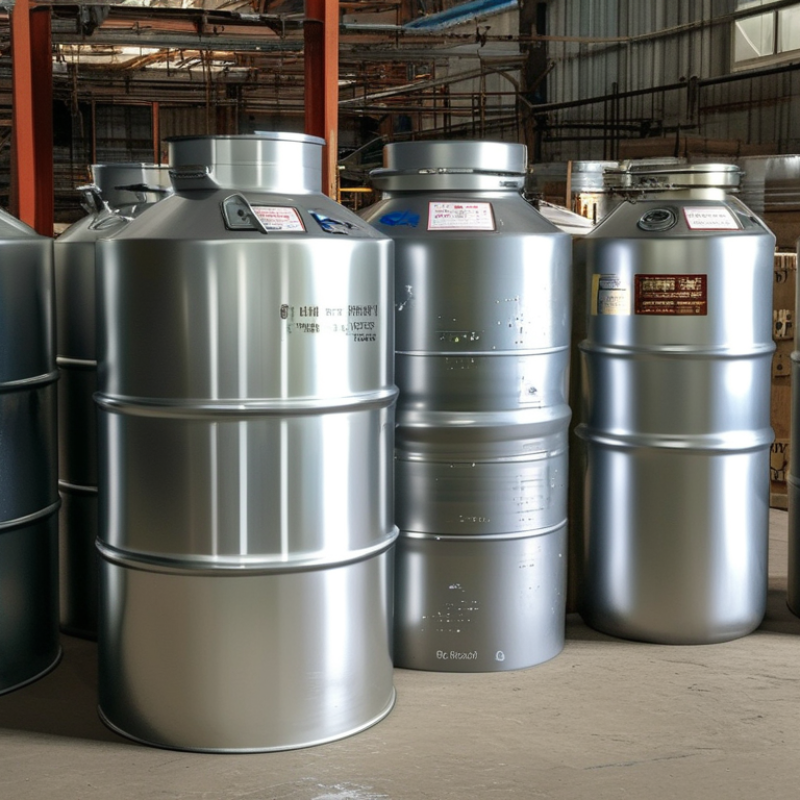
China Top Galvanized Closed Head Steel Drum Suppliers?

What Are Galvanized Closed Head Steel Drums?

Galvanized closed head steel drums are fixed-head containers made from carbon steel with a protective zinc coating. The top has permanent openings, usually fitted with threaded plugs and gaskets. Unlike open-head drums, they are not designed for repeated full-head removal. This structure improves sealing and limits exposure during storage and transport.

The zinc layer protects steel through barrier protection and sacrificial action. Small scratches may receive partial protection, but corrosion resistance depends on coating thickness, humidity, chemicals, and handling. The World Steel Association reported 1,892 million tonnes of global crude steel production in 2023, including about 1,019 million tonnes from China. This large production base supports broad steel-processing capacity, but it does not prove every supplier offers consistent drum quality. Buyers should verify coating tests, weld inspection, leak testing, and dimensional records.

Tips: Check the drum’s nominal capacity, plug design, gasket material, and coating specification. ISO 15750-1 provides useful guidance for non-removable-head steel drums. Request recent inspection reports, not only catalogue photographs. Galvanizing is not a universal solution. Strong acids, salty environments, and prolonged outdoor exposure can still damage the container. A small detail matters: examine the bottom seam and plug threads, where handling damage often appears first.

How Are Galvanized Closed Head Steel Drums Manufactured in China?

China’s galvanized closed head steel drums are manufactured through controlled forming, welding, and inspection processes. Production usually begins with galvanized steel coil, selected for thickness, zinc coating, and surface consistency. Technicians check the coil for scratches, edge cracks, and uneven coating before cutting it into blanks. Small defects matter.

The blank is rolled into a cylindrical body, then joined along its seam with resistance welding. The top and bottom heads are pressed separately, often with reinforced edges for double seaming. Bung openings are punched into the top head, and threaded fittings are attached with controlled torque. Manufacturers then join the heads to the body, creating a closed-head drum with a firm, continuous seam. Some factories use pre-galvanized sheet, while others apply additional protective treatment after forming. The choice affects appearance, weld behavior, and corrosion performance.

Reliable factories test each batch through dimensional checks, coating-thickness measurements, seam inspections, and leak testing. Drop or stacking tests may also be performed when required by the buyer’s specification. Inspectors examine the bung threads, gasket seating, and drum surface under strong lighting. A practical concern remains: zinc can become damaged near welded areas. Poorly controlled heat may reduce local protection. Experienced producers therefore monitor welding current, clean affected surfaces, and apply suitable touch-up protection. Manufacturing records should identify steel grade, coating data, weld settings, and inspection results for every production lot.

What Standards and Specifications Should Buyers Compare?

When comparing galvanized closed-head steel drum suppliers, start with the exact construction. A common format is the 210-litre, non-removable-head drum, classified as 1A1 under UN packaging rules. Do not confuse it with an open-head 1A2 drum. Check body thickness, cover thickness, rolling hoops, plug size, gasket material, and empty weight. ISO 15750-2 provides useful dimensional and performance references for steel drums. The UN Recommendations on the Transport of Dangerous Goods, 23rd revised edition, require performance testing based on the intended packing group, not merely a supplier’s general claim.

Galvanizing needs closer inspection. Ask whether the sheet follows ASTM A653/A653M or an equivalent specification. A G90 coating represents about 275 g/m² of zinc on both surfaces, but the actual drum may use another coating class. Request coating-mass results, adhesion tests, and salt-spray data. Salt spray is useful, but imperfect. It does not reproduce every warehouse climate. Look for weld-zone protection too. Zinc often becomes thinner near forming, seams, and fittings.

Closure security matters during handling. Compare plug torque records, gasket compatibility, leak-test pressure, stacking load, and drop-test evidence. Suppliers should provide batch traceability and certificates matching the delivered steel grade. The World Steel Association reports roughly 680 million tonnes of steel are recycled annually, supporting steel’s circularity advantage. Yet recycling claims should not replace coating and safety evidence. One overlooked detail: ask for photos of the drum after testing, including the seam and chime. Numbers alone can look reassuring. Sometimes, they are not.

How to Evaluate China’s Top Steel Drum Suppliers?

China Top Galvanized Closed Head Steel Drum Suppliers?

When evaluating China’s top galvanized closed head steel drum suppliers, start with evidence, not polished photographs. Ask for the factory address, production capacity, and recent quality records. A reliable supplier should explain steel thickness, zinc coating, seam welding, bung dimensions, and gasket material clearly. Request samples from the same production line used for your order. Inspect each drum for even galvanizing, clean seams, stable rings, and a flat base. Small dents matter. They may reveal weak handling controls.

Review manufacturing experience through export references, inspection reports, and repeat-order history. Check whether the supplier follows recognized packaging and transport standards for your destination. Do not accept vague claims such as “premium grade.” Ask for measurable data, including coating weight, leak-test pressure, stacking load, and dimensional tolerance. Third-party inspection can confirm results before shipment, although it adds time and cost. That cost is often cheaper than rejected cargo. Still, one report is not permanent proof. Processes can change after an audit.

Tips: Compare at least three suppliers using the same checklist. Confirm sample results in writing. Check how quickly technical questions receive precise answers. A capable team will discuss failures honestly, not hide them. Review pallet protection, export documents, lead time, and spare closure parts. Keep communication records. They prevent confusion.

What Industries Use Galvanized Closed Head Steel Drums?

Galvanized closed head steel drums serve industries that need strong, stackable, and corrosion-resistant packaging.

Their sealed top supports safer handling during storage and transport. The zinc coating helps protect the steel from moisture and light chemical exposure. However, coating performance depends on the stored material and surrounding environment.

Water treatment companies often use these drums for compatible treatment chemicals, maintenance fluids, and non-hazardous process materials. Construction businesses may choose them for coatings, sealants, release agents, and equipment fluids.

Agricultural manufacturers can use them for approved fertilizers, soil treatments, and related products. Industrial maintenance operations also rely on them for lubricants, cleaners, and protective compounds. Not every product fits.

In practical drum inspections, I check the coating, seam quality, closure design, and internal cleanliness.

The details matter. A supplier should provide accurate steel thickness, capacity, testing records, and handling guidance. Buyers should also confirm material compatibility before placing a large order.

Galvanized steel may react poorly with certain acidic or alkaline contents. That assumption can fail.

Chinese suppliers can support these industries when they maintain consistent forming processes, leak testing, and export documentation. Still, a low price should never replace specification checks, sample approval, and traceable quality control.