Partner Login
Enter your username and password here on order to log in on the partner portal:
No registered partner yet?
Register nowA dependable Tactical Watch is more than a rugged case and bold dial. It should remain readable at a glance, keep reliable time, and feel comfortable through long days outdoors or on the move. Yet “tactical” is not a consistent technical standard. Marketing language can blur the difference between useful features and decoration.
This 2026 guide compares ten watches through practical criteria: legibility, durability, water resistance, battery or power system, controls, and everyday comfort. It considers digital, analog, and hybrid designs, because no single format suits every wrist or routine. Clear displays matter in dim light. So do buttons that remain easy to operate with gloves. Small details can decide it.
Specs deserve context. A high water-resistance rating does not make every watch appropriate for every activity, and a tough-looking bezel cannot prove long-term reliability. Check the manufacturer’s current documentation, warranty, and service options before buying. Prices and model specifications may also change during the year.
No perfect pick exists. Some readers may value a simple, dependable display over connected features; others may want navigation tools or health tracking. This shortlist highlights trade-offs rather than declaring one universal winner. A few choices may feel less compelling once fit, menus, or charging needs enter the picture. That is worth admitting. Use the comparisons to narrow your options, then match the watch to your actual conditions, budget, and comfort—not just its appearance.
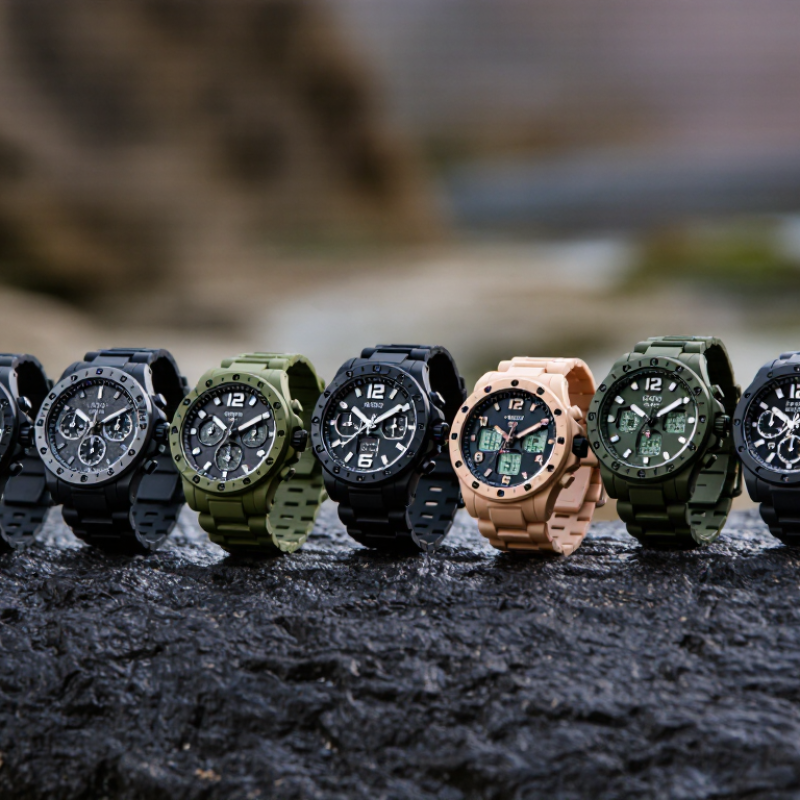
A tactical watch in 2026 is less about a rugged-looking case and more about dependable performance under specific conditions. The term itself has no single universal technical definition. Look instead for clear specifications: water resistance, impact protection, readable markings, and controls that remain usable with gloves. In practice, a matte dial and raised bezel can help reduce glare and protect the crystal. Small details matter.
Standards offer useful reference points, but they need careful reading. ISO 6425:2018 sets requirements for diving watches; it does not certify a watch as “tactical.” The U.S. Department of Defense’s MIL-STD-810H, issued in 2019 and updated by Change 1 in 2022, describes environmental test methods. It is not a blanket product certification, and test conditions should match the intended use. That distinction is easy to miss. A claim of “military-grade” alone tells buyers very little.
For daily wear, check the actual test description, operating-temperature range, stated accuracy, and battery-life conditions. A bright display is useful in a dark vehicle, but it can drain power faster. A tough strap should still dry quickly after rain. I would also ask whether the crown is easy to grip with cold fingers. No spec sheet answers every real-world question. A watch can be durable and still be awkward.
A useful tactical-watch ranking starts with evidence, not styling. We score legibility, operating time, durability, water resistance, and control usability. Each category is checked against published specifications and, where possible, independent test documentation. In dim light, we look for readable numerals and buttons that work with damp fingers. Small detail, big consequence.
For water-resistant models, ISO 6425:2018 provides a measurable benchmark: qualifying diver’s watches undergo pressure testing at 125% of their stated depth rating. That standard does not assess every field watch, so we treat it as relevant evidence, not a universal pass mark. We also examine environmental test claims carefully. MIL-STD-810H describes test methods, but a reference to the standard alone does not prove a watch passed every method. Test conditions matter.
Real use adds another layer. The Outdoor Industry Association’s 2024 Outdoor Participation Trends Report counted 175.8 million U.S. participants in outdoor recreation during 2023. That figure supports evaluating comfort and dependable timekeeping across long days, not just laboratory resilience. We compare case weight, strap adjustment, button feedback, and battery-life claims, then note trade-offs. A long-life display may be harder to read at an angle; a compact case may crowd the controls. Our scoring still involves judgment, and a clean-looking specification sheet can conceal an awkward watch.
The Top 10 Tactical Watches for 2026 reflect different needs, not one universal definition of “tactical.” This shortlist weighs legibility, power, durability, useful functions, and ease of care. A solar field watch suits long days outdoors, while an ana-digi model combines clear hands with quick digital timing. A GPS multisport watch helps track routes and training, but frequent navigation can drain its battery. An ABC watch adds an altimeter, barometer, and compass for changing terrain. Simple matters.
A compact digital watch keeps time and alarms accessible with gloves. A rugged quartz model favors dependable timekeeping and straightforward controls. A dive-rated analog watch offers a bold dial and strong water resistance, though its rotating bezel may be unnecessary for many users. A dual-time watch helps coordinate across time zones. A smartwatch with offline maps offers richer navigation, but needs more charging and setup. A lightweight, low-profile watch is easier to wear beneath a sleeve, though its smaller display can be harder to read. These picks involve trade-offs; a feature-rich watch is not automatically the better choice. Check the actual battery rating, operating temperature, water-resistance guidance, and service options before buying. In cold weather, small buttons can be frustrating. It happens.
A useful way to compare tactical watches is to understand their water-resistance ratings. The chart shows the nominal depth equivalents commonly associated with each pressure rating—not a guaranteed safe operating depth.
Water-resistance ratings are based on laboratory pressure tests. Real-world movement, temperature changes, and aging seals can affect performance, so a “30 m” rating should not be treated as a recommendation to dive to 30 metres.
A useful top-ten tactical-watch comparison should weigh performance in real conditions, not just count features. Start with readability: bold hands, clear numerals, and even a quick glance under a jacket cuff matter. Then compare battery life, water resistance, case weight, and the reliability of the compass or navigation tools. A bright screen may help outdoors but drain power faster. There is no universal winner; the right balance depends on how and where you wear the watch.
Durability claims deserve careful reading. Check how each maker defines water resistance, and distinguish tested specifications from marketing language. Buttons should be usable with gloves, while the strap should stay secure during repeated movement. A heavier case can feel reassuring, yet become tiring over a long day. Small details matter. I would also question rankings that treat extra sensors as automatic advantages; more features can mean more menus, charging, and room for error. No score captures every wrist.
Tips: Compare the same features across all ten models, and verify specifications against official product documentation. Try the display in bright light and low light, if possible. Check whether essential functions work without a phone connection. Keep a note of your priorities before comparing prices. It sounds obvious, but I have found it easy to overvalue a long feature list.
| Rank | Anonymized Model | Case Size / Weight | Water Rating | Power and Timekeeping | Key Tactical Features | Performance Snapshot |
|---|---|---|---|---|---|---|
| 1 | Solar GPS Field 50 | 50 × 50 × 14.5 mm; 67 g | 10 ATM (100 m) | Solar-assisted rechargeable battery; digital timekeeping | Multi-GNSS positioning, navigation sensors, built-in LED flashlight | Best all-round outdoor capability. Strong navigation and lighting features; the large case may feel bulky on smaller wrists. |
| 2 | Solar GPS Field 45 | 45 × 45 × 14.5 mm; 53 g | 10 ATM (100 m) | Solar-assisted rechargeable battery; digital timekeeping | GPS, activity and environmental sensors, route tracking | A lighter, more compact GPS option. Battery endurance depends on GPS use and available sunlight. |
| 3 | Solar Triple-Sensor Digital | 55.2 × 53.5 × 18.2 mm; 93 g | 200 m | Solar-powered quartz; radio time calibration on supported frequencies | Digital compass, altimeter, barometer, thermometer, stopwatch | Excellent for rugged navigation without satellite tracking. Thick case and no GPS are the main trade-offs. |
| 4 | Solar Mud-Resistant Sensor | 56.2 × 54.9 × 16.3 mm; 119 g | 200 m | Solar-powered quartz; radio time calibration on supported frequencies | Compass, altimeter, barometer, thermometer, shock- and mud-resistant construction | A tough choice for dirty, demanding environments. Its substantial size and weight reduce everyday comfort. |
| 5 | Tritium Quartz Diver 43 | 43 mm case; approximately 13 mm thick | 200 m | Battery-powered quartz; typical battery interval is about four years | Self-powered tritium illumination; rotating elapsed-time bezel | Dependable low-light readability without charging. It lacks GPS and advanced digital navigation functions. |
| 6 | Automatic Tritium Diver 41 | 41 mm case; approximately 14 mm thick | 300 m | Automatic mechanical movement; approximately 38-hour power reserve | Tritium illumination, screw-down crown, dive-time bezel | Strong water resistance and no battery requirement. Less accurate than quartz and stops if left unworn long enough. |
| 7 | Lightweight Tritium Navigator | 41 mm case; approximately 11 mm thick; about 53 g | 60 m | Battery-powered quartz | Lightweight composite case, fixed spring bars, tritium illumination | Very light and easy to read in darkness. Its water rating is lower than that of dedicated dive watches. |
| 8 | Titanium Quartz Field 40 | 40 mm case; approximately 12 mm thick; about 56 g | 200 m | Battery-powered quartz | Titanium case, fixed-lug construction, high-contrast dial | A lightweight, durable option with good water resistance. It has no onboard GPS or electronic navigation sensors. |
| 9 | Solar Quartz Diver 42 | 42 mm case; approximately 11.5 mm thick | 200 m | Light-powered quartz; roughly six months of reserve when fully charged | Unidirectional dive bezel, luminous hands and markers | Low-maintenance timekeeping and solid water resistance. Charging performance depends on regular light exposure. |
| 10 | Hand-Wound Field 38 | 38 mm case; approximately 9.5 mm thick | 50 m | Hand-wound mechanical movement; approximately 80-hour power reserve | Compact field-watch layout, luminous hands and markers | Simple, compact, and easy to service. Its lower water rating and lack of electronic features make it less versatile in extreme conditions. |
Choosing a tactical watch starts with your actual routine, not the longest feature list. For field work, prioritize legible numerals, a dependable backlight, and controls you can use with cold or gloved hands. For hiking or travel, weight and battery life may matter more than extra sensors. Outdoor Industry Association’s 2024 Outdoor Participation Trends Report counted 175.8 million U.S. participants in outdoor recreation during 2023. That broad range of activities is a useful reminder: one watch rarely suits every user. Small details matter.
Check water resistance claims against the activity you plan to do. ISO 22810:2010 sets test requirements for water-resistant watches, but a rating is not a promise that every watch suits swimming, impact, or repeated temperature changes. Read the maker’s limits and care instructions before relying on it. For ruggedness, MIL-STD-810H describes environmental test methods; it does not create one universal “tactical” durability rating. Ask which conditions were tested, such as vibration, dust, or temperature cycling. The label alone tells you little.
Then compare comfort over a full day. A bulky case can catch on sleeves, while a stiff strap may rub during a long walk. If you depend on navigation or alerts, check battery performance with those functions enabled, not just the headline figure. I still tend to overvalue extra functions; in practice, menus can slow down a simple task. That is enough. Choose the watch whose essential features remain clear when your hands are tired and the light is poor.