X

Partner Login

Enter your username and password here on order to log in on the partner portal:

No registered partner yet?

Register now

Top 10 Polymeric Surge Arrester Manufacturers Worldwide?

Polymeric Surge Arrester technology has become a practical safeguard for modern electricity networks. It limits overvoltage caused by lightning, switching operations, and temporary grid disturbances. Its silicone-rubber housing also resists moisture, pollution, ultraviolet exposure, and mechanical stress. These details matter when equipment operates beside coastal substations or dusty industrial feeders.

Industry forecasts support this growing attention. MarketsandMarkets’ 2024 Surge Protection Devices Market report identifies expanding investment in power infrastructure, renewable generation, and industrial electrification. Fortune Business Insights also reports continued growth in the global surge protection device market, driven by grid modernization and rising equipment sensitivity. However, market forecasts differ because suppliers define product categories differently. That limitation deserves attention.

Performance should remain more important than promotional claims. IEC 60099-4 provides key requirements for metal-oxide surge arresters, while IEEE and CIGRE publications offer valuable guidance on testing, coordination, and field reliability. This article examines ten influential Polymeric Surge Arrester manufacturers worldwide, considering product design, voltage range, certification practices, testing capacity, service coverage, and documented utility experience. Names such as ABB, Siemens Energy, Eaton, Hubbell, Hitachi Energy, and TE Connectivity frequently appear in global discussions, although regional specialists may perform better in specific climates or network conditions.

No ranking is perfect. A strong catalogue does not guarantee ideal field performance. Installation quality, grounding, leakage-current monitoring, and maintenance records can change the outcome. Buyers should verify test reports, technical datasheets, warranty terms, and local support before selection. The following overview therefore provides a researched comparison, not an absolute verdict.、】【
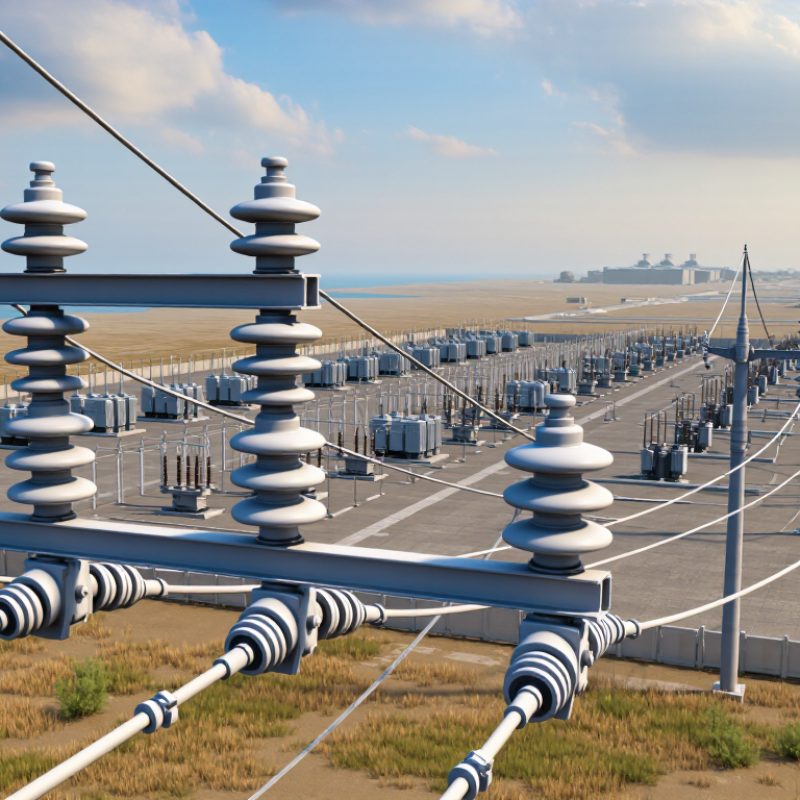
Top 10 Polymeric Surge Arrester Manufacturers Worldwide?

What Are Polymeric Surge Arresters and How Do They Work?

Polymeric surge arresters protect electrical equipment from sudden overvoltage caused by lightning or switching events. Their outer housing uses weather-resistant polymer, often reinforced with silicone rubber. This material is lightweight, hydrophobic, and less likely to shatter than porcelain.

Inside, metal-oxide varistor blocks provide the main protection. Under normal voltage, they carry only a tiny leakage current. When a surge arrives, their electrical resistance drops rapidly. The arrester then guides the excess energy toward ground. Voltage across the protected equipment stays within a safer range.

No spark gap is required.

This design responds quickly and reduces the risk of explosive failure. The polymer housing also performs well in polluted, coastal, and industrial environments. Still, installation quality matters greatly. A long grounding lead can increase residual voltage during a fast impulse. Poor contact pressure may create local heating.

In field inspections, technicians often check leakage current, housing cracks, contamination, and loose terminals. Infrared scanning can reveal abnormal heating before visible damage appears. The label “maintenance-free” can be misleading. Arresters need less routine service, not zero attention.

Selection should match system voltage, temporary overvoltage conditions, discharge energy, and insulation coordination. A smaller device may look economical. It may not survive repeated surges. Field conditions also change, so periodic review remains sensible.

How Are the Top 10 Manufacturers Selected and Compared?

Top 10 Polymeric Surge Arrester Manufacturers Worldwide?

The top ten are selected through evidence, not advertising reach or product appearance. Evidence matters. The review examines manufacturing history, engineering teams, factory audits, and independent type-test records. Each manufacturer must show compliance with relevant IEC 60099-4 requirements and provide traceable test documentation. Certificates alone are not enough. Test dates, laboratory competence, sample configuration, and rated voltage must match the offered arrester.

Comparison focuses on technical performance and field reliability. Important factors include metal-oxide varistor stability, polymer housing quality, sealing design, pressure-relief behavior, and resistance to moisture, salt fog, ultraviolet exposure, and pollution.

Engineers also assess thermal stability after repeated temporary overvoltage events. Installation records from substations, renewable-energy sites, and industrial networks add practical weight. A clear failure-reporting process matters too. It reveals how a manufacturer responds when equipment performs poorly.

The scoring model can assign 30% to verified electrical performance, 20% to product consistency, 15% to field experience, and 15% to quality control. The remaining points cover technical support, delivery capability, and documentation. These weights are useful, but not perfect. A supplier with fewer published projects may still have excellent equipment. Conversely, a large production volume does not guarantee stable quality. Regional climate, system voltage, maintenance practice, and customer requirements can change the ranking. Independent engineers should review unclear claims, repeat critical checks, and record every assumption before publishing the final comparison.

Who Are the Top 10 Polymeric Surge Arrester Manufacturers Worldwide?

Who Are the Top 10 Polymeric Surge Arrester Manufacturers Worldwide?

Identifying the top ten polymeric surge arrester manufacturers requires more than checking sales figures. The strongest suppliers usually show long field experience, accredited laboratory testing, and clear compliance with IEC 60099-4. They also support utility, railway, renewable-energy, and industrial applications. The leading group includes established European high-voltage specialists, North American grid suppliers, Japanese insulation experts, and major manufacturers from China, India, and South Korea. Several regional producers also deserve attention when their products perform well in coastal, desert, or high-altitude networks.

Performance matters most. A reliable manufacturer should provide zinc-oxide blocks with stable energy absorption, weather-resistant silicone housings, and controlled pressure-relief behavior. Look for factory routine tests, type-test evidence, traceable materials, and installation guidance.

Field engineers often compare leakage current, pollution performance, mechanical strength, and ageing results before approving a supplier. Small details matter. Housing sheds must drain water effectively. Seals should remain flexible after years of sunlight.

Rankings are not perfectly objective. Public test data can be incomplete, and a strong product in one climate may underperform elsewhere. I would also question lists based only on revenue or production volume. Independent laboratory results and verified utility references deserve greater weight.

A manufacturer with fewer global shipments may still offer excellent arresters for a specific voltage class. That limitation deserves attention. Procurement teams should review current certificates, local service capacity, spare-part access, and actual operating records before making a final comparison.

What Technologies and Applications Define Each Manufacturer?

Top 10 Polymeric Surge Arrester Manufacturers Worldwide: Technologies and Applications

Polymeric surge arrester manufacturers increasingly compete through materials, monitoring, and application design. A 2024 MarketsandMarkets assessment estimates the global surge arrester market could approach US$2.8 billion by 2029. Polymer-housed units support this growth because they resist moisture, pollution, and mechanical damage. Their silicone rubber housings also reduce installation weight on compact distribution structures.

The leading ten manufacturer groups typically develop zinc-oxide varistor blocks, field-grading systems, and sealed interfaces. Transmission-focused suppliers use high-energy blocks for substations and long overhead lines. Distribution specialists emphasize compact arresters for transformers, cable terminations, and renewable-energy feeders. Some designs add line-discharge monitoring, leakage-current sensors, or remote diagnostics. Useful technology.

IEC 60099-4 requires arrester performance verification under temporary overvoltage, high-current impulse, and environmental tests. CIGRE guidance also stresses pollution severity, altitude, and system grounding during selection. These details matter in coastal substations, where salt deposits can create uneven electrical stress. Solar farms need different coordination from urban medium-voltage networks. Wind turbines add switching surges and limited maintenance access.

A 2023 utility reliability survey published by CIGRE reported that condition monitoring is gaining attention, although adoption remains uneven. That warning deserves attention. A polymeric housing is not automatically maintenance-free. Poor sealing, incorrect energy ratings, and weak thermal design can still cause premature failure. The strongest manufacturers therefore combine laboratory validation, field experience, and application-specific engineering rather than selling one universal arrester.

How Is the Global Polymeric Surge Arrester Market Evolving?

The global polymeric surge arrester market is evolving with grid modernization, renewable generation, and harsher weather patterns. Recent reports from MarketsandMarkets and Grand View Research estimate the broader surge protection sector will grow at roughly 5% to 7% annually through the decade. Their scopes differ, however. That makes exact polymeric arrester figures difficult to compare.

Demand is shifting from simple replacement toward engineered protection. Wind farms, solar substations, and compact urban networks require lightweight arresters with strong pollution resistance. Polymeric housings also reduce breakage risks during transport and installation. Utilities increasingly assess leakage current, sealing performance, thermal stability, and service records before approving suppliers. IEC 60099-4 remains a key technical reference for metal-oxide arresters.

Performance matters more than appearance.

Industry procurement data also shows stronger interest in local supply chains and shorter maintenance cycles. Digital inspection tools are entering larger substations, although adoption remains uneven across emerging markets. The top ten manufacturer landscape is therefore becoming more regional, with established producers competing against specialized engineering firms. Reported market forecasts often assume steady grid investment, but that assumption deserves scrutiny. Delayed transmission projects, raw-material prices, and uneven renewable deployment could slow growth in some regions. Manufacturers that combine verified testing, field experience, and adaptable designs may gain an advantage, especially where salt, dust, and frequent lightning create visible operating challenges.