


 Distributors
 SDS Download
 Contact
Partner Login
Enter your username and password here on order to log in on the partner portal:
No registered partner yet?
Register nowChina Top 10 Heat Shrink Plastic Manufacturers?
China Top 10 Heat Shrink Plastic Manufacturers? This guide examines leading Chinese suppliers serving packaging, electrical, construction, and industrial markets. Heat Shrink Plastic can look simple, yet production quality depends on resin selection, extrusion control, printing accuracy, and stable shrink performance. A clean film should contract evenly around a bottle, cable bundle, or irregular component. Wrinkles, weak seals, and uneven thickness reveal poor process control.
The evaluation considers product range, manufacturing experience, film clarity, shrink ratio, tensile strength, sealing reliability, customization, and quality documentation. It also reviews factory capacity, export experience, customer support, and environmental claims. These details matter when a packaging line runs thousands of units each hour. Small defects become expensive quickly.
Patrick Thomas, a former plastics industry executive, has stated, “Plastic is not the problem; the way we use it is.” His observation fits Heat Shrink Plastic closely. Material choice must match the application, equipment, storage conditions, and end-of-life plan. A cheaper film may reduce purchasing costs but increase waste, downtime, or product damage.
No ranking is perfect. Supplier information can change, and impressive websites do not always reflect factory performance. Samples should be tested. Certificates should be verified. Buyers should also request thickness data, shrink-temperature ranges, and batch consistency records. This introduction provides a practical starting point, not a final purchasing decision. The strongest manufacturers combine technical discipline with honest communication. Some may still have weaknesses. That deserves attention.
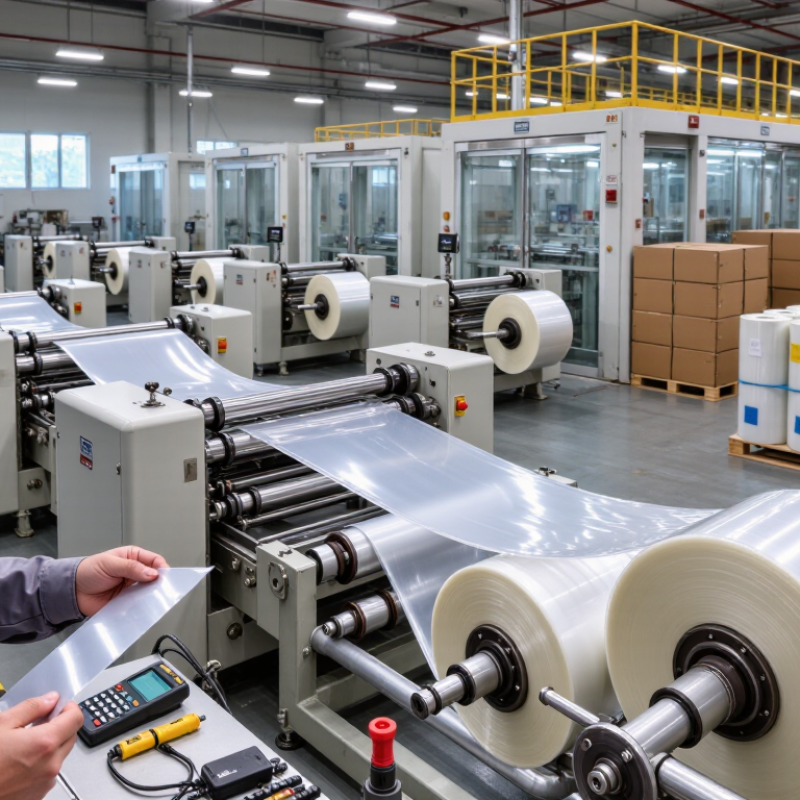
What Are Heat Shrink Plastics and How Are They Used?
Heat shrink plastics are polymer tubes or films that contract when warmed. They are commonly made from polyolefin, PVC, fluoropolymer, or elastomer blends. During manufacture, the material is expanded and cooled under controlled conditions. Heating releases that stored shape. The tubing then tightens around an object. This behavior supports insulation, bundling, sealing, and surface protection. It is not merely decorative. A good installation creates a close, stable covering.
In practical work, technicians slide tubing over cable joints, connectors, battery leads, or small metal parts. A heat gun supplies steady warmth from a safe distance. The tube should shrink evenly, without scorching, bubbles, or sharp folds. I have seen rushed installations trap moisture at one end. That weakness may remain invisible until corrosion appears. Adhesive-lined versions can improve sealing, but they need clean, dry surfaces. Choosing the wrong shrink ratio also causes trouble. A loose tube may never grip properly.
Selection depends on temperature, chemical exposure, flexibility, wall thickness, and electrical requirements. Measure the largest diameter before shrinking, then check the recovered diameter. Transparent tubing helps with inspection, while thicker walls resist abrasion. Flame-retardant grades may suit equipment near heat sources, but performance depends on the complete system. Follow heating and ventilation guidance carefully. A perfect-looking finish does not prove reliability. Testing after installation remains worthwhile, especially where vibration, bending, or moisture is expected.
China Top 10 Heat Shrink Plastic Manufacturers? - What Are Heat Shrink Plastics and How Are They Used?
| No. | Manufacturer Category | Primary Material | Typical Shrink Ratio | Typical Operating Temperature | Main Product Forms | Common Applications | Relevant Performance Requirements |
|---|---|---|---|---|---|---|---|
| 1 | General-purpose tubing producer | Polyolefin | 2:1 or 3:1 | Approximately −55°C to 125°C | Thin-wall tubes, cut lengths, rolls | Wire insulation, cable bundling, connector protection | Electrical insulation, abrasion resistance, dimensional recovery |
| 2 | Adhesive-lined tubing producer | Cross-linked polyolefin with hot-melt adhesive | 3:1 or 4:1 | Approximately −45°C to 110°C | Dual-wall tubes, end caps, breakout boots | Moisture sealing, cable joints, outdoor terminals | Water resistance, strain relief, environmental sealing |
| 3 | High-temperature tubing producer | Fluoropolymer, including PVDF or PTFE grades | 1.7:1 to 2:1 | Approximately −65°C to 200°C or higher | Thin-wall tubing, laboratory tubing, precision sleeves | Sensors, aerospace wiring, chemical and high-temperature assemblies | Chemical resistance, low friction, thermal stability |
| 4 | Flexible elastomeric tubing producer | Fluoroelastomer or silicone-modified elastomer | 2:1 | Approximately −55°C to 200°C | Flexible tubes, boots, sleeves | Automotive ignition systems, engine compartments, vibration-prone wiring | Flexibility, oil resistance, vibration tolerance |
| 5 | Medium-voltage cable accessory producer | Modified polyolefin or silicone rubber | 2:1 to 4:1 | Approximately −40°C to 125°C | Termination kits, joint sleeves, stress-control components | Power cable joints, terminations, substations | Electrical tracking resistance, insulation recovery, sealing |
| 6 | Busbar insulation producer | Flame-retardant cross-linked polyolefin | 2:1 to 4:1 | Approximately −40°C to 125°C | Large-diameter tubing, flat busbar sleeves | Switchgear, distribution cabinets, electrical panels | Flame retardancy, dielectric strength, color coding |
| 7 | Automotive wiring protection producer | Cross-linked polyolefin or flame-retardant polyolefin | 2:1 or 3:1 | Approximately −40°C to 135°C | Harness sleeves, breakout covers, identification tubing | Vehicle harnesses, battery cables, sensor connections | Oil resistance, abrasion resistance, flame performance |
| 8 | Telecommunication cable protection producer | Polyolefin or adhesive-lined polyolefin | 3:1 to 4:1 | Approximately −40°C to 110°C | Splice closures, repair sleeves, cable breakout seals | Fiber-optic cables, communication lines, outdoor network repairs | Moisture sealing, tensile strength, UV resistance |
| 9 | Specialty identification tubing producer | Polyolefin or fluoropolymer | 2:1 or 3:1 | Approximately −55°C to 135°C | Printable markers, flat identification sleeves | Panel wiring, control cabinets, industrial cable identification | Print durability, legibility, flame retardancy |
| 10 | Large-diameter cable protection producer | Cross-linked polyolefin or reinforced polyolefin | 3:1 to 4:1 | Approximately −40°C to 125°C | Large-diameter tubes, cable repair sleeves, end caps | Power cables, industrial cable repairs, marine and infrastructure projects | Mechanical protection, water resistance, UV and weather resistance |
Note: The table presents ten common heat-shrink product and manufacturing categories available in the Chinese market rather than named companies or brands. Temperature ranges and shrink ratios are typical industry values; exact specifications depend on the product construction, material formulation, wall thickness, and supplier datasheet.
