What is an RFID Card and How Does it Work?
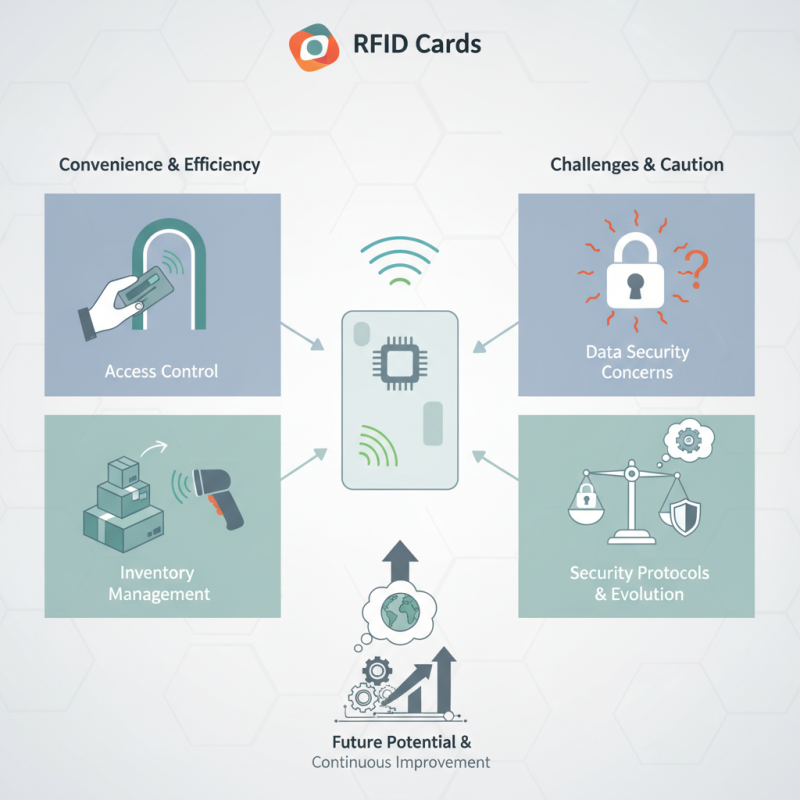
RFID cards are rapidly transforming how we interact with technology. These cards utilize radio frequency identification to communicate data wirelessly. As John Smith, a leading RFID industry expert, stated, "RFID cards are not just tools; they are gateways to a smarter future." This statement embodies the essence of how RFID cards enhance convenience and efficiency in various applications.
Through RFID cards, access control and inventory management have become more streamlined. Users can simply wave their cards near a reader, and access is granted instantly. However, challenges remain. Data security concerns often arise, as unauthorized scanning can happen. The balance between convenience and protection is crucial in the RFID card landscape.
The technology is still evolving. Businesses must remain vigilant about security protocols. As we embrace RFID cards in our daily lives, a reflective mindset is essential. Continuous improvement in security measures and technology can lead to more robust systems. The potential of RFID cards is immense, yet we must be cautious about their implementation.
What is an RFID Card?
RFID cards, or Radio Frequency Identification cards, are innovative tools for tracking and identifying items. They contain a chip and an antenna that communicates data wirelessly. This technology is often used in access control, inventory management, and payment systems. RFID cards can be read from a distance, making them convenient for various applications.
When you hold an RFID card near a reader, the information is transmitted almost instantly. The reader sends a signal to the card, which responds by sending back its unique information. This process can happen quickly, often in just a fraction of a second. However, it’s not foolproof. Signals can be disrupted by physical barriers or interference from other devices.
Many users appreciate the ease of RFID technology, yet some concerns about security remain. If not secured properly, data can be intercepted. Moreover, RFID cards may be lost or stolen more easily than traditional keys. Despite these vulnerabilities, the convenience they offer continues to drive their popularity across various fields.
Key Components of RFID Technology
RFID technology comprises several key components that enable its functionality. At its core, an RFID system includes an RFID tag, a reader, and an antenna. The RFID tag contains the information, often in the form of a unique identifier. Reports suggest that as of 2021, 25 billion RFID tags were sold, indicating widespread usage across various industries.
The RFID reader emits radio waves to communicate with the tag. When the tag comes into range, it responds by transmitting the stored data. According to a recent industry analysis, the global RFID market is projected to reach $30 billion by 2026. This growth reflects the increasing adoption of RFID applications, such as inventory management and asset tracking.
Antennae are crucial for this communication process. They ensure effective signal transmission and reception between the reader and the tag. Many implementations struggle with signal interference and visibility issues, limiting efficiency. Even with advancements, some systems don't fully optimize signal range. This ongoing challenge invites innovation in antenna design for better performance in crowded environments.
RFID Technology Overview
This chart represents the distribution of key components in RFID technology, highlighting the significance of tags, readers, antennae, middleware, and applications in the overall ecosystem.
How RFID Cards Operate: A Step-by-Step Process
RFID cards, or Radio Frequency Identification cards, use electromagnetic fields to transfer data. These cards typically contain a microchip and an antenna. When the card is near a reader, it connects wirelessly. This connection powers the chip, enabling it to send information.
The process starts when a reader emits radio waves. The RFID card captures these waves and activates its chip. It transmits stored data back to the reader. This occurs within milliseconds. Information is then processed, allowing for access control or transaction completion. Issues can arise if the card is damaged. Scratches or wear can interfere with functionality.
Environmental factors also play a role in performance. Metal surfaces can block signals, preventing communication. Users sometimes misplace cards, creating inconvenience. Awareness of these gaps can improve efficiency. RFID technology is effective but not foolproof. Thoughtful usage is key to maximizing its advantages.
Applications of RFID Cards in Daily Life
RFID cards are increasingly prevalent in daily life. They use radio frequency technology for communication. This technology allows for quick access and efficient tracking across various sectors. The use of RFID cards is projected to reach $30 billion by 2026, according to industry analysis. This growth reflects their expanding role in various applications.
In retail, RFID cards streamline inventory management. They enable stores to track products in real-time. This leads to improved stock visibility and reduced theft. A study found that retailers using RFID saw inventory accuracy improve by over 25%. Yet, challenges remain. Not all stores adopt this technology, leaving some inventory issues unresolved.
RFID cards also enhance security. They are used in access control systems for buildings. Employees can use RFID badges for secure entry. However, the risk of unauthorized access remains a concern. Data vulnerabilities can arise if proper safeguards aren't in place. These potential weaknesses remind us that, while RFID technology is beneficial, it requires ongoing evaluation and improvement.
Advantages and Limitations of Using RFID Cards
RFID cards have become popular for various applications, offering several advantages and limitations. One key advantage is their speed. They allow for quick data transfer without direct contact. This makes them useful in environments like public transportation and secure access points.
Another plus is their durability. Unlike magnetic stripe cards, RFID cards are not easily damaged by wear and tear. They can withstand harsh conditions, making them ideal for long-term use. However, the technology is not without flaws. Security concerns are significant. Unauthorized readers can potentially intercept data transfers, leading to privacy issues.
Tip: Always look for RFID cards with encryption features to enhance security.
Another limitation is the cost. Implementing an RFID system can be expensive. While cards themselves are affordable, the infrastructure needed for reading and managing them adds up. Small businesses might find it challenging to adopt this technology.
Tip: Weigh the benefits against costs before making a decision.
Despite these shortcomings, RFID technology offers efficiency that traditional methods often lack. Balancing advantages and limitations is crucial for potential users. Consider the specific needs of your environment before committing to RFID solutions.



 Distributors
  SDS Download
  Contact