What Are IoT Batteries and Which Type Is Best?
IoT Batteries are easy to overlook until a sensor goes silent. A tiny temperature monitor on a cold storage wall, for example, may need to report reliably for years without a convenient outlet. That makes battery choice a design decision, not a shopping detail. IoT Analytics estimated 18.8 billion connected IoT devices worldwide in 2024, highlighting the scale of devices that may need dependable power. The figure counts connections, not battery-powered products, so it should not be read as a direct battery-demand estimate.
There is no universal winner. Primary lithium cells can suit low-power devices that need long shelf life, while rechargeable lithium-ion options can fit equipment with frequent reporting or planned charging. Alkaline cells may work for simpler, lower-cost deployments, but performance depends on load and temperature. Energy harvesting can reduce battery changes, though it cannot guarantee steady power in every location. Small details matter: a cold outdoor sensor and a warm indoor tracker may need different designs.
Battery scientist M. Stanley Whittingham’s research points to a useful principle: match the chemistry to the operating conditions and service life. That is a paraphrase of the design lesson, not a verbatim quotation. A direct expert quote should be checked against its original source before publication. It is tempting to choose by capacity alone. That can be a mistake. This guide compares common IoT Batteries by lifespan, rechargeability, operating environment, maintenance, and total cost, so the best type is judged by the device’s real workload.
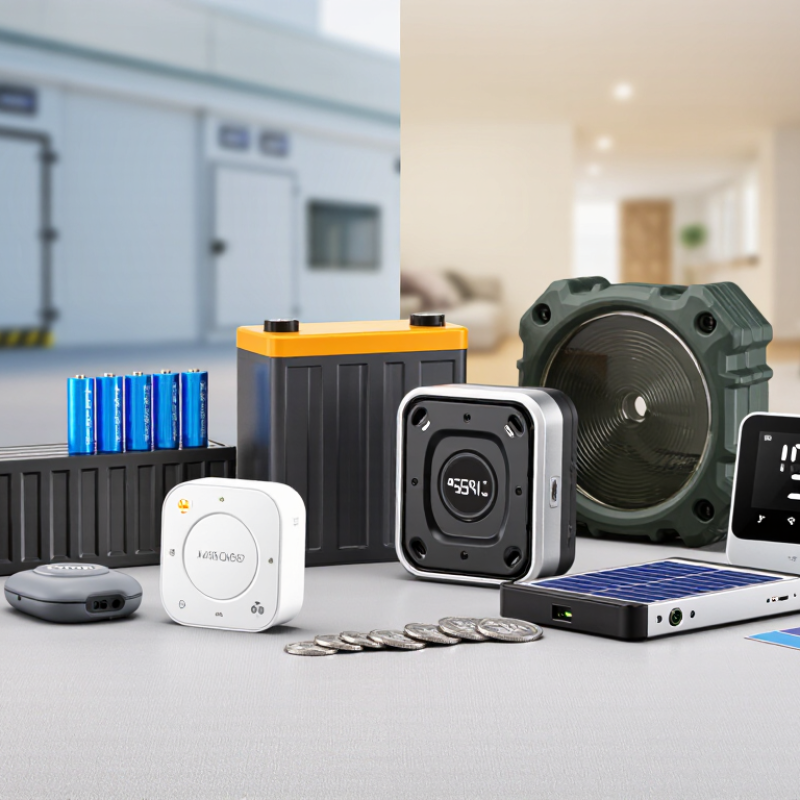
Defining IoT Batteries and Their Role in Connected Devices
An IoT battery is an energy source that lets a connected device operate where mains power is unavailable or impractical. It may power a soil sensor in a field, a meter in a basement, or a small tracker moving between locations. Some devices use primary cells that are replaced; others use rechargeable batteries or combine storage with energy harvesting. The right choice depends on operating life, size, temperature, radio activity, and maintenance access.
Small cells matter. A sensor may sleep for hours, then briefly draw more current while transmitting data. Battery selection must account for both its quiet periods and those short power peaks. IoT Analytics reported 18.8 billion connected IoT devices worldwide at the end of 2024, up 13% year over year (State of IoT 2024). That scale makes battery longevity a practical design concern, not just a specification-sheet detail.
In the field, a device that is hard to reach may need a higher-capacity cell, lower reporting frequency, or a more efficient communications schedule. Engineers also consider self-discharge, cold-weather performance, and the battery’s safe operating limits. A nominal capacity figure alone can mislead: real service life changes with signal strength, temperature, and data traffic. Details matter. There is no universally best IoT battery; the best fit is the one that reliably meets the device’s workload and replacement constraints.
What Are IoT Batteries and Which Type Is Best?
IoT batteries power connected devices such as sensors, meters, and trackers. The best choice depends on the device’s power needs, expected service life, rechargeability, and operating environment.
Typical nominal voltage per cell varies by battery chemistry. Lithium primary cells, including lithium-thionyl chloride, are often used in long-life devices with low, steady power needs. Rechargeable lithium-ion and lithium iron phosphate cells suit devices that can be recharged, while alkaline and nickel-metal hydride cells are common in simpler or replaceable-battery applications. Voltage alone does not determine battery life or suitability.
How IoT Devices Use and Manage Battery Power
IoT batteries power sensors, meters, trackers, and other devices that may need to operate for years without maintenance. Their best choice depends on the job. A sensor sending small readings every hour may use a primary lithium battery; a camera sending frequent images may need a rechargeable pack and regular charging. Radio transmissions often consume more energy than a brief sensor reading, so devices conserve power by sleeping between tasks. Small savings add up.
The scale makes careful power management essential. IoT Analytics estimated 18.8 billion connected IoT devices worldwide at the end of 2024, with growth expected to continue. Its State of IoT report highlights how rapidly the device population is expanding. In practice, engineers manage battery life by reducing transmission frequency, using low-power communication modes, and checking battery voltage remotely. They also test devices in real temperatures: cold weather can reduce usable capacity. A lab estimate can still be wrong.
Tips: Set reporting intervals to match the actual need, not the shortest available setting. Measure current during sleep and transmission, then test the complete device over realistic operating cycles. Track battery trends, too. Replace vague “long-life” claims with field data, and leave a margin for weak signals, aging cells, and unexpected updates. A little extra reserve matters.
Key Requirements for Batteries in IoT Applications
IoT Analytics’ State of IoT Summer 2024 estimated 18.8 billion connected IoT devices in 2024. It projected 40 billion by 2030. At that scale, battery replacement can become a major maintenance cost. A sensor on a warehouse ceiling may be easy to reach; one beside a field irrigation line may not be.
Battery requirements start with the device’s actual duty cycle. Many sensors sleep for minutes, then draw sharp current bursts to transmit readings. Peak current matters. GSMA Mobile IoT guidance notes that optimized, low-data devices can target battery life of up to ten years. That is a target, not a promise: weak coverage, frequent transmissions, and cold temperatures can shorten it.
Cold changes everything. Designers should test the complete device, not just rely on a battery’s printed capacity.
Primary lithium cells can suit long-life, low-drain sensors, while rechargeable lithium-ion cells fit devices with regular charging or heavier loads. The trade-off is real. Rechargeable cells need a charging plan; primary cells cannot be replenished in the field. Check operating temperature, self-discharge, pulse capability, size, and safe enclosure design.
It is tempting to optimize only for capacity. That shortcut can miss the current burst that resets a radio or leaves a reading unsent.
Common Battery Types and Their Characteristics
Common Battery Types and Their Characteristics
IoT devices use different batteries depending on how often they transmit and where they operate. Alkaline cells are inexpensive and easy to find. They suit simple sensors with modest power needs, but frequent replacements can become inconvenient. Rechargeable lithium-ion batteries store plenty of energy in a compact size. They work well for devices that can be recharged, though cold temperatures and charging requirements need consideration.
Primary lithium batteries, including lithium-thionyl chloride cells, are often chosen for remote sensors that must run for years. They have low self-discharge, but some models struggle with brief, high-current bursts. A capacitor or suitable cell design may help. Nickel-metal hydride batteries are rechargeable and can handle repeated use, but their stored energy may drain faster during long periods of inactivity. The best option depends on peak current, operating temperature, expected service life, and whether someone can safely reach the device. A specification sheet is useful, but real field conditions can still surprise you.
Tips: Check the sensor’s transmit-current peaks, not just its average draw. Test the battery at the coldest expected temperature, and leave room for a practical replacement schedule. I would not assume one battery type fits every deployment.
How to Choose the Best Battery for an IoT Device
Choosing an IoT battery starts with the device’s actual load, not its advertised lifespan. A temperature sensor sending one reading every ten minutes may use little average power, yet its radio can draw a sharp current pulse. Check both figures in the device specifications. Then estimate daily energy use and compare it with the battery’s usable capacity, allowing a margin for cold weather and aging.
For long-lived devices with infrequent transmissions, primary lithium batteries often suit the job because they have low self-discharge and perform well in cold conditions. Alkaline cells can work for inexpensive, easy-to-replace sensors, but their voltage may sag under heavier loads. Rechargeable lithium-ion batteries fit devices that transmit frequently or can be charged regularly. They need suitable charging and protection circuitry. There is no universal winner.
Physical details matter, too. Measure the battery compartment, check connector and voltage requirements, and consider whether a technician can replace the cell in the field. A battery that fits on paper may fail when a radio sends data at full power. Test a working device through realistic temperature changes and transmission cycles. It is tempting to trust a clean capacity calculation. Real devices are messier, and the estimate may need revision.
What Are IoT Batteries and Which Type Is Best? — How to Choose the Best Battery for an IoT Device
| Battery Type | Typical Nominal Voltage | Rechargeable? | Key Advantages | Important Limitations | IoT Applications That May Fit |
| Lithium thionyl chloride (Li-SOCl₂) | About 3.6 V per cell | No | High energy per unit mass; very low self-discharge; well suited to long service life with low average current. | Not rechargeable. High pulse loads can cause voltage drop; some cells may need a pulse-support component. Performance depends on cell design and operating conditions. | Low-power metering, remote sensors, and devices that transmit infrequently and are difficult to access. |
| Lithium manganese dioxide (Li-MnO₂) | About 3.0 V per cell | No | Good shelf life and useful pulse capability in suitable cell formats; available in compact primary-cell sizes. | Single-use chemistry; capacity and pulse performance vary by cell size, temperature, and load profile. | Compact sensors, alarms, and IoT devices with intermittent transmissions and moderate pulse demand. |
| Alkaline | About 1.5 V per cell | No | Widely available, low initial cost, and convenient for replaceable-battery products. | Voltage declines during discharge; less suitable for sustained high current or very long unattended service. Output can be reduced in cold conditions. | Low-cost, easy-to-service devices with modest energy needs and accessible battery compartments. |
| Lithium-ion (Li-ion) | Typically about 3.6–3.7 V per cell | Yes | Rechargeable and available in formats suited to relatively high power; practical where regular charging or replacement is possible. | Requires suitable charging and protection circuitry. Usable life depends on charge rate, temperature, depth of discharge, and storage conditions. | Rechargeable trackers, gateways, and connected devices with frequent data transmission or a charging opportunity. |
| Lithium iron phosphate (LiFePO₄) | About 3.2 V per cell | Yes | Rechargeable chemistry often selected for cycle life and thermal stability; suitable for repeated charge-and-discharge operation. | Needs a compatible charger and protection system. Cell voltage and capacity must match the device design; cold-temperature charging may require restrictions. | Solar-powered sensors, stationary monitoring equipment, and devices designed for recurring energy harvesting. |
| Nickel-metal hydride (NiMH) | About 1.2 V per cell | Yes | Rechargeable; useful where standard replaceable cell formats and repeated charging are priorities. | Lower nominal voltage per cell than many lithium chemistries; self-discharge and performance vary by cell type and operating conditions. | Reusable devices with accessible battery compartments and a compatible charging routine. |
Selection tip: Match the battery to the device’s average and peak current, required service life, operating temperature, available space, maintenance access, and charging options. Nominal voltages are typical cell values; confirm the exact operating limits and specifications for the selected cell and device.


 Distributors
 SDS Download
 Contact
