Partner Login
Enter your username and password here on order to log in on the partner portal:
No registered partner yet?
Register nowA hydraulic cylinder may look simple from the outside: a steel tube, a polished rod, and two ports. Inside, however, each component has a job. A worn seal can leave a thin oil trail on the rod. A damaged piston can cause drift under load. Knowing the parts helps buyers ask better questions before a cylinder reaches the machine.
Hydraulics author Andrew Parr’s technical guidance can be paraphrased this way: “Understand how each component works before diagnosing the whole system.” That is a practical starting point, not a substitute for checking the equipment. This guide covers ten Hydraulic Cylinder Parts buyers should recognize, including barrels, pistons, rods, seals, bearings, and end caps. It also explains what to inspect, which materials and finishes matter, and how operating pressure and fluid conditions affect selection. Small details count. A seal that fits poorly may leak; a rod surface that looks smooth may still be scored.
Specifications deserve careful attention. Confirm bore and rod dimensions, mounting style, stroke length, pressure rating, and compatible fluid. Compare supplier drawings with the machine’s requirements. If something is unclear, ask for documentation rather than guessing. Even experienced buyers can miss a detail when replacing a familiar cylinder. This overview offers a useful checklist, but unusual loads, harsh environments, or repeated failures may require a qualified hydraulic specialist to review the application.
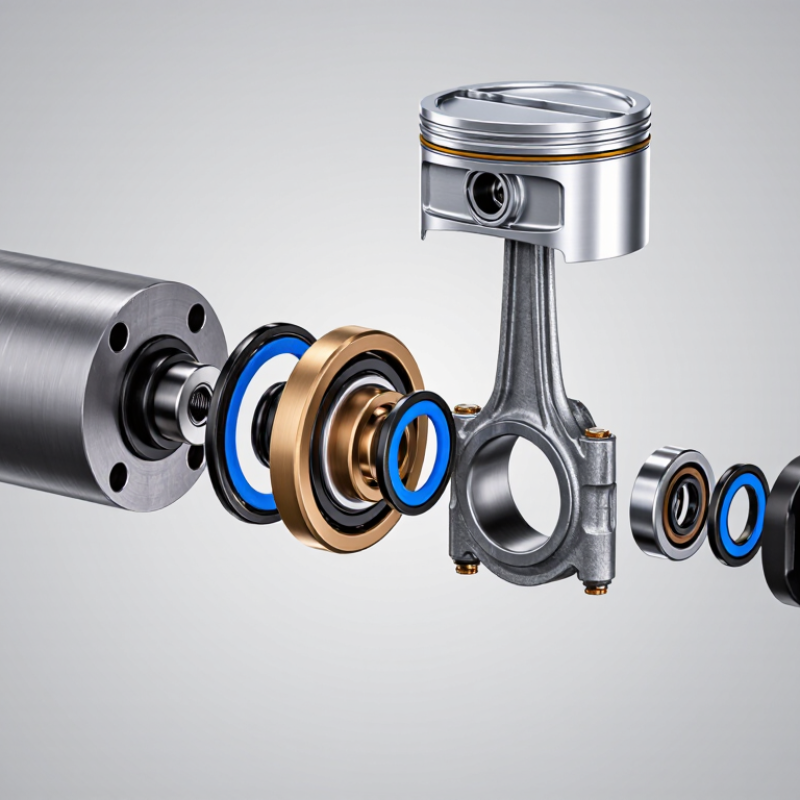
A hydraulic cylinder converts fluid pressure into straight-line force. Pressurized oil enters the cap-end port and pushes the piston forward. The basic relationship is force equals pressure multiplied by piston area. On the rod side, the rod reduces the working area, so pulling force is usually lower than pushing force at equal pressure. The barrel contains pressure; the piston separates chambers; seals limit internal leakage. The rod transfers motion to the load. Small details matter. A worn seal can let oil bypass the piston, reducing force and causing drift.
Flow rate mainly sets speed, while pressure determines available force. Directional valves select which chamber receives oil, and the return flow leaves through the opposite port. Cushions can slow the piston near the stroke ends, reducing impact, but poor adjustment may still cause harsh stopping. The U.S. Department of Energy’s 2006 Improving Pumping System Performance sourcebook estimates that pumping systems use nearly 20% of global electricity. This broad figure is not a cylinder-specific efficiency rating; it highlights why pressure losses and unnecessary flow deserve attention. In practice, temperature, contamination, side loading, and installation alignment also affect performance. A clean schematic helps, but real machines are less tidy. Recheck the load and operating conditions before choosing a bore or rod size.
Top 10 Hydraulic Cylinder Parts Every Buyer Should Know
The Ten Main Cylinder Parts and the Role of Each
A cylinder barrel holds hydraulic pressure and guides the piston through its stroke. The piston separates the two working chambers, converting fluid pressure into movement. Attached to it, the piston rod transfers that force to the machine. The rod-end head supports the rod as it moves in and out. At the opposite end, the cap closes the barrel and helps contain pressure. These parts must match the cylinder’s operating pressure, stroke, and mounting arrangement.
Seals limit fluid leakage around the piston and rod. Wear rings guide moving components and help prevent metal-to-metal contact. Ports connect the cylinder to hydraulic lines, directing fluid into or out of each chamber. Cushioning components slow the piston near the end of its stroke, reducing impact. Mounting hardware, such as clevises or trunnions, secures the cylinder and transfers force to the equipment. Small details matter.
When comparing cylinders, ask what materials and seal types suit the fluid, temperature, and working conditions. Check rod finish, port location, and available space for maintenance. A seal that works well in one application may wear quickly in another. I have seen buyers focus on pressure ratings and miss the mounting geometry. That is an easy mistake to make. A parts list helps, but it cannot replace checking the actual load and duty cycle.
| Part | Primary Role | Common Materials or Design | Key Buyer Checks |
|---|---|---|---|
| Cylinder Barrel | Contains the pressurized fluid and provides the bore in which the piston travels. | Typically honed steel tubing; the bore surface is finished to support sealing and smooth piston movement. | Confirm bore diameter, stroke, pressure rating, straightness, and internal surface finish. |
| Piston | Separates the two working chambers and transfers hydraulic force to the piston rod. | Commonly steel or ductile iron, with grooves for piston seals and wear rings. | Check bore compatibility, seal-groove dimensions, fit, and attachment method to the rod. |
| Piston Rod | Transmits force from the piston to the connected machine or load. | Often high-strength steel with a ground, polished, and corrosion-resistant surface treatment. | Verify rod diameter, stroke, end-thread or mounting details, surface finish, and corrosion protection. |
| Rod Gland (Cylinder Head) | Closes the rod end of the barrel, guides the rod, and houses rod-side seals and bearings. | Usually steel or iron; may be threaded, bolted, or retained by another cylinder-specific design. | Check rod clearance, seal arrangement, mounting style, and serviceability. |
| End Cap (Base) | Closes the barrel at the base end and supports the cylinder’s base-side mounting arrangement. | Commonly steel or ductile iron; may be welded, bolted, or mechanically retained. | Confirm mounting dimensions, port location, connection method, and pressure suitability. |
| Piston Seal | Limits fluid bypass between the piston’s two pressure chambers. | May use polyurethane, nitrile rubber, or PTFE-based materials, depending on fluid, pressure, and temperature. | Match the seal profile and size to the piston groove, fluid, operating temperature, and pressure. |
| Rod Seal | Controls leakage where the piston rod exits the cylinder and helps retain hydraulic fluid. | Typically an elastomeric or polymer seal selected for the cylinder’s operating conditions. | Check rod size, gland groove dimensions, fluid compatibility, pressure, and expected motion speed. |
| Wiper (Rod Scraper) | Removes dust, moisture, and debris from the rod as it retracts, helping protect internal seals. | Often made from polyurethane or another wear-resistant polymer; some designs include a metal case. | Consider exposure to dirt, water, temperature, and the rod’s size and surface condition. |
| Wear Rings (Guide Rings) | Guide the piston and/or rod, control side loading, and help prevent metal-to-metal contact. | Typically low-friction polymer or fabric-reinforced material, selected for load and wear requirements. | Check ring location, dimensions, clearance, load conditions, and compatibility with the seal system. |
| Hydraulic Ports | Provide fluid passages into and out of the cylinder chambers to extend or retract the rod. | Machined into the barrel, head, or end cap; thread and port standards vary by application and region. | Verify port thread standard, size, location, flow requirements, and connection compatibility. |
Note: Materials, seal profiles, mounting styles, and pressure ratings vary by cylinder design and operating conditions. Confirm specifications with the cylinder drawing and application requirements.
Hydraulic cylinder seals control leakage and keep pressure where it can do useful work.
Buyers should check the seal material against the hydraulic fluid, operating temperature, and pressure range. A seal suited to one fluid may swell or harden in another. The rod surface matters, too: scratches can wear a seal quickly, even when the seal itself looks sound.
Small details matter. During inspection, look for fluid around the rod, torn seal edges, or scoring on the exposed shaft. A clean exterior is helpful, but it cannot confirm internal seal condition.
Bearings and wear bands guide moving parts and help limit metal-to-metal contact.
Rod bearings also help manage side loads, though poor alignment can still cause uneven wear. Check for looseness, scoring, and unusual rod movement; these signs deserve attention before a cylinder stops working.
Mounts transfer cylinder force to the machine and influence how smoothly the rod travels. Clevis pins, trunnions, and mounting faces should match the cylinder’s dimensions and expected load. Inspect pin fit and mounting alignment, not just the cylinder body.
A common buying mistake is focusing on bore and stroke while overlooking these supporting parts. They are easy to underestimate.
Even a well-built cylinder can perform poorly when its mount shifts or its bearing fit is wrong.
Hydraulic cylinder performance depends on how its materials work together, not on one impressive component. The barrel is commonly honed steel; its smooth bore helps the piston seals move without excessive wear. Small scratches matter. A rough or damaged bore can cause leakage and shorten seal life.
The piston rod needs strength, a suitable surface finish, and protection from corrosion. Hard coatings can resist wear, but a coating choice should match the environment and maintenance plan. Seals require equal care. Polyurethane often handles abrasion well, while other elastomers may suit different fluids or temperatures. Check compatibility rather than assuming one material fits every system.
Design details affect how those materials perform. A well-supported rod bearing helps control side loads, though it cannot correct poor cylinder alignment. Piston seals, rod seals, and wipers each manage different leakage or contamination risks. Ports and end caps also need correct sizing for flow and pressure. I would not treat a thicker rod as an automatic upgrade; added weight can affect movement and mounting loads. Even a careful specification can miss real operating conditions. Dirt, temperature swings, and uneven loading deserve attention before parts are selected.
A hydraulic cylinder can fail early when one small part does not match the machine. Check the barrel, piston, rod, head, seals, wear rings, bearings, ports, retainers, and fasteners as a connected assembly. Measure the bore, rod diameter, stroke, and mounting dimensions against the equipment specifications. A close visual match is not enough.
Confirm the working pressure, temperature range, fluid type, and duty cycle before choosing seals or wear rings. A seal that suits mineral oil may not suit another fluid. Inspect the rod surface for scratches, pitting, or damaged chrome, since even a shallow mark can wear a seal. Small details matter. Check port thread type and position, too; a fitting that screws in but does not seal correctly can cause leaks.
Ask for material details, dimensional tolerances, and inspection records when the application is demanding. Compare these with the original part drawing, not only a supplier’s product photo. I can see why buyers sometimes focus on price first, but that can leave compatibility questions unanswered. It is also worth checking whether retainers and fasteners are supplied with the part. Reusing worn hardware may seem practical, yet it can introduce movement or uneven loading. A written measurement sheet helps expose mismatches before installation.