
X

Partner Login

Enter your username and password here on order to log in on the partner portal:

No registered partner yet?

Register now

How to Choose Dual Exhaust Tips for Your Car?

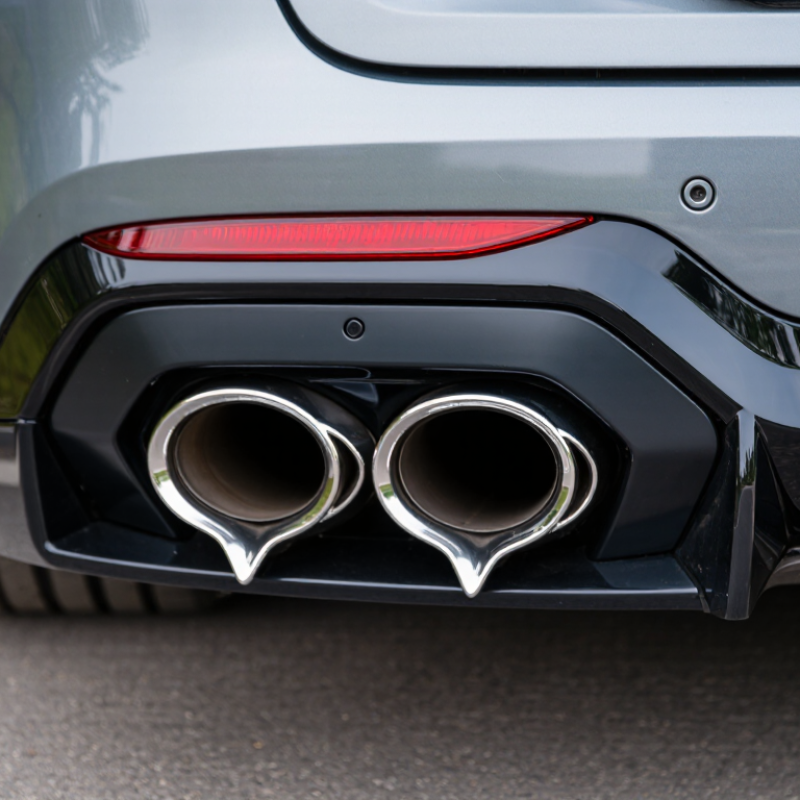
Choosing Dual Exhaust Tips is not only a styling decision. The right pair should match your vehicle’s exhaust layout, outlet diameter, bumper space, and driving conditions. A polished stainless-steel tip can brighten a daily driver, while a matte black finish may suit a performance-inspired build. Small details matter. A few millimeters can affect fitment.

Begin by measuring the existing exhaust outlets carefully. Check inlet size, overall length, clamp position, and clearance from plastic, paint, and heat-sensitive components. Vehicle manuals and manufacturer specifications offer reliable guidance. Experienced installers also inspect the bumper cutouts before recommending a shape. Round, angled, slash-cut, and rolled-edge designs create different visual impressions. However, appearance should not hide poor construction.

Material quality deserves attention. Stainless steel generally resists corrosion better than mild steel, especially in wet or salty environments. Secure clamps and smooth internal edges support a cleaner installation. Dual Exhaust Tips usually influence appearance more than horsepower. They may slightly change exhaust tone, but major performance claims require evidence. Be cautious with dramatic promises.

I once underestimated how strongly a dark finish showed road dust. It looked excellent in photographs, but less impressive after a rainy commute. That mistake is worth remembering. Maintenance, climate, and cleaning habits should shape your choice. Confirm local noise and equipment requirements before installation. A reputable exhaust shop can verify safe clearance and proper attachment. The best selection balances fit, durability, appearance, and realistic expectations. It should look intentional, remain secure, and withstand ordinary driving without constant adjustment.
How to Choose Dual Exhaust Tips for Your Car?

Identify the Layout: Dual-Exit, True-Dual, and Y-Split Exhaust Systems

How to Choose Dual Exhaust Tips for Your Car?

Identify the Layout: Dual-Exit, True-Dual, and Y-Split Exhaust Systems

Before choosing dual exhaust tips, inspect the pipe layout beneath the bumper. A dual-exit system uses one exhaust path that divides near the rear. A true-dual system keeps two separate paths from the engine or collectors. A Y-split system uses one main pipe, then branches through a Y-shaped junction. They may look similar outside. Their airflow and sound can differ considerably.

Measure twice. Check the outlet diameter, spacing, bumper cutouts, and ground clearance. Tips should extend evenly, without touching plastic, paint, or heat-sensitive components. For a true-dual setup, match both tip sizes and angles. A Y-split may need shorter tips because the branch area already reduces available space. Stainless steel usually resists corrosion better, while aluminized steel can reduce cost. Fit matters more than decoration.

Sound can deceive.

The EPA’s 2023 Automotive Trends Report recorded average new-vehicle emissions of about 347 grams of CO2 per mile for model-year 2022 vehicles. Exhaust tips do not create meaningful emissions reductions or guaranteed horsepower gains. They mainly influence appearance and the final sound character.

SAE J2567 provides a standardized method for measuring exterior vehicle noise, but real driving still varies with load and temperature. The 2023 specialty-equipment market report valued the U.S. market at roughly 52.3 billion dollars in 2022, showing strong customization demand.

Still, I would question dramatic performance claims without dyno data. A polished tip cannot repair a restrictive or poorly aligned exhaust system.

Measure Fitment: Match the Tip Inlet Diameter to the Tailpipe Size

How to Choose Dual Exhaust Tips for Your Car?

Choosing dual exhaust tips starts with accurate fitment. Measure the tailpipe before shopping. Use a caliper for the outside diameter, not a ruler. The tip inlet must match the tailpipe size closely. A loose fit can rattle. A tight fit may not slide over the pipe.

Measure both pipes separately. They may look identical but differ slightly after repairs or corrosion. Check the inlet depth, clamp space, and available clearance near the bumper. Leave room for heat expansion. The tips should not touch plastic, paint, or body panels. Cold measurements can be misleading.

I once measured only one side and assumed the second pipe matched. It did not. That small mistake caused uneven installation and extra adjustment. A slip-on tip usually needs a compatible inlet diameter and secure hardware. If the sizes differ, a properly rated reducer may help, but it can change the tip’s position. Avoid forcing the part into place.

Fitment is more than appearance. The outlet should sit evenly, with both tips facing straight and extending a safe distance from the bumper. Check the exhaust system after a short drive. Look for movement, fresh contact marks, or unusual vibration. Recheck the fasteners when the system is completely cool. Loose hardware is easy to overlook.

Evaluate Flow: Use the 3-psi Backpressure Benchmark at Wide-Open Throttle

Choosing dual exhaust tips starts with flow, not appearance. At wide-open throttle, measure backpressure before judging tip size or outlet shape. The commonly used 3-psi benchmark is a practical warning line, not a universal law. If pressure exceeds 3 psi under load, the exhaust path may restrict high-rpm power. The restriction could come from narrow tubing, a clogged converter, a damaged muffler, or poorly matched tips.

Use a calibrated pressure gauge and record readings near the collector and after the muffler. Test with the engine fully warm, then repeat at wide-open throttle across the upper rpm range. SAE technical studies on exhaust restriction show that pressure rises sharply when pipe area becomes insufficient for exhaust volume. The U.S. Environmental Protection Agency’s 2023 Automotive Trends Report also shows modern engines producing higher power from smaller displacements, increasing the need for careful thermal and flow management.

A dual-tip design should preserve the system’s measured flow. Larger outlets may reduce exit velocity and create little performance benefit. Smaller outlets can add restriction, especially when internal passages are narrow. Do not trust sound alone. It can fool you. I once treated a louder exhaust as freer flowing, but a pressure test challenged that assumption. Tip diameter should match the existing pipe diameter unless testing proves otherwise. Check both outlets for equal flow after installation. Uneven pulses may reveal an internal blockage or an inaccurate split. The 3-psi reading deserves attention, although vehicle configuration and test location can change the result.

Select Materials: Compare 304 and 409 Stainless Steel for Corrosion Resistance

Choosing dual exhaust tips is not only about diameter or polished appearance. Material determines how the tips handle moisture, road salt, and heat. In workshop inspections, 304 stainless steel has shown stronger corrosion resistance, especially in coastal climates. It contains more nickel, which helps protect the surface when salt spray settles around the outlet. This matters. A clean-looking tip can still hide pitting underneath.

409 stainless steel behaves differently. It usually costs less and handles exhaust heat well, but it develops discoloration and light surface rust sooner. That change may look alarming, although it is often cosmetic rather than structural. I once underestimated winter salt on a commuter car; the 409 tips needed more cleaning than expected. Experience can correct theory. For salted roads, frequent rain, or outdoor storage, 304 is the safer choice.

For dry climates and controlled budgets, 409 may work well for dual tips. Inspect inner seams and welds, not only the outer shine. Thin plating can imitate stainless steel, then fail after scratches. Ask for the steel grade and production details. A magnet test is not definitive. Match the tip material to the rest of the exhaust system, because a premium tip cannot stop corrosion in a neglected pipe. Leave enough bumper clearance; heat marks reveal poor fitment quickly.

How to Choose Dual Exhaust Tips: 304 vs 409 Stainless Steel

304 stainless steel typically contains more chromium and nickel than 409 stainless steel, which generally provides better resistance to moisture, road salt, and surface corrosion. 409 stainless steel contains less nickel and is commonly selected for heat resistance and cost efficiency in exhaust applications.

Confirm Compliance: Check EPA Requirements and Local Exhaust Noise Limits in dB(A)

Choosing dual exhaust tips is not only a styling decision. Compliance must come first. The U.S. Environmental Protection Agency’s Automotive Trends Report for model year 2022 recorded average new-vehicle emissions of 347 grams of CO2 per mile. Exhaust tips do not normally reduce these emissions, and they must not interfere with catalytic converters, oxygen sensors, mufflers, or other emissions equipment. EPA anti-tampering guidance warns that removing or defeating emissions controls can create legal and inspection problems.

Noise rules require equal care. The EPA does not provide one universal dB(A) limit for every passenger vehicle. State and municipal authorities often set different limits, testing distances, engine speeds, and enforcement methods. The European Environment Agency’s Environmental Noise in Europe report estimated that more than 113 million people faced harmful road-traffic noise exposure above 55 dB Lden. This is not an exhaust test, but it shows why communities regulate vehicle sound closely. A published limit may apply only during a specific stationary or pass-by measurement.

Tips: Check your vehicle’s registration area, inspection handbook, and local noise ordinance before buying. Ask the installer for a sound reading in dB(A), using the required distance and engine speed. SAE J1169 and ISO 5130 provide useful measurement references, but local authorities may apply different procedures. Keep the original parts, and confirm fitment without guessing. I once treated a “quiet” tip as harmless; actual sound depended more on the muffler and installation. That assumption needed correction.