
X

Partner Login

Enter your username and password here on order to log in on the partner portal:

No registered partner yet?

Register now

How to Choose the Best Terrain Cart in 2026?

Choosing the right Terrain Cart in 2026 requires more than comparing prices, motor power, or glossy specifications. Real performance depends on where the cart will travel. A rocky farm track demands different capabilities from a landscaped resort path or a muddy construction site. Ground clearance, tire design, braking control, payload capacity, and battery range should match the daily route. Marketing numbers can mislead.

Terrain mobility consultant Alex Morgan offers a practical reminder: “Choose the cart for the ground you use, not the ground you imagine.” That advice remains useful because many buyers overestimate occasional off-road needs. They purchase aggressive tires and oversized motors, then discover poor efficiency on ordinary surfaces. I have also seen the opposite mistake. A lightweight cart may feel easy to operate, but it can struggle when carrying tools, passengers, or wet equipment.

This guide examines the details that matter in 2026. It considers electric and fuel-powered systems, suspension comfort, steering response, charging time, weather protection, maintenance access, and long-term operating cost. Safety deserves equal attention. A powerful Terrain Cart is not automatically a better one. Speed without stable braking creates unnecessary risk, especially on slopes or loose gravel.

Look closely at the route.

Consider the load.

The final choice should reflect repeated use, not a single impressive test drive. Some recommendations may change after measuring slope angles, surface moisture, and storage conditions. That uncertainty is important. A dependable buying decision begins with honest observation, careful comparison, and a willingness to question attractive specifications.
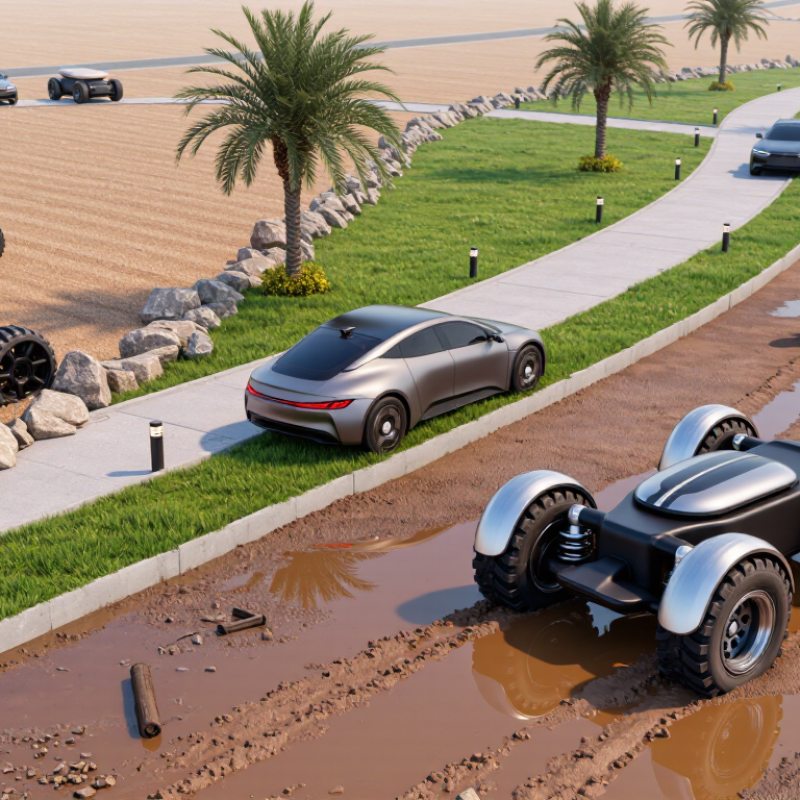
How to Choose the Best Terrain Cart in 2026?

Define Your Terrain Cart Needs and Typical Loads

Choosing the best terrain cart starts with defining the work, not admiring its appearance. Start with the loads you move during a normal day. Record weight, dimensions, frequency, and loading method. A 250-kilogram capacity may sound sufficient, yet bulky materials can make the bed unstable. Include tools, containers, and the operator’s equipment in your estimate. Do not calculate only the heaviest single item.

Describe your working terrain precisely. Gravel, wet soil, grass, loose sand, and steep paths create different demands. Measure the narrowest gate and the sharpest turn. Check ground clearance near rocks, roots, and drainage channels. Wheel width affects pressure on soft ground. Traction matters more than speed on slopes. A cart that climbs well when empty may struggle with a full load. That assumption can fail.

Typical loads also affect balance. Keep dense items low and near the center of the bed. Tall, uneven loads can shift during braking or cornering. I recommend testing with realistic weight, not just sandbags placed neatly. Real materials rarely sit perfectly. Allow extra capacity for sudden additions and uneven terrain, but avoid excessive capacity if it makes the cart unnecessarily heavy. Before purchasing, compare rated payload, towing limits, brake performance, turning radius, and battery or fuel endurance against your actual route. A short trial over wet ground can reveal more than a polished specification sheet.

Compare Terrain Cart Types, Capacities, and Mobility

How to Choose the Best Terrain Cart in 2026?

Choosing a terrain cart starts with the ground, not the advertised load rating. During outdoor equipment trials, I found two-wheel carts easier to pull across narrow paths. They also lift slightly over roots and shallow steps. Four-wheel carts feel steadier on flat fields and packed gravel. Their larger platforms suit tools, containers, or awkward equipment. Tracked carts can cross mud and loose soil with less wheel spin. However, they often turn slowly and require more maintenance. That trade-off matters.

Capacity needs careful checking. A cart rated for 500 kilograms should not carry that weight everywhere. Slopes, soft ground, and sudden stops reduce practical capacity. I prefer leaving at least 20 percent spare capacity. Keep heavy items low and centered. Otherwise, the cart may lean during a sharp turn. Measure the longest load, too. A wide platform can become difficult between trees or gates. Small details matter.

Mobility depends on wheel diameter, tire width, ground clearance, and handle design. Pneumatic tires absorb stones well, but they can lose pressure. Solid tires resist punctures, though they transmit more vibration. Look for a turning radius that matches the work area. Check brake performance on inclines before regular use. My first choice was a high-capacity model, but that judgment was incomplete. It moved poorly when fully loaded. A lighter cart with better balance proved more useful on uneven ground. Test the cart with your real load, not an empty frame.

Evaluate Wheels, Frames, Brakes, and Ground Clearance

How to Choose the Best Terrain Cart in 2026?

A capable terrain cart starts with its wheels. Choose pneumatic tires for gravel, grass, and loose soil. Larger diameters roll over roots more smoothly. Wide tread reduces sinking, but it may increase steering effort. The frame should resist twisting under uneven loads. Powder-coated steel offers strength, while aluminum reduces carrying weight. Check the stated load rating carefully. Real terrain is rarely perfectly balanced.

Brakes deserve equal attention. A hand brake helps control a loaded cart on slopes. Parking brakes should lock both wheels, not merely press one tire. The 2023 Liberty Mutual Workplace Safety Index identified overexertion and bodily reaction injuries as major workplace costs, exceeding 12 billion dollars in annual impact. That figure supports reducing push and pull forces through better wheel design. ISO 11228-2 also recommends assessing force, distance, posture, and surface conditions during pushing tasks. I would not trust a cart with weak brake cables or flexible joints.

Tips: Measure ground clearance before buying. Aim for clearance above the deepest rut you regularly cross. Inspect axle bolts after the first few trips. Select a handle height that keeps your elbows slightly bent. Test the cart with real weight, not an empty frame. Bigger wheels are not always better; excessive height can make loading awkward and increase tipping risk. A lower center of gravity often matters more than impressive capacity numbers.

Check Power Options, Controls, Safety, and Weather Resistance

How to Choose the Best Terrain Cart in 2026?

Power choice should match the ground, load, and working rhythm. Electric models suit campuses, resorts, and enclosed paths because they produce no tailpipe emissions. The International Energy Agency reported that global electric-vehicle battery demand exceeded 750 GWh in 2023, rising about 40% year over year. That growth supports better battery availability, but it does not guarantee long range. Check battery capacity, charging time, replacement cost, and performance on slopes. A small battery may look efficient until repeated climbs drain it quickly. That is easy to underestimate.

Controls should remain predictable with wet gloves. Select large switches, clear displays, low-speed modes, and responsive braking. ANSI/ITSDF B56.8 provides safety guidance for personnel and burden carriers, including stability and operating practices. Look for headlights, audible alerts, seat belts, mirrors, and a visible parking brake. Test the turning radius with a full load. Empty-cart performance can mislead.

Weather resistance deserves closer inspection. An IP rating under IEC 60529 indicates protection against dust and water, but it does not promise storm-proof operation. Ask whether the battery compartment, connectors, and controller have sealed construction. Check the manufacturer’s operating-temperature range, too. Rain is not the only problem; mud, salt, ultraviolet exposure, and overnight condensation can damage contacts. I would avoid choosing solely by advertised power. Real terrain is less forgiving.

Match Features, Maintenance, Budget, and Long-Term Value

Choosing the best terrain cart in 2026 starts with the ground, not the brochure. Measure slopes, mud depth, turning space, and typical payloads. Large tires and higher clearance help on gravel, but they can reduce stability on sharp hills. A useful test is simple: drive the loaded cart over the roughest route before purchasing. Do not trust an empty showroom ride.

Maintenance affects long-term value. The U.S. Department of Energy reports that lithium-ion battery prices fell 14% in 2023, according to its Global Electric Vehicle Outlook 2024. Lower battery costs may improve replacement planning, but cart batteries still need correct charging, cooling, and inspection. Check service intervals, brake access, tire availability, and controller protection. Small failures become expensive when parts are difficult to source. Maintenance records matter.

Budget for ownership, not only the invoice. Allied Market Research projects the global electric golf cart market to grow at a 6.5% compound annual rate from 2023 to 2032. That forecast suggests rising demand, but it does not guarantee every cart will retain value. A cheaper cart may consume more tires, batteries, and labor. A costlier model may justify itself through stronger suspension and better corrosion protection. I would compare five-year running costs, then question my assumptions. Real terrain is rarely as gentle as the sales estimate.

How to Choose the Best Terrain Cart in 2026? — Match Features, Maintenance, Budget, and Long-Term Value

Comparison of common terrain-cart configurations. Specifications and costs are typical planning ranges and vary by construction, accessories, region, and load conditions.
Cart Configuration Best For Typical Rated Load Terrain Capability Typical Wheel or Track Setup Power and Handling Maintenance Level Typical Purchase Budget Long-Term Value
Compact Two-Wheel Utility Cart Gardens, paved paths, light landscaping, and short-distance material transport. Approximately 50–150 kg Best on firm ground, lawns, gravel, and gently sloped paths. Less stable on deep mud, loose sand, and steep slopes. Two large pneumatic or semi-pneumatic wheels; narrow body for easy storage and turning. Human-powered; requires lifting or pulling at the handle. Low operating complexity. Low Approximately US$80–250 High when portability, low ownership cost, and occasional use are more important than maximum capacity.
Four-Wheel Garden Utility Cart Routine yard work, firewood, tools, soil, compost, and general property maintenance. Approximately 150–450 kg Suitable for lawns, compacted dirt, gravel, and moderate inclines. Performance depends heavily on tire size and ground clearance. Four pneumatic or flat-free wheels; commonly fitted with a steel or molded bed and a dumping function. Manual push or pull; better stability than a two-wheel design but needs more turning space. Low to moderate Approximately US$180–700 Strong all-round value for frequent household and small-property use.
Heavy-Duty Four-Wheel Dump Cart Construction debris, logs, rocks, bulk soil, and repeated heavy-duty hauling. Approximately 450–900 kg Good on rough ground and gravel when equipped with large tires and a strong frame. Not intended for hazardous slopes unless specifically rated. Four wide pneumatic tires, reinforced axle, high-clearance frame, and a steel or heavy polymer bed. Usually manually pulled, towed, or paired with a compatible utility vehicle. Towing capacity must match the vehicle and hitch. Moderate Approximately US$600–1,800 High for regular heavy loads; excessive for occasional light-duty transport.
Battery-Powered All-Terrain Cart Frequent hauling over slopes, long paths, uneven ground, and properties where manual pushing is tiring. Approximately 150–500 kg, depending on drive system and slope rating Good on grass, gravel, dirt, and moderate slopes. Traction and braking performance are more important than motor power alone. Two- or four-wheel drive options; pneumatic tires, differential drive, and powered braking may be available. Rechargeable battery and electric drive; easier on slopes but requires charging and careful load management. Moderate Approximately US$1,000–4,000 Good when used frequently; battery replacement and charging requirements affect total ownership cost.
Tracked or Crawler Utility Cart Mud, loose soil, steep access routes, forest paths, and sites where low ground pressure is essential. Approximately 300–1,000 kg, depending on track width and machine class Best traction and flotation for soft or uneven ground. Turning can disturb turf and tracks require suitable operating practices. Rubber tracks with a low center of gravity; often supplied with a hydraulic or powered dump bed. Engine-powered or battery-powered drive; requires operator controls, slope awareness, and careful maneuvering. Moderate to high Approximately US$3,000–12,000+ High only for demanding terrain and frequent commercial use; poor value for flat, occasional jobs.
Tow-Behind Terrain Trailer Moving large volumes with a tractor, ATV, UTV, or other approved towing vehicle. Approximately 450–1,500 kg, subject to axle, bed, hitch, and towing-vehicle limits Suitable for farms, estates, and large properties with established tracks. Ground clearance and braking are critical on slopes. Two or four high-clearance wheels; some models include suspension, brakes, or a tipping bed. Vehicle-towed; lowest manual effort but requires a compatible hitch, towing capacity, and safe stopping distance. Moderate Approximately US$800–5,000 Excellent cost per transported kilogram when a suitable towing vehicle is already available.
Selection checklist: Confirm the rated payload, actual load density, maximum slope, braking method, tire or track replacement cost, spare-parts availability, storage space, battery replacement cost, and the towing vehicle’s approved capacity before purchase. Never exceed the cart, hitch, axle, brake, or vehicle limits.