What is High Speed Fin Press Line Series and Its Benefits?
The "High Speed Fin Press Line Series" has emerged as a transformative technology in manufacturing. Industry expert Dr. Emily Tan emphasizes, "This series significantly enhances production efficiency and reduces waste." This line focuses on creating high-performance fins used in various applications, including HVAC and automotive systems. Its innovative design allows for rapid production cycles while maintaining precision.
Many manufacturers face challenges with traditional pressing techniques. The "High Speed Fin Press Line Series" addresses these concerns with cutting-edge automation and advanced materials. For instance, the line can produce complex fin geometries that were previously thought impractical. However, some still struggle to adapt to the required technology and training. This ongoing transition reveals the necessity for continuous improvement and learning in the industry.
Adopting the "High Speed Fin Press Line Series" can lead to substantial economic benefits. Reduced operational costs and increased productivity are among the key advantages. Yet, companies must assess their workflows and employee capabilities before diving in. Embracing this technology could mean facing both opportunities and hurdles. A thoughtful approach is essential for maximizing its potential.
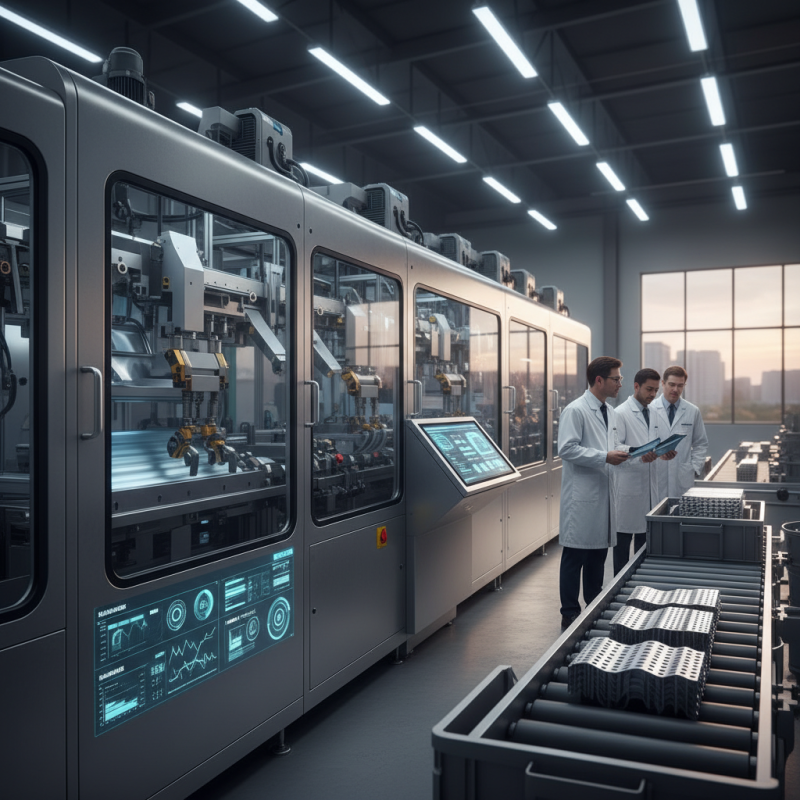
Definition of High Speed Fin Press Line Series
The High Speed Fin Press Line Series is a cutting-edge manufacturing solution designed to enhance production efficiency. This technology specializes in creating fins used in HVAC systems, heat exchangers, and other applications. By integrating advanced automation and precision engineering, these press lines significantly reduce cycle times. Faster production rates lead to increased output and lower operational costs.
High speed fin press lines operate through a series of quick and precise stamping actions. They utilize hydraulic or mechanical presses, which deliver remarkable force and speed. Operators can expect a higher degree of accuracy. This is vital for components that require tight tolerances. The line's capability to offer rapid adjustments further improves its effectiveness in various production scenarios.
Despite its advantages, there are considerations for manufacturers. Training operators is crucial to ensure efficiency. Any oversight could result in material waste or production delays. Additionally, maintaining consistent quality across high-speed production presents challenges. Continuous monitoring is essential to prevent defects. Investing in high speed fin press technology may require a significant upfront cost. Yet, the long-term benefits can be substantial, making it a worthy consideration for many industries.
Key Components of High Speed Fin Press Line Series
High Speed Fin Press Line Series features several essential components that increase productivity. The press itself is a crucial element. It operates at high speeds while maintaining precision, ensuring high-quality fin production, which is vital for various applications.
Another key component is the
feeding system. This system handles the material efficiently, reducing waste. A well-designed feeding mechanism can significantly boost the overall speed of the operation. Additionally, the control panel offers user-friendly interfaces for easy adjustments. Operators can quickly respond to any changes during production.
Tips: Regular maintenance is crucial. Inspect components regularly to avoid unexpected breakdowns. Operator training is essential. Well-trained staff can ensure the equipment runs smoothly and efficiently. They should understand how to troubleshoot basic issues.
Another important aspect is the
collection system. A smart collection setup minimizes downtime and facilitates easy handling. It is essential for sorting and storing fins produced efficiently. The right configuration leads to a seamless workflow, enhancing overall productivity. Remember, even the best systems can face challenges, emphasizing the need for constant improvement and adaptation.
Advantages of Implementing High Speed Fin Pressing Technology
High Speed Fin Pressing Technology has emerged as a game-changer in manufacturing. This method offers several key advantages. It significantly increases production speed, reducing cycle times. As a result, manufacturers can meet tighter deadlines and respond quickly to market demand. The technology enhances operational efficiency, allowing for more parts to be produced in less time.
Another notable advantage is the improved precision it provides. High-speed press lines enable tight tolerances, ensuring product consistency. This precision reduces the need for rework and waste, ultimately lowering production costs. However, it also demands skilled operators who can manage the technology effectively. A focus on training is essential to leverage its full potential.
Furthermore, implementing this technology can lead to innovative design possibilities. With advanced tooling and techniques, engineers can explore new product shapes and features. But it is crucial to balance innovation with manufacturability. Businesses must regularly assess designs to ensure they are feasible for high-speed production. Embracing this technology can drive significant improvements, yet it requires thoughtful consideration of both benefits and challenges.
What is High Speed Fin Press Line Series and Its Benefits? - Advantages of Implementing High Speed Fin Pressing Technology
| Feature | Description | Benefits |
| High Speed Operation | Designed for rapid fin production with minimal downtime. | Increases productivity and reduces cycle time. |
| Energy Efficiency | Utilizes advanced technology to consume less energy. | Lower operational costs and environmental impact. |
| Precision Engineering | Engineered for accuracy in dimensions and features. | Improved product quality and less material waste. |
| Automation | Incorporates automated processes for seamless operation. | Reduces labor costs and errors, ensuring consistent output. |
| Versatility | Can handle various fin designs and materials. | Allows for flexibility in production to meet diverse customer needs. |
Applications Across Industries for High Speed Fin Press Line
High-Speed Fin Press Line technology finds applications across various industries. It offers precision in producing fins for heat exchangers, essential in HVAC systems and automotive markets. A report by Allied Market Research indicates that the HVAC market alone is expected to reach $202 billion by 2028. This reflects the growing need for efficient heat transfer solutions.
In the automotive sector, lightweight components improve fuel efficiency. High-Speed Fin Press Lines ensure that production meets the increasing demand for such parts. According to a recent study, the shift towards electric vehicles could increase the need for advanced heat exchangers by 30% over the next decade. Nevertheless, challenges exist. Automation can lead to high initial investments. Furthermore, workforce training is crucial to operate sophisticated machinery effectively.
Metal fatigue and production errors can impact quality. Implementing rigorous quality control helps mitigate these risks. Continuous improvements in process efficiency are necessary. Industries must adapt to evolving technological advancements. Collaboration between engineers and production teams can pave the way for innovative solutions.
High Speed Fin Press Line Applications Across Industries
Comparison with Traditional Fin Pressing Methods
High Speed Fin Press Line Series offers significant advantages over traditional fin pressing methods. Traditional methods often involve slower processing times and less precise control over the fin design. A report from the Manufacturing Technology Association indicates that traditional processes can result in a defect rate of up to 15%. This is largely due to variations in material handling and manual adjustments.
In contrast, high-speed machines operate with automated precision. They significantly reduce the defect rate, often achieving less than 5%. This improvement not only enhances product quality but also minimizes waste. For example, research from the International Journal of Advanced Manufacturing Technology shows that using high-speed fin press lines can increase productivity by up to 30%.
Another point of difference is flexibility. Traditional methods are often less adaptable to design changes. With high-speed systems, manufacturers can easily modify parameters for different fin sizes or materials. As industries move towards customization, this capability becomes critical. Balancing speed and quality is crucial, but these systems are pushing boundaries that traditional methods cannot match.



 Distributors
  SDS Download
  Contact