How to Ensure Effective Welding Protection for Workers?
Welding Protection is critical in today’s industrial landscape. Workers face various hazards, from intense heat and sparks to harmful fumes. Proper protective measures can significantly reduce these risks, ensuring safer working environments.
Inadequate welding protection can lead to severe injuries. Burns and respiratory issues are common when safety protocols are ignored. Using the right gear is not just advisable; it is essential. Helmets, gloves, and protective clothing serve as the first line of defence. However, many workers still overlook these basics.
Employers must prioritize safety measures. Regular training is vital to remind employees about the importance of welding protection. Real incidents highlight the need for improvement in safety practices. By fostering a culture of awareness, we can create a safer workplace. Everyone has a role to play in maintaining welding safety.
Understanding the Risks Associated with Welding Operations
Welding operations pose significant risks that workers must understand to ensure safety. According to the Occupational Safety and Health Administration (OSHA), nearly 500,000 workers are involved in welding-related tasks in the U.S. each year. This heavy involvement raises concerns about exposure to hazards like fumes, noise, and electric shock. The American Welding Society reports that over 40% of welders experience respiratory problems linked to metal fumes. These stats highlight the critical need for effective protective measures.
Welders face multiple hazards daily. High temperatures can cause burns, while UV radiation can damage skin and eyes. Data from the National Institute for Occupational Safety and Health (NIOSH) shows that 25% of welding injuries result from inadequate personal protective equipment (PPE). Some workers may attempt to cut costs, using worn or subpar protective gear. This can lead to severe consequences. Employers should prioritize training and proper PPE to mitigate these risks effectively.
The atmosphere in welding shops can be challenging. Poor ventilation contributes to toxic fume accumulation, a leading cause of long-term health issues. A survey by the American Industrial Hygiene Association found that 60% of welders reported inadequate ventilation in their workspaces, raising alarms about air quality. Workers need to voice their concerns, ensuring that safety standards are always upheld. Training should emphasize the importance of recognizing these risks actively.
How to Ensure Effective Welding Protection for Workers? - Understanding the Risks Associated with Welding Operations
| Risk Factor | Description | Protective Measures | Recommended PPE |
| UV Radiation | Exposure to harmful ultraviolet light | Use of welding helmets with appropriate UV protection | Welding helmet with UV filter |
| Fume Inhalation | Inhalation of metal fumes released during welding | Use local exhaust ventilation and air filtration | Respirators or masks designed for welding |
| Burns | Risk of thermal burns from sparks and hot metal | Wearing flame-resistant clothing and gloves | Flame-resistant coveralls, gloves |
| Noise Exposure | Exposure to high noise levels from welding equipment | Implementing noise reduction measures and strategies | Ear protection, such as earmuffs or earplugs |
| Electric Shock | Risk of electric shock if equipment is not properly grounded | Regular maintenance and proper use of equipment | Insulated gloves, non-conductive footwear |
Essential Personal Protective Equipment (PPE) for Welders
Welding can be dangerous without proper protection. Personal protective equipment (PPE) is crucial for every welder. They face risks including sparks, intense heat, and harmful fumes. Wearing the right gear can minimize these hazards significantly.
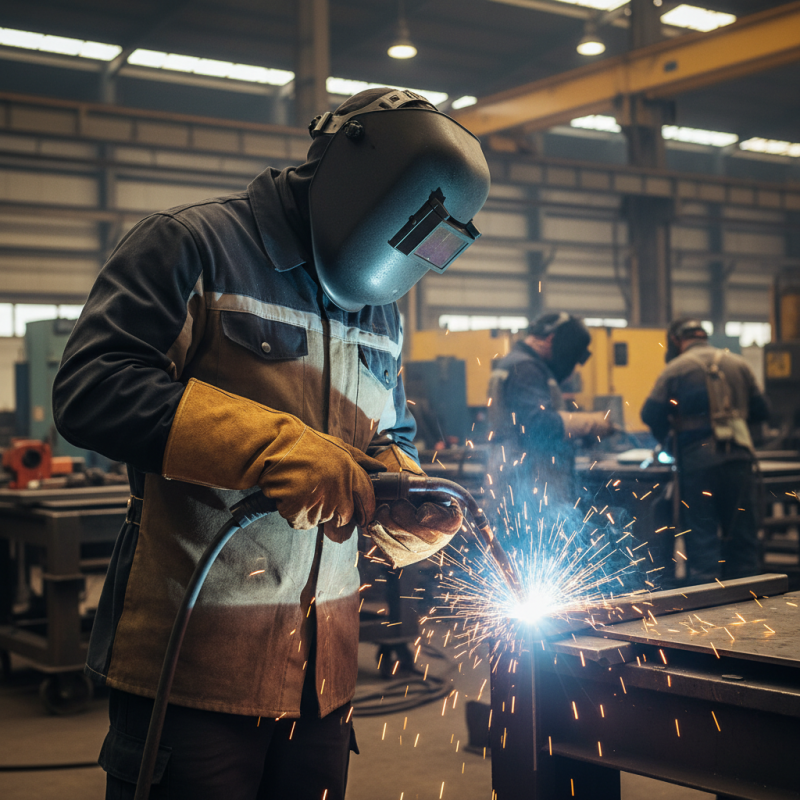
A welding helmet is essential. It protects the eyes from bright flashes and sparks. Good helmets reduce glare and allow better visibility. Gloves are also important. They should be heat-resistant and provide dexterity. Welders need to handle metal pieces safely without burns. Flame-resistant clothing is necessary too. It shields the body from sparks and heat.
Boots should be sturdy and protective. Steel-toe designs prevent foot injuries. Respirators can be crucial when harmful fumes are present. Welders often overlook adequate ventilation. Regularly inspect and replace PPE when needed. It is easy to become complacent about safety gear. Reflecting on these details can enhance overall protection. Taking welding seriously means prioritizing safety above all.
Importance of Adequate Ventilation in Welding Environments
Welding can produce hazardous fumes and particles. Without proper ventilation, workers are at risk. A study by the American Welding Society states that over 50% of welders reported respiratory issues related to poor air quality. Adequate ventilation is crucial in mitigating these risks. It helps in removing contaminants quickly and maintaining healthy oxygen levels.
Ventilation systems should be designed based on the specific situation. Natural ventilation can be effective, but often it’s insufficient in enclosed spaces. Mechanical systems may need to be used in those cases. A report from the Occupational Safety and Health Administration (OSHA) indicates that localized exhaust systems can reduce exposure to harmful fumes by up to 90%. Adjusting the airflow can further enhance the system's efficiency.
Tips: Ensure that ventilation systems are regularly maintained. Monitor carbon dioxide levels and air quality frequently. Provide workers with education on recognizing signs of inadequate ventilation. It’s often difficult to assess air quality directly. Workers may not feel immediate effects, but long-term exposure is harmful. Addressing ventilation issues sooner rather than later can prevent serious health problems.
Implementing Safety Training Programs for Welding Workers
Welding can be hazardous if proper safety measures are not in place. Workers face risks from intense heat and UV radiation. To mitigate these dangers, effective training programs are essential. Training should cover the proper use of protective gear. Workers must learn how to wear helmets, gloves, and flame-resistant clothing correctly. It’s more than just a checklist; it requires hands-on practice to build confidence.
Regular refresher courses can reinforce safety habits. However, many companies overlook this, thinking initial training is enough. Real-life scenarios need to be discussed. Sharing past incidents can instill a sense of urgency to adhere to safety protocols. Engage workers in discussions about their experiences with welding safety. Encourage them to speak up about unsafe practices. This can create a culture of safety.
Additionally, assess the effectiveness of the training. Are workers retaining the information? Periodic tests or practical assessments might highlight gaps. Inadequate training can lead to preventable accidents. Thus, developing a solid feedback loop with workers is vital. Their insights can offer fresh perspectives on the training program's effectiveness. Adapting training based on genuine worker feedback can lead to improved safety outcomes over time.
Regular Health Monitoring and Assessments in Welding Practices
Welding can pose significant health risks to workers. Regular health monitoring is crucial to mitigate those risks. For instance, exposure to harmful fumes and gases is a common concern. A study showed that over 30% of welders experience respiratory issues due to inadequate ventilation and protective measures.
Regular assessments play a key role in identifying health issues early. Frequent check-ups can detect symptoms of exposure, such as lung function decline. According to OSHA, effective monitoring can reduce the incidence of work-related health conditions by up to 40%. However, not all workplaces prioritize these evaluations, revealing gaps in safety protocols.
In addition, personal protective equipment (PPE) is vital, yet it is often not used consistently. Ensuring compliance with PPE guidelines is essential. Training and awareness can improve adherence. Yet, many workers still feel underprepared for hazardous situations. Continuous improvement in training programs and health assessments can foster a safer welding environment.
Welding Health Monitoring and Assessment Data



 Distributors
  SDS Download
  Contact