How to Choose Translucent Glass for Your Project
Translucent Glass can turn a bright window into a softer, more private source of daylight. But the right choice depends on what the room needs, not just how a sample looks under showroom lights. In this guide, we’ll compare how glass type, surface pattern, thickness, and framing affect light, privacy, appearance, and performance. A small sample can mislead. Hold it against the actual view, and check it in both daylight and evening light.
Building-science expert Stephen Selkowitz is known for emphasizing glazing performance in building design. A practical paraphrase of that approach is: “Choose glazing by performance, not appearance alone.” For a project, that means checking visible light transmission, glare, privacy, thermal requirements, and available product data. A bathroom may call for stronger obscurity than a bright stairwell. A meeting room may need diffuse light without making faces or screens hard to see. Details matter.
We’ll also consider textured, etched, patterned, and laminated options, along with cleaning needs and installation constraints. Ask suppliers for full-size samples and technical documentation, then review them in the intended frame and lighting. That step is easy to skip. It can also expose an uncomfortable truth: the most attractive glass sample may not suit the finished space. Decisions can still involve trade-offs, so this guide will help you identify them before choosing.
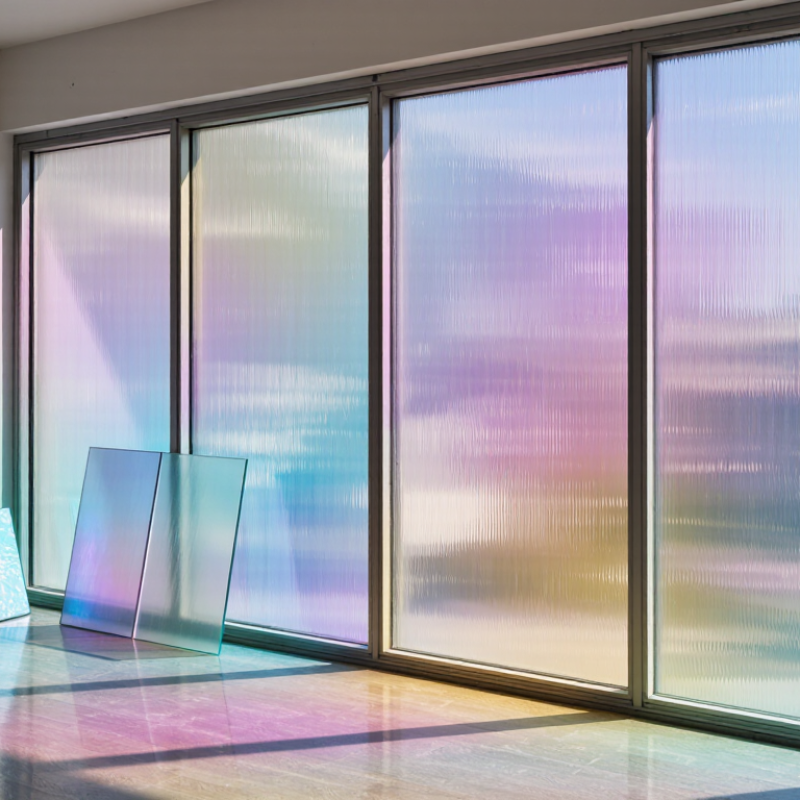
Define the Project’s Privacy, Light, and Design Requirements
Define privacy by looking through the proposed glass at eye level, both day and night. Frosted glass may blur faces yet still reveal movement or silhouettes under strong backlighting. For a bathroom, test a sample beside the actual shower lighting. For a meeting room, check whether seated people and screens remain indistinct from the corridor. Privacy is not binary. I would also test at different distances; a small sample can make an obscure pattern look more private than it feels across a full panel.
Then set a daylight target. The National Fenestration Rating Council reports visible transmittance on a scale from 0 to 1; higher values generally mean more visible light passes through. Compare rated values alongside a full-size mock-up, because texture and room orientation change the effect. The Illuminating Engineering Society’s RP-1-20 gives 300 lux as a maintained ambient-light target for many office areas, but task lighting may still be needed near desks. A lux meter at the work surface can reveal dim corners or screen glare. I would not choose by rating alone. Note the panel’s direction, nearby windows, nighttime lighting, and whether the glass must also provide sound separation.
Compare Common Types of Translucent Glass
How to Choose Translucent Glass for Your Project
Acid-etched glass has a smooth, matte face that softens views while spreading daylight. It suits bathroom partitions and office doors, though fingerprints may show under grazing light. Sandblasted glass offers a similar haze, often with sharper patterns, but its textured surface can collect dust. I’ve seen this detail underestimated. Cleaning access matters.
Patterned, or rolled, glass presses texture into one or both surfaces. It can obscure views while creating decorative shadows, making it useful for entry panels and interior screens. Light transmission varies with the pattern, so compare tested visible-light-transmittance figures rather than relying on sample appearance alone. Laminated translucent glass uses a diffusing interlayer between glass sheets. It can retain fragments after breakage, but its milky look may feel less crisp than etched glass. Check the specification for the intended safety performance.
The International Energy Agency’s 2023 Global Status Report for Buildings and Construction estimates that buildings used about 30% of global final energy in 2022.
That is a useful reminder: translucent glass affects daylight and heat, not just privacy. Review visible light transmittance and solar heat gain data together, then inspect a full-size sample beside the actual frame. Small samples can mislead. I would also question whether a highly obscuring finish is truly needed; the right balance is easy to misjudge.
Evaluate Glass Performance, Safety, and Durability
How to Choose Translucent Glass for Your Project
Translucent glass diffuses light while obscuring clear views, but its performance varies with texture, thickness, and lighting. Start by identifying the room’s needs: a shower enclosure faces moisture and frequent cleaning, while an office partition may need better sound control. Request a full-size sample if possible. Small samples can make a pattern look more uniform than it will across a large panel. Check it from both sides, in daylight and under evening lighting.
Safety depends on where the glass will be installed and how people may contact it. For doors, low partitions, or areas near walking paths, ask a qualified glazier about suitable safety glazing and local building requirements. Tempered and laminated glass behave differently when broken, so the right choice depends on the application. Don’t assume that a thicker pane is automatically safer. Confirm the specified glass type, edge treatment, and framing details before ordering.
Durability also comes down to installation and care. Textured surfaces may collect dust or show water spots, especially near sinks and showers. Ask how the finish handles routine cleaning, and avoid cleaners that the supplier has not approved. I would also test a sample with the actual cloth and cleaner. It’s easy to overlook. Consider condensation, exposed edges, and replacement access; a beautiful panel can become frustrating if routine maintenance is difficult.
How to Choose Translucent Glass for Your Project
Evaluate light transmission alongside safety and durability requirements.
Typical visible light transmittance (VLT) ranges are approximate and vary with glass thickness, pattern, coatings, and construction. Higher VLT generally means more daylight passes through, but does not indicate privacy or safety. Select code-compliant tempered or laminated safety glass where required, and confirm that the surface finish and cleaning method suit the expected wear and exposure.
Select the Right Texture, Thickness, and Finish
Translucent glass balances privacy with daylight, but texture, thickness, and finish all change the result. Fine, even textures soften outlines while letting a room feel bright. Deep patterns obscure more detail, though they can cast uneven shadows near a window. View samples upright and at different times of day. Light changes everything. A small sample may not show how a full panel will look, which is easy to underestimate.
Thickness should suit the panel’s size, support, and intended use—not appearance alone. Ask a qualified glass supplier or installer to confirm suitable specifications for your project. For a shower screen, divider, or other exposed panel, the right safety-glazing type may also matter. Edge finish affects both appearance and handling: polished edges look clean, while exposed cut edges can feel unfinished. I’d compare these in person; photographs often hide small differences.
Tips: Hold samples against the actual frame, then check them in morning and evening light. Wipe each sample to see how fingerprints and water marks show. Ask which side carries the texture or coating, and how it should be cleaned. Keep notes on what you like. Preferences can change once the glass is installed, and sometimes the quieter option works better.
Plan Installation, Maintenance, and Long-Term Use
How to Choose Translucent Glass for Your Project
Plan Installation, Maintenance, and Long-Term Use
Translucent glass can soften glare while bringing daylight into a corridor, bathroom, or office partition. Before choosing a texture, check the complete glazing assembly’s U-factor, solar heat gain coefficient, and visible light transmittance. These values help match privacy and light levels with local climate and room use. The IEA’s 2023 Global Status Report for Buildings and Construction estimates that buildings and construction account for about 34% of global energy demand. That figure is a reminder to consider thermal performance, not a guarantee that any glass choice will save energy. A bright sample can mislead.
Tips: Ask for a full-size sample and view it in morning and afternoon light. Confirm frame compatibility, edge clearances, drainage paths, and sealant compatibility before ordering. Keep installation drawings on site. Small details matter.
For long-term use, ask the installer how to clean the selected surface. Use soft cloths and mild, non-abrasive cleaners unless the product documentation says otherwise. Check seals and drainage openings during routine building maintenance; trapped water or failed seals can damage surrounding finishes. If the glass sits near a busy doorway, consider fingerprints and cleaning access during layout. I would also review the maintenance plan with the facilities team before approval. It is easy to focus on the sample and overlook who will clean it five years later.



 Distributors
 SDS Download
 Contact
