China Top LPG Tank Container Suppliers How to Choose?
Selecting a supplier for an lpg tank container is not just a price comparison. Buyers need equipment suited to the cargo, route, loading system, and expected service life. China has a broad manufacturing base, but supplier capabilities and quality controls can differ. A persuasive website is only a starting point. Details matter.
Before requesting quotations, define the required capacity, materials, insulation, valves, fittings, and operating conditions. Ask each supplier for technical drawings, inspection records, production details, and clear warranty terms. Check how the company verifies welding quality and pressure-related performance. Ask who conducts inspections and whether records can be traced to the specific unit. Request references or examples of comparable projects when available. Evidence helps.
Compare quotations line by line, including testing, accessories, packaging, delivery, and after-sales support. A low initial price may omit items that affect the final cost. Confirm that the proposed design can meet the applicable requirements for the intended destination and use; ask a qualified inspector to review uncertainties. Also discuss spare parts, response times, and how defects are handled. These points are easy to overlook.
This guide outlines practical ways to assess China-based suppliers, prepare useful questions, and compare offers fairly. No checklist can remove every risk, and a polished brochure cannot reveal every production weakness. Careful verification takes time. It can make the decision more informed.
Understanding LPG Tank Containers and Their Key Applications
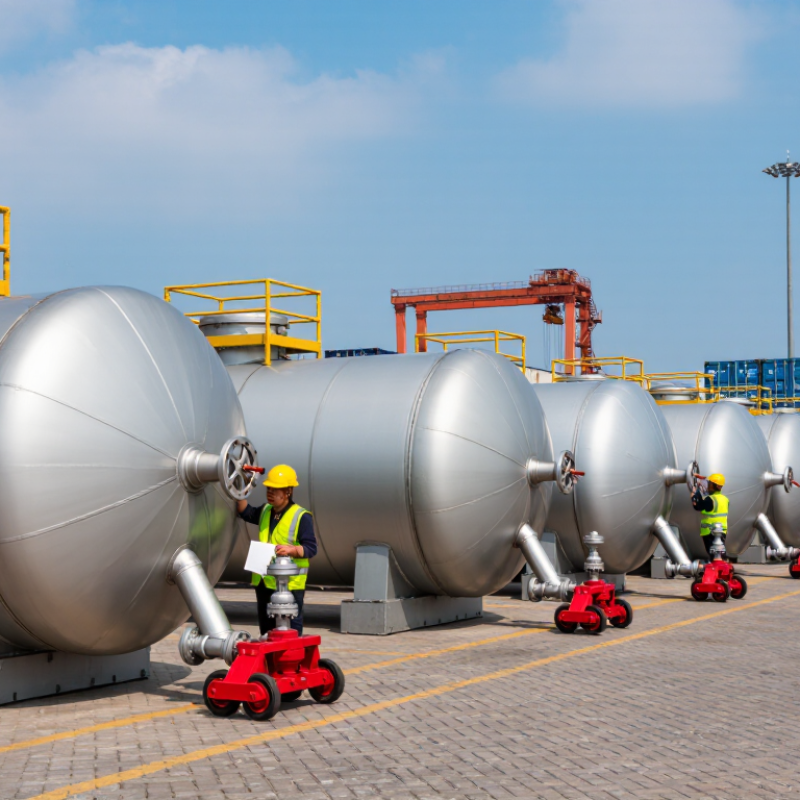
lpg tank containers are pressure-rated vessels designed to carry liquefied petroleum gas, commonly propane, butane, or their blends. The gas remains liquid under pressure, so the tank, valves, and fittings must work as a coordinated system. These containers support bulk movement between filling sites, storage terminals, and industrial users. Their framed design allows handling by container equipment and transport by road, rail, or ship, where the route and operating conditions permit.
Applications vary. A distributor may use them to move fuel between regional depots, while a factory may rely on delivered LPG for process heat. Before selecting a tank, check the intended gas blend, required capacity, connection layout, operating pressure, and material compatibility. Ask for current inspection records and clear maintenance guidance, not just a product sheet. Details matter. A container suited to one route or filling setup may not fit another, even when the dimensions appear familiar. In practice, comparing technical documents can feel tedious, and paperwork alone cannot reveal every operating mismatch. Confirm the setup with qualified personnel who understand the filling and handling process.
LPG Tank Container Selection: Propane and Butane Boiling Points
At standard atmospheric pressure, propane boils at about −42.1°C, isobutane at −11.7°C, and n-butane at −0.5°C. These differences affect vaporization and handling conditions. When evaluating a tank container, confirm that its approved service, pressure rating, and operating limits match the LPG product and expected temperatures; boiling point alone does not determine the required tank rating.
Mapping China’s LPG Tank Container Supplier Landscape
China Top LPG Tank Container Suppliers: How to Choose?
Mapping China’s LPG tank-container supplier landscape requires more than sorting factory directories. Some companies build pressure vessels and complete tanks; others focus on leasing, fleet operations, maintenance, or export coordination. These roles are easy to confuse. Ask who controls the design, who fabricates the pressure boundary, and who carries out final inspection.
The International Tank Container Organisation’s 2024 Annual Report estimated about 801,800 tank containers in the global fleet at the start of 2024. This figure covers different tank-container uses, not LPG units alone. The World LPG Association’s Statistical Review 2024 reported global LPG demand of roughly 331 million tonnes in 2023. These figures show market scale, not any single supplier’s production capacity. That distinction matters.
For a practical comparison, request traceable inspection records, pressure-test documentation, weld records, and clear details about valves and frame dimensions. Check whether the supplier’s service network can support your routes, not just the initial shipment. A factory visit can reveal small but useful details, such as orderly component storage and legible equipment nameplates. A polished brochure may still leave gaps. Supplier roles and capabilities are not always neatly separated, so verify each claim against documents and the actual production scope.
Evaluating Supplier Experience, Manufacturing Capacity, and Service
Choosing an LPG tank container supplier in China starts with evidence, not a low quotation. Ask about experience with comparable tank designs, production volumes, and export projects. Request examples of inspection records and documentation, with sensitive details removed if needed. Details matter. A long history is useful, but it does not prove that today’s production team follows consistent procedures.
Manufacturing capacity should be checked on the factory floor. Look at welding stations, material identification, inspection areas, and how components move through production. Ask how the supplier manages peak orders without skipping quality checks. Ask for evidence. Review sample test reports and traceability records, then confirm that they match the proposed design and delivery schedule. A neat workshop is encouraging, but one visit cannot reveal every weakness.
Service matters after the order is placed. Identify a technical contact, expected response times, and the process for handling document corrections or delivery changes. Confirm what support is available for commissioning questions and spare parts. Put these expectations in writing. Some details may still feel uncertain; note them rather than assuming they will resolve themselves. A careful supplier should answer specific questions clearly and explain where its capabilities have limits.
Checking Safety Standards, Certifications, and Quality Controls
When comparing LPG tank container suppliers in China, safety evidence matters more than a polished brochure. Ask which design codes and product approvals apply to the intended route and receiving market. Requirements can differ, so verify them with the relevant inspector or technical authority. A certificate alone does not prove every unit is compliant. Check its issuing body, scope, validity, and whether it covers the exact container model.
Look closely at production controls. Request material certificates linked to heat numbers, weld procedures, welder qualifications, and inspection records. For pressure-bearing seams, ask how non-destructive testing is selected and documented. Each finished tank should have traceable pressure-test and leak-test records, along with checks for valves and pressure-relief devices. Small details count. Ask directly. A mismatched serial number deserves an explanation.
A factory visit or independent inspection can reveal gaps paperwork misses: poorly stored fittings, uneven weld finishes, or incomplete calibration logs. Ask how defects are recorded, corrected, and retested. Review maintenance instructions and spare-part availability, since safe service continues after delivery. A polished certificate is not enough. I would question a supplier that cannot explain a failed inspection plainly; confidence should come from verifiable records, not sales language.
Comparing Quotes and Selecting the Right Supplier for Your Needs
An LPG tank container quote is more than a single price. Compare the same capacity, design pressure, materials, valve arrangement, insulation, and fittings across each offer. Ask whether the price includes testing, documentation, spare parts, delivery, and commissioning support. A low quote may exclude details that affect installation time and operating costs. That matters.
Tips: Put each offer into one comparison sheet. Record the quoted scope, lead time, payment stages, warranty coverage, and response time for technical questions. Request sample inspection records and clarify who handles damage found before shipment. Keep assumptions visible; otherwise, the comparison is not fair.
Before selecting a supplier, discuss your route, filling and unloading setup, service frequency, and maintenance capacity. Ask how weld quality, pressure-related components, and final assembly are checked, then request traceable quality records. Look for specific answers, not just reassuring language. A factory visit or independent inspection may help when the order value and risk justify it. Quotes still leave uncertainty. It is easy to give price too much weight; lead-time reliability and after-sales support can matter just as much. Choose an offer that fits your operation and can be verified in writing.


 Distributors
 SDS Download
 Contact
