How to Choose the Best Food Printer in 2026?
Choosing the best Food Printer in 2026 requires more than comparing glossy product photos. Buyers must examine printing accuracy, food-contact safety, cleaning routines, software control, and long-term operating costs. A machine that produces impressive logos may still struggle with chocolate, icing, fondant, or uneven biscuit surfaces.
Industry forecasts show why this category deserves careful attention. Grand View Research reports continued growth in the global 3D food printing market, supported by bakery innovation, personalized nutrition, and automated food production. MarketsandMarkets also identifies rising demand for customized food and digitally controlled manufacturing. However, these reports often combine commercial kitchens, research laboratories, and consumer equipment. Their figures should guide decisions, not replace hands-on testing.
A practical evaluation starts with the food you actually print. Test a small cake, a soft cookie, and a detailed edible image. Watch the nozzle, ink flow, temperature stability, and cleanup time. Check whether manufacturers provide food-contact documentation, technical support, replacement parts, and clear operating instructions. Standards and local requirements still matter, especially when edible inks or ingredients enter commercial production.
Small details decide performance.
Do not trust every “professional” claim. Some specifications look impressive but lack independent verification. I would request sample outputs, batch consistency data, and warranty terms before purchasing. The best Food Printer is not always the fastest model or the most expensive one. It is the machine that matches your recipes, production volume, staff skills, hygiene procedures, and realistic budget. In 2026, careful testing remains more reliable than marketing language.
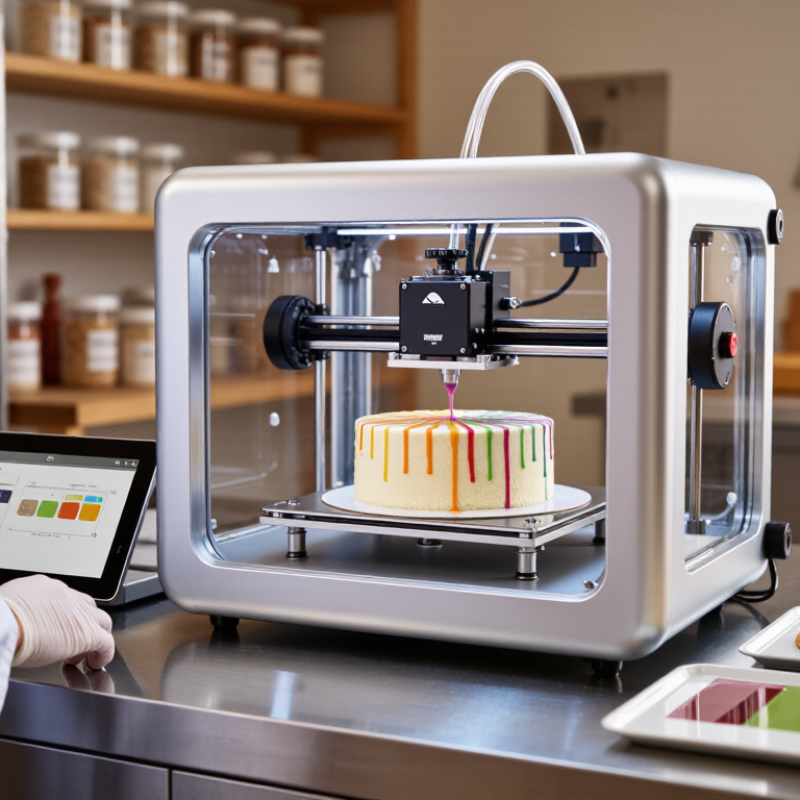
Define Your Food Printing Needs and Intended Applications
Choosing a food printer starts with defining the job, not comparing specifications. Will it print edible images on cakes, extrude dough, decorate chocolate, or produce customized nutrition portions? These applications need different food-contact systems, nozzle sizes, materials, and cleaning routines.
A bakery may value color accuracy and fast output. A research kitchen may need programmable extrusion and precise portion control.
Grand View Research valued the global 3D food printing market at approximately USD 141 million in 2023, with strong projected growth through 2030.
Growth does not mean every printer fits every operation. The USDA Economic Research Service reported that food-away-from-home accounted for about 58% of United States food expenditure in 2023. This suggests opportunities for visible customization, but speed, labor, and consistency still matter more than novelty.
Start with three measurable requirements: daily volume, food type, and acceptable preparation time.
Test a real recipe, not only the supplier’s sample paste. Record print accuracy, texture, waste, sanitation time, and operator training needs.
Small details matter. A nozzle that clogs after twenty minutes can disrupt service. A printer may create attractive designs but struggle with humid kitchens or chilled ingredients.
My own preference would be a slower system with repeatable results, though that choice can reduce creative flexibility. Review food-contact documentation, cleaning instructions, and local compliance requirements before purchase.
Compare Food Printer Types, Printing Methods, and Compatible Ingredients
How to Choose the Best Food Printer in 2026?
Choosing a food printer starts with its printing method, not its appearance.
Direct-to-food inkjet printers spray edible ink onto cookies, cakes, marshmallows, and other fairly dry surfaces. They work best when the coating is smooth, firm, and completely set. Moisture can blur fine lines. Some models print on edible sheets, such as wafer paper or frosting sheets, which can later be placed on cakes. This method suits detailed logos, photographs, and small decorations.
Consider the ingredients carefully. Edible ink usually contains approved food colorants, but compatibility still depends on surface texture and moisture. Dark chocolate may need a light-colored edible layer before printing. Fondant can produce sharp images, while whipped cream often spreads the design. Extrusion-style food printers use edible paste instead of ink. They can shape chocolate, icing, or dough, but their speed and detail are different.
Surface matters most.
For reliable results, check nozzle cleaning, food-contact materials, drying time, and local food regulations. Print a small test before producing a full batch. In practical trials, a design may look accurate on screen but lose contrast after refrigeration. I would also question claims about “universal” ingredients; no printer handles everything equally well. A careful buyer should record temperature, humidity, surface type, and drying time during testing, because small kitchen changes can affect color and detail.
Check Safety Standards, Maintenance Requirements, and Ease of Use
Choosing a food printer in 2026 starts with safety, not print speed.
The FDA Food Code 2022 requires food-contact surfaces to be smooth, durable, and easy to clean. Look for removable nozzles, sealed ingredient paths, and accessible drip trays. Materials should have suitable food-contact documentation, such as NSF/ANSI 51 compliance where applicable. Certification is helpful, but it is not a substitute for daily cleaning.
Maintenance can decide whether the printer remains useful after a few busy weeks.
CDC estimates link contaminated food to about 48 million illnesses in the United States each year. That figure covers food systems broadly, but it shows why residue and allergens deserve serious attention. Choose equipment with clear cleaning schedules, tool-free access, and replaceable parts. Automatic rinsing sounds convenient. Still, I would inspect the nozzle manually after thick fillings. A perfect demonstration can hide awkward maintenance.
Tips:
Ask for a live cleaning demonstration. Check whether the operator can remove the food path without special tools. Test the error messages and calibration process. Print several designs, then examine edges, leaks, and uneven layers. Keep a simple log for cleaning, ingredient changes, and nozzle replacement. The International Food Information Council’s 2024 Food & Health Survey also shows that consumers continue to value transparency around food choices. Therefore, readable ingredient records and consistent handling should influence your purchase. Ease of use means fewer mistakes, not merely a bright touchscreen.
Compare Total Costs, Software Features, and Long-Term Value
How to Choose the Best Food Printer in 2026?
Purchase price is only the visible part of a food printer’s cost. Calculate printer hardware, printheads, food-grade cartridges, cleaning supplies, training, software fees, maintenance, electricity, and downtime. The U.S. Energy Information Administration reported an average commercial electricity price of about 13 cents per kilowatt-hour in 2023. Energy may not dominate costs, but unused equipment still wastes money. PMMI’s 2024 automation research highlights labor shortages and connected data as major investment drivers. A printer should reduce repetitive work, not create another task list.
Software often separates an attractive machine from a useful production tool. Look for recipe version control, precise layer settings, calibration records, user permissions, batch history, and allergen documentation. Exportable data matters when quality teams review production records. A cloud dashboard can help managers monitor several units, but offline access is valuable during network failures. Security deserves attention, too. Cheap software may hide expensive limitations.
Long-term value depends on utilization, consistency, and waste reduction. Wohlers Report 2024 valued the global additive manufacturing industry at approximately 20 billion dollars in 2023, showing the sector’s expanding industrial relevance. However, that figure covers many technologies, not food printing alone. Be careful with broad market claims. Test real recipes, cleaning time, cartridge yield, and print accuracy before signing a contract. Include three years of consumables and service costs in the comparison. My own spreadsheet would still miss occasional jams and staff frustration. No model is perfect.


 Distributors
 SDS Download
 Contact