Partner Login
Enter your username and password here on order to log in on the partner portal:
No registered partner yet?
Register nowA dependable Led Camping Light Abs should do more than look bright on a product page. At dusk, it should light a tent entrance, reveal a loose tent peg, and remain steady when the temperature drops. ABS plastic can help keep a lamp lightweight and impact-resistant, but material alone does not guarantee quality. Check the housing, switch, battery arrangement, and protection against rain before choosing.
“[Insert a verified quotation about camping-light selection here],” says [verified expert’s full name and relevant credentials]. Use a quotation you can confirm from a reliable interview, publication, or company source; an invented attribution would weaken trust. This guide examines the details that matter in real use: usable brightness, beam spread, runtime, charging options, weight, and ease of operation with cold fingers. Small details count.
A high lumen figure can sound impressive. Yet a harsh beam may glare against a tent wall, while a dim setting may better suit reading or late-night tasks. Compare stated runtime with the brightness mode you expect to use, and look for clear product specifications rather than vague claims. No single model fits every trip. A weekend car camper may value longer runtime; a backpacker may prioritize low weight and compact storage. The best Led Camping Light Abs is the one that balances these needs, feels practical in hand, and performs consistently outdoors. One detail is easy to miss: test the controls before your trip, not after dark.
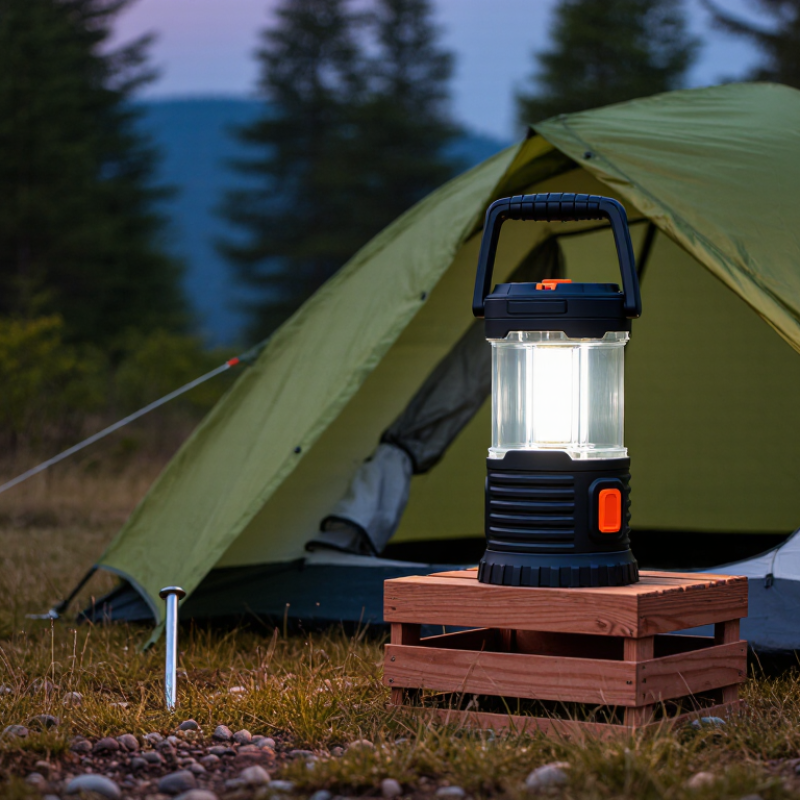
ABS, or acrylonitrile butadiene styrene, is a tough thermoplastic often used for camping-light housings. It can handle knocks from a packed gear box, yet it is not indestructible. A dropped lamp may survive, while a thin clip or battery-door hinge can still crack. ABS is also a poor heat conductor, so the housing’s shape and ventilation matter. Warm plastic near the LED is worth checking.
The U.S. Department of Energy reports that LEDs use at least 75% less energy than incandescent lighting and can last up to 25 times longer. That efficiency does not mean a lamp produces no heat. In a compact ABS enclosure, trapped heat can affect components over time. Look for a housing that feels solid, with no sharp seams or loose covers, and follow the maker’s temperature guidance. UL 94 evaluates how plastic materials burn; a claimed rating applies only to the tested material and conditions, not automatically to the whole light. Small detail. I would still inspect the battery compartment and seals, because impact resistance alone says little about weather protection.
How much light you need depends on what happens after sunset. A small lantern may be enough for reading inside a tent, while cooking or sorting gear needs a wider, brighter beam. Check the manufacturer’s lumen and runtime figures, but treat them as estimates; cold weather and high brightness can shorten battery life. A dim setting is useful. It saves power.
Consider where the light will sit. A hanging lantern should spread light evenly across a tent without glaring into anyone’s eyes. For walking nearby or checking a guyline, a focused beam or separate headlamp keeps your hands free. Think about the controls too: large buttons are easier to use with cold fingers. Tiny switches can be frustrating.
Match the light to your trip length, charging options, and likely weather. For a weekend near a car, USB charging may be convenient; on a longer trek, replaceable batteries or a power bank may matter more. An ABS housing can help resist everyday knocks, but it does not make a light waterproof. Check its stated water-resistance rating and protect its ports from rain. Even careful plans miss something. Test the light at home in a dark room before relying on it outdoors. A comfortable light is not always the brightest one.
When comparing LED camping lights with ABS housings, judge brightness, beam range, and runtime separately. Lumens describe total light output, but a high lumen figure alone cannot tell you whether a tent or trail will be well lit. ANSI/PLATO FL 1-2019 defines a consistent way to report flashlight performance: beam distance is measured to the point where illumination reaches 0.25 lux, while runtime ends when output falls to 10% of its initial level. Check whether product figures use these test methods. Numbers can mislead.
For a campsite, a wide, moderate beam can illuminate a cooking area more evenly than a narrow, intense beam. For walking, prioritize usable distance and a stable beam; compare the published range with the actual path, not just the headline figure. Runtime also depends on brightness settings and battery conditions. A light rated for many hours on low may last far less on high. ABS can help keep the housing light and impact-resistant, but it does not determine optical performance. I would test the controls with cold hands, too; specifications rarely capture that small frustration. Choose a model whose stated runtime fits your trip at the setting you will genuinely use.
ABS can make a camping light lighter and more impact-resistant, but the material alone does not guarantee durability. Check the housing for thick, even walls, rounded corners, and a firmly seated battery cover. Those details matter when a lantern slips onto gravel. Cold weather can also make some plastics more brittle, so check the maker’s stated operating-temperature range. A rugged-looking shell is not proof.
Weather protection depends on seals as much as plastic. Under IEC 60529, IPX4 indicates protection against splashing water; IPX7 covers specified temporary immersion testing. Neither rating means the light will survive every wet campsite, especially if its gasket is worn. Still, an IP number can feel reassuring while saying little about a cracked seal. For safety, inspect the battery compartment for corrosion and choose a light with relevant third-party electrical testing. The U.S. Department of Energy’s Energy Saver guidance says LEDs use at least 75% less energy and can last up to 25 times longer than incandescent lighting. That concerns the light source, not the ABS shell or battery. It is an easy distinction to miss.
For car camping, prioritize a stable base, a hanging loop, and a diffuser that softens light over a picnic table. For backpacking, compare weight, packed size, and low-output runtime; a bright maximum setting is less useful if it drains the battery before morning. ABS housing can help keep a lamp lightweight and resist everyday knocks, but it does not guarantee waterproofing. Check the stated IP rating and whether the charging port has a cover. Small details matter.
Set a budget around the features you will actually use: adjustable brightness, a warm low mode, and a clear battery indicator often beat extra flashing modes. The U.S. Department of Energy’s Energy Saver guidance reports that LEDs use at least 75% less energy and can last up to 25 times longer than incandescent lighting. That broad comparison is not a runtime promise for any camping lamp; compare each product’s hours at the brightness you expect to use. Cold nights can also reduce battery performance. I still find runtime claims easy to misread. Check the test conditions, then leave a little margin.
| Camping Style | Typical Budget (USD) | Useful Brightness Range | Battery and Runtime Priorities | ABS Housing Features to Check | Useful Extras | Best Fit |
|---|---|---|---|---|---|---|
| Occasional car camping | $10–$25 | 100–300 lumens for a tent or nearby table | Replaceable AA or AAA cells are convenient for short trips; check the stated runtime at the brightness level you plan to use. | Look for a securely closed battery compartment and sturdy seams. ABS can provide a lightweight shell, but it does not make a light waterproof. | Simple switch, hanging hook, low-light mode | A straightforward, low-cost lantern for casual use near a vehicle. |
| Weekend tent camping | $20–$45 | 200–500 lumens, preferably with adjustable output | A rechargeable lithium-ion battery can reduce the need to carry spare disposable cells. Compare runtime at medium and high settings. | Check for impact protection claims and a clearly specified ingress-protection rating if rain resistance matters. | Dimmable settings, USB charging, battery indicator | A versatile lantern for meals, tent setup, and general campsite lighting. |
| Backpacking and hiking | $25–$60 | 50–250 lumens for camp use; a separate headlamp may be better for hands-free trail lighting | Prioritize low weight, compact size, and efficient low modes. A rechargeable battery is useful when charging access is available; carry a backup power plan. | Choose a compact, lightweight ABS body with a reliable handle or attachment point. Avoid assuming a plastic housing can withstand every drop or temperature. | Low-weight design, red-light mode, lockout to prevent accidental activation | A small light for inside the tent and camp tasks, paired with a headlamp for walking. |
| Family or group campsite | $30–$70 | 400–1,000 lumens, with dimming to reduce glare | Look for a larger battery capacity or the option to use backup cells. High brightness typically uses power faster, so compare runtimes across modes. | Check handle strength, stable placement, and the maker’s stated weather-resistance rating; inspect seals around charging ports. | Wide light distribution, multiple brightness levels, USB power output | A brighter shared lantern for a picnic table or common area. |
| Long trips or frequent outdoor use | $45–$100+ | 300–1,000 lumens with a genuinely useful low mode | Prioritize documented runtime, charging options, and replaceable or serviceable batteries where available. Consider how the light can be recharged during the trip. | Review the published ingress-protection rating, warranty terms, and construction details. ABS is common in lightweight housings, but material alone does not determine durability. | USB-C charging, power bank function, battery-status display, repair support | A feature-rich option for campers who use a lantern often and value charging flexibility. |
Buying notes: Price ranges are broad estimates and vary by market and features. Lumens describe total light output, not how evenly or comfortably a lantern lights an area. Runtime depends on battery capacity, temperature, and brightness setting. ABS is a lightweight thermoplastic; check the complete light’s weather-resistance rating rather than relying on the housing material alone.