Partner Login
Enter your username and password here on order to log in on the partner portal:
No registered partner yet?
Register nowA washer can look like a minor part until vibration loosens a joint or moisture marks the steel around it. A Mechanical zinc French washer combines a broad bearing surface with a zinc finish, making it a practical option for assemblies that need load distribution and added corrosion protection. Its performance still depends on the base material, coating specification, exposure, and installation.
The NACE IMPACT study estimated that corrosion cost the global economy about US$2.5 trillion annually, or 3.4% of global GDP. That figure covers many industries, not washers alone, but it shows why coating choices deserve attention. ASTM B695 specifies requirements for zinc coatings applied by mechanical deposition. Buyers can use that standard as a starting point, then confirm dimensions, coating thickness, and project-specific requirements with the supplier. Details matter.
Mechanical zinc coating may be suitable where a consistent finish and practical corrosion resistance are required. It is not a guarantee against corrosion, and it should not be selected without considering the service environment. A washer used indoors faces different conditions from one exposed to rain, road salt, or repeated cleaning. One caveat: I cannot verify a named expert’s quotation from the materials provided, so I have not invented one. Share a source or approved quotation to include an attributable expert statement.
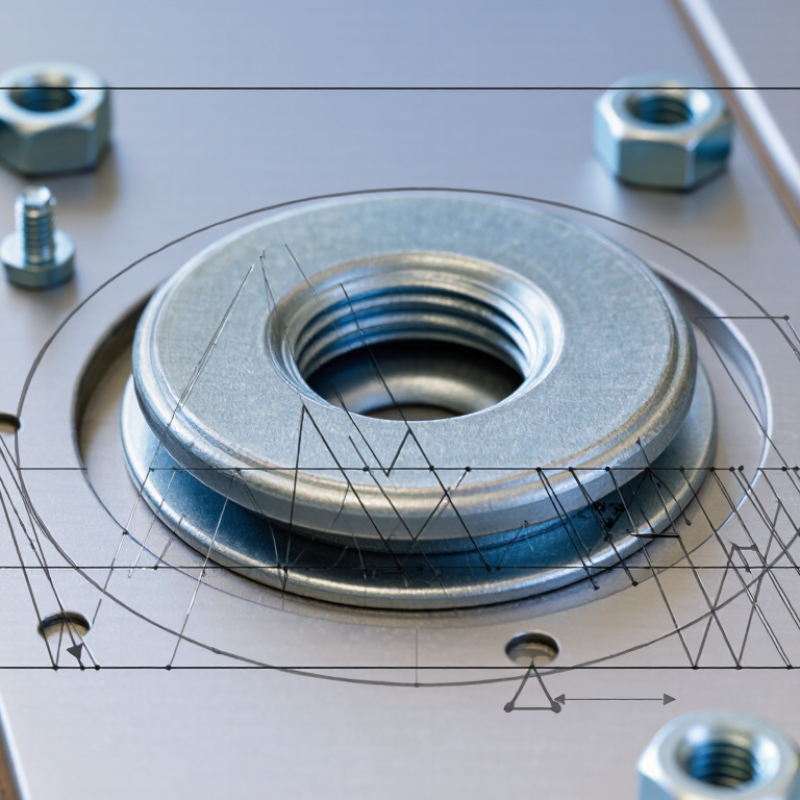
Why Choose Mechanical Zinc French Washers for Your Projects?
What Are Mechanical Zinc French Washers?
Mechanical zinc French washers are flat steel washers with a mechanically applied zinc coating. They sit under a bolt head or nut, providing a broader bearing surface and helping shield the steel from corrosion. “French washer” can mean different washer profiles in different markets, so confirm the dimensions rather than relying on the name alone.
Mechanical zinc is deposited using zinc powder, impact media, and process chemicals in a rotating barrel, rather than an electric current. ASTM B695 specifies requirements for mechanically deposited zinc coatings, including coating thickness classes. The right class depends on the environment and the assembly. Appearance alone cannot confirm coating thickness.
The World Steel Association’s World Steel in Figures 2025 reports 1,882.6 million tonnes of crude steel production in 2024. That figure reflects steel’s vast industrial use, not washer demand. For a real project, match the washer’s inner and outer diameters to the fastener and bearing surface. Check that it sits flat; a washer that rocks can concentrate pressure. Mechanical deposition can reduce hydrogen-embrittlement risk compared with some electroplating processes, but it does not remove every risk in high-strength assemblies. Small part, important details.
Mechanical zinc plating can provide a protective coating for steel washers. The chart compares representative coating-thickness classes specified by ASTM B695; the appropriate class depends on the application and exposure conditions.
What are mechanical zinc French washers? They are washers with a mechanical zinc coating. When selecting them, consider the required coating class along with washer dimensions, fastener fit, and the environment. Coating thickness alone does not determine service life.
A mechanical zinc French washer usually begins as low-carbon steel sheet. A punch cuts each blank, then a forming tool creates its broad, flat profile. The edges are deburred to remove sharp burrs that could damage mating surfaces or start corrosion. A quick visual check helps, but it can miss small edge defects. That matters.
For coating, cleaned washers tumble in a rotating barrel with zinc powder, impact media, water, and process chemicals. Repeated collisions press zinc onto the steel without an electrical current. ASTM B695, the industry specification for mechanically deposited zinc on iron and steel, defines coating thickness classes including 5, 8, 12, and 25 micrometers. The selected class affects coating build and expected protection, so buyers should match it to exposure and assembly needs. A thicker coating is not automatically better; tight clearances can become a problem. Operators typically check coating thickness and coverage on sampled parts, since barrel position and load size can affect results. The surface may look uniform and still deserve closer measurement. That imperfection is worth remembering.
| Production or Selection Step | What Happens | Why It Matters | Useful Check |
|---|---|---|---|
| Washer design | A French washer is generally a flat washer with a comparatively broad outside diameter. Its dimensions and material are selected for the joint and fastener. | A broad bearing area can help spread the fastener load over a larger surface, subject to the washer’s dimensions and the materials being joined. | Confirm the inside diameter, outside diameter, thickness, and fit with the bolt or screw and the assembly. |
| Blanking and hole punching | For many flat washers, sheet or coil is punched to form the central hole and outside profile. The production route varies with the material and design. | Consistent dimensions support proper seating and assembly. | Check for dimensional consistency, distortion, and defects around the punched edges. |
| Deburring and cleaning | Edges may be deburred, and the parts are cleaned to remove oil, dirt, and loose residue before coating. | Clean, properly prepared surfaces help the coating process produce a more uniform finish. | Look for excessive burrs, visible contamination, or areas where the coating does not cover the surface. |
| Mechanical zinc plating | Washers are tumbled with impact media and zinc powder. Repeated impacts deposit zinc onto the parts; this is a mechanical process rather than electrolytic plating. | Zinc provides a sacrificial layer that can help protect steel from corrosion. Mechanical plating avoids the electroplating process that can introduce hydrogen into steel. | Specify the required coating standard and verify coating coverage and thickness with suitable inspection methods. |
| Rinsing, passivation, or sealing | Depending on the specified finish, the coated parts may receive a post-treatment such as passivation or a sealer. | Post-treatments can improve corrosion performance or alter appearance; results depend on the coating system and specification. | Confirm the required finish, corrosion test criteria, and any restrictions on chemicals or appearance. |
| Final inspection and packaging | Finished washers are checked against the order requirements and packaged to limit damage or contamination during handling and storage. | Inspection helps ensure the parts meet the agreed dimensional, coating, and quantity requirements. | Review the purchase specification, inspection records, and packaging condition before installation. |
| Project suitability | Mechanically zinc-coated washers may suit indoor or moderately exposed applications when the specified coating meets the service conditions. | Zinc coatings are not suitable for every environment. Prolonged outdoor exposure, marine conditions, chemicals, or other aggressive environments may require a different corrosion-protection system. | Match the coating specification to the expected moisture, chemical exposure, service life, and maintenance plan. |
Note: Coating thickness, corrosion resistance, dimensions, and finish vary by specification and manufacturing process. Confirm requirements with the applicable standards and project documentation.
Mechanical zinc French washers are designed with more shape than a plain flat washer. Many have a shallow, formed profile that helps the fastener sit neatly against a panel or finished surface. Their central opening guides the screw or bolt, while the wider rim spreads pressure over a larger area. That can help limit dents around a hole in thin sheet metal or cabinetry.
The zinc finish adds a practical layer of protection against everyday moisture and handling. It is useful for many indoor assemblies, but it should not be treated as a solution for prolonged exposure to water or harsh conditions. Check the washer’s dimensions against the fastener and workpiece. A rim that is too narrow may not spread the load well; one that is too wide may interfere with nearby parts.
The profile is not a cure-all. French washers can improve appearance and bearing contact, but they cannot correct a poorly sized hole or an overtightened fastener. During installation, look for even contact and a stable fit. Small details matter. Product shapes and finishes can vary, so confirm the specification before choosing a washer for a load-bearing assembly.
Mechanical zinc French washers are useful where a fastener needs a wider bearing surface. In furniture and cabinet assembly, they can help spread pressure beneath a bolt head or nut, reducing dents in wood or thin panels. They also appear in light-gauge sheet-metal work, equipment guards, and brackets, where a narrow washer might press unevenly against the surface.
In workshops and maintenance settings, these washers may be used on enclosures, shelving, and general-purpose machinery. Their zinc coating offers basic protection in dry, indoor conditions. For damp, coastal, or chemically exposed locations, confirm the washer’s corrosion requirements before installation. Zinc is not a cure-all.
Fit matters. Choose a washer whose inner diameter matches the fastener and whose outer diameter supports the surrounding material without interfering with nearby parts. Tighten the assembly evenly, especially on softer surfaces. A washer can spread the load, but it cannot correct a misaligned hole or an unsuitable fastener. Check the actual assembly; small details are easy to overlook.
Select a mechanical zinc French washer by checking its fit against the joint, not by appearance alone. Confirm the inner diameter clears the bolt and the outer diameter supports the surface without hanging over an edge. French washer dimensions can vary, so verify the drawing, thickness, flatness, and coating specification before ordering. Zinc plating can suit many dry, indoor steel assemblies. Persistent moisture or salt exposure needs a more suitable coating system.
Corrosion resistance deserves attention. NACE International’s IMPACT study estimated global corrosion costs at about $2.5 trillion in 2013, equal to 3.4% of global GDP. The figure is broad, but it shows why coating choice matters. For electroplated zinc on steel, ASTM B633 sets coating requirements and service-condition classifications. Match the specified coating to the washer’s environment; “zinc plated” alone does not define service life.
Before installation, remove burrs and debris, then seat the washer flat beneath the bolt head or nut. Keep it fully supported. Tighten to the assembly specification with a suitable, calibrated tool. Avoid relying on a generic torque chart: coating, lubrication, and thread condition can change the clamp load produced at a given torque. This is easy to miss. Recheck alignment before tightening, especially when the washer covers a slot or a painted surface.