How to Choose the Best Water Label Machine in 2026
Choosing the right Water Label Machine in 2026 means looking beyond its advertised speed. The best fit depends on your bottle shape, label material, production volume, and available floor space. A line handling clear PET bottles may need different label sensing and wrap control than one labeling square containers. Small details matter: a crooked label on a cold, wet bottle can mean rework, wasted stock, and a slower shift.
Quality-management expert W. Edwards Deming wrote, “Quality comes not from inspection, but from improvement of the production process.” His principle applies to label equipment selection: consider how consistently a machine runs, not just how fast it performs in a demonstration. Ask suppliers about changeover time, label placement accuracy, cleaning access, and support for your actual bottle and label samples. Then compare those answers with your line’s real operating conditions. A polished brochure is not a factory test.
There is no universal winner. Some buyers need flexible settings for frequent product changes; others value steady output on one bottle format. Budget matters, but the cheapest purchase can become expensive if adjustments are constant. And specifications can look reassuring. They do not always reveal the awkward parts of installation or daily operation. This guide explains which features deserve close attention, what to test before purchase, and how to compare machines with practical evidence. The goal is a confident choice—not a perfect promise.
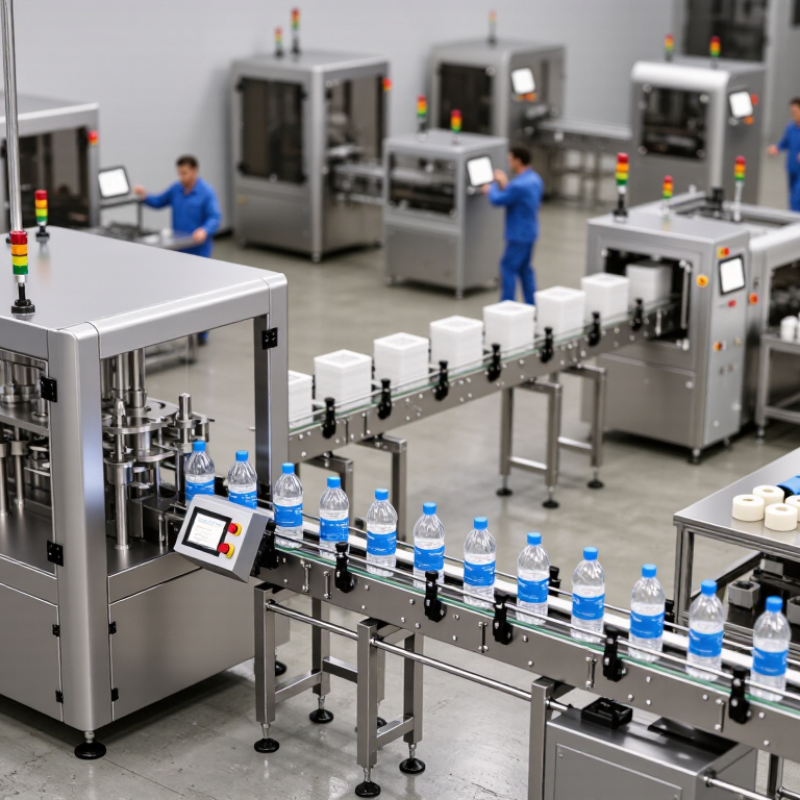
Identify Your Water Product and Labeling Requirements
Before comparing machine speeds, define the water product and every package it must label. Still, sparkling, and mineral water may share a production line, but their bottles and label requirements can differ. Start with the container. Measure its diameter, taper, label panel, and material. A curved PET bottle may need different label placement from a square jug. Cold, damp bottles matter. Condensation can weaken adhesion or lift label edges, so test samples after chilling.
The International Bottled Water Association’s 2023 statistics, based on Beverage Marketing Corporation data, estimated U.S. bottled-water consumption at 15.9 billion gallons. That market figure does not determine your line speed, but it highlights the value of consistent labeling across long runs. Record peak speed, changeover frequency, label dimensions, and acceptable placement tolerance. Wraparound, front-and-back, and shrink-sleeve systems suit different packages; none is automatically best. Match the method to bottle geometry, label stock, and adhesive.
Also note whether one machine must handle several bottle sizes or label designs. Frequent changeovers call for accessible adjustments and repeatable settings. Confirm that labels stay smooth on real production bottles, not just dry samples. A lab test is not a production run. I would not trust a dry-bottle demonstration alone. Check the label after chilling, handling, and line-speed trials, then document what still needs improvement.
How to Choose the Best Water Label Machine in 2026: Identify Your Water Product and Labeling Requirements
These are common nominal bottle capacities, shown as format examples—not a universal product range. When choosing a labeling machine, also confirm your containers’ shape and diameter, label material and placement, required line speed, and changeover needs.
Check Container Compatibility and Required Production Speed
A water label machine should be tested with the containers you actually run, not only a sample bottle supplied for a demonstration. Compare bottle diameter, taper, surface texture, and material. A label that sits smoothly on a rigid PET bottle may wrinkle on a flexible one or drift across a tapered shoulder. Bring filled containers too; their weight can change how they move through guides and belts. Small details matter.
Then match rated speed to your real production target. Ask whether the quoted rate means labels per minute on your bottle size, or an ideal rate on a standard container. Include time for roll changes, adjustments, and brief stops. Grand View Research estimated the global bottled water market at USD 303.95 billion in 2023, indicating a large and growing category, but market growth alone does not tell you what line speed to buy. Record your current hourly output and peak demand, then run a timed trial using several container formats. Watch for skewed labels, slipping bottles, and rejected units. The trial may feel inconvenient; skipping it can be more expensive. A faster machine is not automatically better if operators must slow it down to keep labels aligned.
Evaluate Label Accuracy, Controls, Maintenance, and Compliance
A water label machine should be judged on the bottle, not just its brochure speed. Run your own bottles at normal line speed, then inspect labels across different fill levels and temperatures. Check for skew, wrinkles, bubbles, and labels drifting around the bottle seam. GS1’s General Specifications use barcode grades from 0.0 to 4.0 under ISO/IEC 15416; the required grade depends on the application. Ask suppliers to verify codes on your actual containers, not flat sample labels. Small differences matter.
Controls should let operators adjust speed, label position, and sensor settings without guesswork. Save tested settings for each bottle format, and confirm that a changeover restores them accurately. Maintenance needs equal scrutiny. Ask how quickly a worn roller, sensor, or adhesive buildup can be addressed, and whether routine cleaning requires tools. A neat touchscreen is not proof of easy service. I would still test it during a real shift.
For compliance, map every label version to its approved artwork, lot records, and inspection checks. FDA’s Food Labeling Guide explains required information for many packaged foods; requirements can differ by product and market. Keep version control clear, and have qualified staff review applicable rules. Record inspection results and failed-label counts. These records reveal recurring drift, though they will not catch every operator mistake. That part deserves regular review.
Compare Total Ownership Costs and Verify Supplier Support
A water label machine’s purchase price is only the first line of its cost. Compare change parts, label waste, energy, compressed air, maintenance, training, and spare-part lead times over the expected service life. The U.S. Department of Energy’s Improving Compressed Air System Performance sourcebook estimates compressed air uses about 10% of industrial electricity, reaching 30% in some facilities. Check the machine’s actual air demand against your plant supply; a small leak or oversized system can quietly raise operating costs. NIST Handbook 135’s life-cycle cost approach also supports counting installation, operation, maintenance, and replacement—not just acquisition.
Supplier support needs proof, not promises. Ask for written response-time targets, local service coverage, parts availability, commissioning scope, and operator training. Request references from plants running similar speeds and bottle formats. Then test a practical scenario: a sensor fails during a busy shift. Who answers, how quickly, and which parts are stocked nearby? Downtime hurts. A spreadsheet can still miss awkward changeovers, so include a realistic allowance for them. I would also verify that manuals, wiring diagrams, and troubleshooting steps arrive with the machine, not weeks later.


 Distributors
 SDS Download
 Contact
