
Partner Login
Enter your username and password here on order to log in on the partner portal:
No registered partner yet?
Register nowChoosing a red-light device should begin with your goal, not its appearance. Lumebox Red Light Therapy may suit some routines, but the right option depends on treatment area, schedule, and verified device specifications. Grand View Research estimated the global red-light therapy market at about USD 1.1 billion in 2023, with projected growth through 2030. That figure reflects commercial demand. It does not prove a device will deliver a particular health outcome. The distinction matters.
Clinical evidence also needs careful reading. Peer-reviewed reviews of photobiomodulation describe results that vary by condition, wavelength, dose, and study design. Evidence for one use should not be treated as proof for every use. Check the Lumebox model’s published wavelength range, irradiance, coverage area, recommended session length, and safety guidance. Compare those details with your intended routine. A panel that covers your back may be inconvenient for targeted facial use. Small practical details count.
Look for clear testing information and instructions, not dramatic promises. The evidence can be uneven. If you are choosing between models, compare their specifications against the same criteria rather than relying on marketing language. Ask a qualified health professional before using light therapy for a medical concern, especially if you have a diagnosed condition or take photosensitizing medication. This guide will help you assess Lumebox Red Light Therapy with realistic expectations. Some questions may remain unanswered; that is a reason to verify, not guess.
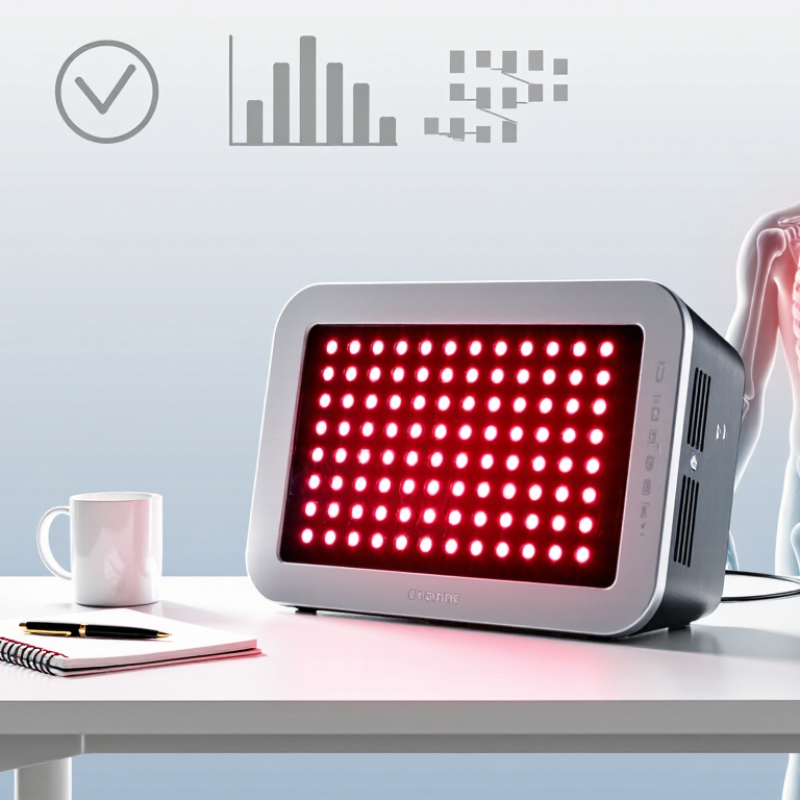
Choose a clear goal before comparing red-light therapy devices. Skin appearance, temporary muscle recovery, and general wellness are different aims. Start with one goal. A device suited to a small facial area may be inconvenient for covering your back or legs. Consider treatment area, session length, and whether you can use it consistently. Note your baseline: a photo in the same light or a simple comfort rating can help you judge change.
For skin concerns, evidence is promising but not universal. A 2014 controlled study by Wunsch and Matuschka, published in Photomedicine and Laser Surgery, evaluated 136 volunteers across 30 red or near-infrared light sessions. Researchers reported changes in skin roughness, fine lines, and collagen density. The results do not guarantee the same outcome from every home device. Wavelength, power, distance, and exposure schedule differ. Check whether a device clearly reports these details.
For muscle recovery, define the task more narrowly: soreness after workouts, for example, is not the same as treating an injury. Follow the device’s instructions, and avoid increasing exposure just because progress feels slow. Keep a brief log for several weeks. It is easy to overread a good week. If symptoms persist or worsen, ask a qualified clinician rather than relying on light therapy alone.
Compare red-light therapy devices by treatment area, not just panel size. A compact unit can suit a desk-side routine or one knee, while a larger panel may cover the back and shoulders without repeated repositioning. Check the measured irradiance at your intended distance, then compare dose:
The World Association for Photobiomodulation Therapy publishes condition-specific dose recommendations; its guidance is a better reference than assuming every device needs the same session time. Keep in mind, readings can vary with distance and measurement method.
Portability matters when a device must move between rooms or travel. Check its weight, handle, stand stability, power supply, and whether it can be positioned hands-free. A smaller model may be easier to store, but its limited coverage can make full-body sessions slower. A larger device may save repositioning time, yet become awkward in a shared or small room. Published photobiomodulation research uses varied wavelengths and treatment protocols, so specifications alone cannot predict personal results.
A spec sheet can still mislead. Compare the stated irradiance, treatment distance, coverage dimensions, and safety instructions together; if those details are missing, choosing between models becomes guesswork.
When comparing red light devices, read the full light specifications, not just the headline wavelength. Look for the stated wavelength range, measured output, treatment distance, and illuminated area. A reading without its distance is hard to interpret. Distance matters. A stronger output figure does not automatically mean better results; comfort, coverage, and consistent use also matter. Check whether the device gives clear timing guidance and explains how to position it. If specifications are missing or difficult to verify, treat that as a reason to ask questions, not as proof of quality.
Follow the instructions for session length and frequency, and start conservatively if the guidance allows. Sit or stand at the recommended distance, with the target area unobstructed. Keep notes. Record the session time, distance, and any skin response, such as lingering warmth or irritation. Avoid staring directly into bright LEDs, and use eye protection when the instructions call for it. Red light therapy is not a substitute for medical care, and evidence varies by use. If you have a health condition, take photosensitizing medication, or feel unsure, ask a qualified clinician before starting. I would not assume that more minutes must help; that assumption deserves a second look.
How to Choose Lumebox Red Light Therapy for Your Needs?
Check safety details before comparing power or price. IEC 62471:2006 divides lamps into four photobiological risk groups, from Exempt to Risk Group 3. Ask for the device’s tested classification, wavelength, and recommended distance; a bright panel is not automatically a safer or more effective one. Wear the eye protection specified in the instructions, and never stare into the LEDs. Small details matter.
Review your health and medicines with a clinician if you have an eye condition, unusual light sensitivity, or take medication that increases photosensitivity. Evidence and protocols vary, so treat marketing promises cautiously. Stop if you develop persistent redness, discomfort, or headache. I would not assume “drug-free” means risk-free.
Ease of use affects whether a routine is realistic. Look for a stable stand, a clear timer, readable instructions, and a treatment area that fits your intended use. Measure the distance from the panel to your skin, then follow the maker’s stated session length rather than improvising. Keep the unit away from water and let it cool as directed. A simple routine beats one you abandon.
| What to Assess | Practical Guidance | Safety and Ease-of-Use Check |
|---|---|---|
| Your intended use | Define the area and goal you want to discuss with a healthcare professional. Benefits depend on the condition and device; results are not guaranteed. | Check that the device instructions cover your intended use. Do not treat it as a substitute for diagnosis or prescribed care. |
| Light wavelengths | Red light devices commonly use wavelengths around 630–660 nm; near-infrared devices often use roughly 800–850 nm. These are common ranges, not a specification for any particular device. | Look for clearly stated wavelengths and instructions for distance and session duration. Near-infrared light may be invisible, so do not use visibility as a safety guide. |
| Dose and schedule | Follow the device’s specific directions for exposure time, treatment distance, and frequency. More exposure is not necessarily better. | Choose a device with understandable instructions and a practical timer. Stop if you experience discomfort, unusual warmth, or skin irritation. |
| Eye protection | Avoid staring into bright LEDs. Use eye protection if the manufacturer recommends it, especially when treating near the face. | Ask an eye-care professional before use if you have an eye condition or are especially sensitive to light. Follow the device-specific eye-safety directions. |
| Photosensitivity or medication | Some medicines and medical conditions can increase sensitivity to light. Check medication information and ask a clinician or pharmacist if unsure. | Do not start without professional advice if you have a known photosensitivity disorder or take medication that may cause photosensitivity. |
| Pregnancy or complex health needs | Safety information may be limited for some populations and treatment areas. Discuss use with a healthcare professional if pregnant, breastfeeding, or managing a significant health condition. | Get individualized advice before use rather than assuming a device is appropriate for every situation. |
| Skin changes or treatment area | Have unexplained, changing, or concerning skin lesions assessed by a clinician instead of self-treating them with light therapy. | Ask a healthcare professional before treating an area with an active skin condition, recent procedure, or implanted medical device nearby. |
| Ease of use and setup | Consider treatment-area coverage, required positioning, session length, portability, controls, and whether the setup fits your routine. | Review cleaning, storage, power, warranty, and return details. Avoid using a damaged device or one with unclear operating instructions. |
| Evidence and claims | Evidence for photobiomodulation varies by condition, wavelength, dose, and study quality. Be cautious of claims promising a cure or guaranteed results. | Verify any regulatory status for the exact device and intended use; do not assume that one clearance or registration proves effectiveness for every claim. |
General information only; it is not a substitute for personalized medical advice or the device’s instructions.
Choosing a red light therapy device starts with your routine, not the biggest panel on the shelf. If you want occasional sessions at home, a compact unit may be easier to store beside a desk or bathroom cabinet. Check its treatment area, recommended distance, timer, and verified wavelength details before comparing prices. A small device can suit focused use, but it may take longer to cover larger areas. Keep it simple.
For frequent use, consider whether a larger device fits your space and budget. Measure the area where you plan to use it, including room for the suggested distance from the light. Compare the full cost, warranty, return terms, and replacement parts—not just the sale price. Clear instructions and realistic product specifications are more useful than dramatic promises. That matters.
Set a budget that leaves room for consistent, comfortable use. A lower-cost option may be sensible if you are still deciding whether the routine suits you; a pricier model is not automatically better. Start with short sessions that follow the device instructions, and protect your eyes when advised. Evidence and individual responses can vary, so treat wellness claims cautiously. If you have a medical condition or use light-sensitive medication, ask a qualified clinician before starting. I would reassess after a few weeks; routines often look different in practice.