Why Choose a Dust Aerosol Generator for Your Business Needs?
In today's competitive landscape, businesses often seek reliable solutions to enhance their operations. A Dust Aerosol Generator emerges as a versatile tool for various industries. This device produces consistent and controlled dust-like particles, making it essential for both testing environments and quality control processes.
Choosing a Dust Aerosol Generator can significantly impact your business needs. It allows for more accurate assessments in industrial settings, ensuring that equipment meets safety standards. This generator also helps with research and development, providing precise data for product improvements.
Many companies may underestimate the importance of such technology. However, investing in reliable equipment pays off in the long run. A Dust Aerosol Generator not only improves efficiency but also reduces potential risks associated with dust exposure. It supports a healthier workplace and promotes better outcomes in product testing and validation. By carefully evaluating options, businesses can enhance their operational capabilities.
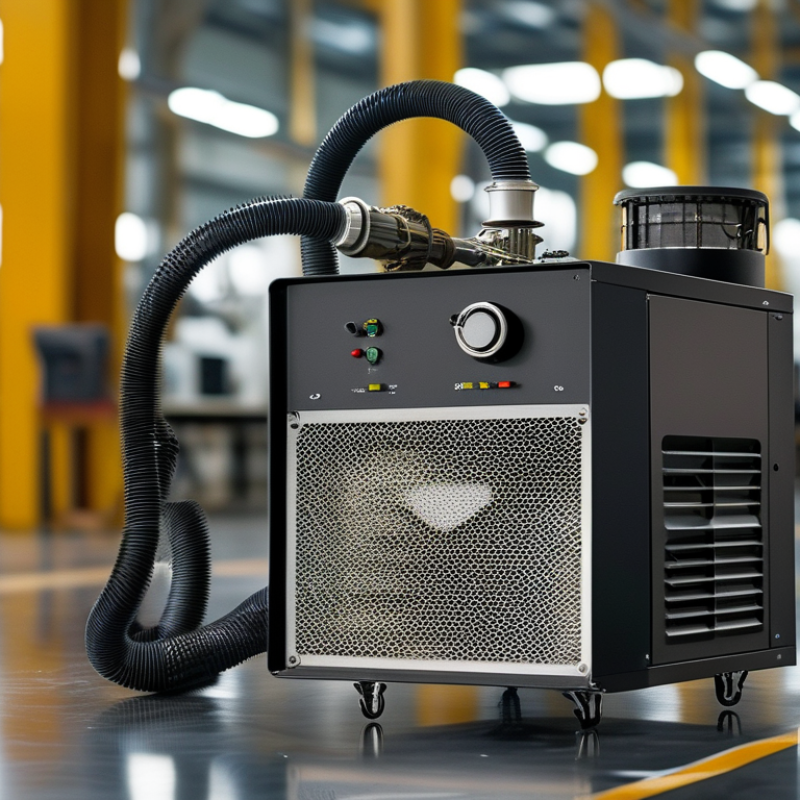
Understanding Dust Aerosol Generators and Their Functionality
Dust aerosol generators play a vital role in various industries, from manufacturing to environmental research. These devices create fine particles that simulate dust, aiding in testing and training applications. By recreating real-world scenarios, businesses can ensure safety and compliance in environments prone to dust exposure.
Understanding how dust aerosol generators function is essential for effective utilization. They disperse particles in a controlled manner, ensuring uniform distribution. This functionality allows companies to conduct thorough testing of air filtration systems, personal protective equipment, and workspace safety measures. However, not all generators are created equal, and users must consider factors like particle size, generation rate, and system compatibility when making a selection.
While the advantages are clear, challenges remain. Operators must be trained to handle these devices correctly. Additionally, monitoring air quality during testing is crucial to avoid unintended exposure. This balance between safety and functionality highlights the need for ongoing training and evaluation. Investing in dust aerosol generators can ultimately enhance operational excellence when approached thoughtfully.
Key Benefits of Using Dust Aerosol Generators in Various Industries
Dust aerosol generators are essential tools across various industries. These devices create controlled dust environments for testing and research. They enable businesses to assess how products and systems react to dust exposure. This is particularly beneficial in pharmaceuticals, aerospace, and automotive sectors.
Recent studies indicate that exposure to dust can cause equipment malfunction and health issues. According to a report from the Health and Safety Executive, dust-related diseases account for over 12,000 deaths annually in the UK alone. By using dust aerosol generators, companies can simulate real-world conditions safely. This proactive approach not only protects workers but also aids in product improvement.
Additionally, dust aerosol generators can enhance workplace safety protocols. Customizable dust concentrations allow for thorough testing of filtration systems and personal protective equipment. A report from the National Institute for Occupational Safety and Health highlights that effective dust control can reduce respiratory problems by up to 80%. These statistics demonstrate the need for reliable testing methods in various industrial applications.
Selection Criteria for Choosing the Right Dust Aerosol Generator
When selecting a dust aerosol generator for industrial applications, several criteria should be considered. First, the generator’s output capacity is crucial. Research shows that an optimal dust concentration ranges from 0.1 to 2 mg/m³ for effective testing. This ensures that the generator can simulate conditions similar to those found in actual working environments.
Another critical factor is the particle size distribution. Generators capable of producing particles ranging from 1 to 10 micrometers are more versatile. According to industry reports, these sizes are commonly associated with respiratory health issues. Therefore, having a generator that accurately replicates this size range is essential for valid testing and safety assessments.
Additionally, consider maintenance and ease of use. Complex systems may require specialized training. Data suggests that straightforward operation can significantly reduce downtime. This reflects the importance of user-friendly design. It not only enhances efficiency but also promotes consistent testing results. The balance between complexity and ease of use can often be the deciding factor for businesses.
Applications and Use Cases of Dust Aerosol Generators in Business
Dust aerosol generators have become essential tools in various industries. They create controlled dust environments that simulate real-world conditions. This is crucial for product testing, quality assessment, and safety compliance. For example, manufacturers use these generators to test the durability of their products against dust exposure. A report from the Environmental Protection Agency highlights that dust exposure can lead to a 20% decrease in equipment lifespan over time.
In laboratory settings, researchers utilize dust aerosol generators to study the effects of particulate matter on human health. This is particularly relevant in fields like pharmaceuticals and toxicology. By understanding how dust interacts with different surfaces and materials, businesses can improve product designs and safety protocols. A study published in the Journal of Occupational Health notes that proper dust control measures can reduce health-related accidents by up to 30%.
Tip: Regular maintenance of your dust aerosol generator ensures consistent performance. Keeping filters clean can improve the quality of aerosol produced.
Effective training for staff on how to use these generators is vital. Employees must understand the importance of safety and control measures. Investing in regular training can enhance workforce confidence and compliance. The
Occupational Safety and Health Administration underlines that workplace training can help mitigate potential risks associated with dust exposure.
Maintaining and Optimizing the Performance of Dust Aerosol Generators
Maintaining and optimizing dust aerosol generators is vital for various industries. Regular maintenance ensures these machines operate efficiently. According to a recent industry report, an estimated 30% of dust aerosol generators fail due to lack of proper upkeep. This leads to increased downtime and operational costs. Ensuring regular inspections can drastically reduce these failures.
Performance optimization is another crucial aspect. Fine-tuning settings can improve particle size distribution and increase efficiency. Data shows that generators adjusting to specific environments can enhance aerosol concentration by up to 25%. Operators should monitor humidity levels and adjust dispersion rates accordingly. Ignoring these factors can lead to subpar performance and compromised air quality.
Periodic calibration is essential. Many users overlook this aspect, leading to inconsistent output. A well-calibrated generator not only meets industry standards but also adheres to safety regulations. The interplay between maintenance and optimization ensures that performance remains reliable. When both aspects align, businesses can expect a more effective, cost-saving operation.



 Distributors
  SDS Download
  Contact