
Partner Login
Enter your username and password here on order to log in on the partner portal:
No registered partner yet?
Register nowChina’s metal-coating industry is expanding, driven by construction, automotive manufacturing, energy equipment, and marine infrastructure. Within this market, the Special Solidify Agent For Metal Primer plays a quiet but critical role. It controls curing speed, adhesion, hardness, chemical resistance, and long-term film stability.
A 2024 report from MarketsandMarkets estimates that the global epoxy resin market will continue growing through 2029, supported by protective coatings and industrial applications. Grand View Research also identifies corrosion protection as a major demand area for advanced coating systems. These figures show strong opportunity, but they do not prove that every Chinese supplier offers equal performance. Testing still matters.
Dr. Robert W. Revie, a respected corrosion-control specialist, defined corrosion as “the destructive attack of a metal by chemical or electrochemical reaction with its environment.” His statement explains why primer formulation cannot depend on resin selection alone. The curing agent must create a dense, well-bonded barrier around steel, aluminum, or galvanized surfaces.
China has many capable manufacturers. Some provide strong technical data, batch consistency, and application support. Others may present impressive specifications without sufficient salt-spray, adhesion, or pot-life evidence. This is where buyers should remain cautious.
Real performance is visible on the panel.
This article examines how to evaluate China’s top Special Solidify Agent For Metal Primer suppliers. It considers chemistry, curing behavior, test standards, production control, export experience, and technical service. The conclusion may not identify one universal winner. Primer performance changes with substrate preparation, humidity, temperature, and application thickness. That uncertainty deserves honest attention.
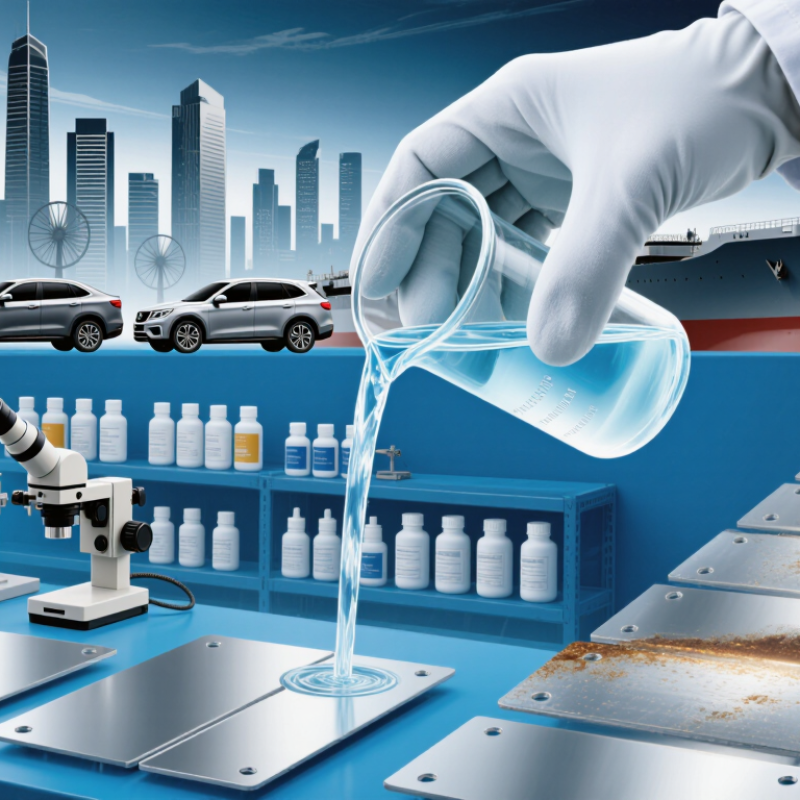
A special solidifying agent for metal primer is usually a curing agent, not a simple drying additive. It reacts with the resin and forms a crosslinked protective film. In epoxy primers, amine, polyamide, and modified hardeners are common choices. Each changes pot life, adhesion, hardness, and chemical resistance.
The right agent depends on steel preparation, humidity, temperature, and application thickness. On blasted steel, a balanced curing reaction can improve bonding around small surface profiles. In damp workshops, fast curing may reduce dust pickup, but it can also trap moisture. That trade-off is often underestimated. Field testing matters more than a supplier’s single laboratory result.
Corrosion protection has serious economic value. The IMPACT study by NACE estimated global corrosion costs at about 3.4% of worldwide GDP. The World Steel Association reported approximately 1.89 billion tonnes of crude steel production in 2023. These figures show why primer performance deserves careful formulation. A curing agent should support adhesion and barrier formation without creating excessive brittleness. ISO 12944-5 also stresses that coating systems must match exposure conditions and surface preparation. The term “special” can be misleading. Sometimes, the best agent is not the fastest one. A measured cure, tested through adhesion, hardness, and salt-spray procedures, is more reliable than marketing language. Testing can still miss real-site failures. Temperature swings, sharp edges, and poor cleaning remain difficult variables.
In Chinese metal primer production, curing agents are selected around resin chemistry, substrate, and application conditions. Epoxy primers commonly use modified amines, polyamides, or adducts to balance adhesion and chemical resistance. The choice is practical, not merely promotional. A steel panel may demand fast handling, while a humid workshop needs longer open time. Small differences matter.
Formulators adjust active hydrogen content against the epoxy equivalent ratio. Too much curing agent can leave a brittle film and surface whitening. Too little may cause softness, poor solvent resistance, or delayed curing. Pigments, fillers, and solvent levels are tested with the hardener. Each component can change flow and intercoat adhesion. Laboratory technicians often check gel time, pencil hardness, cross-cut adhesion, and salt-spray behavior. These tests reveal weaknesses that a glossy panel can hide.
Temperature changes the reaction. So does moisture. Production teams condition samples at realistic temperatures before approving a formula. They may modify amine structures to reduce odor, blushing, or yellowing, while preserving workable pot life. Not every batch behaves perfectly. Raw-material variation and inaccurate mixing still create surprises. Experienced manufacturers therefore record viscosity, color, cure speed, and adhesion for each lot during routine production.
China Top Special Solidifying Agent for Metal Primer?
Key Performance Properties of High-Quality Solidifying Agents
A high-quality solidifying agent does more than harden a metal primer. It controls adhesion, flexibility, corrosion resistance, and curing speed. In practical coating work, the film should grip blasted steel like a thin, even shell. It must also tolerate impact, humidity, and temperature changes without becoming brittle.
The NACE IMPACT study estimated global corrosion costs at about US$2.5 trillion annually, equal to nearly 3.4% of global GDP. That figure explains why curing-agent selection deserves careful testing. A reliable formulation should support strong cross-cut adhesion under ASTM D3359 and stable salt-spray performance under ASTM B117. However, laboratory hours do not always predict field results. Surface oil, abrasive dust, and incorrect mixing ratios can weaken even a technically strong primer.
Pot life matters too. A useful curing agent provides enough working time for spraying, while reaching practical hardness without excessive heating. High-quality systems often balance chemical resistance with controlled flexibility. Too much hardness can cause cracking around welds and sharp edges. Too much flexibility may reduce scratch resistance. Testing should include adhesion, impact, pencil hardness, immersion resistance, and low-temperature curing. Real application records help, but they are not perfect. Each substrate and climate can expose weaknesses that a product data sheet misses.
The chart presents representative, non-brand-specific benchmark values for high-quality solidifying agents used in metal primers. Strong performance is indicated by high adhesion retention after humidity and salt-spray exposure, together with a practical working life.
Selecting a curing agent for a metal primer requires more than choosing the highest hardness. The metal surface, corrosion risk, and application environment matter more. The NACE IMPACT Study estimated global corrosion costs at about US$2.5 trillion annually, equal to 3.4% of global GDP. A suitable primer system can reduce premature coating failure, but only when surface preparation and compatibility are controlled.
For carbon steel, select an agent that supports strong adhesion and moisture resistance after abrasive blasting. The target surface should commonly reach Sa 2½ under ISO 8501-1. For galvanized steel, use a formulation with low shrinkage and good flexibility. Zinc surfaces can develop weak intercoat adhesion if the primer cures too aggressively. Aluminum needs special care because its oxide layer reforms quickly. Mild abrasion and a compatible adhesion-promoting agent are often safer than excessive grinding. ISO 12944-5 also reminds applicators to match coating systems with corrosivity categories, not only metal type.
Tips: Check the pot life, cure speed, mixing ratio, and recoat window. Test a small panel first. ASTM B117 salt spray results can help compare systems, but they should not replace field exposure testing. One practical weakness remains: laboratory data rarely reflects every workshop condition. Temperature, humidity, contamination, and operator technique can change the result. That deserves honest review.
| Metal Surface | Recommended Primer Binder | Suitable Solidifying Agent Chemistry | Typical Agent Addition1 | Typical Working Characteristics | Surface Preparation | Key Advantages | Main Selection Risks |
|---|---|---|---|---|---|---|---|
| Carbon Steel | Two-component epoxy primer | Polyamine or modified amine adduct | Usually 10–40% of total mixed binder, according to the supplier’s equivalent ratio | Good adhesion, chemical resistance, and ambient-temperature cure; pot life commonly 1–8 hours at approximately 25°C | Remove oil, rust, and mill scale; abrasive blast to a clean, profiled surface or mechanically prepare to an equivalent standard | Strong corrosion-protection platform and good compatibility with anticorrosive pigments | Incorrect stoichiometry can cause soft films, poor adhesion, or excessive brittleness |
| Galvanized Steel | Adhesion-promoting epoxy or epoxy-modified primer | Low-yellowing amine adduct or compatible waterborne epoxy curing agent | Commonly 15–35% of total mixed binder; confirm by epoxy equivalent and amine hydrogen equivalent | Requires controlled reactivity to reduce intercoat defects and improve adhesion to zinc surfaces | Degrease thoroughly, remove white rust, and lightly abrade or sweep blast without removing excessive zinc | Good adhesion when the surface is clean and lightly profiled; suitable for maintenance and fabrication coatings | Strong solvents, excessive abrasion, or a highly acidic formulation may damage the zinc layer |
| Hot-Dip Galvanized Sheet | Thin-film epoxy or epoxy-polyurethane adhesion primer | Modified polyamine with moderate cure speed | Typically 10–30% of total mixed binder, subject to the selected epoxy resin | Low-shrinkage cure and good wetting are more important than maximum hardness | Remove passivation residues and processing oil; use a non-aggressive abrasion method where permitted | Balances adhesion, flexibility, and corrosion resistance on relatively smooth zinc-coated surfaces | A fast-curing agent may reduce wetting and create cratering or poor intercoat adhesion |
| Aluminum | Epoxy, epoxy-polyamide, or specialized epoxy adhesion primer | Flexible polyamide or amine adduct with good wetting | Often 15–45% of total mixed binder, depending on resin functionality and flexibility requirements | Good wetting and moderate flexibility help accommodate aluminum’s thermal movement and oxide layer | Degrease, remove oxide contamination, and abrade or chemically pretreat; coat promptly after preparation | Improves adhesion to the oxide-covered surface while maintaining useful impact resistance | Overly rigid or highly exothermic systems can crack, shrink, or lose adhesion during thermal cycling |
| Stainless Steel | High-adhesion epoxy primer | Modified amine adduct or polyamide curing agent | Generally 15–40% of total mixed binder, calculated from the resin and curing-agent equivalents | Requires strong wetting and sufficient mechanical or chemical bonding to the passive oxide layer | Remove oil and fingerprints; abrade with clean, dedicated media to avoid iron contamination | Provides a sound base for subsequent protective or decorative coating layers | Poor preparation can cause rapid delamination even when the cured film appears hard |
| Copper and Copper Alloys | Epoxy primer with good barrier performance | Low-yellowing amine adduct or polyamide | Commonly 15–40% of total mixed binder, with compatibility confirmed by laboratory testing | Good barrier properties and controlled cure are preferred to minimize staining and surface defects | Remove oil, tarnish, and soluble salts; lightly abrade and apply soon after cleaning | Can provide durable adhesion and isolate the substrate from moisture and aggressive environments | Some pigments, amines, and contaminants may contribute to discoloration or interfacial adhesion loss |
| Zinc-Rich Steel Primer | Inorganic silicate or compatible epoxy zinc-rich primer | Moisture-cure silicate system or amine curing agent for epoxy zinc-rich systems | Follow the binder-specific ratio; zinc-rich formulations should not be adjusted by simple volume substitution | Cure depends strongly on humidity, temperature, pigment loading, and film thickness | Prepare steel to a high cleanliness level and control surface profile and humidity before application | Provides barrier protection and, in suitable systems, sacrificial zinc protection | An incompatible curing agent may interfere with electrical contact between zinc particles or cause mud cracking |
| Metal with High Flexibility or Thermal Cycling | Flexible epoxy or epoxy-modified coating system | Polyamide or flexible amine adduct with extended cure profile | Often 15–45% of total mixed binder, adjusted to balance flexibility and hardness | Lower crosslink density generally improves flexibility but may reduce solvent and chemical resistance | Use a clean, dry, profiled surface and verify that the primer can tolerate the expected movement | Reduces cracking and delamination risk caused by impact, vibration, or temperature changes | Excessive flexibility may produce blocking, low hardness, or reduced resistance to aggressive chemicals |
Selection Notes
1 The addition ranges are typical formulation starting points for two-component epoxy systems, not universal specifications. The final ratio must be calculated from the resin epoxy equivalent weight and the curing agent’s amine hydrogen equivalent weight or supplier-defined mix ratio.
Before production, verify adhesion, hardness, pot life, drying time, corrosion resistance, solvent resistance, humidity tolerance, and intercoat compatibility on the actual metal substrate.
Selecting a solidifying agent in China requires more than comparing prices. A reliable material should support stable curing, strong metal adhesion, and consistent corrosion resistance. In workshop trials, I check surface dryness, mixing time, film hardness, and adhesion after seven days. Small details matter. A primer that cures quickly may still fail under humidity or salt exposure.
Quality evaluation should begin with a clear technical data sheet, safety data sheet, and batch-specific certificate of analysis. Review viscosity, active content, recommended mixing ratio, pot life, and curing temperature. Suppliers should explain their quality system and provide traceable production records. ISO 9001 certification can help, but it does not replace product testing. Ask for evidence. Samples should be tested on the actual steel grade, surface preparation method, and application equipment.
Applications may include steel structures, machinery parts, transport equipment, and industrial maintenance coatings. The correct agent depends on the resin system and required service environment. A supplier’s laboratory support is valuable when humidity changes or production speed increases. Still, no supplier is perfect. A first trial can mislead if the sample is unusually fresh or carefully selected. Repeat testing across several batches is wiser. I would also inspect packaging seals, storage guidance, and response quality before signing a long-term agreement.