China Top 10 Compact Floor Scrubber Manufacturers
Selecting a Compact Floor Scrubber is not just a matter of choosing the smallest machine. Cleaning width, tank capacity, battery runtime, and turning radius all affect how well it works in a real building. A model that fits neatly between café tables may struggle across a long warehouse aisle. Small details matter. This guide introduces ten manufacturers associated with compact floor-cleaning equipment and explains what buyers can compare before contacting suppliers.
The comparisons focus on practical, checkable details: published specifications, available machine types, parts support, warranty information, and the surfaces each scrubber is designed to clean. For example, a buyer might compare brush width and recovery-tank capacity, then check whether the machine can pass through a 75-centimeter doorway. Manufacturer websites, product manuals, and written quotations can help confirm those details, since model availability and support may vary by region. No ranking is perfect. A familiar brand may not be the best fit for a small clinic, while a lesser-known supplier may offer a suitable machine and responsive local service. That is a limitation worth stating. Treat this list as a starting point, not a substitute for checking current specifications, arranging a demonstration, and confirming service arrangements for the exact model.
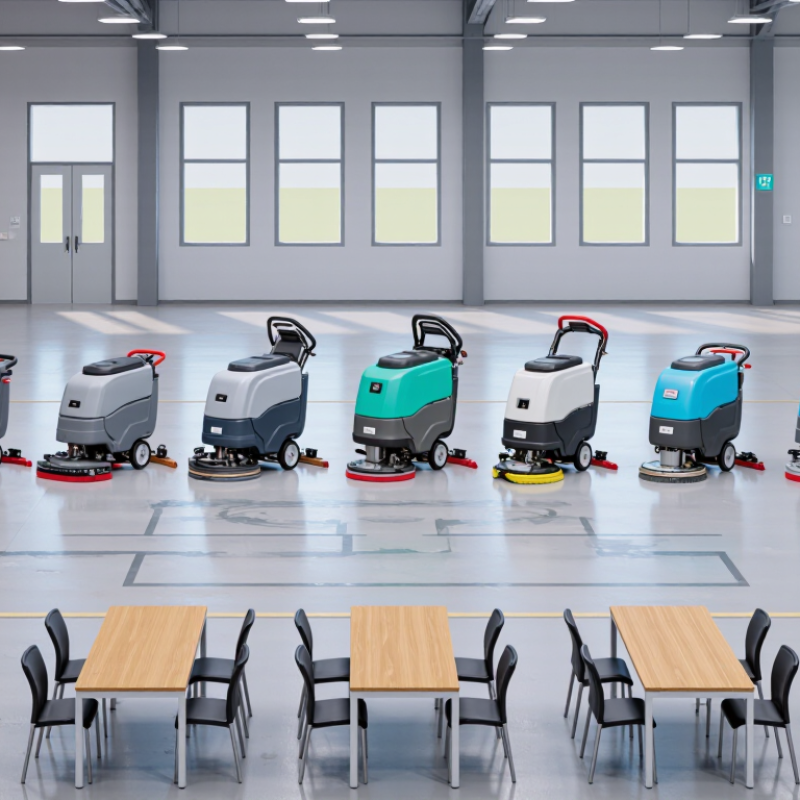
Compact Floor Scrubbers Defined: Walk-Behind and Ride-On Designs
Compact floor scrubbers generally come in two designs: walk-behind and ride-on. A walk-behind unit is steered from behind using a handle, making it practical for narrow aisles, small shops, and rooms with frequent obstacles. The operator can watch the brush path closely and adjust around shelving or doorways. That control matters. Its slower pace may increase cleaning time across large, open floors, and pushing for long periods can be tiring.
A ride-on scrubber lets the operator sit while the machine covers broader areas, such as warehouse lanes or school corridors. Larger tanks can reduce refill stops, though exact capacity and runtime vary by model and floor conditions. Turning space is important; a compact ride-on may still struggle in tight corners. Before comparing manufacturers, measure the narrowest doorway and aisle, then consider cleaning width, battery access, and how easily the squeegee can be replaced. A machine that fits the sales description but not the building is a poor choice. Neither design is automatically better: floor layout, daily cleaning area, and operator comfort should guide the decision.
China’s Top 10 Manufacturers: Product Range, Production Scale, and Export Reach
China’s compact floor scrubber manufacturers vary in more than machine size. A useful comparison looks at product range, production scale, and export reach together. Some suppliers focus on walk-behind units for narrow aisles, while others offer ride-on models, battery options, and different cleaning widths. Buyers should check practical details, such as tank capacity, brush pressure, and how easily operators can reach filters and squeegees.
Production scale is not just a factory’s floor area. It also includes assembly capacity, quality checks, component sourcing, and the ability to keep spare parts available. Ask for current production information and test reports where possible. A glossy catalog can still hide gaps. That is worth remembering. A clear answer about lead times may be more useful than a large capacity claim.
Export reach can be assessed through established shipping destinations, distributor coverage, service support, and parts availability. These factors matter when a scrubber works far from the supplier’s factory. Compare warranty terms and request references from similar markets, while recognizing that service quality can vary by local partner. No single ranking captures every buyer’s needs; a small manufacturer may offer focused support, while a larger producer may provide broader model choice. The evidence should guide the decision.
Key Specifications: Cleaning Width (cm), Tank Capacity (L), Runtime (h), and Noise (dB(A))
When comparing China’s top 10 compact floor scrubber manufacturers, check how each specification fits your site. Cleaning width, measured in centimetres, indicates the scrub path per pass. A wider head may cover open aisles faster, but it can struggle around chair legs and narrow doorways. Measure the tightest turn before choosing.
Tank capacity, listed in litres, affects how often operators refill and empty the machine. Match it to the floor area, soil level, and available water access. A large tank is not automatically better; added weight may make a compact unit harder to steer. Small details matter. Ask whether the stated capacity is usable volume or total tank volume.
Runtime in hours should be checked under realistic conditions, since heavy scrubbing can differ from light-duty testing. Request the test setup, including brush pressure and operating mode. Noise figures in dB(A) help assess suitability near occupied offices or shops, but measurement distance matters. Quiet is relative. Compare readings taken under similar conditions, and ask for test documentation. A specification sheet can still leave gaps; verify key figures with a live demonstration where possible.
Productivity Benchmark: Theoretical m²/h = Width (m) × Speed (km/h) × 1,000
A useful productivity benchmark starts with a simple equation: theoretical m²/h = cleaning width (m) × travel speed (km/h) × 1,000. A 0.50 m scrubber moving at 4 km/h therefore reaches 2,000 m²/h on paper. This is a geometric ceiling, not a promised shift output. Turns, overlaps, obstacles, refilling, and dirty-water disposal all reduce productive time. The ISSA 612 Cleaning Times reference uses task-based production rates, a better comparison than travel speed alone. Treat its figures as planning guidance, not a guarantee for every floor.
For compact machines, check the cleaning path and the route together. A narrow aisle may prevent full-width passes; a tight doorway may add repeated turns. Log the area actually cleaned, operating time, and interruptions over several shifts. Then compare measured output with the theoretical figure. The gap is useful.
One caveat: operator technique and floor condition can skew a short trial. A smooth showroom aisle is not a busy entrance with grit and wet footprints. Record the test conditions, too. Otherwise, the benchmark looks precise while hiding the messiest variables.
Buyer Checks: IEC 60335-2-72 Safety, Water Recovery, Parts, and Service Coverage
When comparing China’s top 10 compact floor scrubber manufacturers, treat IEC 60335-2-72 as a document check, not a slogan. Request the exact model’s test report, certification scope, and operating manual. Check that the electrical protections and instructions match the machine you will receive. A report for a similar model is not enough. Small detail, big difference.
Water recovery deserves a practical test. Ask the supplier to scrub a tiled floor, turn, and stop, then inspect the damp trail left behind. Record the water used and the amount recovered. Results can change with floor texture, brush pressure, and operator habits, so one showroom pass may not tell the whole story. I would ask for repeat runs, even if that feels fussy.
Before ordering, confirm which parts are stocked locally or can be shipped, and request lead times for squeegee blades, filters, hoses, and batteries. Ask who handles troubleshooting, in what language, and during which hours. A clear service map matters more than a broad promise of coverage. Check warranty exclusions in writing. Even a careful checklist misses real working conditions; arrange a trial on your own floor when possible.


 Distributors
 SDS Download
 Contact
