
Partner Login
Enter your username and password here on order to log in on the partner portal:
No registered partner yet?
Register nowChina’s Carbon Tube industry has developed from basic pultrusion workshops into a sophisticated global supply network. Manufacturers now produce tubes for robotics, drones, bicycles, medical equipment, automation, and lightweight engineering structures. Their capabilities differ widely, however. A polished website does not prove stable quality.
This guide examines ten Chinese manufacturers for international buyers. It considers carbon-fiber grades, tube construction, winding methods, dimensional tolerance, surface finish, and production capacity. It also reviews certification practices, sample policies, communication speed, packaging, and export experience. These details matter when a tube must fit a precision joint or survive repeated vibration.
Dr. Stephen W. Tsai, a leading composites researcher, has expressed a practical principle: “A composite is designed, not selected.” That statement fits Carbon Tube purchasing well. Buyers should match fiber orientation and resin performance to real loads, temperature changes, and joining methods. A lightweight tube can still fail through poor bonding or uncontrolled wall thickness.
The ranking is not absolute. Public information is incomplete, and some manufacturers protect technical data. A smaller supplier may outperform a larger factory on a custom order. That possibility deserves attention. Our comparison therefore emphasizes verifiable evidence, including material documentation, inspection records, test samples, and responsive engineering support. Buyers should request these before signing a long-term agreement.
Some factories may promise very tight tolerances. Ask how they measure them. Ask for recent reports. Independent validation remains sensible for safety-critical applications. This article offers a practical starting point, not a substitute for technical qualification.
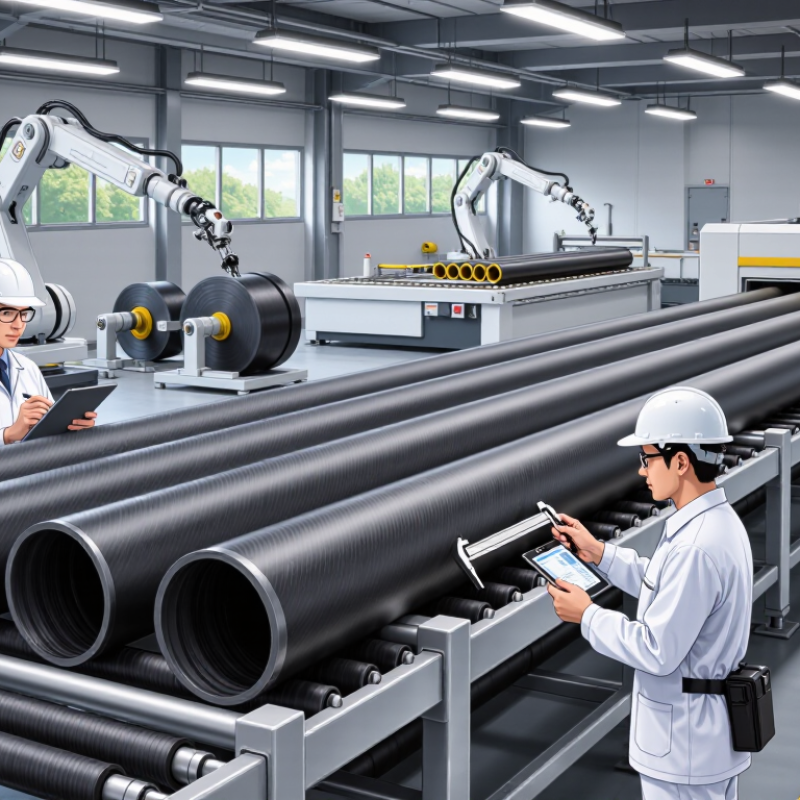
Carbon tubes are hollow structures made from carbon-fiber-reinforced polymer, usually formed around a mandrel. Carbon fibers provide high tensile strength, while the polymer matrix holds the fibers in place. The result is a tube that can be stiff, light, and resistant to corrosion. It may replace steel or aluminum in robotic arms, camera supports, drones, medical equipment, and sporting structures.
The performance difference is substantial. Carbon fiber commonly delivers a specific strength several times higher than steel, while its density is much lower. A 2024 Grand View Research report estimated the global carbon-fiber market at about USD 4.7 billion in 2023, with continued growth expected through 2030. This expansion reflects demand for lighter transport systems and more efficient industrial equipment. Yet market growth does not guarantee suitable tubes for every project.
Global buyers should examine fiber direction, wall thickness, resin type, surface finish, dimensional tolerance, and test documentation. A thin tube may reduce weight, but it can buckle under compression or fail around drilled holes. That assumption can fail. The European Commission’s 2024 materials guidance also emphasizes traceability and lifecycle performance for advanced composites. Buyers need batch records, mechanical data, and clear inspection methods. Carbon tubes are not simply black metal replacements. Their strength depends heavily on design, manufacturing quality, and loading direction. Small details matter.
When evaluating China’s carbon tube manufacturers, begin with the material, not the catalog. “Carbon tube” may describe pultruded, filament-wound, or roll-wrapped construction. Each process affects stiffness, impact resistance, surface quality, and price. Ask for the fiber type, resin system, fiber orientation, and tube layup. A professional supplier should explain these details clearly, without hiding behind technical wording.
Request samples with the same diameter, wall thickness, and finish as your intended order. Measure them with calibrated tools. Check straightness, outer diameter, inner diameter, and cut-edge quality. Ask for test data covering tensile strength, compression, flexural strength, and temperature performance. Test reports should identify the method, sample size, and testing date. Generic certificates are weak evidence. Factory experience matters.
Review production controls, material traceability, and inspection records. A reliable manufacturer can connect a finished tube to its raw-material batch. Confirm how defects are handled, including voids, resin-rich areas, delamination, and uneven walls. Visit the facility when possible, or arrange a live video inspection. A polished website is not proof. I have learned that fast replies can still hide poor engineering judgment. Ask practical questions about drawings, tolerances, packaging, lead times, and replacement procedures. Compare answers across several conversations. Small inconsistencies deserve attention. Also examine whether the supplier can adapt tooling and maintain stable quality during repeat orders. Cost matters, but an unusually low quotation may reflect thinner walls, weaker testing, or unclear specifications.
| Rank | Supplier Profile | Primary Manufacturing Process | Typical Carbon Fiber Construction | Common Product Range | Typical Outer Diameter | Typical Wall Thickness | Standard Quality Evidence | Typical MOQ | Estimated Production Lead Time | Export Readiness | Buyer Evaluation Score |
|---|---|---|---|---|---|---|---|---|---|---|---|
| 1 | Profile A — Advanced Custom Tubes | Roll-wrapping, compression molding, and precision machining | Unidirectional, biaxial, and 0°/±45°/90° laminates | Structural tubes, robotic arms, aerospace support parts, and industrial shafts | 6–250 mm | 0.5–12 mm | Dimensional inspection, fiber-orientation records, resin-content checks, and mechanical test reports | 50–100 pieces for standard sizes; project-based for custom tooling | 18–30 working days | High | 92/100 |
| 2 | Profile B — High-Volume Pultrusion Specialist | Continuous pultrusion with secondary cutting and drilling | Unidirectional carbon fiber with optional braided outer reinforcement | Round tubes, square tubes, rectangular profiles, and lightweight structural sections | 3–160 mm | 0.8–10 mm | Batch traceability, tensile data, visual inspection, and profile dimensional reports | 100–300 pieces, depending on profile size | 15–25 working days | High | 90/100 |
| 3 | Profile C — Lightweight Performance Tubes | Filament winding and mandrel molding | Helical winding with customized fiber angles for torsion and bending loads | Drive shafts, drone components, sports equipment, and electric mobility parts | 10–220 mm | 0.7–9 mm | Fiber-angle verification, balance testing, hardness checks, and dimensional records | 30–80 pieces for approved designs | 20–35 working days | High | 88/100 |
| 4 | Profile D — Precision Small-Diameter Producer | Roll-wrapping, pull-winding, and CNC finishing | Standard-modulus carbon fiber with epoxy or high-temperature resin systems | Thin-wall tubes, medical-device components, optical supports, and instrument parts | 2–80 mm | 0.3–5 mm | Micrometer inspection, concentricity reports, surface-finish records, and sample approval | 100–500 pieces | 20–32 working days | Medium-High | 86/100 |
| 5 | Profile E — Industrial Structural Supplier | Pultrusion, compression molding, and cut-to-length processing | Unidirectional and quasi-isotropic laminate constructions | Automation frames, cable supports, construction parts, and machine guards | 8–300 mm | 1–15 mm | Incoming material inspection, production batch records, load testing, and final inspection reports | 100–250 pieces | 18–28 working days | Medium-High | 84/100 |
| 6 | Profile F — Custom Composite Fabricator | Wet lay-up, vacuum bagging, roll-wrapping, and autoclave-capable molding | Woven, unidirectional, and hybrid carbon-fiber laminates | Prototype tubes, low-volume assemblies, custom brackets, and complex hollow sections | 12–350 mm | 1–20 mm | Material certificates, laminate schedules, cure records, and prototype inspection data | 10–50 pieces for prototype or low-volume orders | 25–45 working days | Medium-High | 82/100 |
| 7 | Profile G — Cost-Efficient Standard Range | Standard pultrusion and basic CNC cutting | Unidirectional carbon fiber with epoxy or vinyl-ester resin options | Standard round tubes, hobby components, lighting supports, and general industrial parts | 5–120 mm | 0.8–8 mm | Basic dimensional checks, visual inspection, and supplier material declarations | 200–500 pieces | 12–22 working days | Medium | 79/100 |
| 8 | Profile H — Braided Composite Specialist | 2D braiding, resin transfer molding, and post-machining | Angle-braided carbon fiber designed for impact and multi-directional loads | Protective housings, energy equipment, sports components, and curved tubes | 15–180 mm | 1–10 mm | Braid-angle records, void-content assessment, surface inspection, and sample testing | 50–150 pieces | 25–40 working days | Medium | 77/100 |
| 9 | Profile I — Prototype and Small-Batch Workshop | Hand lay-up, vacuum infusion, and CNC finishing | Woven carbon fabric with local reinforcement and custom layups | Prototype assemblies, research equipment, camera supports, and specialized fixtures | 10–250 mm | 1–18 mm | First-article inspection, visual laminate assessment, and customer-approved samples | 5–30 pieces | 20–40 working days | Medium | 74/100 |
| 10 | Profile J — General Composite Components Supplier | Basic roll-wrapping, pultrusion, cutting, and drilling | Standard unidirectional or woven carbon-fiber laminate | General-purpose tubes, model components, display structures, and non-critical supports | 6–100 mm | 1–8 mm | Visual inspection, length and diameter checks, and standard packing records | 300–1,000 pieces | 15–30 working days | Medium | 70/100 |
China’s top 10 carbon tube manufacturers serve buyers across construction, transport, machinery, and energy projects. Their profiles show different strengths, production scales, and quality systems.
Several focus on seamless carbon tubes for high-pressure applications. Others produce welded tubes for structural frames, furniture, and general engineering. Many offer standard grades, custom wall thicknesses, cut lengths, and surface treatments. Experienced factories usually control heating, piercing, welding, sizing, and final inspection in separate stages. Their laboratories may test chemical composition, tensile strength, hardness, and dimensional accuracy. Reliable suppliers also provide mill certificates, inspection reports, and traceable batch numbers. Yet capacity claims can be difficult to compare. A large catalog does not always mean better technical support.
Tips: Request samples before placing a large order. Confirm outer diameter, wall thickness, length tolerance, grade, and end finish. Ask how each batch is tested. Review recent export experience and packaging methods. Clear drawings reduce costly misunderstandings. A small trial order is wiser than trusting attractive photos alone.
Some manufacturers support third-party inspections and international documentation. Others respond faster to custom requests but may have narrower testing resources. Buyers should examine equipment age, production records, rejection rates, and communication quality. Factory visits can reveal storage problems that online profiles hide. No supplier is perfect. Careful comparison remains essential.
China Top 10 Carbon Tube Manufacturers for Global Buyers
Comparing Products, Materials, Quality, and Production Capabilities
A serious comparison starts with the tube’s intended load, not its advertised strength. Carbon fiber tubes may use pultruded, roll-wrapped, or filament-wound construction. Each process creates different stiffness, surface finishes, and cost levels. Pultruded tubes suit straight, repeated profiles. Roll-wrapped tubes offer more control over fiber angles. Filament-wound designs can support larger diameters and complex loading.
Material selection deserves close attention. Standard carbon grades often balance price and strength, while intermediate or high-modulus fibers improve stiffness. Resin systems also matter under heat, moisture, and vibration. Ask for fiber orientation, resin content, wall thickness, and dimensional tolerances. A glossy surface proves little. Internal voids may remain hidden.
Quality evidence separates capable manufacturers from simple traders. Request sample inspection reports, batch traceability, cure records, and test data from comparable products. Check outer diameter, inner diameter, straightness, compression strength, and bending performance. Production capacity includes more than factory size. Review mold availability, cutting equipment, drilling accuracy, curing control, and monthly output. Large orders need stable repetition.
Some evaluations remain imperfect. Published strength values may use ideal samples, not finished assemblies. Testing can also differ between suppliers. An experienced buyer should compare identical test methods and request independent verification when risks are high. Ten manufacturers may appear similar online, yet their process discipline, documentation, and response to failed samples can differ sharply. That difference often decides the real purchasing cost.
Comparing representative carbon-fiber material grades used in tube products
This benchmark compares commonly published nominal tensile-modulus grades for carbon fiber used in composite tubes. Higher modulus can improve stiffness-to-weight performance, while the final tube properties also depend on fiber orientation, resin system, fiber volume fraction, wall thickness, curing process, and quality control. The figures are material benchmarks rather than company-specific rankings.
Selecting among China’s carbon tube manufacturers requires more than comparing quoted prices. Define the application first: outer diameter, inner diameter, length, wall thickness, stiffness, surface finish, and expected load. A supplier should explain its fiber direction, resin system, curing method, and dimensional tolerances clearly. Vague answers deserve caution.
Request samples from shortlisted manufacturers and measure them independently. Check weight, straightness, fit, and surface defects under consistent lighting. Ask for material certificates, inspection records, and batch traceability. If relevant, review quality-system certification and confirm whether testing is performed internally or by an independent laboratory. Experienced suppliers should provide practical data, not only attractive photographs.
Purchasing terms also influence real performance. Confirm minimum order quantities, production lead times, packaging, replacement procedures, and delivery responsibilities in writing. A pre-production sample can reveal mold marks or tolerance problems that a catalogue cannot show. Do not skip it. However, one sample may not represent an entire production lot, which is an easy mistake for new buyers. Consider an inspection before shipment, especially for precision assemblies. Keep specifications, approved samples, and communication records together. Good cooperation is useful, but documented evidence protects both sides when expectations change.