China Top 10 Cleanroom Dehumidifier Manufacturers?
China’s cleanroom industry is expanding across pharmaceuticals, electronics, healthcare, food processing, and advanced manufacturing. In these environments, humidity control is not a minor comfort issue. It affects particle behavior, product stability, static electricity, corrosion, and operator performance.
A reliable Cleanroom Dehumidifier must deliver stable dew-point control under changing production loads. It should also integrate smoothly with air-handling units, filtration systems, sensors, and building controls. Important evaluation points include moisture-removal capacity, energy efficiency, airflow uniformity, noise, maintenance access, and documented testing. Field experience matters here. A polished brochure cannot replace verified performance inside a running cleanroom.
William Whyte, a respected cleanroom technology researcher and author, wrote, “The primary purpose of a cleanroom is to control contamination.” His observation gives this comparison a practical direction. The following guide examines China’s top ten Cleanroom Dehumidifier manufacturers through product capability, engineering experience, quality systems, customization, service coverage, and customer trust. It does not treat market visibility as proof of technical excellence.
No ranking is perfect.
A supplier may appear strong on paper yet struggle with a demanding low-dew-point application. Another may offer fewer models but provide better commissioning support. Buyers should therefore compare test data, reference projects, warranty terms, spare-parts availability, and lifecycle costs. Factory visits, sample inspections, and independent verification can reveal details that online research misses. This guide aims to support a more informed shortlist, while recognizing that the final choice depends on each facility’s process, climate, validation requirements, and operating budget.
What Is a Cleanroom Dehumidifier?
What Is a Cleanroom Dehumidifier?
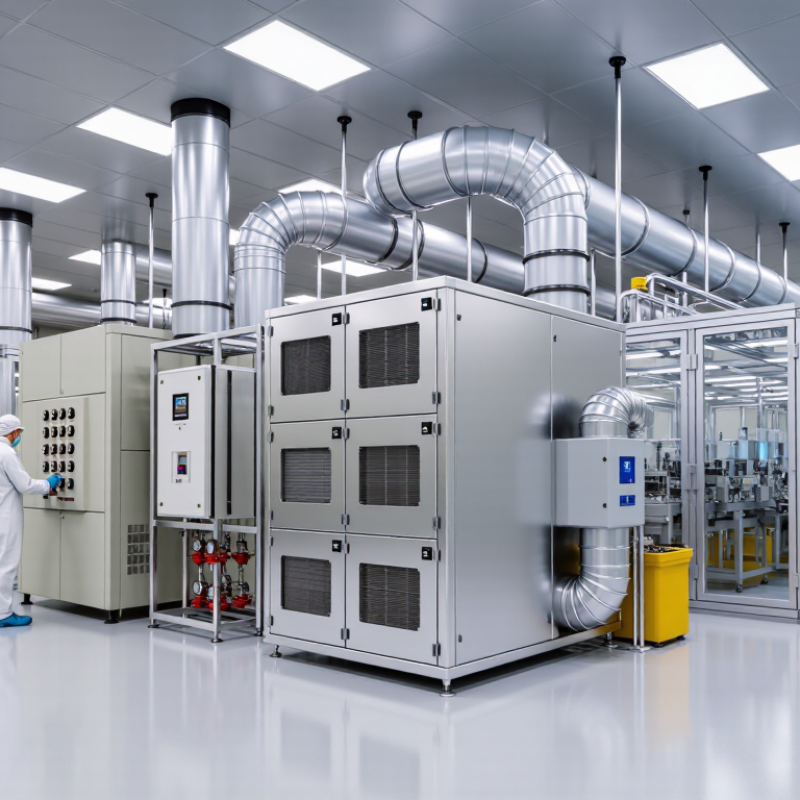
A cleanroom dehumidifier controls moisture before it damages products, processes, or air quality. It removes water vapor from supply air and maintains a stable dew point. Common systems use refrigeration coils, desiccant rotors, or both. Refrigeration works well at moderate humidity. Desiccant technology performs better when very dry air is required. At 20°C, a 0°C dew point equals roughly 26% relative humidity. A -10°C dew point falls near 12%. Small changes can affect powder flow, coating quality, and static electricity.
ISO 14644-1:2015 classifies cleanrooms by airborne particle concentration, not by one universal humidity value. This detail is often missed. ASHRAE Handbook—HVAC Applications, 2023, recommends evaluating moisture loads, condensation risk, and process requirements together. A pharmaceutical room may need stable humidity for material protection. An electronics area may need lower dew points to reduce condensation and static risk. In practice, door openings, worker traffic, and wet cleaning can create sudden moisture peaks. Real rooms are rarely perfect.
Tips: Specify dew point, airflow, regeneration heat, filter efficiency, and control accuracy before comparing suppliers. Check performance at the actual entering-air condition, not only at standard laboratory conditions. Log temperature and humidity continuously. A single relative-humidity target can still be a weak design. Experienced engineers should review seasonal loads, maintenance access, and sensor placement. These details often decide whether a system remains reliable after installation.
China Top 10 Cleanroom Dehumidifier Manufacturers? — What Is a Cleanroom Dehumidifier?
A cleanroom dehumidifier removes water vapor from conditioned air to maintain stable humidity or dew-point conditions. The chart shows representative moisture-control targets commonly used in different cleanroom applications. These are engineering reference values, not universal regulatory limits; ISO 14644-1 primarily defines airborne particle cleanliness, while humidity requirements depend on the process, materials, and equipment.
Lower dew-point values indicate drier air and generally require stronger desiccant dehumidification. Lithium-battery dry rooms typically use very low dew points, while sterile pharmaceutical and biotechnology areas often use moderate humidity control for product and personnel comfort.
Why Humidity Control Matters in Cleanroom Environments
China Top 10 Cleanroom Dehumidifier Manufacturers?
Why Humidity Control Matters in Cleanroom Environments
In a cleanroom, humidity is not a background number. It changes how particles behave, how materials dry, and how operators work. Excess moisture can increase corrosion, condensation, microbial risk, and process instability. Low humidity creates static electricity, brittle packaging, and uncomfortable skin. A small reading error may become a large production deviation.
When assessing cleanroom dehumidifier manufacturers in China, buyers should examine more than rated capacity. A dependable unit should maintain a stable dew point under changing heat loads. Accurate sensors matter. So do sealed air paths, suitable filtration, corrosion-resistant components, and accessible maintenance areas. Factory testing, installation records, and calibration support provide stronger evidence than attractive specifications. Ask for operating data from conditions similar to your facility. Marketing figures can be incomplete.
Still, no dehumidifier solves every cleanroom problem. Room leakage, door traffic, heat loads, and poor sensor placement can defeat excellent equipment. In practical audits, teams sometimes adjust setpoints repeatedly while ignoring an open loading door. That mistake is easy to make. Commissioning should include humidity mapping, alarm checks, airflow verification, and seasonal testing. Operators also need clear response procedures for sensor failure or sudden moisture entry. Even well-designed systems may need refinement after production begins. A cleanroom is a moving environment, not a sealed laboratory.
China’s Top 10 Cleanroom Dehumidifier Manufacturers
China’s Top 10 Cleanroom Dehumidifier Manufacturers are often judged by engineering depth, not advertising volume. The strongest suppliers design systems for pharmaceutical rooms, semiconductor areas, laboratories, and precision assembly zones. Their equipment usually combines desiccant rotors, variable-speed fans, stainless steel panels, and programmable controls. Stable low humidity matters more than impressive brochure numbers.
In practical evaluations, buyers should request dew-point test reports, airflow data, energy consumption, and factory quality records. A reliable manufacturer can explain performance at different temperatures, not only under ideal conditions. Look for documented testing, responsive technical support, and installation teams familiar with cleanroom pressure control. Small details matter. Door seals, drain layouts, and sensor placement can affect real performance.
The top ten should also be compared through customization ability. A unit sized for a 100-square-meter laboratory may fail in a larger production area. Noise, maintenance access, filter replacement, and heat rejection deserve equal attention. My experience suggests that site conditions often expose weaknesses missed during procurement. No ranking is perfect. Some suppliers communicate well but provide limited after-sales data, while others offer strong equipment with slower documentation. A careful audit, sample inspection, and witnessed factory test can reduce these uncertainties before purchase.


 Distributors
 SDS Download
 Contact
