Partner Login
Enter your username and password here on order to log in on the partner portal:
No registered partner yet?
Register nowChoosing a Car Garage Lift is not just a price comparison. It affects daily workflow, vehicle safety, and the space available in a workshop. China has a broad supplier base, from established equipment makers to smaller specialized factories. Their products may look similar in catalog photos, yet important details can differ. Think about rated capacity, lifting height, platform dimensions, drive type, and the design of mechanical safety locks. These details matter.
This guide introduces ten manufacturers serving the car garage lift market in China. It offers a starting point, not a substitute for checking each supplier. Buyers should review product specifications, factory quality controls, test records, warranty terms, and access to replacement parts. Ask how the lift is installed and what maintenance it requires. A clear answer is useful; a vague promise is not. Where available, verify relevant product certifications and confirm that they match the exact model being considered.
The lowest quote may leave out freight, installation, or service support. Look closely. A lift that fits a compact repair bay may not suit a busy service center with heavier vehicles. No checklist is perfect. Requirements change, and brochures rarely show every practical limitation. Comparing manufacturers against a written set of workshop needs can make the search more reliable. The following overview aims to help readers ask better questions before requesting a quotation or arranging a technical review.
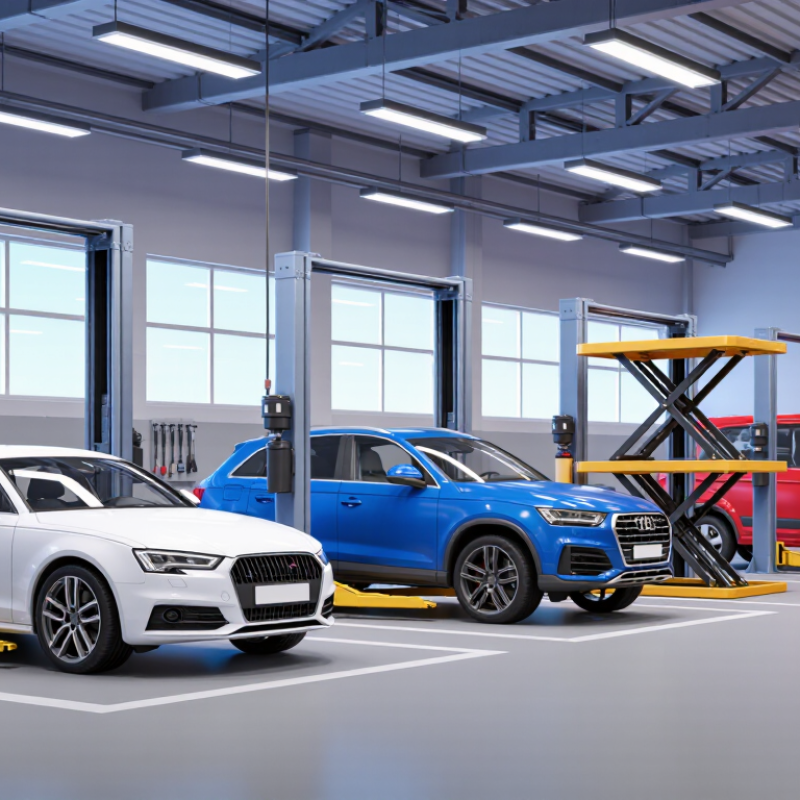
China’s car garage lift industry includes equipment for repair shops, dealerships, parking facilities, and private garages. Its product range spans two-post and four-post lifts, scissor lifts, and mechanical parking systems. Buyers assess rated capacity, lifting height, platform width, floor space, and power requirements. A narrow service bay may need unobstructed door access more than extra lifting height. Small details matter.
The industry has several layers. Steel processors and component suppliers provide structural parts, hydraulic cylinders, motors, and control systems. Some manufacturers handle design, fabrication, assembly, and testing in one facility. Others depend more heavily on outside suppliers. This can affect lead times and how consistently parts fit. Factory inspection is useful, but it does not replace checking the finished unit under load.
Sales typically move through direct export teams, equipment distributors, and local installation partners. Buyers should confirm what installation, operator guidance, spare parts, and maintenance support are included. Specifications alone can mislead: a lift may meet a vehicle’s weight requirement but still be unsuitable for its wheelbase or the workshop’s floor conditions. Requirements also vary by destination market. That part is easy to overlook. A clear site plan and documented test records make comparisons more practical, though paperwork cannot reveal every weakness.
A credible comparison of China’s top car garage lift manufacturers should begin with evidence, not catalogue claims. Check rated capacity, lifting height, arm reach, and vehicle types against the work your shop actually handles. A two-post lift for daily repairs has different demands from a four-post unit used for storage or alignment. Request test reports, installation drawings, and clear guidance on floor thickness and anchor placement. These details matter.
Inspect engineering and production consistency, including weld quality, cable routing, hydraulic hoses, and mechanical safety locks. Photos help, but ask for close views and documentation of components hidden behind covers. Reliable manufacturers should explain inspection steps and provide traceable serial numbers or batch records. Do not treat a polished showroom as proof. Compare warranty terms, spare-part availability, response times, and technician training in your region. No checklist is perfect.
A manufacturer’s answers to technical questions can reveal how well its team understands real workshop conditions. Ask how the lift handles uneven loading, which routine checks are recommended, and what parts require periodic replacement. For imported equipment, confirm who handles commissioning, operator instruction, and service after installation. The cheapest quote may omit freight, foundation work, or electrical requirements, so compare like-for-like offers. Even careful buyers can miss a small detail.
Suggested evaluation weights for comparing manufacturers. These percentages are a decision-making framework, not measured scores for specific companies.
Prioritize verified safety compliance and rated load capacity, then assess construction quality, lifting range, after-sales support, and parts availability. Confirm product specifications and certifications for each lift model before purchasing.
China’s car garage lift manufacturers differ less by slogans than by the problems their equipment solves. These ten profiles highlight common areas of specialization, not a verified ranking. A two-post lift maker may focus on compact repair bays, with arm positions designed for clear access to a vehicle’s underside. Four-post lift producers often serve storage and maintenance needs; runway spacing and approach ramps matter in daily use.
Scissor-lift manufacturers typically prioritize a low platform and efficient floor space. Alignment-lift specialists add longer runways and turning plates for wheel-service work. Mobile-column producers serve workshops that need flexible lifting points, while low-rise lift makers target tire changes and quick inspections. Some factories concentrate on heavy-duty equipment, where column stability and synchronized movement deserve close review. Details count.
Other profiles include integrated parking-system makers, export-oriented factories with established inspection routines, and custom-engineering teams that adapt dimensions to unusual workshop layouts. A glossy catalog cannot confirm weld quality, load testing, or spare-part availability. Ask for technical drawings, rated capacity, installation guidance, and maintenance schedules. Then compare them with the actual floor, ceiling height, and vehicle mix. Even a strong manufacturer can miss a practical detail; buyers should verify the fit before ordering.
Car garage lifts differ in how they support a vehicle and use workshop space. Two-post lifts leave the wheels accessible, making them practical for tire, brake, and suspension work. Four-post lifts support the tires along runways and can suit storage or routine servicing. Scissor lifts take up less floor space, though their platforms may limit access beneath the car. In-ground systems keep the floor clear but require careful planning and suitable site conditions.
Most modern lifts use hydraulic or electro-hydraulic power. A motor drives a pump, while synchronized lifting points help keep the vehicle level. Some designs use screw-driven mechanisms instead. Compare rated capacity with the actual vehicle weight, including tools or cargo. Small details matter. Arm restraints, mechanical safety locks, overload protection, and an emergency stop help reduce risk during operation. Locks should engage reliably, not merely appear sturdy.
Before raising a vehicle, technicians should check its lifting points, position the arms or runways, and confirm that the load is balanced. A brief test lift can reveal shifting or unusual movement. Keep people clear while the lift is moving. No system is foolproof. Regular inspection of cables, hoses, locks, and contact pads can catch wear early, but maintenance intervals and operating steps should follow the equipment documentation. A crowded shop can make even a capable lift awkward to use, so clearance deserves real attention.
When comparing China’s car garage lift manufacturers, look beyond the quoted price. Ask for rated capacity, platform dimensions, lifting height, and installation drawings. Check that the lift fits your floor thickness, ceiling height, and vehicle mix. Request test records for the exact model, not a similar one. A capable supplier should explain safety locks, hydraulic components, emergency lowering, and replacement-part availability clearly. If answers stay vague, pause. A polished catalog is not proof of consistent production.
Before placing an order, review how the supplier handles quality checks and export packing. Ask how defects are recorded and what support is available after installation. Confirm who pays for replacement parts and shipping under the warranty. These details can change the real cost. Communication matters, too: a fast reply is useful, but accurate technical answers matter more. I would not judge a supplier from one call alone. Even careful checks cannot remove every risk, so document agreed specifications and changes in writing.