
Partner Login
Enter your username and password here on order to log in on the partner portal:
No registered partner yet?
Register nowChoosing among China’s best Box Making Machine manufacturers requires more than comparing prices. A reliable supplier must understand board strength, box dimensions, production speed, and finishing requirements. Machine performance should match the factory’s daily workload. Not just its brochure.
Packaging machinery consultant Dr. Chen Wei offers a practical reminder: “A fast machine is valuable only when it makes consistent boxes.” This principle matters on a busy production floor. Operators notice uneven creases, weak folds, glue overflow, and frequent shutdowns. These small defects can become expensive returns. Experienced manufacturers usually provide machine testing, production samples, spare parts, and technical training. They also explain maintenance intervals clearly. That transparency builds trust.
This guide examines China-based manufacturers through a buyer’s perspective. It considers engineering experience, automation quality, customization, after-sales support, and verified customer feedback. Factory visits and live demonstrations can reveal details that websites often hide. Watch the feeding system closely. Listen for unusual vibration. Check whether operators can adjust the machine without confusion. Ask how quickly replacement components can arrive.
No supplier is perfect. Even a respected company may have slower communication or limited experience with unusual box styles. That is worth admitting. Buyers should compare complete operating costs, not only the purchase quotation. Energy use, tooling, labor, downtime, and installation all affect the final investment. The strongest Box Making Machine manufacturer is not always the largest one. It is the supplier that understands your products and supports your production after delivery.
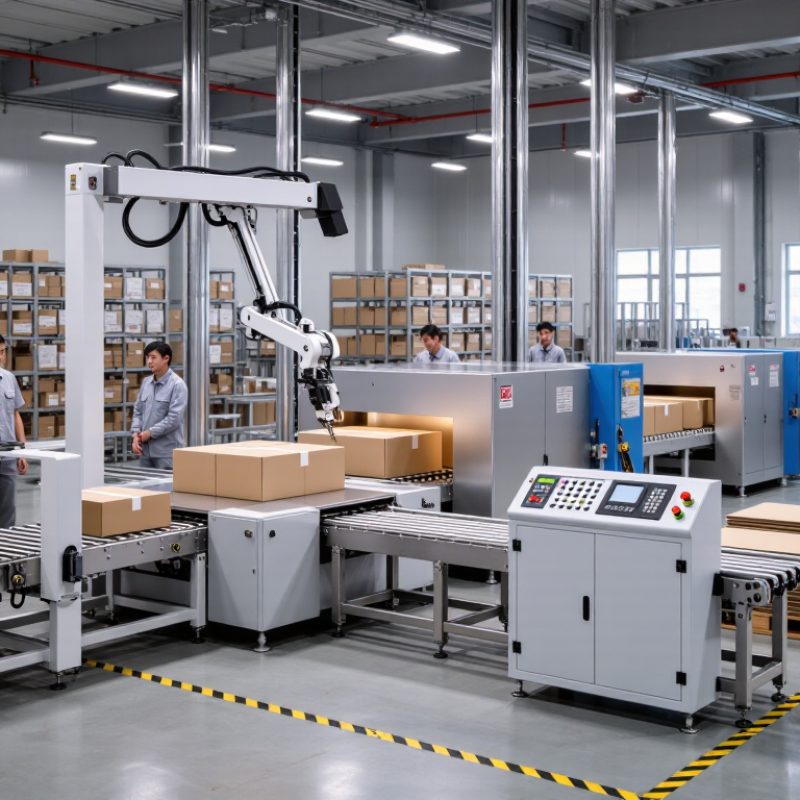
What Defines a Leading Box Making Machine Manufacturer in China?
A leading box making machine manufacturer is defined by more than a polished website or a low quotation. Real experience appears in practical engineering decisions. The manufacturer should understand corrugated board types, paper thickness, folding lines, glue behavior, and production speed. Test it properly.
A reliable factory runs sample production before shipment. Ask for boxes made from your actual board, not a perfect sample prepared in advance. Inspect fold accuracy, glue strength, feeding stability, and waste levels. Operators should see clear controls, guarded moving parts, and simple adjustment points. Good manufacturers record component batches and maintain inspection reports. They should also explain maintenance intervals, electrical requirements, and expected output under normal conditions.
Technical authority comes from measurable evidence. Look for factory audits, documented quality procedures, safety compliance, and traceable testing records. After-sales support matters just as much. Spare parts should be identified by clear codes, while remote troubleshooting should include photos, videos, and practical instructions. A serious supplier can provide training and discuss installation limits honestly.
No machine fits every factory.
Some suppliers may overstate speed by using ideal materials and skilled operators. That claim deserves questions. Compare actual production data, not only brochure numbers. Request customer references when possible, and confirm whether the manufacturer has supported similar box sizes. A strong partnership is built through transparent answers, careful testing, and a willingness to admit what the machine cannot do.
China’s box-making equipment market is broad because one machine rarely serves every packaging format. Smithers’ 2024 report, The Future of Corrugated Packaging to 2029, values global corrugated packaging above US$200 billion in 2024. It also forecasts continued growth through 2029. China’s express-delivery volume reached 132.07 billion parcels in 2023, according to the State Post Bureau’s annual bulletin. This scale supports strong demand for fast, flexible production lines.
Main types include corrugated box machines, folding carton machines, and rigid box machines. Corrugated lines combine paperboard preheating, single-facer production, gluing, cutting, printing, and folding. Flexographic printer-slotters add logos, handling marks, and simple graphics. Rotary die-cutters serve irregular shapes and reinforced packaging. Folding carton systems use sheet-fed die-cutters and folder-gluers for retail cartons. Rigid box equipment cuts greyboard, applies adhesive, wraps printed paper, and presses corners. Case erectors then form flat blanks into usable boxes.
The specification sheet is not enough. Measure the waste. Buyers should test board thickness, changeover time, glue stability, dust control, and actual hourly output. Published speed often reflects ideal conditions, not mixed orders. A practical factory trial should use the customer’s own paper and artwork. I would also question whether a low purchase price hides expensive tooling, training, or spare-part delays. Smithers’ market data supports investment, but it does not remove production risks. The boundary between “automatic” and “operator-dependent” is sometimes unclear.
This chart compares common box-making machine types by the number of core production functions they typically combine. The index indicates process coverage, not machine quality, speed, or manufacturer performance.
Core functions include: corrugating, liner bonding, printing, creasing, slotting, die-cutting, folding, gluing, wrapping, pressing, and window-film application.
Evaluating China’s best box making machine manufacturers requires more than comparing catalog prices. Reliable suppliers combine engineering depth with stable production control. A complete line may include corrugators, flexographic printers, slotters, die-cutters, folder-gluers, and bundling systems. Servo drives improve registration during fast production. Vacuum transfer systems reduce sheet slipping. Automatic feeding also helps maintain consistent output.
Production capability should be judged through measurable details. Ask about flute types, maximum sheet size, printing colors, changeover time, and hourly output. A strong factory can provide sample boxes, material tests, and production records. Camera inspection systems can detect missing print, dirty plates, and inaccurate slots. Waste collection matters too. It affects operating cost every shift.
Machine frames should be stress-relieved and accurately machined. Electrical cabinets need clear labeling and practical access. Operators should receive training with real corrugated sheets, not only demonstrations. Service response is equally important. A machine that stops for three days can damage delivery schedules. Some specifications look impressive on paper. They may not reflect ordinary factory conditions. Humidity, recycled paper, and uneven board quality can reduce performance. Buyers should test these variables before making a decision. The best evaluation is often less glamorous: run the machine, inspect the boxes, measure waste, and speak with the operators.
| Machine Category | Primary Manufacturing Technology | Typical Materials | Typical Production Speed | Automation and Control | Key Production Capability | Quality-Control Focus |
|---|---|---|---|---|---|---|
| Corrugated Flexo Folder Gluer | Flexographic printing, rotary slotting, folding and inline gluing | Single-wall and double-wall corrugated board, typically E, B, C and combined flutes | Approximately 100–300 m/min, depending on board grade and print configuration | PLC control, servo-driven sections, automatic registration and touchscreen setup | High-volume shipping cartons with printing, creasing, slotting and gluing in one line | Print registration, slotting accuracy, glue application and box squareness |
| Automatic Folder Gluer | Precision feeding, folding, compression and adhesive bonding | Folding carton board, coated paperboard, micro-flute and laminated sheets | Approximately 100–400 m/min, depending on carton style and board thickness | Servo positioning, automatic belt adjustment, electronic counters and fault monitoring | Straight-line cartons, crash-lock bottoms, four-corner boxes and multi-point gluing | Fold-line alignment, compression pressure, adhesive coverage and finished dimensions |
| Rotary Die-Cutting Machine | Rotary die cutting, creasing, embossing and waste stripping | Corrugated board, kraft board, paperboard and laminated packaging sheets | Approximately 3,000–10,000 sheets per hour, depending on format and board type | Servo feed control, automatic register correction and programmable pressure settings | High-speed production of custom shapes, handles, windows, perforations and creases | Die-cut edge quality, crease depth, waste removal and sheet-to-sheet registration |
| Rigid Box Making Machine | Greyboard cutting, paper wrapping, corner forming and pneumatic or servo pressing | Greyboard, coated paper, specialty paper, fabric and laminated covering materials | Approximately 15–40 boxes per minute, depending on box structure and size | PLC operation, servo adjustment, automatic positioning and recipe-based changeovers | Book-style, magnetic, drawer, collapsible and premium presentation boxes | Corner precision, paper adhesion, surface appearance, lid fit and squareness |
| Automatic Carton Erecting Machine | Blank feeding, opening, bottom forming, folding and hot-melt or tape sealing | Pre-glued corrugated cases, regular slotted cartons and e-commerce packaging blanks | Approximately 8–25 cases per minute, depending on carton dimensions and sealing method | Photoelectric sensors, PLC logic, automatic jam detection and low-material alarms | Consistent carton opening and bottom sealing for warehouse and fulfillment operations | Carton squareness, seal strength, blank feeding reliability and reject rate |
| Paper Bag and Box Combination Line | Web or sheet feeding, flexographic printing, die cutting, folding and gluing | Kraft paper, coated paper, recycled paperboard and lightweight corrugated stock | Approximately 60–250 m/min, depending on product design and number of colors | Servo motors, web-tension control, automatic registration and digital job parameters | Retail bags, gift packaging, lightweight cartons and short-to-medium production runs | Web tension, color consistency, handle placement, folding accuracy and bonding quality |
| Digital Box Printing and Finishing System | Inkjet or electrophotographic printing combined with digital cutting and creasing | Paperboard, coated stock, corrugated board and short-run specialty substrates | Approximately 500–6,000 sheets per hour, depending on print resolution and sheet size | Prepress workflow integration, variable-data capability and automated calibration | Rapid sampling, personalized packaging, seasonal designs and short production batches | Color stability, image sharpness, registration, substrate compatibility and repeatability |
| Inspection and Packaging Quality System | Machine vision, barcode verification, dimensional inspection and statistical process control | Printed cartons, corrugated cases, rigid boxes and finished packaging components | Inline inspection speeds are matched to the connected production line | Cameras, sensors, reject stations, production data logging and traceability software | Detection of missing print, open flaps, incorrect dimensions, glue defects and barcodes | Defect detection rate, traceability, sampling frequency and corrective-action records |
China’s box-making sector benefits from a strong automation base. The International Federation of Robotics reported 276,288 industrial robot installations in China in 2023. That represented 51% of global installations. However, robotics capacity does not automatically prove machine quality.
Evaluate each manufacturer through documented performance, not showroom appearance. Request a live factory acceptance test using your own board, artwork, and box dimensions. Measure folding accuracy, gluing strength, waste rate, changeover time, and sustained running speed. Smithers’ The Future of Global Packaging to 2028 valued the global packaging market at more than US$1 trillion in 2023. This scale increases pressure for stable output and efficient maintenance. Ask for verified production records, ISO 9001 documents, electrical compliance files, and customer references in comparable markets. Check whether engineers can explain servo systems, sensors, software updates, and spare-part availability clearly.
Tips: Compare total ownership cost, not only the quotation. Include installation, training, energy use, tooling, shipping, and service response time. Ask for a written acceptance standard. No vague promises. A polished factory can still hide weak after-sales support. My own evaluation may also miss problems if I inspect only one machine. Repeat testing after several hours of continuous production. That small step often reveals heat, alignment, or feeding issues. Reliable manufacturers welcome measurable criticism and correct defects before shipment.
Choosing among China’s box making machine manufacturers requires more than comparing prices. Applications should match the machine’s working range. Folding cartons may require precise gluing, creasing, and rapid changeovers. Rigid boxes need controlled forming, accurate positioning, and stable pressure. Corrugated packaging demands suitable feeding systems and stronger material handling. Ask for sample production using your actual paper, board thickness, box size, and daily output. Samples reveal more than a polished brochure.
Certifications deserve careful checking. A manufacturer may provide ISO 9001 documentation for quality management. CE compliance may apply when equipment enters relevant markets. Electrical safety reports, material declarations, and export documents should match the specific machine model. Check certificate numbers, issuing bodies, and validity dates. Do not accept generic files without verification. Proof matters. A missing document can delay installation or create compliance problems.
After-sales support often determines the real operating cost. Look for installation guidance, operator training, troubleshooting manuals, and remote diagnostic assistance. Spare parts should include sensors, belts, heaters, blades, and electrical components. Ask about response times, warranty exclusions, service coverage, and technician availability. A reliable supplier keeps service records and explains maintenance intervals clearly. In practice, support promises can sound better than actual performance. I would request customer references and a written service agreement. Small gaps remain, especially across time zones, so communication procedures should be tested before purchase.