Partner Login
Enter your username and password here on order to log in on the partner portal:
No registered partner yet?
Register nowChoosing China’s best French Doors Patio Doors requires more than comparing catalog prices. Global buyers must examine performance, manufacturing experience, and after-sales support. A beautiful white frame means little if the rollers fail, seals shrink, or rain enters the threshold.
This guide evaluates Chinese suppliers through practical buyer concerns. We will review aluminum, uPVC, and timber options. We will also compare thermal breaks, Low-E glass, multi-point locks, drainage channels, and powder-coated finishes. These details matter in a coastal villa, a cold apartment, or a sunlit hotel entrance. As building-science expert Joseph Lstiburek often emphasizes, “Water is the enemy.” That simple warning applies directly to patio-door design, installation, and maintenance.
Reliable manufacturers should provide test data, clear drawings, sample approvals, and consistent quality records. Buyers should ask about air leakage, water resistance, wind performance, glass safety, packaging, and replacement parts. Factory visits can reveal more than polished product photos. Look closely at corner joints, gasket compression, hardware alignment, and protective film.
The lowest quotation is not always the best value. Sometimes, it is only the cheapest risk. We should admit one limitation: supplier claims still require independent verification and project-specific review. Climate, wall structure, opening size, and installation quality can change the final result. This article helps architects, distributors, contractors, and homeowners create a more reliable shortlist. It connects product appearance with measurable performance, responsible sourcing, and long-term use.
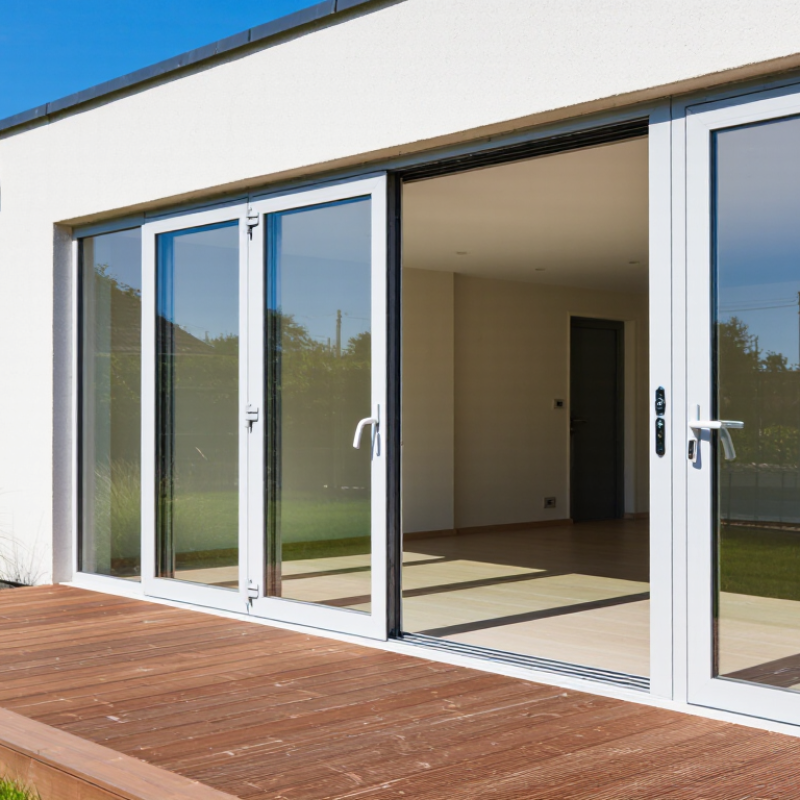
Chinese manufacturers offer several French patio door types for different climates, layouts, and project budgets. Traditional hinged French doors open from the center and create a wide passage between two active panels. They suit balconies, gardens, and dining rooms with enough swing space.
Sliding French doors use overlapping panels and save interior floor area. They work well beside narrow terraces, although their tracks need regular cleaning. Folding French doors can connect a room with an outdoor deck almost completely. However, more hinges and rollers mean more adjustment points. Inward-opening models protect exterior hardware from harsh weather, while outward-opening doors may improve indoor space usage. Local wind conditions should guide this choice.
Frame materials also change performance. Thermal-break aluminum offers slim sightlines and strong resistance to moisture. uPVC provides good insulation and usually needs less maintenance. Wood or wood-aluminum systems bring a warmer appearance, but they require careful sealing around joints. Low-E double glazing is common, while triple glazing may suit colder regions. Check the glass thickness, hardware load rating, drainage design, and gasket quality in the technical file. A low quotation can look attractive, but missing installation details may create later costs. In project reviews, I have found that sample doors sometimes feel smoother than production units. Requesting a pre-shipment inspection and testing the actual locking action is sensible. Small details matter.
China’s French patio doors serve global projects best when material choices match the local climate. Thermally broken aluminum frames reduce heat transfer through the door edge. Powder-coated finishes resist moisture, but coastal sites still need careful coating specifications. I would request salt-spray data before approving a large order.
Glass selection changes comfort and safety. Double glazing suits many moderate climates, while triple glazing can help in colder regions. Low-emissivity coatings improve insulation and reduce fading near bright windows. Tempered glass offers impact resistance; laminated glass helps retain fragments after breakage. Spacer quality matters too. Poor spacers can create condensation around the glass perimeter.
Design should support daily movement, not only showroom appearance. Multi-point locks improve compression around the sash when correctly adjusted. Stainless-steel rollers should carry the door weight without rough movement. EPDM seals need consistent contact at corners, where leakage often begins. Check drainage paths with a water test, especially for outward-opening units. Air leakage, water penetration, thermal performance, and wind-load reports provide useful evidence, but reports must match the actual configuration.
A sample can mislead. Color, hardware, and glass may differ between samples and production batches. I would inspect corner joints, weld quality, seal alignment, and packaging before shipment. Some suppliers focus heavily on appearance and understate installation tolerances. That deserves scrutiny. Global buyers should compare verified test results, maintenance guidance, and replacement-part access, not just the lowest quotation.
China Best French Doors Patio Doors for Global Buyers?
Choosing French patio doors from China requires more than comparing prices. A reliable supplier should provide a verifiable business license, factory address, and clear ownership details. Ask whether production happens in-house or through subcontractors. The answer matters.
Visit the workshop, physically or through a live video call. Check aluminum cutting, corner joining, glass handling, and hardware storage. Look for organized production records, labeled materials, and final inspection areas. A clean showroom is not enough. Ask for recent factory audit reports and confirm their issuing organizations. Test reports should match the actual door system, glass type, and hardware configuration. Expired or unrelated certificates create unnecessary risk.
Request a sample before placing a large order. Measure frame thickness, drainage holes, locking alignment, surface finish, and opening force. Test the sample repeatedly, not just once. Ask for documented air, water, and wind performance where relevant. Also review quality-control procedures, packaging photos, replacement policies, and production lead times. References from similar overseas projects can strengthen credibility, but verify them independently. Factory capacity may sound impressive, yet delivery records reveal more. Some suppliers communicate well before payment and poorly afterward. That possibility deserves attention. I would also compare two or three quotations line by line, because a cheaper door may quietly exclude screens, upgraded glass, or protective packaging.
Customization should begin with climate, not appearance. The IEA’s 2023 Global Status Report reports that buildings consume about 30% of global final energy. The U.S. Department of Energy also estimates that windows can represent 25–30% of residential heating and cooling energy use. For global projects, buyers should request U-factor, solar heat gain coefficient, air leakage, and water resistance data. These figures matter more than attractive renders.
Experienced manufacturers can adjust opening sizes, glazing thickness, hardware positions, drainage paths, and thermal breaks. Every change needs a controlled drawing revision. A useful factory process includes profile inspection, glass verification, corner welding checks, and repeated opening tests. ASTM E283 evaluates air leakage, while ASTM E331 examines water penetration. European projects may require EN 14351-1 documentation. NFRC-based ratings can support clearer energy comparisons.
Small details reveal quality. Inspect the gasket joint at the lower corner. Check whether rollers move smoothly after repeated cycles. Ask for batch numbers, inspection photos, and third-party test reports. Production samples should match the approved sample, including color and handle alignment. Not every factory report is equally reliable. That weakness deserves attention. A perfect specification does not exist, especially across different climates and installation teams. Clear tolerances, packaging tests, and on-site feedback reduce expensive surprises.
Shipping is the first practical test. UNCTAD’s Review of Maritime Transport 2023 reports that over 80% of global merchandise trade moves by sea. Buyers should confirm packing methods, container loading photos, and moisture protection before payment. Ask whether the quote includes insurance, port handling, customs clearance, and final delivery. Incoterms must be written clearly. A low factory price can become expensive after arrival.
Installation deserves equal attention. The U.S. Department of Energy states that windows can represent 25% to 30% of residential heating and cooling energy use. Poorly installed French doors may create drafts, water leakage, and difficult operation.
Request the installation manual, rough-opening dimensions, drainage details, and approved fasteners. Local installers should check wall levels before fitting the frame. Small errors matter.
Some suppliers provide drawings, but not enough site guidance. Buyers should challenge vague instructions.
Warranty terms should specify coverage periods, hardware exclusions, glass replacement, and response times. They should also explain who pays for defective parts and international shipping. A warranty without spare-part planning is weak protection. Keep invoices, inspection photos, serial records, and installation reports. After-sales support should include remote troubleshooting and replacement-part availability. The World Bank’s Logistics Performance Index 2023 shows major differences in customs and delivery performance between countries. Delays are possible. Buyers need realistic timelines, written responsibilities, and a local service contact before ordering.