
Partner Login
Enter your username and password here on order to log in on the partner portal:
No registered partner yet?
Register nowChoosing an X Ray Security Scanner manufacturer is about more than comparing model names. Buyers need equipment that fits their site, screening workflow, and maintenance capacity. A compact unit may suit a reception area, while a busy checkpoint may require a wider conveyor and clear, consistent imaging. Small details matter.
Security technologist Bruce Schneier offers a useful principle: “Security is a process, not a product.” For scanner buyers, that means looking beyond the machine itself. Ask manufacturers about operator training, image review tools, service response, software updates, and the availability of replacement parts. Request demonstrations using realistic objects and daily operating conditions. Then check whether the proposed setup matches your space and staffing. Fit comes first.
This guide compares seven X Ray Security Scanner manufacturers through practical buyer considerations, including product range, support, usability, and stated technical capabilities. It is not a universal ranking: a supplier suited to a large transport hub may not be right for a small facility. Specifications can look convincing on paper. Real-world service quality is harder to judge, and that deserves careful questions. Buyers should verify claims directly, review documentation, and consider how the system will perform after installation—not just during a polished demonstration. There is no perfect shortlist. A careful comparison can still make the decision clearer.
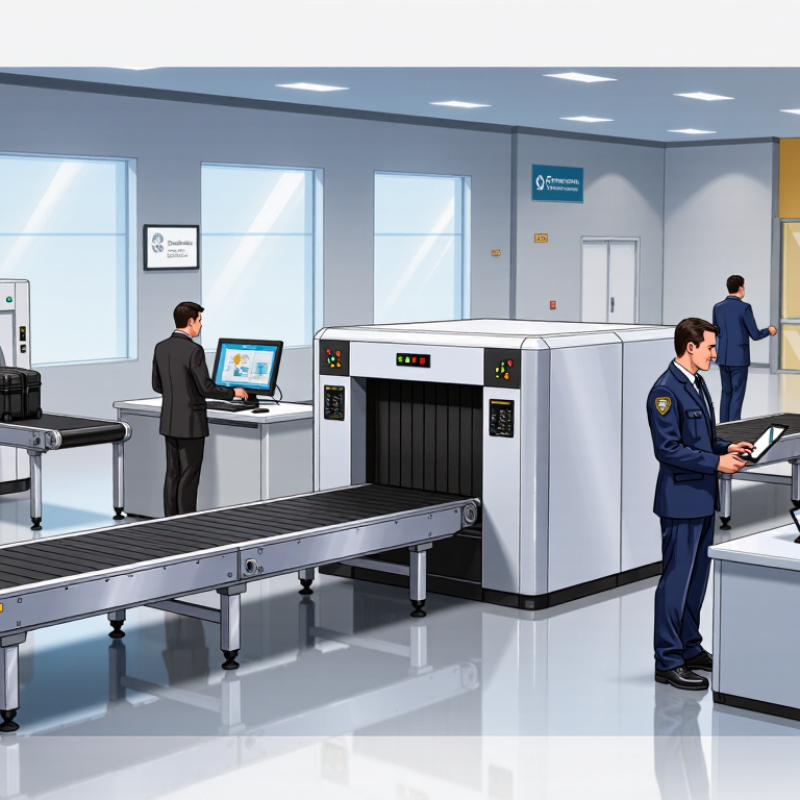
An X-ray security scanner sends a controlled beam through a bag or parcel as it moves along a conveyor. Detector arrays measure how much radiation passes through different areas. Software converts those measurements into an image, often using color to distinguish broad material-density ranges. Dual-energy systems compare how materials absorb two energy levels, which can help operators interpret overlapping shapes. The image is not a photograph. It is an estimate, and dense objects can obscure details.
A trained operator reviews the image and may request a closer inspection when something remains unclear. Algorithms can flag areas for attention, but they do not replace human judgment. Not magic. Scanner performance depends on image quality, conveyor speed, calibration, and regular maintenance.
The scale is substantial: the U.S. Transportation Security Administration reported screening more than 858 million passengers in 2023. That figure shows why consistent equipment and procedures matter across busy checkpoints. Buyers should ask about image resolution, throughput, operator training, and service intervals—not just the scanner’s footprint.
One limitation deserves honest attention: even a clear image may not reveal an object’s full context. A second review can help, but no system removes uncertainty entirely.
Buyers comparing X-ray security scanner manufacturers should examine verified detection performance, image quality, and operating speed together. ACI World estimated global airport passenger traffic at 9.5 billion in 2024, underscoring why throughput matters in busy facilities. Ask suppliers for test conditions behind their performance claims, not just headline figures. Check whether operators can distinguish overlapping objects on a clear display, and whether image tools support consistent review. Also compare tunnel dimensions, conveyor capacity, energy use, and compatibility with existing alarm and reporting systems. A high-speed unit may still create delays if image review or alarm handling becomes a bottleneck.
Reliability shows up during long shifts. Request documented uptime, preventive-maintenance intervals, spare-part availability, and response times for service calls. Confirm radiation-safety documentation and ask how software updates are tested before deployment. Review independent evaluation or certification records, where applicable, and clarify what the evaluation covers. A specification sheet cannot predict every site condition. That is worth remembering.
Tips: Run a site trial with representative bag sizes and realistic staffing. Record throughput, image-review time, false alarms, and operator feedback. Compare results across shifts, not just during a polished demonstration. Some trade-offs will remain; write down which ones your team can accept.
Seven X-Ray Security Scanner Manufacturers to Consider
Choosing among seven manufacturers is easier when each is judged by its operating strengths, not brochure claims. Consider suppliers focused on compact checkpoint systems, high-throughput lanes, parcel inspection, mobile units, dual-view imaging, modular upgrades, and long-term maintenance. These categories reflect different facility needs; they are not a ranking. A compact unit may fit a narrow lobby, while a faster system may suit a busy entrance. Ask for demonstrations using representative bag sizes and realistic conveyor speeds. Image clarity matters, but so do controls that staff can learn without constant coaching.
Check service coverage, operator training, parts availability, and software update policies before comparing prices. Request written performance details and clarify what the warranty excludes. A system that performs well in a showroom can feel different during a noisy morning rush. I would also leave room for doubt: published throughput figures may not match your site’s actual workflow. Speak with current users where possible, and assess the scanner alongside staffing, space, and maintenance needs.
Tips: Measure doorways and conveyor space first. Test the interface with intended operators. Compare support response times, not just purchase costs.
Choosing an X-ray scanner starts with the setting, not the specification sheet. Airports need high throughput and clear images of varied carry-on shapes. The Transportation Security Administration reported screening about 858 million passengers in 2023. That volume makes belt speed, uptime, and operator workflow practical buying criteria. For checked baggage, larger tunnel dimensions and multiple viewing angles can help staff inspect dense or overlapping contents. Computed tomography can produce three-dimensional images, but buyers should compare its review process and maintenance needs with their actual workload.
Different sites need different trade-offs. A distribution hub may prioritize wide conveyor belts and steady operation across long shifts. A courthouse or office entrance may need a compact cabinet scanner that fits a small inspection desk. The International Air Transport Association forecast 4.96 billion air passengers in 2024, underscoring the pressure on airport screening capacity. Match that demand with measured throughput, not a headline figure alone. Ask manufacturers to demonstrate representative test items, image clarity, software usability, and service response. Check the room, too: door width, power supply, and operator sightlines can complicate installation. Details matter. Scanner selection is not always tidy; buyers may need to weigh faster processing against image-review demands. A site trial can expose that mismatch before procurement.
The 1–5 scores are a qualitative planning guide based on typical deployment contexts, not measured performance ratings. Match the scanner configuration to the size and type of items being screened and the requirements of the site.
A capable X-ray security scanner manufacturer should match the equipment to your site, not just offer a standard model. Compare tunnel size, conveyor speed, image clarity, and daily operating volume. Ask for a live demonstration using objects similar in size and density to those your staff will inspect. Check how quickly operators can interpret images and how the system handles routine maintenance. Details matter. A fast belt is not useful if images become difficult to review.
Assess the supplier as carefully as the scanner. Request technical specifications, quality-control records, warranty terms, spare-parts availability, and a clear service response plan. Ask for references from installations with similar workloads, then confirm what support those buyers actually received. A polished brochure proves little. I would also set written acceptance criteria before ordering, including throughput and image-quality checks. These can be awkward to negotiate, but they reduce room for disagreement later. No single test tells the whole story.
Tips: Bring a checklist to the demonstration. Record scan speed, image consistency, operator training time, and support response commitments. Ask who performs installation and training, and whether maintenance instructions are easy to follow. If a claim cannot be verified, note that uncertainty and ask for evidence.
Use this comparison to shortlist manufacturers by product category and application. The rows describe supplier types, not named companies; verify each supplier’s specifications, certifications, service coverage, and references before purchase.
| Manufacturer type | Typical system category | Common deployment | Key points to compare | Evidence to request | Best suited for |
|---|---|---|---|---|---|
| Checkpoint screening specialist | Carry-on baggage and parcel X-ray systems; some portfolios include dual-view or computed tomography (CT) systems. | Passenger checkpoints, entrances, and controlled-access areas. | Conveyor dimensions, image quality, screening workflow, alarm handling, throughput claims, and compatibility with local procedures. | Model-specific technical data, installation requirements, operator training plan, and references from comparable sites. | Airports, transport hubs, and facilities screening passenger belongings. |
| Hold-baggage screening specialist | High-throughput baggage screening equipment, including multi-view and CT configurations. | Airport baggage-handling areas and integrated screening lines. | Required throughput, system availability, footprint, integration with baggage-handling equipment, and maintenance access. | Site-specific layout, interface documentation, performance test plan, service-level terms, and installation references. | Airports and operators planning new or upgraded baggage-screening lines. |
| Cargo and freight screening specialist | Large-object X-ray systems for pallets, crates, and freight; configurations vary by load size and screening method. | Cargo terminals, logistics centers, and customs inspection facilities. | Maximum object dimensions and weight, tunnel or inspection-area size, image interpretation workflow, and site space requirements. | Rated capacity and limits for the exact model, facility drawings, radiation-safety documentation, and acceptance-test criteria. | Organizations inspecting freight that cannot be screened on standard baggage equipment. |
| Vehicle and drive-through screening specialist | Vehicle and container inspection systems, with configurations selected for the target vehicle class and inspection process. | Border crossings, ports, secure facilities, and vehicle inspection lanes. | Supported vehicle types, lane layout, inspection speed, operating mode, image review arrangements, and environmental limits. | Site survey, civil and utility requirements, applicable regulatory approvals, operating procedures, and comparable deployment references. | Sites needing inspection of vehicles or containers rather than hand-carried items. |
| Compact cabinet-system manufacturer | Enclosed cabinet X-ray systems for small parcels, mail, and objects that fit within the chamber. | Mailrooms, laboratories, government offices, and secure receiving areas. | Chamber dimensions, maximum object size, loading method, image display, interlocks, and required operator training. | Product manual, safety and compliance documents, maintenance schedule, and confirmation that intended items fit the chamber. | Organizations screening smaller items in a fixed indoor location. |
| Conveyor and system-integration specialist | Conveyorized X-ray equipment designed to connect with facility-specific material-handling workflows. | Distribution centers, production facilities, and multi-lane screening installations. | Conveyor speed and dimensions, controls integration, line balancing, access for maintenance, and performance under actual operating conditions. | Interface specifications, integration scope, commissioning plan, factory and site acceptance tests, and responsibility matrix. | Buyers needing screening equipment integrated into an existing or planned operational line. |
| Multi-category security-screening manufacturer | A portfolio spanning multiple X-ray system categories, potentially supported by related screening equipment and software. | Organizations procuring equipment for several sites or different screening applications. | Consistency across models, common software and training options, parts availability, service coverage, and lifecycle support. | Model-by-model specifications, local service contacts, spare-parts policy, warranty terms, and references for each relevant application. | Buyers seeking a supplier that can support multiple locations or screening use cases. |