Partner Login
Enter your username and password here on order to log in on the partner portal:
No registered partner yet?
Register nowChoosing the best Salinity Meter in 2026 starts with a simple question: what are you measuring, and where? A meter used beside a fish tank faces different demands from one used in irrigation channels or coastal fieldwork. Sample temperature, dissolved substances, required accuracy, and maintenance all affect the choice. There is no universal winner. Not quite.
The stakes are practical. The FAO’s 2024 report, Global Status of Salt-Affected Soils, estimates that 1.381 billion hectares of land are salt-affected. That finding makes reliable monitoring important for agriculture and soil management, but it does not make every salinity instrument suitable for every job. For water measurements, the USGS National Field Manual explains how specific conductance is measured and why temperature matters. Conductivity-based meters can be quick and convenient, yet readings depend on calibration and how the instrument converts conductivity into salinity. Refractometers and other methods may suit narrower applications. Details matter.
This guide compares common meter types by accuracy, operating range, ease of calibration, durability, and cost. It also considers the small details that shape field use: a probe coated with residue, a cold sample, or a calibration solution left uncapped. These examples are not a substitute for testing under your own conditions. No product type wins on name alone. The right choice is the one whose measurement method matches your sample and whose performance you can verify. That is less tidy than a single recommendation. It is also more useful.
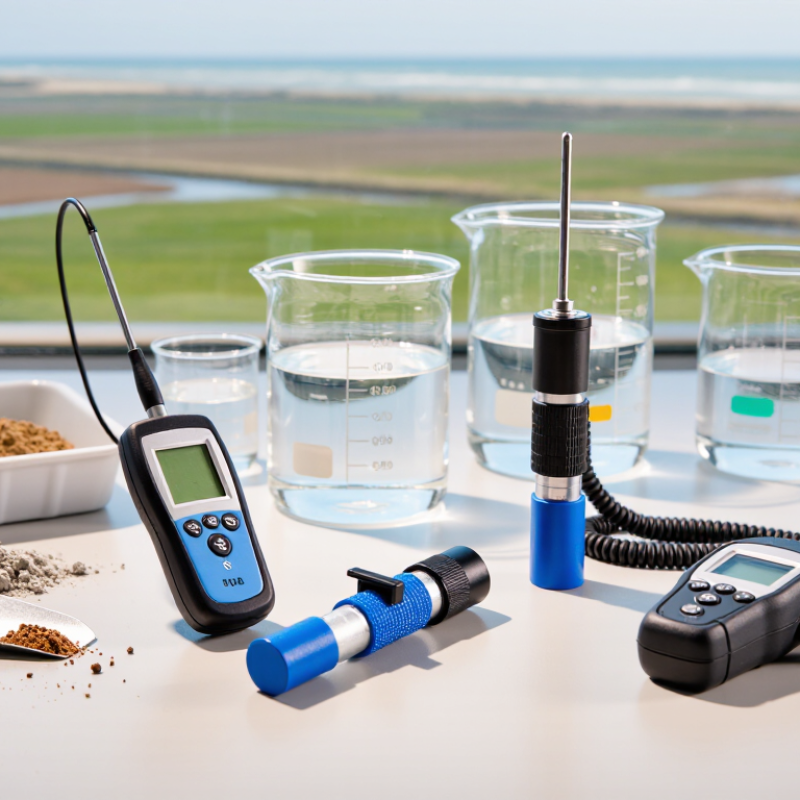
A salinity meter estimates how much dissolved salt is in water; it does not count salt crystals directly. Most electronic meters measure electrical conductivity, because dissolved ions carry an electric current. More ions usually mean higher conductivity and a higher estimated salinity reading. The relationship is useful, but not perfect. Other dissolved minerals can affect the result.
For everyday water testing, a conductivity-based meter is often the most versatile choice. It gives a quick digital reading and suits aquariums, hydroponics, and water-quality checks. Temperature matters. Choose a meter with temperature compensation, and calibrate it with an appropriate reference solution. Rinse the probe between samples; a drop of leftover salty water can skew a small sample. Easy to miss.
Other tools answer slightly different needs. A refractometer estimates salinity from how light bends through a sample, while a hydrometer uses liquid density and buoyancy. Both can work well when used carefully, though reading scales or managing tiny droplets takes practice. For reliable comparisons, use the same method each time and follow the instrument’s instructions. A meter can display several decimal places, but that does not guarantee equal accuracy. The sample itself may be uneven, too.
The main types of salinity meters in 2026 use conductivity, refractive index, density, or ion-selective electrodes. Conductivity meters suit aquariums, hydroponics, and seawater because dissolved ions carry electrical current. NOAA’s Ocean Service reports average ocean salinity at about 35 parts per thousand, a useful seawater reference—not a target for every sample. UNESCO’s Practical Salinity Scale 1978 (PSS-78) relates practical salinity to conductivity ratios. These meters are quick, but they do not directly count every dissolved salt.
Refractometers estimate salinity from how light bends through a sample. They are compact and handy for a few drops, though temperature and sample composition can affect readings. Density meters, including hydrometers, are simple but less precise when temperature changes. Ion-selective meters measure a particular ion, such as chloride, rather than total dissolved salts. Choose by sample type and required accuracy, not by display features alone. There is no universal winner.
Tips: Calibrate conductivity meters with a suitable standard, rinse the probe, and let the reading stabilize. Check temperature compensation; it cannot correct every unusual sample. I would still verify an unexpected result with a second method. Small errors happen. That is worth admitting.
A conductivity salinity meter suits frequent measurements across a broad range, especially in water samples. It reads electrical conductivity, then estimates salinity using a conversion. That estimate can shift when the water contains unusual ions, so conductivity is not a direct measure of salt mass. For dependable comparisons, calibrate with a suitable standard and check the sample temperature.
A refractometer is quick and portable. A few drops on its prism can give a clear reading, making it convenient for routine aquarium checks. Its usable range depends on the scale, and residue or poor calibration can skew results. Fast, but not foolproof. Rinse the prism between samples and avoid reading it under uneven lighting.
A hydrometer is usually simple and inexpensive, but its reading depends on buoyancy and temperature. Tiny bubbles, a tilted vessel, or a misread scale can affect the result. It may be adequate for basic checks, though it is less convenient when many samples need testing. For tighter accuracy, a temperature-compensated conductivity meter is often the practical choice. Still, the best option depends on the sample and required precision; I would not treat one reading as unquestionable.
The best salinity meter depends on the sample, working conditions, and precision required. For aquariums, hatcheries, and routine water checks, a conductivity meter is often practical. It gives quick readings and can include automatic temperature compensation. Choose a model with a suitable range; seawater and concentrated brines need different measurement capacity. Keep the probe clean, and check calibration regularly.
For laboratory comparisons or occasional checks of clear liquids, a handheld refractometer can be convenient. It uses light refraction rather than electrical conductivity, so it suits small samples and simple workflows. Temperature still matters, though. A digital unit may reduce reading errors, but it cannot fix a poorly prepared sample. For food processing or high-solids solutions, verify that the instrument’s scale matches the material.
Hydrometers can work for basic density checks when cost matters and a larger sample is available. They are less convenient in the field and can be affected by bubbles or temperature shifts. No meter is perfect. A conductivity reading may be misleading when other dissolved ions are present, so compare methods if results seem unusual. Think about cleaning time, calibration access, and the smallest sample you can reliably collect. Those details often decide which meter fits daily work.
| Application | Best-Fit Meter Type | What It Measures | Why It Fits | Important Considerations |
|---|---|---|---|---|
| Marine aquariums and reef tanks | Digital conductivity salinity meter | Electrical conductivity, typically displayed as salinity or practical salinity | Quick, repeatable readings make it convenient for frequent checks and water changes. | Use a seawater-appropriate instrument and calibration solution. Keep the probe clean and allow the reading to stabilize. |
| Open-ocean research and profiling | Conductivity-temperature-depth (CTD) instrument | Conductivity, temperature, and pressure; salinity is calculated from these measurements | Designed to collect continuous water-column data, including changes with depth. | Requires correct calibration, careful deployment, and appropriate data processing. It is generally more equipment than a routine spot check needs. |
| Brackish water, estuaries, and field surveys | Portable conductivity meter with temperature compensation | Conductivity, often converted to a salinity estimate | Portable and versatile across changing salinity conditions; useful for comparing samples in the field. | Choose a range that covers both fresh and saline samples. Conversion depends on the water’s ionic composition and the meter’s chosen scale. |
| Saltwater pools and routine pool checks | Conductivity-based salinity meter | Electrical conductivity converted to a salt concentration estimate | Provides fast checks without relying on visual interpretation of test strips. | Check the pool system’s recommended measurement method and range. Other dissolved substances can affect conductivity-based readings. |
| Food brines and salt solutions | Salinity refractometer or suitable conductivity meter | Refractive index or electrical conductivity, converted to a scale-specific salt estimate | A refractometer can provide a quick small-sample check; conductivity is useful for repeatable process monitoring. | Use a scale calibrated for the solution being tested. Sugar, acids, and other dissolved ingredients can make a simple salinity conversion inaccurate. |
| High-salinity brines and concentrated solutions | High-range refractometer or concentration-specific conductivity meter | Refractive index or conductivity over a range suited to concentrated solutions | Avoids relying on an instrument designed only for seawater-level salinity. | Confirm the measurement scale and chemical compatibility. A seawater salinity scale should not be assumed valid for every concentrated brine. |
| Laboratory reference testing of seawater | Calibrated salinometer or laboratory conductivity system | Conductivity relative to a seawater standard; practical salinity is derived using an accepted relationship | Suitable when controlled conditions and traceable calibration matter more than portability. | Follow the applicable laboratory method, temperature controls, and calibration procedures; routine handheld readings are not automatically equivalent to reference results. |
| Checking chloride in water or brine | Chloride titration kit or laboratory titration | Chloride concentration, not total salinity directly | Useful when chloride itself is the parameter of interest or when a specified analytical method is required. | Do not treat chloride results as a universal total-salinity reading; the relationship depends on the sample’s ionic composition. |
Selection tip: For most routine seawater checks, choose a calibrated conductivity-based meter. Match the instrument’s range, display scale, and calibration method to the sample; salinity readings are method- and composition-dependent.
Calibration and Maintenance for Reliable Readings
For most routine water testing, a conductivity-based salinity meter is practical and responsive. Reliable readings depend less on extra features than on calibration, temperature control, and a clean probe. The USGS National Field Manual recommends checking specific-conductance instruments with suitable conductivity standards. Choose standards near the water’s expected range, not just one convenient point. NOAA’s National Ocean Service gives average ocean salinity as about 35 parts per thousand (ppt). That is a useful context check for seawater, not a substitute for calibration.
Tips: Rinse the probe with clean water between samples, then gently blot it; wiping can leave residue or create static. Calibrate with fresh standards at a stable temperature, and record the standard value, temperature, and date. Follow the meter’s temperature-compensation instructions. Small details matter.
Inspect the sensor for deposits, scratches, or trapped air before taking a reading. If results drift, repeat the calibration and test a known standard before trusting the sample. A notebook can reveal gradual changes that a single reading misses. Even careful routines are imperfect: field temperature shifts, dirty containers, and rushed rinsing can affect results. Note those conditions instead of hiding uncertainty.