10 Best Safety Lockout Devices for Global Buyers?
Choosing the right Safety Lockout device is more than comparing padlocks. A maintenance crew needs equipment that fits the energy source, the worksite, and the people using it. A valve lockout that fits one handle may not secure another. A compact electrical breaker lockout can be easier to carry, but only if it matches the panel and breaker design. Small details matter.
James Reason, a respected safety researcher, wrote, “We cannot change the human condition, but we can change the conditions under which humans work.” That principle applies directly to lockout selection. Clear labels, durable materials, and devices that are simple to apply can help workers follow a consistent isolation process. Yet no product alone makes equipment safe. Workers still need appropriate training, verified procedures, and confirmation that hazardous energy has been controlled.
This guide compares ten Safety Lockout options for global buyers, including padlocks, hasps, cable devices, and electrical and valve lockouts. It considers practical factors such as compatibility, visibility, portability, and resistance to demanding work environments. Buyers should also check product documentation and confirm that each device suits their own equipment and operating procedures. A catalog photo can be reassuring. It cannot prove fit. The right choice is often less obvious than expected, and even a well-reviewed device may need a closer look before purchase.
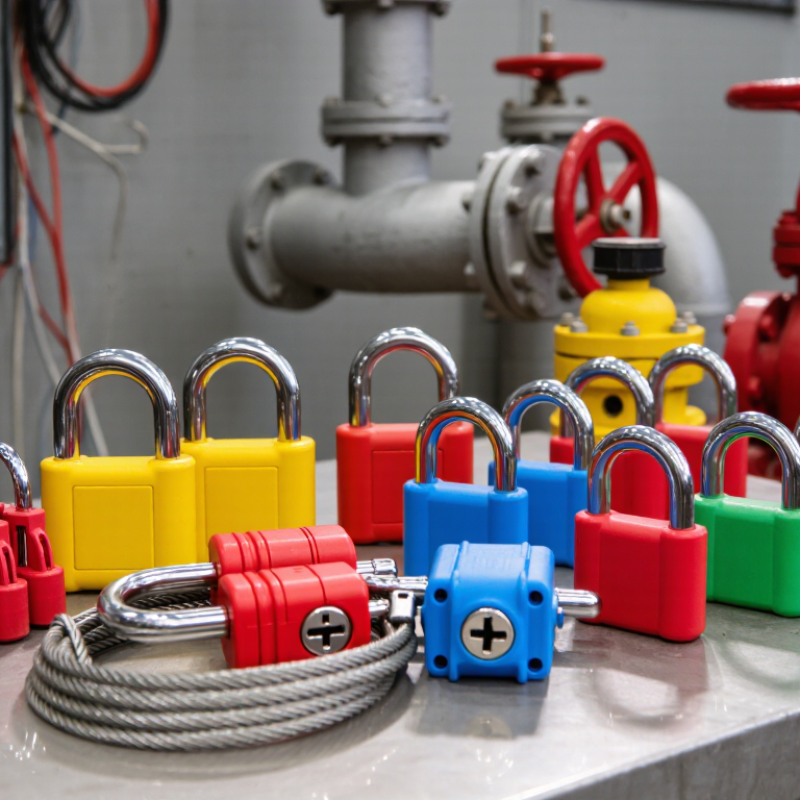
What Safety Lockout Devices Are and How They Prevent Hazardous Energy Release
Safety lockout devices help keep machinery from starting while people clean, repair, or inspect it. They secure energy-isolating points, such as electrical disconnects, valve handles, and breaker switches. A personal lock holds the device in a safe position, while a tag identifies the worker and warns others not to operate the equipment.
The protection depends on using the right device for the energy source. A cable lockout can secure several valves, while a breaker lockout can prevent a switch from being reset. For compressed air or hydraulic systems, workers may need to isolate the supply and release trapped pressure. Then they verify isolation, often by testing controls and checking that pressure or voltage is absent. A lock is not proof by itself. Stored energy can remain.
Good practice is specific and sometimes easy to overlook. Workers should match the device to the equipment, check that it cannot be removed without the key, and keep keys under personal control. Tags add useful information, but they do not physically stop operation. Procedures also need to reflect the actual machine; a generic checklist may miss a secondary feed or a gravity-loaded part. These devices reduce risk, but only when isolation, verification, and clear communication work together.
Which Criteria Matter When Comparing Safety Lockout Devices Worldwide
When comparing safety lockout devices worldwide, start with the hazards and equipment workers actually encounter. A compact breaker lock may suit a crowded electrical panel, while a durable valve cover needs room for gloves and clear labeling. OSHA estimates that effective lockout/tagout practices prevent about 120 fatalities and 50,000 injuries each year in the United States. This figure highlights the stakes, but it does not replace site-specific risk assessments. Check whether each device accepts the required lock size, resists expected heat or chemicals, and stays legible after repeated use. A device that fits on paper may be awkward in a wet, cramped maintenance area.
Tips: Test samples on real equipment before ordering at scale. Ask suppliers for material specifications, temperature ranges, and instructions in the languages workers use. Verify that employees can apply and remove devices without improvising. Small details matter.
For global purchasing, compare traceability, replacement-part availability, and consistent product specifications across shipments. Review relevant standards and local workplace requirements with qualified safety professionals; terminology and documentation can vary between markets. Seek test records, but check what was tested and under which conditions. Price still matters. Yet choosing the lowest-cost device can create hidden costs if it cracks, slips, or is difficult to identify. Even a careful comparison has limits: one product range may not fit every machine, and buyers sometimes overlook usability during procurement. A short field trial can reveal that gap.
Ten Safety Lockout Device Types for Different Equipment and Energy Sources
Choosing lockout devices starts with the energy source, not the catalog. OSHA estimates that proper control of hazardous energy prevents 120 fatalities and 50,000 injuries annually in the United States. The figures show why device fit matters. A breaker lockout secures electrical switches; a plug lockout encloses disconnected plugs. Valve lockouts cover gate, ball, and butterfly valves, while cable lockouts restrain unusual or multiple isolation points. Hasps let several workers attach personal locks. Group lockboxes hold keys during shared maintenance.
Other equipment needs different protection. Pneumatic lockouts block compressed-air couplings, and gas-cylinder lockouts prevent access to cylinder valves. Adjustable circuit-breaker devices accommodate varied breaker shapes. Wall-switch lockouts restrict access to control switches, while universal valve covers shield selected handwheels. Ten types, but no universal solution. Check voltage, valve dimensions, and operating conditions before selection.
OSHA’s hazardous-energy guidance emphasizes written procedures, training, and verification; a device alone is not a complete control. After isolation, test the equipment to confirm it cannot start or release stored energy. A motor may still coast, and a raised load may still fall. These details are easy to miss. OSHA data reflects U.S. workplaces, so buyers should also check applicable local requirements and site-specific risk assessments.
How to Match Lockout Devices to Workplace Hazards and Procedures
Choosing a safety lockout device starts with the energy source, not the catalog photo. A breaker, plug, valve, and pneumatic coupling each need a different physical fit. Check the equipment’s shape, access points, and operating conditions before selecting a device. A lock that slips on a greasy valve handle is not a reliable control.
Match the device to the written isolation procedure. For electrical work, confirm that the breaker lockout fits the switch and prevents movement to “on.” For pipes, select a valve cover or cable device that suits the valve type and leaves room for a personal lock. Air lines may need a fitting-specific lockout that blocks reconnection. Test the fit on actual equipment. Small differences matter.
Check temperature, moisture, dust, and chemical exposure in the work area. Labels should remain readable, and devices should be easy to identify during shift changes. Workers need practical training, not just a list of product names. Try the procedure with the people who will use it. It may reveal an awkward step. That is useful feedback, even if the first draft looked complete. Keep replacement keys controlled, inspect devices regularly, and revise the selection when equipment or tasks change.
What Global Buyers Should Check for Standards, Compatibility, and Supply Support
For global buyers, safety lockout devices must match both the equipment and the rules at the installation site. In the United States, OSHA’s Control of Hazardous Energy standard, 29 CFR 1910.147, requires employers to control hazardous energy during servicing. OSHA estimates that effective lockout/tagout practices can prevent about 120 fatalities and 50,000 injuries each year. For machinery design, ISO 14118 addresses prevention of unexpected start-up. These references serve different purposes; a device label alone does not prove full compliance.
Check fit in person where possible. A valve cover should fully block the handle, while a breaker lock must match the switch’s shape and travel. Confirm material suitability for heat, moisture, dust, and chemical exposure. Ask suppliers for test records, dimensional drawings, traceability, and clear guidance on compatible equipment. Support matters too: request local-language instructions, replacement-part availability, and realistic delivery times. Catalog photos can look convincing, but small clearance differences may stop a device from fitting. That detail is easy to overlook.
Tips: Photograph the isolation point, record its dimensions, and test the proposed device before ordering in volume. Ask for samples and written compatibility confirmation. One caveat: site conditions change, and our first fit check is not always enough. Recheck after equipment modifications, and involve trained safety personnel when selecting procedures and devices.



 Distributors
  SDS Download
  Contact