What Is the Best Type of Natural Gas Generator in 2026?
In 2026, the best Natural Gas Generator is not simply the largest or newest model. It is the one that reliably meets your actual load, fuel conditions, and operating schedule. A quiet standby unit for a home has different needs from a generator serving a farm, workshop, or critical facility. Small details matter: startup time, maintenance access, fuel pressure, and how the unit handles a motor starting under load.
The U.S. Energy Information Administration’s Electric Power Annual 2024 reports that natural gas supplied about 43% of U.S. utility-scale electricity generation that year. That grid-scale figure does not predict how a particular generator will perform. It does show why gas generation remains an important part of the energy conversation. The International Energy Agency’s Executive Director, Fatih Birol, warned, “We are in the first global energy crisis.” His remark highlights a practical issue for buyers: fuel availability and resilience deserve as much attention as rated output.
For a fair comparison, this outline will examine standby versus prime-duty use, engine and turbine designs, efficiency, emissions, installation needs, and lifecycle cost. The U.S. Department of Energy’s CHP technology resources also show why performance depends on the application and system design, not just the fuel. There is no universal winner. A high-capacity model can be wasteful when lightly loaded, while a compact unit may struggle with repeated peak demand. Check the manufacturer’s load charts, service requirements, and verified emissions data before choosing. Real-world fit matters.
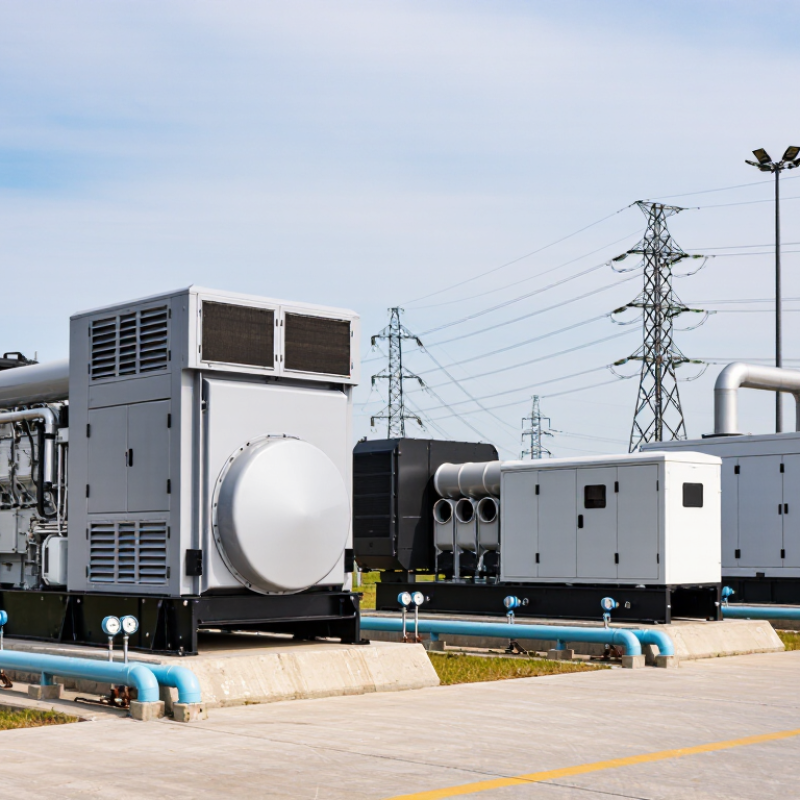
Natural Gas Generator Types in 2026: Standby, Prime, and CHP
Natural gas generators serve different jobs, even when their engines look similar. A standby unit stays idle until utility power fails, then starts automatically to support selected building loads. It suits homes, clinics, and small commercial sites that need backup rather than continuous generation. The transfer switch, fuel connection, and regular load testing matter as much as the generator itself. Quietly, these details get overlooked.
Prime power units operate for longer periods where grid service is unavailable, unreliable, or insufficient. They can carry changing loads, but output limits and maintenance schedules must match the duty cycle. Engineers should review starting currents from pumps and compressors, not just the average demand. A generator sized from a rough estimate can struggle when several motors start together.
Combined heat and power systems, or CHP, produce electricity while capturing useful engine heat. That heat may serve hot water, space heating, or an industrial process. CHP can improve total fuel use when a site needs heat and electricity at the same time. It is less compelling when heat demand is seasonal or distant from the engine room. The best choice depends on operating hours, load shape, fuel availability, and maintenance capacity; the answer is not always obvious from a nameplate.
How to Size a Generator: Match Running Load and Motor-Starting Surge
Choosing a natural gas generator starts with an honest load list, not the largest number on a single appliance. Add the running watts of equipment you expect to use at the same time: lights, a refrigerator, and essential controls. Check nameplates or manuals, since estimates can miss important details. Leave room for future needs.
Motors need extra power to start. A well pump or air-conditioner compressor may briefly draw several times its running load. Find its starting watts or locked-rotor amps in the equipment documentation. Size the generator to handle the highest likely starting surge while other selected loads are already running. If you plan to start large motors one at a time, confirm that operating approach is practical. It can be easy to overlook a second motor starting automatically. Natural gas output may also depend on fuel pressure and site conditions, so use the generator’s natural-gas rating—not its rating for another fuel.
Tips: Record running and starting loads separately. Ask a qualified electrician to check your calculations and transfer equipment. A little margin helps, but oversized equipment may cost more than your actual needs justify. Recheck the list when household plans change.
Sizing a Natural Gas Generator: Running Load vs. Motor-Starting Surge (2026)
Illustrative household loads in kilowatts. Motor-driven appliances can briefly draw more power when starting than while running.
In this example, the running loads total about 5.0 kW. If the 3.5 kW air conditioner starts while the other listed loads are running, the estimated brief demand is about 12.0 kW. Check appliance nameplates, account for loads that may start together, and verify the generator’s rated output on natural gas before choosing a size.
Why Power Factor Matters: A 100 kVA, 0.8-PF Set Delivers 80 kW
When comparing natural gas generators in 2026, don’t choose by kVA alone.
A 100 kVA set at a 0.8 power factor delivers 80 kW: 100 multiplied by 0.8.
That is its real-power output at the stated conditions, not a guarantee that every site can use 80 kW continuously. The distinction is easy to miss. A panel may show kVA, while equipment schedules list kW. Check both before sizing.
Power factor describes how effectively electrical capacity becomes useful work. Motors, pumps, and compressors can draw substantial starting current, so a modest running load may still challenge a generator’s kVA rating. Look at both starting and running demand. Also verify whether the rating is standby or continuous, and confirm the site’s gas pressure and supply capacity. A 100 kVA rating looks tidy on paper. Real installations are messier. I would revisit the load estimate after measuring actual demand, especially if several motors start together. Hot weather, elevation, and site conditions may also reduce available output, so leave a practical margin rather than planning around the full 80 kW.
EPA’s Natural Gas Emission Factor: 53.06 kg CO₂ per MMBtu
EPA’s natural gas combustion factor is 53.06 kg of CO₂ per MMBtu of fuel input. It offers a useful baseline for comparing generator options in 2026. This figure describes CO₂ released when gas burns, not emissions per kilowatt-hour of electricity. That distinction matters. Efficiency determines how much fuel a generator needs to produce the power you use.
For example, burning 10 MMBtu produces an estimated 530.6 kg of direct CO₂. A fuel meter and operating log can help check real-world consumption. But actual results vary with load, maintenance, and operating conditions. A generator running far below capacity may use fuel less efficiently than expected. The EPA factor also does not include upstream emissions from producing and transporting natural gas.
The best type depends on the site’s duty cycle. A reciprocating engine may suit changing loads, while a turbine may fit steadier, larger-scale demand. Compare fuel use at your typical load, not only at rated output. Check maintenance needs, noise, and local operating requirements, too. The number is helpful, but it is not the whole footprint.



 Distributors
 SDS Download
 Contact
