
Partner Login
Enter your username and password here on order to log in on the partner portal:
No registered partner yet?
Register nowChina’s packaging sector includes manufacturers and converters supplying liners for bottles, jars, and other containers. This guide introduces ten China-based suppliers of Aluminum Pulp Induction Vent Liner products. These liners combine a pulp-based layer with an induction-sealable aluminum structure, though exact constructions vary by supplier. Fit matters. A liner must match the closure, container finish, product conditions, and sealing equipment.
Supplier names alone do not prove performance. Buyers should compare drawings, layer descriptions, thickness tolerances, seal-window guidance, and available test data. Ask how samples are identified and whether production lots can be traced. For vented applications, clarify airflow targets, barrier requirements, and intended use before requesting a quotation. Small details count: cap diameter, neck finish, and heat settings can affect the result. Confirm them in writing. It is also useful to compare minimum order quantities, sample availability, customization options, and lead-time estimates.
The list is a starting point, not a certified ranking. Company capabilities, export experience, and product ranges can change, while public information may be incomplete. That is a limitation worth admitting. Use direct discussions and sample trials to verify claims, and request relevant quality documents rather than relying on broad marketing language. A dependable supplier should explain technical trade-offs clearly and respond consistently. The right choice is rarely just the lowest price; it is the liner that performs repeatably on the buyer’s actual packaging line. Test samples. Check fit.
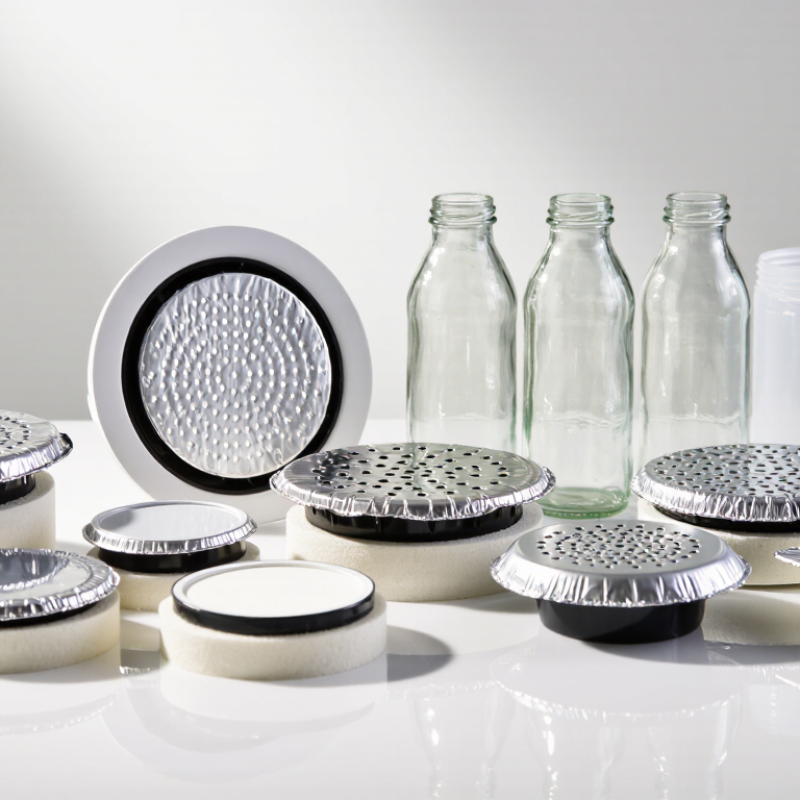
An aluminum pulp induction vent liner is a layered closure insert used inside compatible containers. It commonly combines a pulpboard backing, an aluminum foil layer, and a heat-seal coating. The exact construction varies. Its vent feature may use a designed channel or membrane to manage pressure while limiting product leakage. The liner is not a universal fit.
During sealing, an induction coil creates a changing electromagnetic field. This heats the foil without directly heating the cap. The heat softens the sealant, which bonds to the container rim as the closure is held in place. The pulp backing supports the liner and can remain with the cap or separate, depending on the design. Meanwhile, the vent element allows controlled gas movement. Small details matter: a poor fit, uneven rim, or incorrect sealing settings can weaken performance.
Tips: Check the container material, rim dimensions, product compatibility, and vent specification before use. Run a small sealing trial, then inspect the bond and vent path. Don’t assume every liner seals the same way. A quick visual check helps, but it may not reveal a blocked vent or weak seal.
Aluminum pulp induction vent liners combine a foil layer, a pulpboard backing, and a heat-seal coating. Some designs also include a breathable membrane that lets air or vapor pass while helping resist spills. The exact layer order varies by package and sealing method. Small details matter.
During induction sealing, electromagnetic energy heats the foil and activates the coating against the container rim. The pulpboard supports the liner under the cap and can cushion minor contact. A venting layer may help reduce pressure changes during storage or transport, but it does not make every package leakproof. “Vent” is not a universal performance promise.
These liners are used with compatible bottles and jars for products such as powders, dry ingredients, and selected household contents. Packaging teams should check the container material, neck finish, product compatibility, and required airflow.
Seal trials can reveal uneven contact, wrinkles, or excessive heating. Measure carefully. A liner that works on one jar may fail on another, and that detail is easy to overlook. Temperature, humidity, and fill conditions can also affect results.
China’s top 10 aluminum pulp induction vent liner suppliers are best compared by production capability, material control, and testing—not by catalog claims alone. These liners combine an aluminum foil layer with a pulp-based backing, designed to fit compatible container closures. Fit matters. A sample should sit flat, without curled edges or exposed fibers.
Ask suppliers for foil thickness, pulp basis weight, liner diameter tolerances, and sealing-condition guidance. Request samples in the intended container and test them with the actual induction equipment. Check for consistent bonding, clean removal, and visible damage after sealing. Small differences can matter. A liner that performs well on one bottle neck may not suit another.
A credible shortlist should include manufacturers able to explain their inspection process and provide traceable batch records. Confirm whether quoted specifications apply to routine production or only to a development sample. That distinction is easy to miss. Also discuss storage humidity, packaging, lead time, and minimum order quantities before comparing prices. Supplier rankings can change with product format and application; without a defined use case, “top 10” is only a starting point, not a technical endorsement.
This chart shows estimated 2024 primary aluminum production in the top 10 producing countries, in thousand metric tons. Production is upstream supply-chain context—not a ranking of aluminum pulp induction vent liner suppliers or finished liner output.
Source: U.S. Geological Survey, Mineral Commodity Summaries 2025, “Aluminum” (2024 estimates).
When comparing Chinese manufacturers, look beyond catalog photos and quoted prices. Confirm the liner’s aluminum thickness, pulp-paper structure, induction layer, and sealing compatibility with your container. A sample should fit the container mouth evenly, without curled edges or visible gaps. Ask how production lots are checked and whether the supplier can provide recent inspection records. Clear, specific answers matter.
Request samples made to your intended dimensions, then test them with your own containers and sealing equipment. Check seal consistency, peel behavior, and resistance to handling after application. Ask about tooling costs, minimum order quantities, lead times, and how design changes are documented. Compare the same specifications across suppliers; otherwise, a low quote may reflect a different construction. A polished presentation helps, but it is not evidence of consistent production. Even a careful sample review cannot predict every production issue.
When comparing aluminum pulp induction vent liner suppliers in China, start with the container and sealing conditions, not a low unit price. Check the liner’s diameter, thickness, pulp structure, and fit against your actual cap and bottle. Small details matter. A liner that shifts during placement may create uneven seals, even when its material appears suitable.
Ask suppliers for current product specifications, sample lots, and clear guidance on recommended sealing settings. Test samples on your own induction equipment and containers; record seal consistency, leakage results, and how the pulp layer handles storage. One successful trial is useful, but it is not proof of stable production. Request batch identification and a description of how material changes or quality issues are handled. It is easy to overvalue a polished sample. Real production can be less tidy.
Consider production capacity, lead times, packaging protection, and the supplier’s ability to communicate technical changes in plain English. Ask how orders are inspected and whether inspection records can be shared. Compare quotations carefully: confirm what is included, such as tooling, packing, and freight assumptions. A very low quote may hide a specification gap. No supplier will be perfect, and a buyer’s own requirements may also need revision after testing. Clear records and candid answers make that easier to manage.
Anonymous supplier profiles for sourcing comparison, not a verified ranking or directory of named companies. Specifications, order quantities, and lead times below are indicative planning ranges; confirm current capabilities, test results, and commercial terms directly with each supplier.
| Profile | Typical Product Capability | Material and Construction Checks | Indicative MOQ | Indicative Production Lead Time | Customization and Quality Checks | Best Fit |
|---|---|---|---|---|---|---|
| Profile 01 | Standard aluminum foil and pulpboard induction liners for common plastic container closures. | Confirm foil thickness, pulpboard grade, liner diameter, and whether the liner is supplied as a single-piece or two-piece construction. | About 10,000–30,000 pieces | About 2–4 weeks after artwork and specifications are approved | Request dimensional inspection records and a sample sealing trial using the intended cap, container, and induction sealer. | Buyers seeking standard sizes and routine production runs. |
| Profile 02 | Vent-cap liner configurations intended to allow pressure equalization while helping reduce liquid leakage. | Check vent structure, air permeability, liquid holdout, and compatibility with the product’s viscosity and storage conditions. | About 20,000–50,000 pieces | About 3–5 weeks, subject to vent material and tooling availability | Ask for application-specific leak, pressure, and compatibility test methods; validate performance with the filled package. | Packages where controlled venting is a functional requirement. |
| Profile 03 | Custom-die-cut liners for non-standard closure diameters and container neck finishes. | Verify dimensional tolerances, liner concentricity, edge quality, and fit inside the closure. | About 20,000–60,000 pieces; tooling may be additional | About 3–6 weeks, including sample and tooling approval where needed | Request a drawing, first-article samples, and written approval of critical dimensions before mass production. | Projects with unusual closure geometry or a new packaging format. |
| Profile 04 | Food-contact-oriented liner materials for suitable dry, liquid, or semi-liquid food packaging applications. | Confirm the exact material layers and obtain applicable food-contact declarations for the destination market and intended use. | About 10,000–50,000 pieces | About 3–5 weeks, depending on material availability and documentation | Review traceability, migration or compliance documentation where applicable, and lot-level quality records. | Food packers requiring documented material compliance. |
| Profile 05 | Moisture- and oxygen-barrier liner options for products that require additional protection from environmental exposure. | Compare the proposed laminate structure and request barrier data relevant to the product and packaging conditions. | About 20,000–50,000 pieces | About 3–6 weeks, depending on laminate structure | Assess seal integrity and barrier performance on the actual container; do not rely on material descriptions alone. | Products sensitive to moisture or oxygen ingress. |
| Profile 06 | Printed, embossed, or otherwise customized liner solutions, subject to material and process feasibility. | Check print adhesion, legibility, ink suitability, and whether customization affects the sealing surface. | About 30,000–100,000 pieces | About 4–7 weeks after artwork approval | Approve production artwork and physical samples; clarify color tolerances and reprint responsibility in writing. | Brands and packers with identification or presentation requirements. |
| Profile 07 | Multiple liner diameters and material constructions supplied for a range of closure formats. | Confirm which sizes are regular stock and which require a new die, material order, or minimum production run. | About 10,000–50,000 pieces per size | About 2–5 weeks for regular items; longer for custom sizes | Request a size chart, current stock confirmation, and samples from the intended production specification. | Buyers managing several package sizes or frequent replenishment. |
| Profile 08 | Export-oriented production with support for packing specifications and shipping documentation. | Specify carton quantity, moisture protection, palletization, labeling, and destination-market documentation needs. | About 20,000–100,000 pieces | About 3–6 weeks, excluding international transit | Confirm Incoterms, export packing details, inspection arrangements, and responsibility for freight and customs documents. | Importers coordinating regular international shipments. |
| Profile 09 | Suppliers offering sample development and application trials for induction-sealed liner selections. | Check suitability for the actual container resin, cap design, product, and induction-sealing equipment. | About 10,000–50,000 pieces after sample approval | About 3–6 weeks; sample development may add time | Agree on a trial protocol covering seal appearance, peel behavior, leakage, and relevant storage conditions. | New product launches or applications with uncertain sealing requirements. |
| Profile 10 | Volume-focused production for repeat orders of an approved liner specification. | Assess production capacity, raw-material consistency, lot identification, and change-control procedures. | About 50,000–200,000 pieces | About 2–5 weeks for repeat orders, subject to capacity and materials | Request a documented quality plan, agreed acceptance criteria, and notification of material or process changes. | High-volume buyers prioritizing repeatability and supply planning. |