


 Distributors
  SDS Download
  Contact
 Partner Login
Enter your username and password here on order to log in on the partner portal:
No registered partner yet?
Register nowWhat Is an Acrylic Luminous Sign and How Does It Work?
An Acrylic luminous sign combines a clear acrylic panel, internal LEDs, and carefully controlled light diffusion. It can display a brand name, directional message, or illuminated graphic with crisp edges. Unlike traditional metal signage, acrylic can transmit light through its surface while preserving a clean, modern appearance.
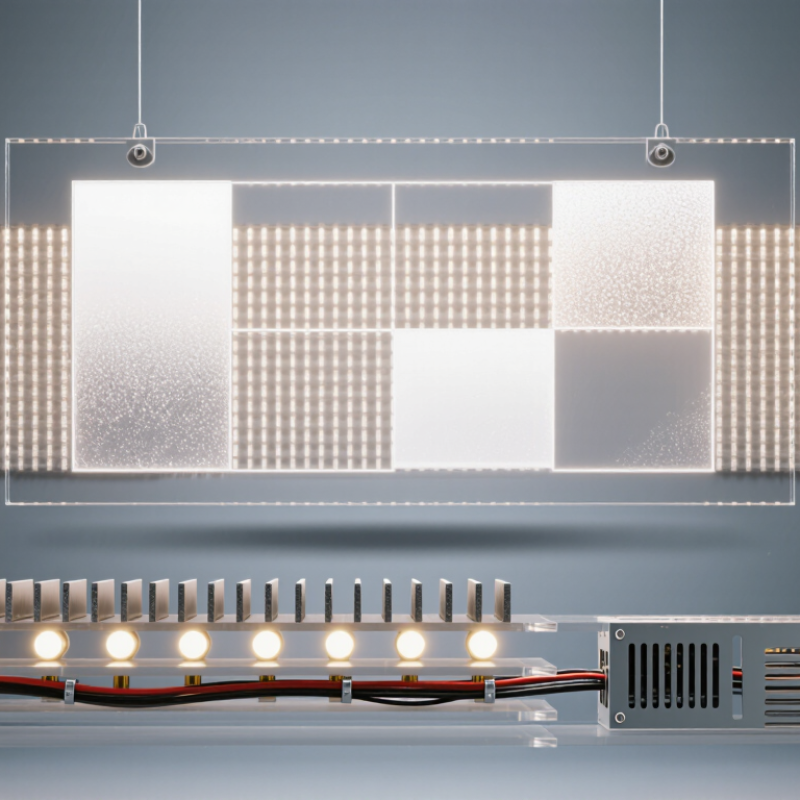
Lighting designer and author James R. Benya has said, “Good lighting is not about more light; it is about better light.” That principle explains how an Acrylic luminous sign should work. LEDs are positioned behind the panel or along its edges. Light then travels through the acrylic, meets engraved or printed areas, and creates an even glow. A frosted surface can soften bright points. A poorly designed panel may reveal dark corners or visible LED spots.
The sign’s performance depends on more than appearance. Acrylic thickness, LED spacing, color temperature, power supply quality, ventilation, and mounting distance all matter. Warm white light may suit hospitality spaces, while cool white light can improve visibility in offices or retail areas. Small details matter.
This guide examines the structure, lighting process, materials, installation choices, and maintenance requirements behind an Acrylic luminous sign. It also considers practical weaknesses, including glare, heat buildup, uneven brightness, and dust around the edges. Some signs look impressive in a showroom but perform poorly outdoors. That gap deserves honest attention. A reliable result requires tested components, accurate measurements, and professional electrical installation.
Definition and Basic Structure of an Acrylic Luminous Sign
An acrylic luminous sign is a three-dimensional sign with a translucent acrylic face and internal lighting. It displays letters, symbols, or simple shapes with an even glow. Unlike a flat printed panel, its raised structure creates visual depth. The acrylic face is usually cut, formed, or assembled into individual characters. Its thickness affects both appearance and light diffusion.
The basic structure includes an acrylic cover, an inner cavity, LED modules, wiring, and a rear panel. The rear panel often uses aluminum or another rigid material. It supports the sign and helps protect the electrical components. LED modules sit behind the acrylic face, leaving space for balanced illumination. A power supply converts incoming electricity into the lower voltage required by the LEDs. Ventilation and sealed edges may also be necessary, especially for outdoor installations.
In practical signmaking, uniform spacing matters as much as material quality. LEDs placed too close can create bright spots. Excessive depth can make the sign look dim. That matters. A diffuser, colored acrylic, or reflective interior can improve consistency, but each choice changes the final color. I have found that a sample section is useful before full production. It reveals shadows, uneven brightness, and unexpected color shifts. Acrylic also scratches more easily than many people expect. Careful handling remains essential. A luminous sign may look simple from the street, yet its structure requires accurate cutting, secure assembly, and thoughtful light placement.
What Is an Acrylic Luminous Sign and How Does It Work?
Definition and Basic Structure of an Acrylic Luminous Sign
| Data Dimension | Typical Information | Definition or Working Principle |
|---|---|---|
| Basic Definition | A sign with a light-transmitting acrylic face and an internal light source. | The acrylic panel acts as the visible sign face, while the internal lighting makes letters, symbols, or graphics readable in low-light conditions. |
| Primary Face Material | Cast or extruded polymethyl methacrylate, commonly called acrylic or PMMA. | PMMA is a rigid, lightweight thermoplastic that can transmit, diffuse, or selectively block light depending on its color, finish, and thickness. |
| Light Source | LED modules, LED strips, or LED light bars are commonly used. | The light source converts electrical energy into light. LEDs are widely used because they are compact, energy-efficient, and suitable for continuous operation. |
| Electrical Input | Many LED sign systems operate on low-voltage direct current, often 12 V or 24 V DC. | An external power supply converts building mains electricity to the voltage required by the LED system. The exact input and output specifications depend on the lighting components. |
| Acrylic Face Function | Light diffusion, color presentation, graphic protection, and surface appearance. | The face spreads light across the visible area and presents the selected color, printed graphic, cut lettering, or translucent film design. |
| Graphic or Lettering Layer | Printed graphics, translucent vinyl, painted areas, routed details, or individually formed letters. | Opaque and translucent areas control where light passes through, creating the required text, logo-free symbol, pattern, or contrast effect. |
| Enclosure or Cabinet | A shallow box or channel made from metal, acrylic, plastic, or a combination of materials. | The enclosure supports the face, holds the lighting components, protects wiring, and helps maintain a controlled distance between the LEDs and the acrylic. |
| Reflective Interior | A light-colored or reflective backing is often placed behind the LEDs. | The backing redirects stray light toward the acrylic face, improving light utilization and helping reduce dark areas inside the sign. |
| Diffusion and Uniformity | Uniformity depends on acrylic diffusion, LED spacing, LED lens design, and the depth of the enclosure. | The internal light must be distributed evenly before reaching the face. Insufficient spacing or unsuitable diffusion can produce visible bright spots and shadows. |
| Lighting Colors | White, red, green, blue, amber, and programmable RGB or RGBW options are available. | Color is produced by the LEDs, the acrylic sheet, translucent graphics, or a combination of these elements. |
| Illumination Direction | Front-lit, edge-lit, back-lit, or a combination of lighting methods. | Front-lit signs illuminate the face from behind; edge-lit designs introduce light through the acrylic edge; back-lit designs illuminate a separate surface or raised lettering from the rear. |
| Typical Acrylic Thickness | Common sign-face thicknesses are approximately 2–10 mm, depending on size, mounting method, and design. | Thicker sheets generally provide greater rigidity, while thinner sheets can reduce weight. The suitable thickness must be selected for the specific sign structure. |
| Weather Resistance | Acrylic is naturally resistant to moisture and is suitable for many indoor and outdoor sign applications when properly designed. | Outdoor durability also depends on UV exposure, sealing, mounting, drainage, electrical protection, and the quality of the other sign materials. |
| Operating Process | Power supply → LED circuit → light diffusion → illuminated acrylic face. | When powered, the LEDs emit light inside the enclosure. The light reflects and diffuses through the acrylic, making the sign visible. |
| Energy Consideration | Power consumption varies with sign area, LED density, brightness, color, and operating hours. | Total electrical demand can be estimated by multiplying the rated power of the LED system by the operating time, while allowing for power-supply losses. |
| Main Advantages | Lightweight construction, clear appearance, flexible shaping, and effective nighttime visibility. | Acrylic can be cut, engraved, formed, printed, or combined with films and lettering to create a wide range of illuminated sign designs. |
| Common Applications | Building directories, reception signs, directional signs, retail displays, interior decoration, event signage, and outdoor identification signs. | The combination of a visible graphic face and integrated lighting makes acrylic luminous signs suitable wherever information must remain readable in changing ambient light. |
