
Partner Login
Enter your username and password here on order to log in on the partner portal:
No registered partner yet?
Register nowChoosing the right Packaging Bags can shape product safety, shipping costs, and customer trust. Global buyers face different climates, transport routes, regulations, and retail expectations. A bag that protects coffee in a dry warehouse may fail with frozen foods or liquid products. Material thickness matters. So does the closure.
This guide examines seven practical Packaging Bags used across international supply chains. It considers stand-up pouches, flat pouches, woven bags, paper bags, vacuum bags, zippered bags, and kraft mailer bags. Each option serves a different purpose. Some provide strong moisture barriers. Others improve shelf visibility or reduce storage space. Certain designs support faster packing lines, while others require more careful sealing equipment.
Details matter.
Buyers should compare film structure, tear resistance, printing quality, and filling performance. They should also verify food-contact suitability when applicable. Reliable suppliers can provide material specifications, test reports, production samples, and clear lead times. These documents help buyers avoid decisions based only on attractive photos or low quotations.
Sustainability claims deserve careful review. A recyclable-looking bag may contain mixed layers that complicate recycling. This is an easy detail to miss. Packaging performance must remain the priority, but environmental impact cannot be ignored. No single bag wins every category. Even experienced purchasing teams may need to revise their choice after testing samples in real conditions. The best solution balances protection, cost, usability, compliance, and dependable supply.
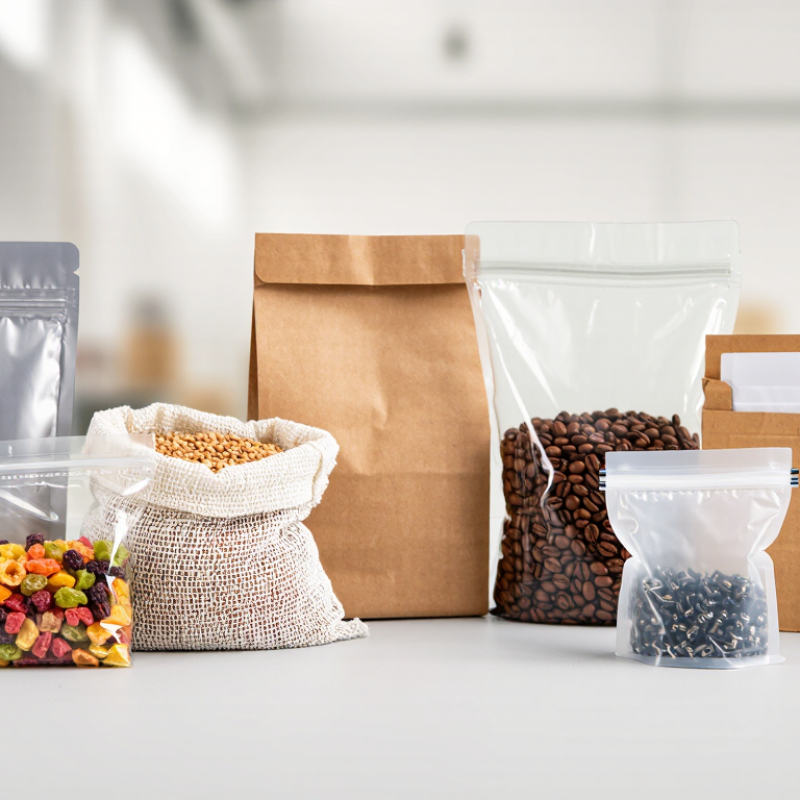
Global buyers judge packaging bags by more than appearance. They need reliable protection across long shipping routes, changing climates, and different handling systems. The seven common choices include stand-up pouches, flat pouches, vacuum bags, woven sacks, paper bags, courier bags, and heavy-duty bulk bags. Each format serves a different product and transport condition.
A suitable bag should match the product’s weight, moisture level, temperature sensitivity, and opening needs. A thick barrier film can protect powders from humidity. A strong woven structure can support heavy goods during warehouse movement. Sealed edges matter. Weak seams may fail after vibration, stacking, or sudden temperature changes. Clear labels, readable measurements, and practical handles also help buyers manage goods across languages and markets. Materials should be supported by test data, including seal strength, drop resistance, and barrier performance. Destination-market requirements must also be checked before production.
Sustainability deserves careful judgment. A recyclable structure sounds attractive, but it may not perform well for oily or sharp products. Paper can reduce plastic use, yet it may need a moisture-resistant layer. I have seen buyers focus on unit price and overlook storage damage. That choice became expensive. Samples should be tested under realistic conditions, not only displayed on a clean showroom table. Suppliers should explain material layers, tolerances, production capacity, and quality controls clearly. Small details matter. A dependable packaging bag protects the product and reduces unpleasant surprises for everyone involved.
7 Best Packaging Bags for Global Buyers
Seven Packaging Bag Types and Their Main Applications
Stand-up pouches suit snacks, pet food, sauces, and powdered products. Their gusseted base keeps shelves tidy and improves product visibility. Zippers support repeated use, but weak seals can fail during humid shipping. Flat-bottom bags offer a stable shape for coffee, grains, and premium dry goods. They stack neatly in cartons and reduce wasted shelf space. However, their sharper corners need careful film selection.
Side-gusset bags work well for roasted coffee, seeds, flour, and animal feed. The folded sides expand as products fill the bag. Vacuum bags remove air from meat, cheese, and other approved food products. They can reduce oxidation and storage volume. Woven polypropylene sacks handle rice, fertilizer, minerals, and construction materials. Their woven structure resists tearing, although fine powders may need an inner liner. Paper bags provide a lower-plastic option for flour, takeaway products, and dry foods. Moisture exposure remains a real weakness.
FIBC bulk bags carry large quantities of powders, granules, and agricultural materials. Lifting loops allow forklift handling and warehouse movement. Buyers should verify safe working load, fabric strength, stitching, and discharge design. Packaging tests should include drop resistance, seal strength, odor transfer, and transit vibration. A bag can look excellent but perform poorly after long sea transport. I have found that product density and filling speed often change the final choice. Specifications should remain practical, not merely attractive on paper.
Material choice controls protection, cost, and shipping performance. Smithers’ Future of Global Flexible Packaging to 2028 estimates the market will reach about US$250 billion by 2028. That growth reflects demand for lighter, stronger formats.
Kraft paper bags suit dry goods and provide good breathability, but moisture protection remains limited.
Polyethylene bags offer strong water resistance and flexible sealing.
Woven polypropylene sacks handle heavy loads, sharp edges, and repeated movement. Their tear resistance is useful for industrial shipments.
Laminated bags combine paper, film, or foil layers. They improve barrier performance against oxygen, light, and humidity.
Vacuum bags remove air and slow oxidation, although punctures can destroy their advantage quickly.
Aluminum foil bags provide the highest barrier level for sensitive products.
Compostable bags reduce dependence on conventional plastics, but their strength and storage conditions require careful testing.
Protection levels vary by destination. A bag crossing humid ports needs better moisture control than one moving through a dry warehouse. The International Safe Transit Association recommends distribution testing because vibration, compression, and drops can expose weak seals.
The 2023 UNEP report states that plastic pollution could fall by 80% by 2040 through reuse, recycling, and material reduction. Still, “compostable” does not always mean home-compostable. That distinction is often missed.
Tips: Match the bag to the product’s moisture, weight, and shelf-life risks. Request seal-strength and drop-test results. Check film thickness, inner liners, and closure quality. A cheaper bag may become expensive after one damaged pallet. I would also test real routes, not only laboratory samples.
7 Best Packaging Bags for Global Buyers
How to Choose the Right Packaging Bag for International Shipping
International shipping tests packaging in ways local delivery may not. A bag can face humidity, rough handling, pressure, and long warehouse storage. I usually begin with the product’s weight, shape, moisture sensitivity, and stacking needs. Lightweight polyethylene mailers suit soft goods. Woven polypropylene sacks handle heavier dry products. Kraft paper bags offer a firm surface, but they need moisture protection.
Vacuum bags reduce volume for textiles, bedding, and some shelf-stable products. Stand-up pouches work well for small consumer goods and include useful resealable closures. FIBC bulk bags support large, dry loads when lifting equipment is available. Insulated bags help protect temperature-sensitive shipments during short transit periods. The right choice depends on performance, not appearance.
Test samples before placing a large order. Drop a filled bag from a practical warehouse height. Stack cartons for several days. Expose samples to humidity and inspect weak seams. I once focused too much on material thickness and missed a poor closure design. That mistake was expensive. It also showed me that thicker is not always safer.
Check the bag’s empty weight, seal strength, dimensions, and storage requirements. Confirm destination-country rules, carrier limits, and any product-contact requirements before shipment. Use readable labels and leave enough surface space for handling information. A small pilot shipment can reveal problems that a factory sample hides. That extra step often protects both the goods and the buyer’s reputation.
| Packaging Bag Type | Common Material | Typical Load Range | Moisture Protection | Puncture and Tear Resistance | Best International Shipping Uses | Main Advantages | Key Limitations |
|---|---|---|---|---|---|---|---|
| Poly Mailer | Co-extruded polyethylene film, commonly made with a low-density polyethylene layer | Approximately 0.1–5 kg per parcel, depending on film thickness and closure design | ★★★★★ Strong resistance to rain and surface moisture when properly sealed | ★★★★☆ Flexible and tear-resistant, but not suitable for sharp edges without internal protection | Clothing, textiles, soft goods, documents, and other non-fragile e-commerce shipments | Low weight, compact storage, easy sealing, and generally lower dimensional shipping cost | Provides little cushioning and may be unsuitable for fragile or rigid products |
| Kraft Paper Mailer | Multi-layer kraft paper, sometimes combined with paper padding or a thin barrier layer | Approximately 0.1–3 kg per parcel | ★★☆☆☆ Limited unless coated or protected by an additional moisture barrier | ★★★☆☆ Good for lightweight products; performance decreases when wet or overloaded | Books, apparel, stationery, printed materials, and relatively lightweight retail products | Paper-based structure, printable surface, low storage volume, and easy manual handling | More vulnerable to water, abrasion, and heavy compression than plastic mailers or boxes |
| Corrugated Shipping Bag | Single-wall or double-wall corrugated fiberboard formed into a flexible bag or mailer | Approximately 0.5–10 kg per parcel, depending on board grade and construction | ★★★☆☆ Moderate; requires additional protection in wet transport conditions | ★★★★☆ Better edge and compression protection than thin mailers | Books, small electronics with cushioning, footwear, hardware, and semi-fragile products | Lightweight structural protection, stackability, and compatibility with common export cartons | Can crush or weaken after exposure to water; occupies more space than film mailers |
| Stand-Up Pouch | Mono-material plastic, laminated plastic film, or paper-plastic laminate with a heat-sealed closure | Approximately 0.05–2 kg of product, with larger formats available | ★★★★★ Excellent when the seal and barrier layer are intact | ★★★☆☆ Suitable for flexible products; sharp contents may require a stronger laminate | Dry foods, powders, pet products, personal-care items, and liquid or semi-liquid goods with suitable closures | Efficient use of storage space, low package weight, resealable options, and good product visibility or labeling area | Usually needs an outer carton for long-distance transport and protection from crushing |
| Vacuum Barrier Bag | Multilayer plastic film, commonly using polyamide for puncture resistance and polyethylene for sealing | Approximately 0.1–5 kg of product per bag | ★★★★★ High barrier against air and moisture when correctly evacuated and sealed | ★★★★☆ Good puncture resistance, but sharp bones, edges, or parts may need an outer pack | Meat, seafood, coffee, dried products, industrial components, and products sensitive to oxidation | Reduces air volume, limits oxidation, and can help control product movement inside the package | Requires suitable sealing equipment; the bag alone does not provide impact or compression protection |
| Woven Polypropylene Bag | Woven polypropylene tape fabric, often with an inner liner or laminated outer surface | Approximately 10–50 kg per bag for common industrial formats | ★★★☆☆ Good when laminated or fitted with a liner; uncoated fabric is not fully waterproof | ★★★★★ High tensile strength and good resistance to rough handling | Rice, grain, minerals, chemicals, fertilizers, construction materials, and other bulk goods | High load capacity, reusable potential, strong stitching options, and efficient pallet handling | Not ideal for very fine powders without a liner; may require additional protection against water and contamination |
| Flexible Intermediate Bulk Container (FIBC) | Heavy-duty woven polypropylene fabric with lifting loops, seams, and optional liner | Commonly 500–2,000 kg, subject to the bag's certified safe working load | ★★★☆☆ Good with a coated fabric or inner liner; construction must match the cargo requirement | ★★★★★ Designed for large-volume industrial handling and lifting | Powders, granules, agricultural products, minerals, chemicals, and other dry bulk cargo | High volume efficiency, forklift or crane handling, reduced handling labor, and strong palletization potential | Requires appropriate lifting equipment and load testing; unsuitable for small parcels or direct retail presentation |
| Selection note: Actual performance depends on material thickness, seam quality, closure design, product shape, packaging configuration, handling conditions, and applicable destination-country regulations. For international shipments, verify the package's tested load rating, moisture-barrier performance, labeling requirements, and compatibility with the selected transport mode before purchase. | |||||||
7 Best Packaging Bags for Global Buyers
Global Standards, Customization, and Cost Considerations
Global buyers often choose among kraft paper bags, stand-up pouches, flat pouches, woven polypropylene bags, vacuum bags, retort pouches, and mesh produce bags. Each format serves a different handling need. Kraft bags offer a natural appearance, while woven bags handle heavier loads. Vacuum bags reduce air exposure, but they require reliable sealing equipment. Retort pouches tolerate heat processing, although their material structure can increase costs.
Standards should guide the purchase, not decorate the specification sheet. Ask for food-contact declarations, migration test results, material composition, and factory quality records when relevant. Packaging requirements differ between markets, even for similar products. Confirm thickness, seal strength, printing inks, and recycling information before production. A small mistake in dimensions may create thousands of unusable bags. I have seen attractive samples fail because the zipper leaked during transport. Perfect specifications are rare. Review them carefully.
Tips: Request a production sample, not only a digital proof. Compare packed volume, pallet efficiency, and shipping weight. Custom colors, handles, windows, and barrier layers improve usability, but they also raise tooling or material costs. Keep the design practical. A simpler bag may perform better and arrive cheaper. Ask suppliers to separate unit price, setup fees, testing costs, and shipping estimates. This makes comparisons more reliable. Leave space for local labels and changing compliance information.
Global standards, customization, and cost considerations
The chart compares common packaging bag formats using indicative industry ratings from 1 (low) to 5 (high). Barrier protection refers to resistance against moisture, oxygen, light, and contamination; customization reflects printing, shape, closure, and size flexibility; cost efficiency reflects typical suitability for cost-sensitive, high-volume purchasing. Actual performance and pricing depend on material structure, order volume, specifications, and applicable regulations such as ISO 18606, EN 13432, and ASTM D6400.