2026 Top Anti Clogging DTF Ink Types for Buyers?
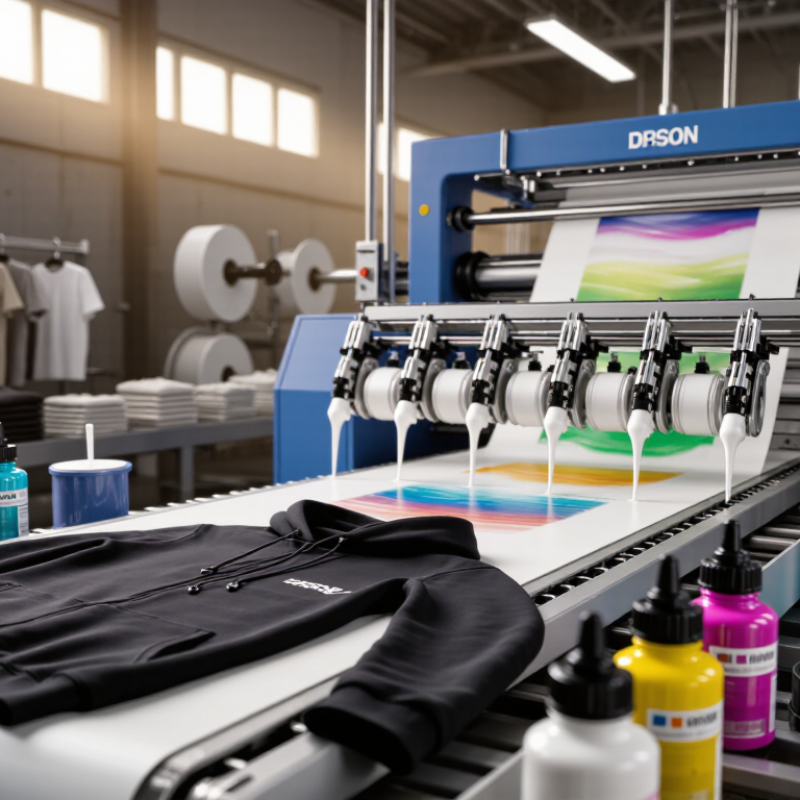
Choosing the right Anti Clogging Dtf Ink will matter more in 2026 as direct-to-film production becomes faster, denser, and more automated. Buyers now expect stable white ink, clean color separation, and fewer interruptions during overnight printing. A clogged nozzle can leave tiny gaps across a black cotton hoodie, even when the artwork looks perfect on screen. Small details matter.
Industry research supports this growing focus. Smithers’ The Future of Digital Textile Printing to 2028 highlights continued expansion in digital textile applications, driven by customization, shorter production runs, and on-demand manufacturing. Grand View Research’s Direct-to-Film Printing Market reports also describe strong market momentum, especially among small and mid-sized apparel businesses. These trends increase pressure on ink manufacturers to improve dispersion stability, sediment control, drying behavior, and printhead compatibility. However, market growth does not make every “no-clog” claim reliable.
This guide evaluates the leading Anti Clogging Dtf Ink types for 2026 through practical buyer criteria. These include white ink settling, viscosity consistency, filtration quality, storage tolerance, curing performance, and compatibility with common Epson-based printheads. In real workshops, a bottle may perform well on Monday and behave differently after poor shaking or temperature changes. That is the uncomfortable part. Ink quality matters, but maintenance, humidity, circulation, and operator habits matter too. Buyers should compare technical data sheets, independent testing, warranty terms, and supplier support before placing large orders. A low price may look attractive, yet repeated cleaning cycles can quietly increase labor, ink waste, and downtime. Reliability should be measured on fabric, not only in a sample bottle.
What Makes DTF Ink Anti-Clogging in 2026?
2026 Top Anti-Clogging DTF Ink Types for Buyers?
What Makes DTF Ink Anti-Clogging in 2026?
Anti-clogging DTF ink begins with controlled pigment dispersion, not attractive packaging claims. Pigment particles must remain evenly suspended during storage, circulation, and printing. In practice, many buyers examine particle-size distribution, viscosity, and surface tension together. A useful working range is often 3–6 mPa·s viscosity and 25–35 mN/m surface tension. These figures vary by printhead design. They are not universal rules.
Water-based pigment ink with fine, stable particles usually offers the strongest clog-resistance potential. Resin balance also matters. Too much binder can leave a dry film around nozzle plates. Too little may weaken wash durability. Grand View Research’s 2024 DTF market analysis valued the sector at approximately US$2.56 billion in 2023, with projected growth near 14.4% annually through 2030. That expansion increases pressure for reliable, low-maintenance formulations. Buyers should request storage tests, nozzle recovery data, and filtration details. Ask for evidence.
Real-world testing still matters more than a specification sheet. Run a 24-hour idle test, then inspect missing nozzles, white-ink settling, and purge volume. A stable ink should restart without aggressive cleaning. In my experience, white ink deserves special attention because heavier particles settle faster. Temperature changes can expose weaknesses quickly. Do not trust “anti-clogging” alone. Check batch consistency, technical documentation, and independent print trials before purchasing. Even strong formulations can fail when humidity, maintenance, or printhead settings are poorly controlled.
Best Practices for Preventing Clogs During Printing
2026 Top Anti-Clogging DTF Ink Types for Buyers
Clogs usually begin with dried white ink, poor circulation, or contaminated nozzles. A suitable DTF ink should contain stable pigment dispersion, balanced humectants, and controlled viscosity. These features help keep particles moving through narrow channels. Low-viscosity white ink can reduce sedimentation, but it may require careful curing control. High-opacity formulas often contain more pigment. That benefit can increase maintenance pressure.
Grand View Research estimated the global digital textile printing market at about USD 4.3 billion in 2023. Its report also projects strong growth through 2030. More production means more demand for dependable ink handling. However, market growth does not prove that one ink type prevents every clog. Real results depend on storage temperature, print frequency, and machine design. I have seen clean-looking ink fail after a weekend shutdown. That detail is easy to underestimate.
Tips: Shake white ink gently before loading it. Do not use vigorous mixing that creates foam. Keep cartridges sealed when idle. Run a short nozzle check every day, even during quiet periods. Follow the ink supplier’s filtration and cleaning guidance. Replace dampers or filters when flow becomes irregular. A 2024 Smithers analysis of digital textile printing highlights productivity and reliability as key industry priorities. Still, daily checks remain imperfect. Dust enters. Operators miss alarms. Build a simple maintenance log, and record nozzle loss before it becomes a visible print defect.
2026 Top Anti-Clogging DTF Ink Types for Buyers
Relative clogging tendency based on pigment concentration, sedimentation behavior, and typical white-ink maintenance requirements.
Lower scores indicate better natural resistance to nozzle blockage. Low-viscosity CMYK inks usually present the lowest clogging risk, while high-opacity white inks require regular circulation, gentle agitation, nozzle checks, and proper storage because their higher pigment solids settle more easily.
Buyer Checklist for Choosing Reliable DTF Ink in 2026
In 2026, reliable DTF ink begins with clog prevention, not color alone. Water-based pigment ink remains the practical choice for film transfer, but its dispersion quality matters greatly. Look for fine, stable pigment particles, controlled viscosity, and low sedimentation. A technical data sheet should state viscosity, surface tension, pH, filtration level, and recommended storage temperature. Vague claims are warning signs. Smithers’ 2024 digital textile printing outlook identifies continued investment in pigment ink systems, driven by simpler processing and lower water use.
Use this buyer checklist before placing a large order. Request a recent batch sample, safety data sheet, and certificate of analysis. Print a nozzle-check pattern after overnight storage. Then run small gradients, white-ink underbases, and repeated head-cleaning tests. A clean first test is not proof. Ink may still settle inside dampers after several days. Keep unopened containers away from heat and direct sunlight. Record batch numbers and opening dates.
Wash testing must follow the intended fabric and curing conditions. The AATCC Colorfastness to Laundering method is useful for repeatable evaluation, while ISO 105-C06 supports international comparison. Measure white opacity, edge sharpness, stretch behavior, and color change after washing. Do not trust one successful garment. Humidity, film quality, and printer maintenance can hide weaknesses. One imperfect test is valuable; it reveals what the supplier’s brochure does not.
2026 Top Anti-Clogging DTF Ink Types for Buyers — Buyer Checklist for Choosing Reliable DTF Ink in 2026
| DTF Ink Type | Typical Composition | Relative Clogging Risk | Recommended Printhead Nozzle Range | Typical Viscosity at 25°C | Anti-Clogging Features to Check | Best Use Case |
| Standard CMYK Pigment Ink | Aqueous pigment dispersion with water, humectants, dispersants, and additives | Low to Medium | Usually 3–30 μm | Approximately 2–6 mPa·s | Fine pigment particle distribution, stable dispersion, low sedimentation, and verified compatibility with the selected printhead | General garment decoration and daily production |
| High-Opacity White Ink | White pigment dispersion, commonly based on titanium dioxide, in an aqueous carrier | Medium to High | Usually 3–30 μm | Approximately 3–8 mPa·s | Continuous circulation or periodic agitation, strong anti-settling control, compatible white-ink channel, and clear maintenance instructions | Opaque transfers on dark, colored, and black garments |
| Low-Sedimentation White Ink | Optimized white pigment dispersion with humectants and controlled rheology additives | Medium | Usually 3–30 μm | Approximately 3–8 mPa·s | Low settling rate, effective recirculation, reduced crusting during idle periods, and documented storage stability | Production environments with overnight or weekend idle periods |
| Fluorescent Pigment Ink | High-chroma aqueous pigment dispersion using fluorescent colorants | Medium | Use only within the printhead supplier’s specification | Approximately 2–6 mPa·s | Fine particle dispersion, reliable filtration, resistance to drying at the nozzle plate, and validated color-channel compatibility | Sportswear, promotional graphics, and high-visibility designs |
| Pastel or Light-Color Ink | Pigment-based ink with reduced colorant concentration or blended light shades | Low to Medium | Usually 3–30 μm | Approximately 2–6 mPa·s | Stable dilution control, consistent surface tension, and resistance to nozzle drying during low-ink-volume printing | Soft-color fashion designs and detailed multicolor artwork |
| High-Elasticity Stretch Ink | Pigment ink with flexible binder and additives designed to reduce cracking after stretching | Medium | Must match the printhead specification | Approximately 3–8 mPa·s | Balanced binder content, controlled particle size, stable rheology, and no visible residue after routine cleaning | Sportswear, stretch fabrics, and frequently washed garments |
2026 Buyer Checklist for Reliable DTF Ink
| Evaluation Dimension | Preferred Buyer Benchmark | Why It Matters for Clogging Control | Pass/Fail Check |
| Printhead Compatibility | The technical data sheet lists the exact printhead family, operating temperature, viscosity, and surface-tension range | Incorrect rheology can cause poor jetting, missing nozzles, and unstable drop formation | ☐ Yes ☐ No |
| Particle and Filtration Control | Particle-size distribution and filtration details are disclosed; filtration is suitable for the selected printhead | Large particles and agglomerates are common contributors to nozzle blockage | ☐ Yes ☐ No |
| White-Ink Circulation | White ink includes a documented circulation, agitation, or recirculation procedure | White pigment is denser than many color pigments and can settle during idle periods | ☐ Yes ☐ No |
| Idle-Time Performance | The supplier specifies a capped idle period and provides a daily or weekly maintenance routine | Ink exposed to air can dry at the nozzle plate and create partial nozzle loss | ☐ Yes ☐ No |
| Storage Conditions | Sealed storage, protection from freezing and overheating, and a clearly stated shelf life are provided | Temperature abuse and expired ink can increase separation, viscosity change, or sedimentation | ☐ Yes ☐ No |
| Batch Consistency | Batch number, production date, color reference, and quality-control information are available | Consistent batches reduce unexpected changes in jetting, color density, and maintenance frequency | ☐ Yes ☐ No |
| Test Printing | A sample test covers nozzle checks, white circulation, color accuracy, wash resistance, and at least one idle period | Laboratory specifications cannot replace testing on the buyer’s actual printer and transfer workflow | ☐ Yes ☐ No |
Note: Viscosity, nozzle-size, and maintenance values are typical industry reference ranges rather than universal specifications. Always confirm the current technical data sheet and printer manufacturer requirements before purchase.


 Distributors
 SDS Download
 Contact
