X

Partner Login

Enter your username and password here on order to log in on the partner portal:

No registered partner yet?

Register now

2026 Top EC Meter Types for Global Buyers?

Choosing the right Ec Meter in 2026 requires more than comparing prices or display sizes. Global buyers must examine measurement range, accuracy, calibration stability, probe design, and regional service support. An Ec Meter measures electrical conductivity, helping users evaluate dissolved salts in water, nutrient solutions, hydroponic systems, laboratories, and industrial processes. The correct model depends on the sample, testing frequency, and required documentation.

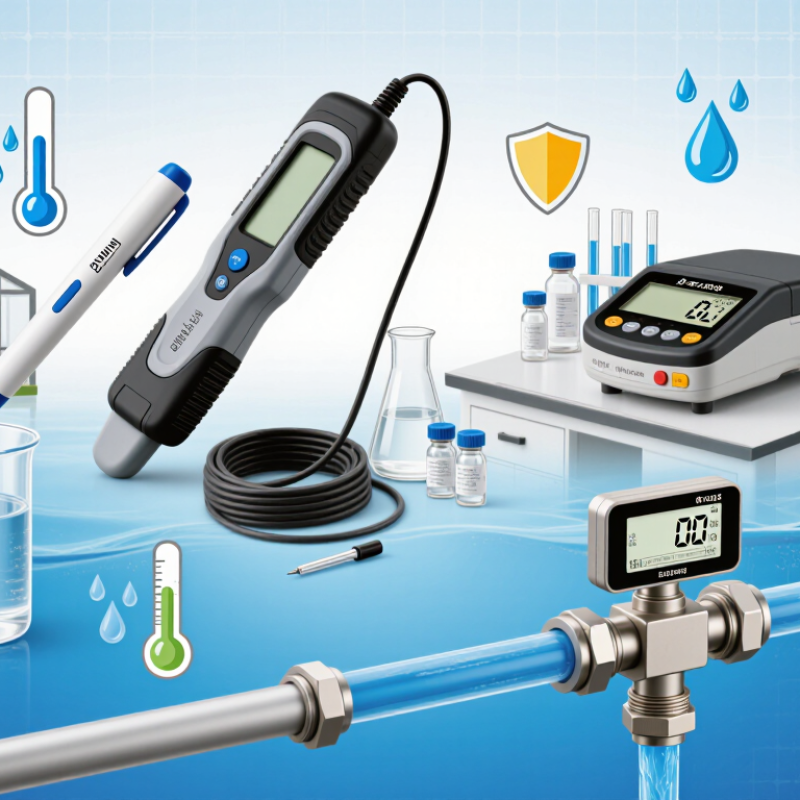
Simple pen-style meters suit field checks, such as testing a 500-milliliter nutrient cup beside a greenhouse bench. Handheld meters offer stronger protection, replaceable probes, and better portability for water treatment teams. Benchtop models provide improved repeatability for laboratories and quality-control departments. Inline Ec Meter systems support continuous monitoring, but installation conditions, flow speed, temperature, and cleaning schedules can affect results. Smart meters may add Bluetooth records, yet connectivity does not guarantee reliable data.

Small details matter.

Buyers should confirm automatic temperature compensation, calibration standards, IP ratings, electrode materials, and software compatibility. Suppliers with transparent specifications, traceable testing, clear warranties, and responsive technical support deserve closer attention. Regional voltage requirements and import documentation should also be reviewed before purchase. These checks reduce avoidable delays and inconsistent readings.

Still, no buying guide can predict every working environment. A low-cost meter may perform well in clean water but struggle with concentrated solutions or frequent use. Even advanced instruments need proper calibration and careful storage. This guide compares the leading Ec Meter types for global buyers, while recognizing that practical testing should support every final decision.
2026 Top EC Meter Types for Global Buyers?

What an EC Meter Measures and Why It Matters in 2026

What an EC Meter Measures and Why It Matters in 2026

An EC meter measures electrical conductivity in water or another liquid. It detects how easily dissolved ions carry an electrical current. These ions may come from mineral salts, nutrients, or other dissolved substances. The result is usually shown in microsiemens per centimeter or millisiemens per centimeter. Higher EC often indicates more dissolved material, but it does not identify each substance.

That distinction matters in hydroponics, water treatment, aquaculture, and laboratory work. An EC reading can help users adjust nutrient strength before plants show visible stress. For example, a sudden rise may signal evaporation or excessive dosing. A low reading may indicate dilution or insufficient minerals.

Temperature changes also affect conductivity, so automatic temperature compensation improves measurement consistency. Still, compensation is not magic. Calibration remains essential.

Global buyers typically compare portable pen meters, inline sensors, and benchtop instruments. The right type depends on testing frequency, sample volume, and required accuracy.

A portable meter suits quick checks beside a tank.

An inline model supports continuous monitoring.

A benchtop unit offers better control for repeated laboratory measurements.

It is easy to trust one precise number too much. EC cannot replace laboratory analysis when specific contaminants or individual nutrients must be confirmed.

Buyers should check calibration procedures, electrode maintenance, measurement range, and local technical support before purchasing.

Even experienced users sometimes overlook cleaning between samples. That small mistake can distort results.

The Main EC Meter Types and How Each One Works

2026 Top EC Meter Types for Global Buyers

The Main EC Meter Types and How Each One Works

Electrical conductivity (EC) meters measure how easily dissolved ions carry electrical current through water. They are useful for hydroponics, irrigation, laboratories, aquaculture, and water treatment. The basic method is simple. A probe sends a small electrical signal through the sample and measures its resistance. The meter then converts that result into conductivity, usually in µS/cm or mS/cm.

Handheld EC meters suit field inspections and routine checks. Their compact probes work well in tanks, nutrient solutions, and drainage water. Pen-style meters are smaller and faster, but their probes may be less durable.

Benchtop meters offer better stability and clearer readings for laboratories. They often support calibration records, adjustable temperature compensation, and replaceable probes.

Inline EC meters work continuously inside pipes or circulation systems. They help operators notice sudden changes without collecting samples manually.

Temperature-compensated meters adjust readings because warm water conducts electricity more easily. Automatic compensation is convenient, but it is not always perfect for unusual solutions.

Calibration with suitable reference solutions remains necessary. I have found that dirty probes can create convincing but wrong readings. Rinsing with clean water helps, although it cannot repair a damaged sensor.

Buyers should compare measuring range, probe material, calibration controls, display visibility, and local service support. A cheaper meter may be practical for occasional checks, yet frequent users often need stronger construction and easier maintenance.

Choosing EC Meters for Water, Soil, and Hydroponic Applications

2026 Top EC Meter Types for Global Buyers

Choosing EC Meters for Water, Soil, and Hydroponic Applications

Electrical conductivity meters help growers estimate dissolved salts in water and nutrient solutions. They are useful, but they do not identify individual nutrients. Portable pocket meters suit routine checks in hydroponic reservoirs. Benchtop meters offer stronger stability for laboratories and frequent testing. For irrigation water, choose a model with automatic temperature compensation and a suitable measurement range. Cold water can produce misleading readings without compensation.

Soil testing needs a different approach. Direct soil probes are convenient for quick comparisons, but soil contact can be uneven. A soil-water extract often provides more repeatable results. Clean the probe after every sample. I once trusted a dirty sensor and adjusted nutrients unnecessarily. That was an avoidable error. For hydroponics, check EC after adding nutrients, then recheck after circulation stabilizes.

Tips: Match the meter’s range to your expected EC values. Calibrate with fresh standard solution. Rinse with clean water, but do not wipe the sensing area aggressively. Store the probe as the instructions require. A cheap meter may work well, yet unstable readings deserve attention. Record EC, temperature, crop stage, and sampling time. These details reveal trends that a single reading cannot show. Soil texture and moisture still complicate interpretation. Test consistently.

2026 Top EC Meter Types for Global Buyers? - Choosing EC Meters for Water, Soil, and Hydroponic Applications

EC Meter Type Typical Measurement Range Typical Accuracy Best Applications Recommended Sample or Installation Main Advantages Important Limitations Calibration and Maintenance
Pocket Pen EC Meter 0–20 mS/cm Typically ±2% of full scale Hydroponic nutrient solution, irrigation water, aquarium and general water checks Direct immersion in a clean liquid sample; allow the reading to stabilize Low cost, portable, quick to use and convenient for routine checks Small electrode area can be affected by bubbles, contamination and highly concentrated solutions; usually less suitable for very low-conductivity water Use an appropriate conductivity standard, commonly 1.413 mS/cm; rinse with clean water after use and keep the probe hydrated when required by the electrode design
Portable Handheld EC Meter 0–200 mS/cm Typically ±1% of reading or ±1 digit Greenhouse nutrient tanks, irrigation systems, wastewater screening and field water testing Immersion probe or flow-through cup; suitable for repeated field measurements Wider range, stronger temperature compensation options and better readability than basic pens More expensive than pen meters; accuracy depends on probe condition, sample temperature and correct calibration Perform one- or two-point calibration according to the working range; inspect the cable and probe regularly and avoid storing the sensor dry if it uses a conductivity cell that requires hydration
Inline or In-Tank EC Controller 0–20 or 0–200 mS/cm Typically ±1–2% of full scale Continuous monitoring of hydroponic reservoirs, fertigation lines, recirculating water and process tanks Installed in a continuously mixed tank, bypass loop or flow cell Real-time monitoring, alarm functions and potential integration with dosing or irrigation controls Requires correct installation, stable flow or mixing and protection from solids, scale and air bubbles; more complex to commission Calibrate after installation and whenever the probe is cleaned or replaced; clean deposits from the cell and verify the temperature sensor
Soil EC Probe Approximately 0–20 dS/m Often ±2–5% of reading, depending on soil texture and method Field soil salinity mapping, greenhouse media, root-zone monitoring and crop management Inserted at a consistent depth into moist soil or used with a prepared soil-water extract Measures salinity near the root zone and supports spatial field comparisons Results vary with moisture, bulk density, temperature, soil texture and probe contact; direct soil readings are method-dependent Follow the manufacturer’s soil-specific procedure, maintain consistent moisture and depth, and compare results using the same extraction or in-situ method
Benchtop EC Meter 0–200 mS/cm Typically ±0.5–1% of reading Laboratories, nutrient formulation, water-quality testing and quality-control work Beaker or sample vessel with a dedicated conductivity cell; controlled sample temperature is preferred High repeatability, stable display, advanced temperature compensation and data-recording options Not designed for routine field use; requires a clean workspace, suitable sample vessels and careful electrode handling Use traceable conductivity standards covering the expected range; rinse between samples, prevent cross-contamination and periodically verify calibration
Low-Conductivity Water Meter Approximately 0–2,000 µS/cm Typically ±1% of reading or better with a suitable cell Drinking water screening, filtered water, condensate, rainwater and low-mineral process water Use a clean vessel and a probe designed for low-conductivity measurements; avoid contact with conductive surfaces More sensitive for low-ionic-strength water than general-purpose high-range meters Readings can drift because of carbon dioxide absorption, contamination, unstable temperature and poor sample handling Use a low-range standard, clean the cell carefully and allow the sample temperature to equilibrate before measurement
High-Range Industrial EC Meter 0–1,000 mS/cm Typically ±1–2% of full scale Brine, seawater, concentrated process liquids, cooling systems and industrial wastewater Use a compatible high-range cell in a sample vessel or engineered flow-through installation Handles concentrated solutions that exceed the range of common hydroponic meters Not optimized for ultrapure or very low-conductivity water; electrode fouling and temperature effects may be significant Select the correct cell constant, calibrate with a suitable high-conductivity standard and clean the sensor to prevent scale or chemical buildup

Note: EC is commonly reported in µS/cm or mS/cm. For soil salinity, dS/m is also widely used; numerically, 1 dS/m equals 1 mS/cm. Actual range, accuracy and temperature-compensation performance vary by sensor design, cell constant, sample temperature and measurement method.

Comparing Accuracy, Calibration, Sensors, and Connectivity Features

2026 Top EC Meter Types for Global Buyers?

For global buyers, EC meter selection starts with accuracy, not screen size or marketing claims. A reliable unit should show stable readings across low, medium, and high conductivity ranges. Look for stated accuracy, resolution, and temperature compensation details. Small errors matter when testing nutrient solutions, drinking water, or industrial rinse water. Check the measurement method. Analog meters are simple and inexpensive, while digital meters usually offer clearer readings and better data handling. Field experience shows that clear displays reduce mistakes in bright greenhouses and poorly lit workshops. Not always.

Calibration support is equally important. A meter may leave the factory accurate, yet drift after frequent exposure to heat, salts, or dirty samples. Models supporting one-point or multi-point calibration can suit different working conditions. Calibration solutions should have traceable values and clear storage instructions. Never assume automatic calibration removes user responsibility. Sensors also deserve close attention. Replaceable probes can reduce long-term costs, but only when replacement parts remain available in the target market. A compact probe may fit narrow containers, while a larger sensor can respond more consistently in moving water.

Connectivity adds practical value when it serves a real workflow. Bluetooth or USB transfer can record readings, calibration dates, sample locations, and operator notes. Wi-Fi may help laboratories monitor fixed systems, but it can add setup problems and cybersecurity concerns. Buyers should verify language support, export formats, operating temperature, battery life, and local service access. A beautiful app cannot repair poor sensor maintenance. Test the complete system with your own samples before purchasing large quantities. Mistakes happen.

2026 Top EC Meter Types for Global Buyers

Comparison of representative specifications for accuracy, calibration interval, response time, and connectivity. Values reflect typical market ranges for professional and industrial instruments; actual specifications vary by model and application.

How to read the chart: Lower accuracy values indicate smaller measurement error. Longer calibration intervals generally reduce maintenance frequency, while shorter response times support faster process decisions.

Evaluating Global Compliance, Pricing, and Supplier Reliability

2026 Top EC Meter Types for Global Buyers?

Evaluating Global Compliance, Pricing, and Supplier Reliability

In 2026, global buyers are comparing pen, portable, and inline EC meters. Pen meters fit field checks, hydroponics, and small laboratories. Portable meters offer stronger protection, replaceable probes, and clearer data records. Inline models support continuous monitoring in water systems. Choose the type that matches your testing frequency, sample conditions, and required accuracy. A low purchase price can hide expensive probe replacements.

Compliance needs careful verification. Request current declarations for applicable market requirements, such as electrical safety, electromagnetic compatibility, and restricted-material rules. Requirements can differ between regions and product configurations. Check the user manual, charger specifications, labeling, and test reports. Calibration matters too. Ask whether calibration certificates include traceable reference standards and clear test dates. In practice, paperwork is often incomplete. That should slow the purchase, not end it.

Tips: Compare total ownership cost, not only unit price. Test samples before placing a large order. Review measurement stability after repeated rinsing and calibration. Ask suppliers about spare probes, warranty limits, production lead times, and batch traceability. A reliable supplier should answer technical questions precisely and provide consistent documents. Factory audits can help, but they are not perfect. I would also keep a small reserve budget for replacement sensors, because real operating conditions are rarely as clean as product demonstrations.